Rain falls freely, but that does not mean it is ready to drink straight away.
What lands on your roof carries more than just water before it reaches any storage tank.
Here you will learn why treating collected rainwater matters, what filtration stages are involved, and how to set up a system that actually makes the water safe for daily use.
Whether the goal is drinking water, cooking, or basic household tasks, getting the filtration right makes all the difference.
A poorly filtered system can do more harm than having no system at all.
From understanding contamination risks to picking the right equipment for your home, everything covered here is broken down in simple, practical terms that anyone can follow and apply.
What is the Need for Filtering Rainwater?
Rainwater might look clean as it falls from the sky, but it picks up dust, pollen, debris, and organic matter along the way before reaching your storage tank.
When rainwater travels over rooftops, gutters, and collection surfaces, it gathers bacteria, chemicals, and harmful particles.
Drinking or cooking with untreated water can cause serious health problems.
Properly filtering rainwater makes it safe for drinking, cooking, and everyday household tasks like washing vegetables or making beverages.
Clean water also protects your appliances and plumbing from buildup. The CDC recommends treating collected rainwater before using it as drinking water.
They suggest multi-stage filtration and disinfection to remove contaminants that are not visible to the naked eye.
Types of Rainwater Filtration Systems
Not all rainwater filtration systems work the same way. Each type targets a different type of contaminant, and most complete setups use multiple filtration stages in combination.
| Filtration Type | What Does It Remove? | Key Details |
|---|---|---|
| Pre-Filtration (Pre-Tank) | Leaves, twigs, insects | Mesh screens and first-flush diverters block debris before the tank. |
| Sediment Filtration (Post-Tank) | Dust, silt, pollen | Cartridges rated 1 to 5 microns trap fine particles post-tank. |
| Carbon Filtration | Odors, bad taste, and organic compounds | Improves water quality and smell. Common for non-potable uses. |
| Disinfection | Bacteria, viruses, cysts | UV sterilizers eliminate microorganisms. Required for drinking water. |
For the best results, these stages work together rather than in isolation. The more end uses the water needs to serve, the more filtration layers the system should include.
Setting Up a Rainwater Filtration System for Drinking Water

Setting up a rainwater filtration system for drinking water takes some planning, but the process becomes straightforward when broken into clear, manageable steps.
Step 1: Roof and Gutter Preparation
Start by cleaning your roof surface and checking gutters for debris, bird droppings, and chemical residue. A dirty roof introduces contaminants into your system right from the beginning.
Also, check that your roofing materials are safe for potable water collection. Certain painted or treated roof surfaces can leach harmful chemicals into rainwater during collection.
Step 2: Pre-Tank Filtration
Install mesh screens or first-flush diverters before the water reaches your storage tank. These remove the first, dirtiest flow of rainwater, which carries the most surface debris.
For finer debris removal, a vortex filter is a good optional upgrade. Systems like the Bushman Maelstrom use spinning water flow to separate particles without clogging quickly.
Step 3: Storage Tanks
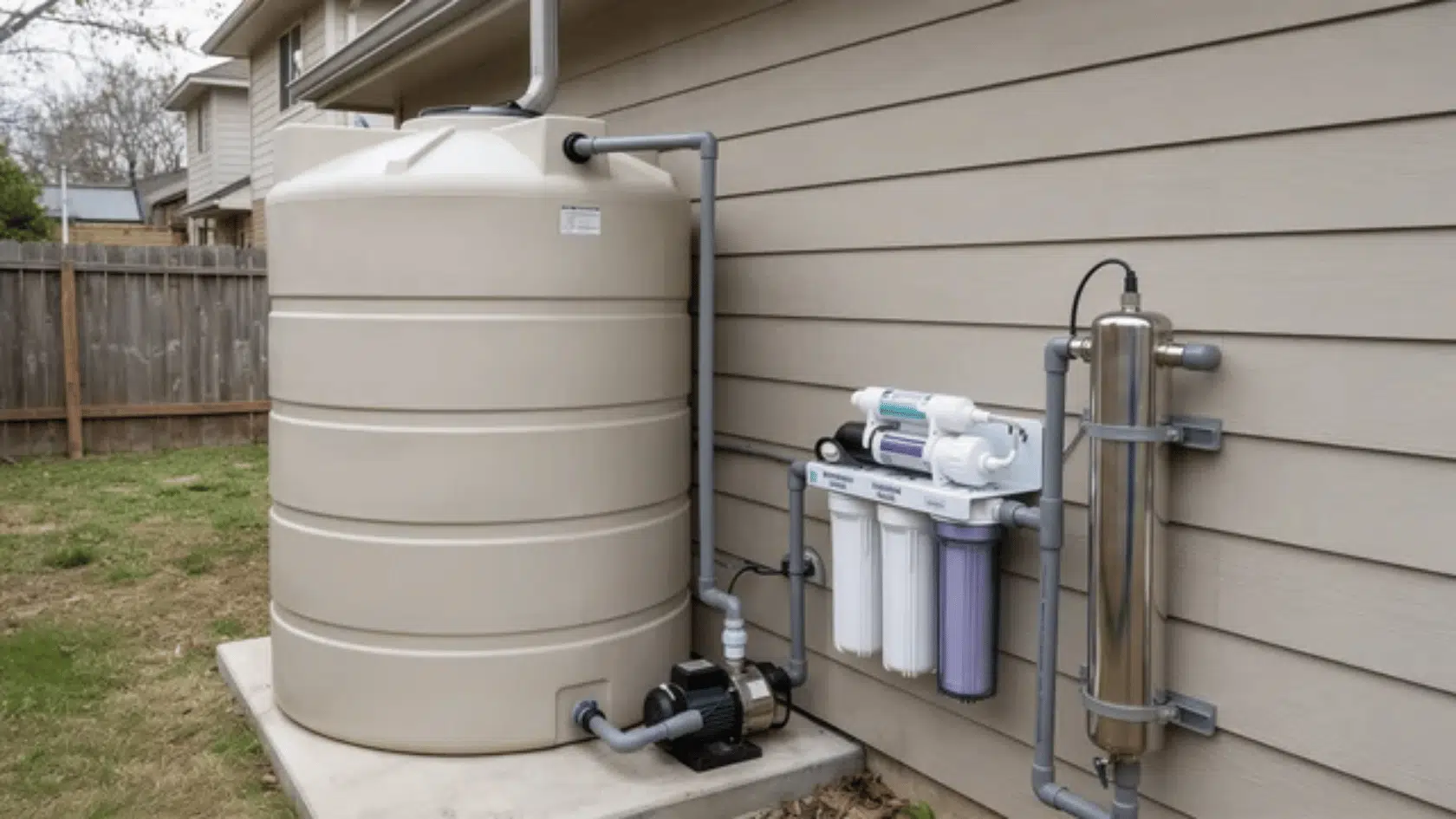
Always choose a food-grade tank for drinking water storage. Materials like polyethylene rated for potable use prevent chemicals from leaching into the water over time.
Clean your storage tank at least once a year, preferably twice. Sediment, algae, and biofilm can accumulate at the bottom and degrade water quality even after filtration.
Step 4: Post-Tank Filtration
After the storage tank, install a sediment filter to remove fine particles such as dust, silt, and pollen. Choose a cartridge rated between 1 and 5 microns for the best results.
Follow the sediment filter with a carbon filtration unit. Activated carbon blocks remove bad tastes, odors, and organic compounds that make water unpleasant to drink or use for cooking.
Step 5: Disinfection for Potable Water
Install a UV sterilizer as the final stage before the water reaches your tap. UV light kills bacteria, viruses, and cysts that pass through every other filtration stage undetected.
Test your water regularly, even after installing a UV system. Check for bacterial contamination and chemical levels at least once every few months to stay safe.
Popular Rainwater Filtration Systems
There are several ready-to-use and DIY rainwater filtration systems available today. Knowing what each one offers helps you pick the right fit for your specific needs and budget.
| System | Key Feature | Best For |
|---|---|---|
| Clean Rain Advanced / Clean Rain Ultra | Multi-outlet design with built-in pre-filtration | First-time users wanting an all-in-one setup |
| US Water Systems Pulsar Max Plus | UV disinfection with flow rate up to 20 GPM | Larger homes with higher daily water demands |
| Bushman Maelstrom Rainwater Filter | Vortex spinning technology with super-fine mesh | Keeping debris out of the storage tank from the start |
| DIY Sand and Gravel Filters | Layered sand, gravel, and charcoal filtration | Off-grid or budget-friendly non-potable setups |
Choosing the right rainwater filtration system depends on your water goals, household size, and budget. A clear understanding of each option makes the decision much easier and more confident.
Rainwater Filtration Challenges and Considerations
Installing a rainwater filtration system can offer long-term benefits, but several practical factors should be considered before getting started. Planning for these issues early can reduce costs, prevent delays, and improve system performance.
- Seasonal Rainfall Changes: Rainfall varies throughout the year, and extended dry periods may reduce the water available for household use.
- Heavy Rain and Overflow: Intense storms can overwhelm storage tanks, carrying additional debris or contaminants from roofs and gutters into the system.
- Upfront Installation Costs: A complete rainwater filtration setup with sediment filters, carbon filters, pumps, and UV sterilizers may require a significant initial investment.
- Space Requirements: Storage tanks, pipes, and filtration units require sufficient space, which can make installation difficult on smaller properties.
- Local Rules and Restrictions: Rainwater collection and potable-use regulations vary by location, so local requirements should be checked before installation.
Careful planning, suitable equipment, and regular maintenance can make most rainwater filtration challenges easier to manage.
What Reddit is Saying About Rainwater Filtration Systems?

A thread on r/AusRenovation brought together homeowners with years of hands-on experience, and a few key takeaways stood out.
Several users pointed out that benchtop filters can tackle serious contaminants like arsenic, microcystins, and PFAS that basic setups miss entirely.
One user had run the same filter for eight years without a single issue.
A useful tank tip that came up was to use a smaller settling tank first, letting debris settle before the cleaner water flows into your main storage. It considerably reduces the load on your post-tank filters.
The community agreed on one thing: sediment filters and bacteria filters serve different purposes, and no single filter covers both.
Getting a water sample test done before buying anything is the smartest first step.
Conclusion
Safe drinking water starts with the right system and proper upkeep.
Rainwater filtration works best when every stage, from pre-tank screens to UV sterilizers, is set up and maintained correctly.
Take a moment to assess your household needs, available space, and local regulations before making any decisions.
The information covered here gives you a solid base to start from.
Remember, even the best system needs regular testing and filter changes to stay effective. Consistency in maintenance is what keeps your water safe in the long term.
Have questions or tips from your own setup? Drop them in the comments below!
Frequently Asked Question
Why is Collecting Rainwater Illegal in The United States?
Collecting rainwater is legal in most of the U.S., but some states limit how much you can collect or require permits. These rules exist to protect water rights and manage local water resources.
How Long Will Rainwater Stay Fresh?
Rainwater stays fresh for 1–2 days in open containers and up to a week in clean, covered storage.
How Fast Will a 50 Gallon Rain Barrel Fill Up?
A 50-gallon rain barrel can fill in about 30–60 minutes from a moderate rain on a typical roof, depending on rainfall intensity and roof size.