Tiny wings, fast sips, and a backyard show you did not have to buy tickets for.
That is the fun of setting up a DIY hummingbird feeder, and it works even better when the rest of the backyard setup makes birds feel welcome and comfortable enough to keep coming back.
With a few household items and a little creativity, you can make a feeder that brings quick flashes of color right outside your window.
The best part? You do not need a big budget or expert skills.
From old jars to empty bottles, these simple ideas turn everyday scraps into sweet feeding stations hummingbirds can find and use.
What Makes a Good DIY Hummingbird Feeder?
A good DIY hummingbird feeder should be simple, safe, and easy to clean. It does not need fancy parts. It just needs to hold nectar well and give hummingbirds a clear spot to sip.
Key Features of a Good DIY Hummingbird Feeder
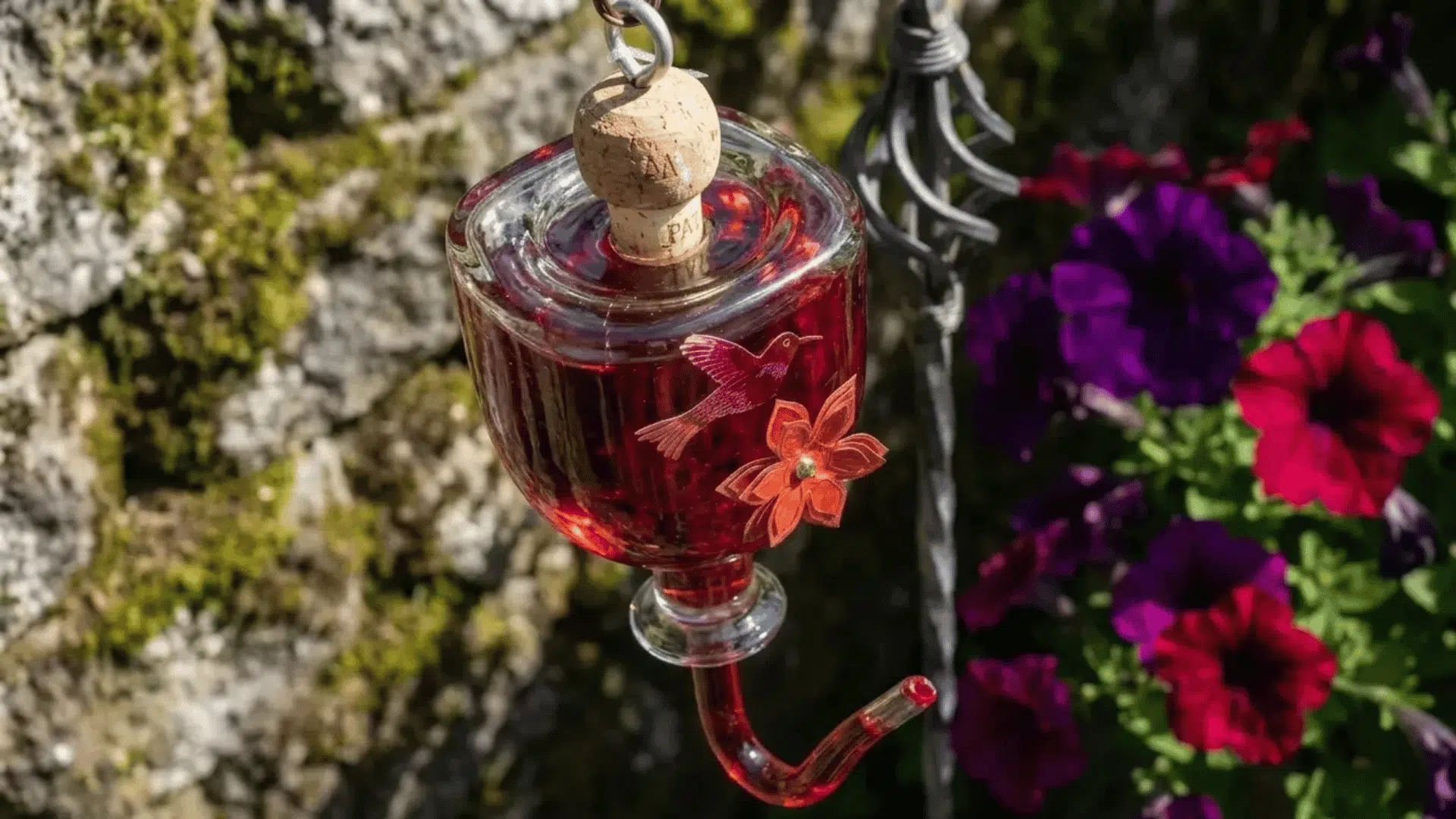
- Red details: Use red caps, lids, flowers, or ribbons to help birds spot it.
- Small feeding holes: Tiny holes let hummingbirds feed and help keep insects out.
- Easy cleaning: The feeder should open quickly for regular washing.
- Steady hanging: It should stay balanced and not leak sticky nectar.
- Safe materials: Use clean glass, food-safe plastic, twine, or smooth wire.
Quick Tip Box
Skip red dye in the nectar. Plain sugar water is enough. Use red feeder parts or decorations for color instead. |
DIY Hummingbird Nectar Recipe
A good feeder starts with the right nectar. Hummingbirds need a clean sugar-water mix that is close to natural flower nectar.
| Ingredient | Amount |
|---|---|
| White granulated sugar | 1 part |
| Water | 4 parts |
- Mix 1 cup of water with 1/4 cup of white sugar.
- Stir until the sugar fully dissolves.
- Let it cool before adding it to the feeder.
Make small batches and keep extra nectar in the fridge for a short time.
Note:
Do not use red dye, honey, brown sugar, powdered sugar, raw sugar, or artificial sweeteners. These can spoil quickly or harm hummingbirds.
DIY Hummingbird Feeder Ideas
A DIY hummingbird feeder can be simple, cute, and easy to make with everyday items.
From jars to bottles, these ideas help you create a small feeding spot that feels fun without taking much time.
1. Easy Mason Jar DIY Hummingbird Feeder

A mason jar feeder is simple, cute, and easy to refill. It works well for porches, balconies, and garden hooks.
What You Need
- Small mason jar
- Red plastic lid or red plastic sheet
- Hole punch or small drill
- Twine, wire, or strong string
- Scissors
- Cooled nectar
How to Make It
- Cut the red plastic to fit the jar opening.
- Make a few tiny feeding holes.
- Fill the jar with cooled nectar.
- Place the red plastic over the top and secure it with the metal ring.
- Tie twine or wire around the jar neck to make a hanger.
Check for leaks, then hang it in a shaded spot.
Why This Idea Works
The clear jar lets you see when nectar is low. It is easy to clean, low-cost, and has a nice handmade look without needing many tools.
2. DIY Hummingbird Feeder From a Spice Container

That empty spice jar can become a tiny hummingbird feeder with very little work.
Many spice containers already have shaker holes, which makes them a smart base for this project.
What You Need
- Empty spice jar with shaker lid
- Warm soapy water
- Red plastic flower shapes or red outdoor-safe paint
- Twine, thin wire, or strong string
- Homemade nectar
How to Make It
- Wash the jar well and remove the label.
- Make sure no spice smell is left inside.
- Check that the shaker holes are small enough for hummingbirds to sip from.
- Add red around the lid or feeding area so birds can spot it.
- Fill it with cooled nectar, close it tightly, and tie string around the neck.
Hang it from a branch, hook, or balcony rail.
Best For
- Small patios
- Balcony gardens
- Kids’ craft days
- Quick recycled projects
This feeder is small, so it may need refilling often. That also makes it easier to keep fresh.
3. Recycled Bottle Hummingbird Feeder

A clean bottle can turn into a simple garden feeder with just a few extra parts.
Glass bottles, small plastic bottles, or drink bottles can work if they are sturdy and easy to rinse.
What You Need
- Clean bottle
- Feeder tube or small feeding base
- Wire, twine, or copper wire
- Red flower accent
- Homemade nectar
How to Make It
- Wash and dry the bottle first.
- Attach a feeder tube or feeding base to the opening.
- Wrap wire around the bottle to make a firm hanger.
- Add a red flower accent near the feeding point.
- Fill it with cooled nectar and hang it upside down only if the feeder part is made for that setup.
Check for leaks before placing it outside.
Safety Note:
The feeder should not drip down the sides. Sticky nectar can attract ants, bees, and wasps.
4. Plastic Bottle DIY Hummingbird Feeder for Kids

This kid-friendly feeder turns an empty bottle into a bright backyard craft. It is light, simple, and easy for kids to help decorate.
What You Need
- Small clean plastic bottle
- Red cap, red plastic, or red craft foam
- Cotton ball or small feeding plug, if needed
- Rubber bands
- Yarn or string
- Fake or fresh red flowers
- Hummingbird nectar
How to Make It
- Wash the bottle and let it dry.
- Ask an adult to make tiny feeding holes near the cap.
- Add red flowers close to the holes.
- Pour in cooled nectar.
- Tie yarn or string around the top.
- Hang it where kids can watch safely.
Parent Note:
Adults should handle sharp tools. Kids can decorate, help measure nectar, and choose a safe viewing spot.
5. DIY Hummingbird Feeder Using a Small Container

A small food-safe container can become a quick, low-cost feeder. Choose one with a tight lid so it hangs without spills.
What You Need
- Small container
- Red lid or red plastic accents
- Small drill, heated pin, or hole punch
- String or wire
- Hummingbird nectar
How to Make It
- Wash the container well.
- Make a few tiny holes in the lid.
- Add red flowers or red plastic near the holes.
- Pour in a small amount of cooled nectar.
- Press the lid on tightly.
- Attach string or wire so it hangs level.
- Place it in partial shade.
Why This Idea Works
It reuses small containers that often get tossed. The flat shape also makes it easy to refill and clean.
6. DIY Hummingbird Feeder With Perch or Swing

Hummingbirds need quick rest stops between sips. A tiny perch or swing near the feeder can give them a safe place to pause.
Simple Feeder Perch Ideas
- Bend copper wire into a small half-circle beside the feeder.
- Tie a thin twig close to the feeding area.
- Hang a small wire swing near the feeder.
- Place the feeder near light branches so birds can rest between visits.
Keep It Safe
Smooth any sharp wire ends. Keep the perch steady, shaded, and away from windows.
7. DIY Hummingbird Feeder From a Test Tube
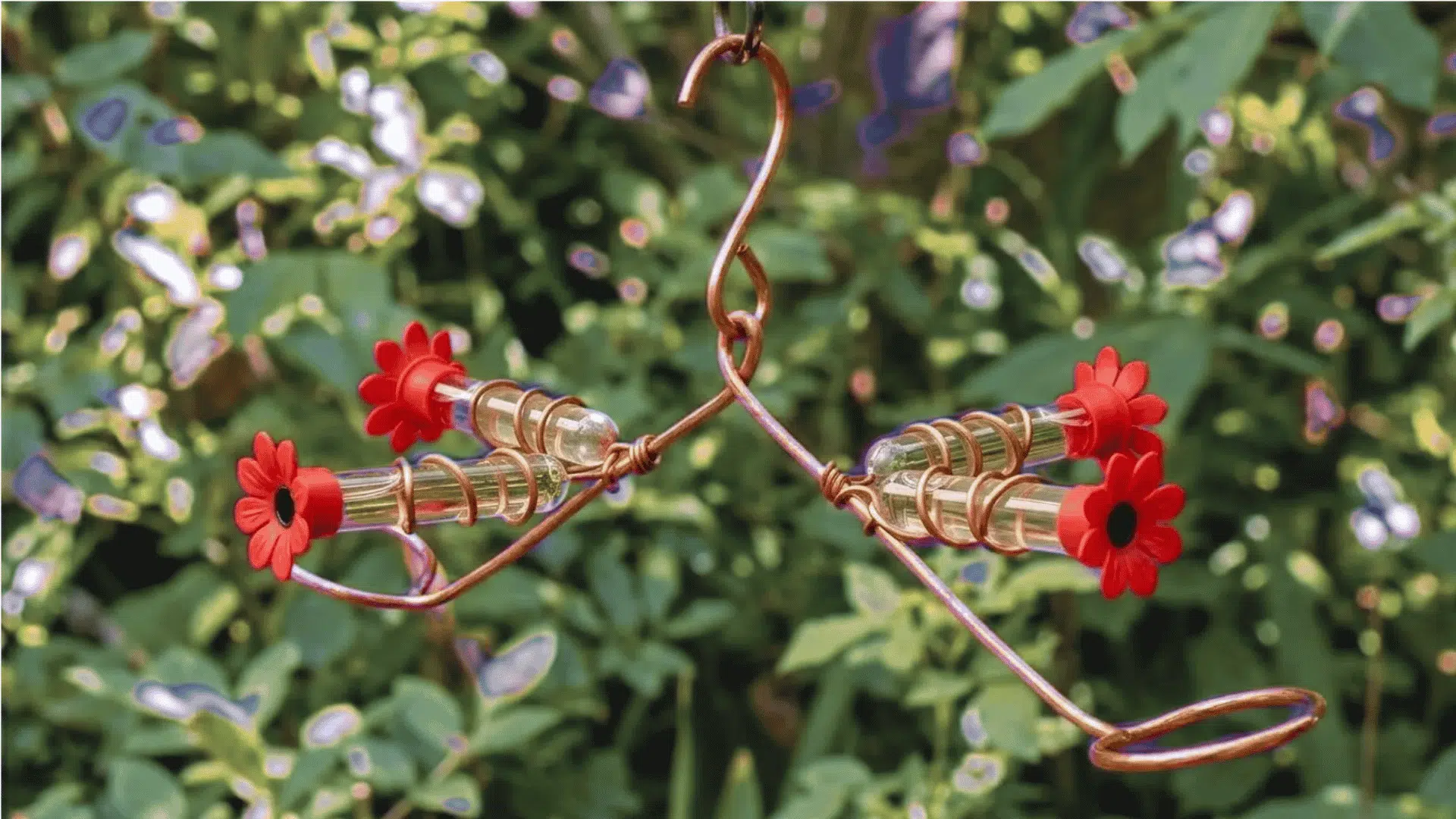
A test tube feeder is tiny, neat, and great for small outdoor spaces.
It works well if you want a feeder that hangs close to flowers or a porch rail.
What You Need
- Clean plastic or glass test tube
- Rubber stopper with a small feeding tube
- Thin wire or twine
- Red craft flower
- Homemade nectar
How to Make It
- Wash the test tube well and let it dry.
- Fill it with cooled nectar.
- Place the stopper or feeding tube firmly at the open end.
- Wrap wire around the tube to make a hanger.
- Add a red flower near the feeding tip.
Hang it upright or at a slight angle so it does not leak.
Why This Idea Works
It holds a small amount of nectar, so it stays fresh and is easy to rinse between refills.
8. DIY Hummingbird Feeder From a Jar Lid

A shallow jar lid feeder is simple and easy to clean. It works well because the nectar sits low, and the feeding holes stay close to the surface.
What You Need
- Small shallow jar lid
- Red plastic sheet or red craft flowers
- Small drill or heated pin
- String, wire, or hanging chain
- Homemade nectar
How to Make It
- Clean the lid first.
- Make tiny feeding holes in the top cover or red plastic sheet.
- Add red flowers around the holes.
- Pour in a small amount of cooled nectar.
- Secure the cover so it does not shift.
- Attach string or wire to keep it level.
Hang it in a calm, shaded spot.
Why This Idea Works
The shallow shape makes washing fast and helps you spot cloudy nectar right away.
9. DIY Hummingbird Feeder From a Teacup

An old teacup can become a sweet little feeder for a porch, patio, or garden corner. It has a soft cottage-style look and works well as a shallow feeding station.
What You Need
- Small teacup
- Matching saucer, if available
- Strong outdoor glue
- Red craft flowers
- Thin chain, wire, or twine
- Hummingbird nectar
How to Make It
- Wash the teacup well and let it dry.
- Glue the cup to the saucer so it stays steady.
- Add red craft flowers near the rim to help birds notice it.
- Attach wire, chain, or twine so the cup hangs level.
- Pour in a small amount of cooled nectar.
Hang it in a quiet, shaded spot.
Check it often since open feeders can collect dust, leaves, or rainwater.
Best For
- Porch decor
- Cottage-style gardens
- Small nectar amounts
- Using old cups in a new way
This feeder works best when cleaned often and placed where it will not swing too much.
Which DIY Hummingbird Feeder Idea Is Best for You?
Each DIY hummingbird feeder has its own sweet spot. Some are quick to make, some look nice outdoors, and some are better for kids.
| DIY Feeder Idea | Best For | Difficulty |
|---|---|---|
| Mason jar feeder | A sturdy refillable option | Easy |
| Spice container feeder | A quick reuse project | Very easy |
| Glass bottle feeder | A handmade garden look | Medium |
| Plastic bottle feeder | A kid-friendly craft | Easy |
| Small container feeder | A low-cost idea | Easy |
| Feeder swing add-on | A tiny rest spot nearby | Easy |
| Test tube feeder | Small spaces and tiny nectar batches | Easy |
| Jar lid and saucer feeder | Fast cleaning and shallow feeding | Easy |
| Teacup feeder | Porch decor and small nectar amounts | Easy |
Pick the spice container if you want something fast. Choose the glass bottle if you want a more decorative garden piece. Try the test tube or teacup idea if you want a small feeder with extra personality.
Conclusion
A homemade hummingbird feeder adds a small bit of magic to any outdoor corner, and the best part is how easy it is to make one of your own.
You can keep it simple, playful, or a little crafty with items already sitting around the house. The real win is creating a clean, safe spot where these tiny birds can stop by for a quick sip.
Try one idea first, then adjust the design as you see what works in your space.
Have you made a DIY hummingbird feeder before? Share your favorite idea, smart trick, or funny backyard visitor story in the comments.
Frequently Asked Questions
What Is a Hummingbird’s Biggest Enemy?
Outdoor and feral cats are the biggest enemies to hummingbirds. As the most common predator of these tiny birds, cats frequently ambush them while they are feeding in gardens.
Should I Stop Feeding Hummingbirds in September?
Do not stop feeding hummingbirds in September. That is a myth. Fresh nectar helps them get the energy they need for migration.
Is It Bad to Touch Baby Hummingbirds?
Never touch or handle a baby hummingbird unless it is a true emergency. They are extremely fragile, and human hands can injure them, damage their feathers, or disturb their care.