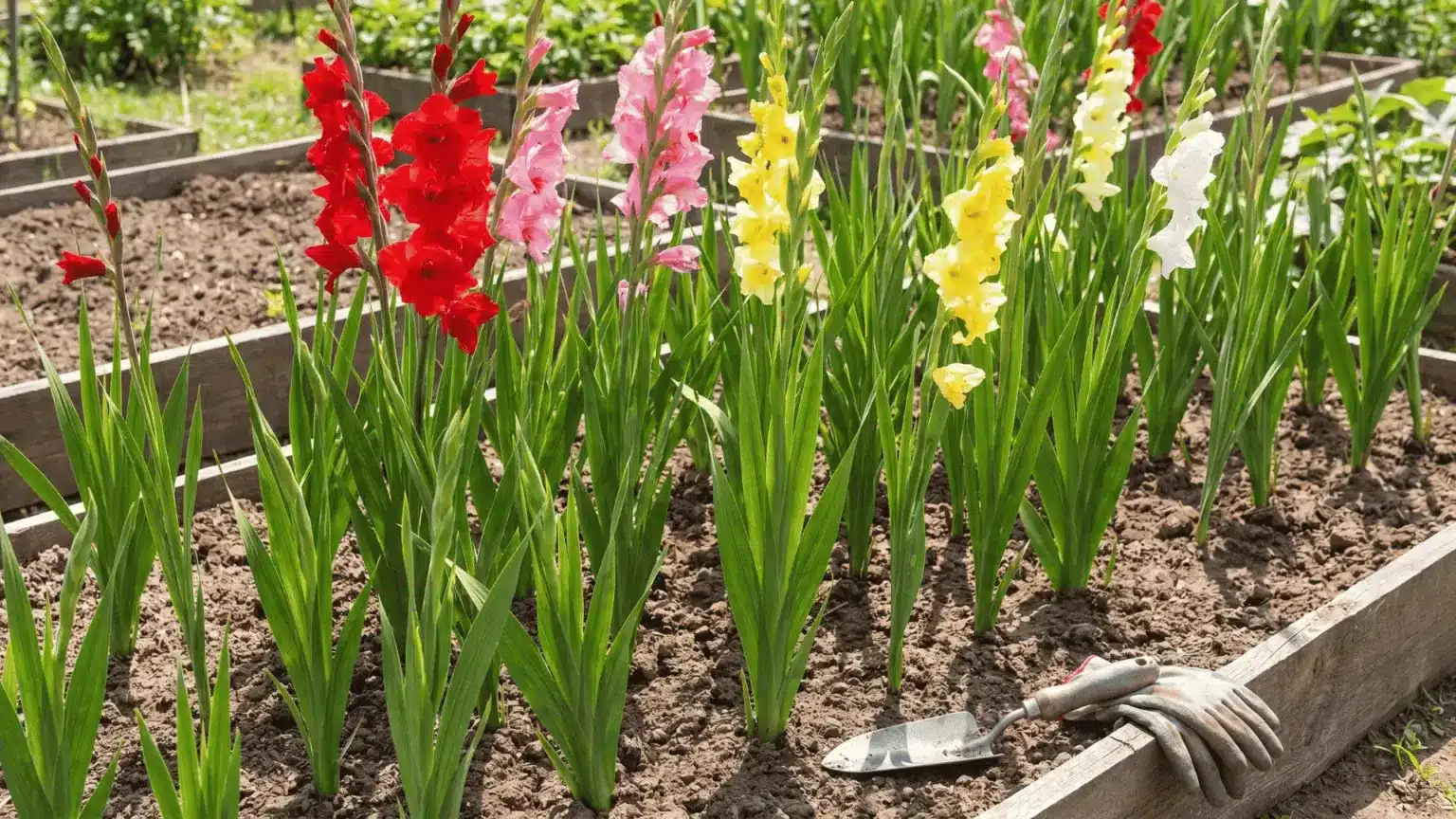
Many gladiolus planting problems start long before the flowers ever bloom.
Gardeners often assume planting after the last frost is enough, but soil temperature, drainage, and timing all affect whether corms grow successfully or rot underground before shoots appear.
Knowing when to plant gladiolus bulbs also matters because planting too late can produce healthy leaves without a single flower before fall frost arrives.
In many gardens, failed blooms are traced back to cold spring soil, poor drainage, or missed planting windows rather than bad corms.
A few small adjustments can make the growing season much more successful.
What Is a Gladiolus Bulb?
A gladiolus bulb is actually a corm, a solid underground stem that stores food for the plant.
Unlike a true bulb, which has layers like an onion, a corm is solid all the way through. This is why it can rot easily in wet soil.
Each corm has a pointed tip on top, where the shoot grows, and a flat bottom, where roots form. Small baby corms, called cormels, grow around the base.
| Feature | Details |
|---|---|
| Common Name | Gladiolus bulb |
| Correct Term | Corm |
| Structure | Solid stem tissue (not layered) |
| Hardiness | Zones 8–10 (stays in ground); Zones 7 and colder (must be lifted) |
| Sensitive To | Wet soil, cold winters |
When to Plant Gladiolus Bulbs
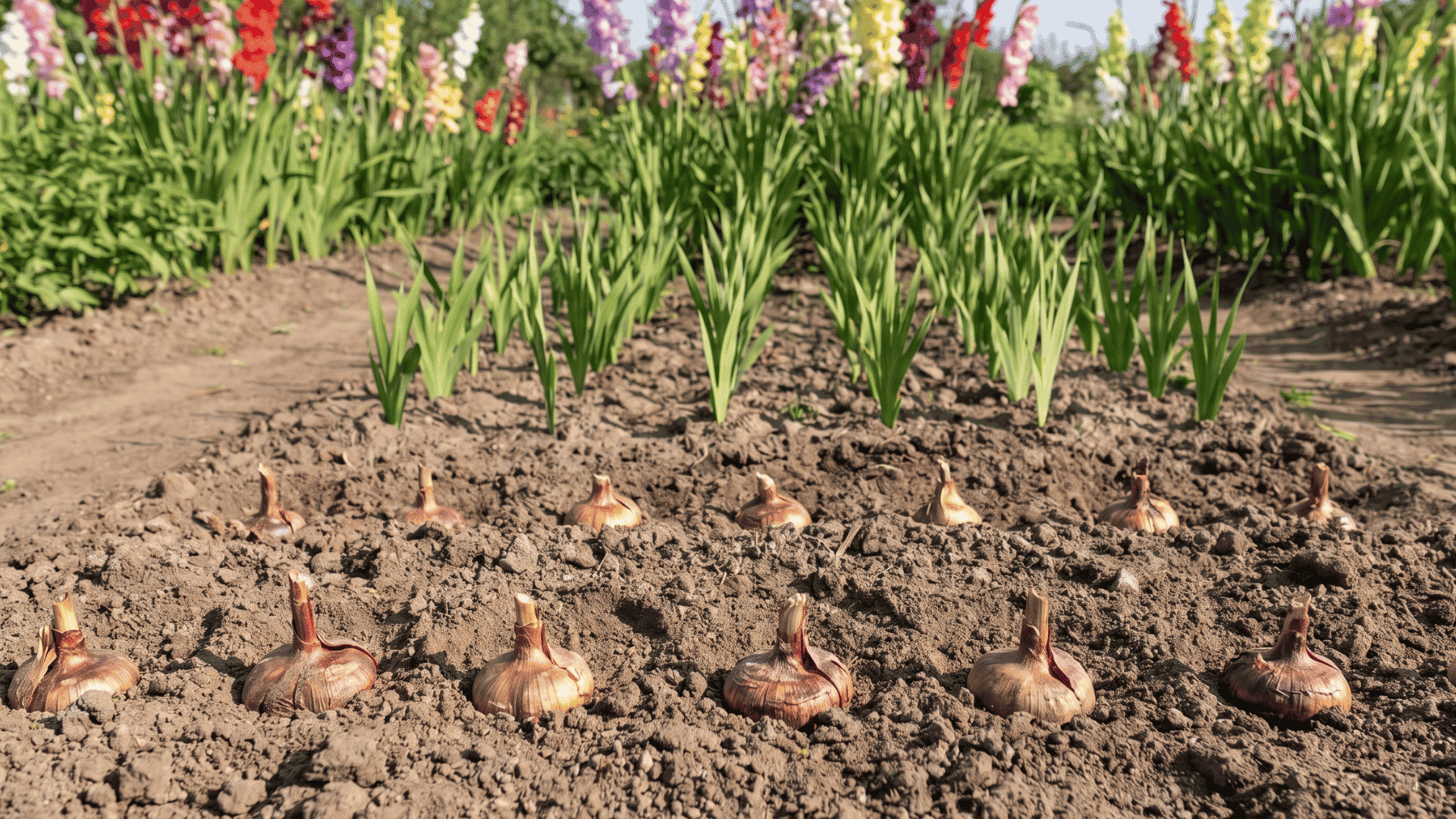

Plant gladiolus corms after the last frost, once soil warms to at least 55°F, usually from late March through May, depending on your zone.
Getting this timing right is the biggest factor in gladiolus bloom time, since cold soil keeps corms dormant and increases the risk of rot.
- Zones 5–6: Late April to May
- Zones 7–8: Late March to April
- Zones 9–10: February to March
Soil temperature matters more than the calendar date. Below 55°F, corms sit dormant and can rot; between 55–65°F, roots begin forming, and shoots follow soon after.
For continuous flowers all summer, plant a new batch every 10 to 14 days, stopping about 90 days before your area’s first fall frost.
Tip: Keep a small soil thermometer near your planting bed each spring. Checking the actual soil temperature, rather than guessing from air temperature, takes the guesswork out of timing your gladiolus bloom time perfectly.
How to Grow Gladiolus Bulbs: Step-by-Step Instructions
Gladiolus needs proper care after planting to grow strong stems and produce colorful blooms, which is exactly what makes them such a favorite in any cutting garden.
The steps below walk you through the whole process from soil prep to covering the corms:
Step 1: Prepare the Soil

Use loose, well-draining soil so roots can spread easily after planting. Remove stones and break apart compacted soil before placing the corms.
Heavy or wet soil can trap moisture around the corm, increasing the risk of rot. Raised beds work well in areas with poor drainage.
Step 2: Dig the Holes

Dig holes about 4 to 6 inches deep, depending on the corm size. Plant larger corms slightly deeper for better support once flowering begins.
Planting too shallow exposes corms to heat and frost damage. Planting too deeply in cold soil can slow emergence and delay growth.
Step 3: Place the Corm Correctly

Set the pointed growing tip upward and the flat root plate downward. This allows roots to grow downward while the shoot grows straight toward the surface.
Sideways or upside-down corms still try to reach light by bending upward underground. This delays emergence and often weakens the plant.
Step 4: Space the Corms Properly

Leave about 6 inches between corms to give roots and flower spikes enough room to develop. Crowded planting can reduce airflow and create weaker growth.
For a fuller display, plant gladiolus in groups of 6 to 10 instead of single corms. Group planting creates a stronger visual effect once the blooms start.
Step 5: Cover the Soil Gently

Refill the holes carefully and press the soil lightly around the corms. This helps keep them stable without compacting the soil too tightly.
Avoid stomping or packing the soil firmly, as compacted soil slows root growth. Loose soil also drains excess moisture more effectively.
Tip: Gladiolus also grows well in containers when planted 4–6 inches deep.
How to Care for Gladiolus After Planting
Gladiolus needs proper care after planting to grow strong stems and produce colorful blooms.
Regular watering, support, feeding, and maintenance help the plants stay healthy throughout the growing season.
- Water Regularly: Keep soil evenly moist with about 1 inch of water weekly.
- Stake Tall Stems: Support flower spikes to prevent bending or falling.
- Fertilize Properly: Feed after shoots appear and during bloom formation.
- Mulch the Soil: Retain moisture and reduce weed growth.
- Remove Faded Blooms: Cut spent flowers, keeping the leaves intact.
- Check Plant Health: Watch for pests, diseases, or poor growth.
With consistent care, gladiolus plants can grow stronger, stay upright, and reward you with beautiful flowers during the blooming season.
How Many Gladiolus Bulbs can You Plant Together?
For garden beds, plant gladiolus corms in clusters of 6 to 10 for the fullest visual impact, spacing each corm 6 inches apart within the group.
In containers, a 12-inch pot comfortably holds 3 to 5 corms without crowding roots.
Larger drifts of 15–20 corms work well along borders, as long as spacing and airflow stay consistent throughout.
What Not to Plant Next to Gladiolus
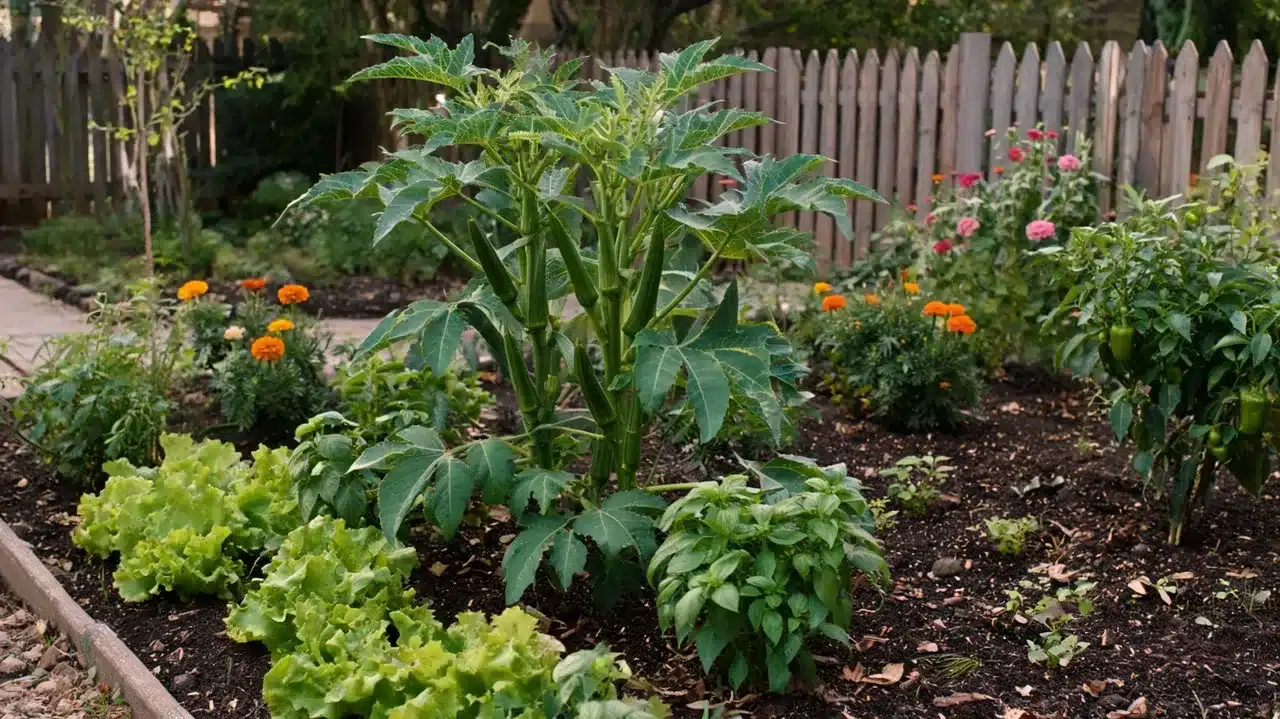
Gladiolus does best in lean, well-draining soil, so pairing it with plants that need rich, heavily fed beds usually backfires for one side or the other.
A few neighbors are worth avoiding:
- Beans and peas: these nitrogen-fixers enrich soil in ways that favor leafy growth over flower spikes.
- Onions and garlic: similar nutrient needs and shared pests create unnecessary competition.
- Climbing vines like morning glory: left unchecked, vines wrap around stalks and bend or snap them.
- Spring bulbs like tulips and daffodils: overlapping dormancy cycles mean both bulbs compete for nutrients at once.
- Shade-loving plants: hostas and impatiens clash with the full sun gladiolus needs to thrive.
Vegetable beds are also a poor fit, since most vegetables want fertile, moisture-retentive soil, the opposite of gladiolus’s preference.
Tip: When in doubt, give gladiolus its own dedicated row or cluster rather than tucking it into a vegetable bed; a few feet of separation avoids most nutrient and shading conflicts before they start.
For a mixed layout, this vegetable garden design guide can help keep heavy feeders separate from bulb plantings.
Conclusion
Planting gladiolus the right way helps produce stronger stems and longer-lasting blooms.
Understanding soil warmth, drainage, and succession planting can prevent many common growing problems before they start.
Whether you grow gladiolus in garden beds or containers, proper care through the season helps the corms perform better year after year.
Start planting your gladiolus bulbs at the right time and enjoy a brighter summer display in your garden.
Have a favorite gladiolus variety or planting tip? Share it in the comments below.
Frequently Asked Questions
Do Gladiolus Need Staking?
Tall gladiolus varieties often need staking because heavy flower spikes can bend or fall during wind or rain. Stakes help keep stems upright and prevent damage while blooming.
Can Gladiolus Grow Indoors?
Gladiolus can grow indoors in containers if they receive enough direct sunlight and proper drainage. However, outdoor growing conditions usually produce taller plants and stronger flower spikes.
How Often Should Gladiolus Be Watered After Planting?
Gladiolus prefers evenly moist soil during active growth, especially once shoots appear. Avoid overwatering because soggy soil can quickly lead to corm rot and weak root development.