Yellowing leaves, drooping stems, and stalled growth can turn a once-thriving houseplant into a source of daily frustration. The culprit is rarely a single mistake; more often, it’s a small imbalance in water, light, or humidity that quietly builds over time.
The good news is that arrowhead plant care follows a handful of simple, repeatable habits that keep foliage vibrant and growth steady.
Get the routine right, and this fast-growing tropical rewards you with lush, arrow-shaped leaves in shades of green, pink, and cream.
What follows is everything that stands between a struggling arrowhead and one that flourishes indoors, season after season, year after year.
Getting to know the Arrowhead Plant
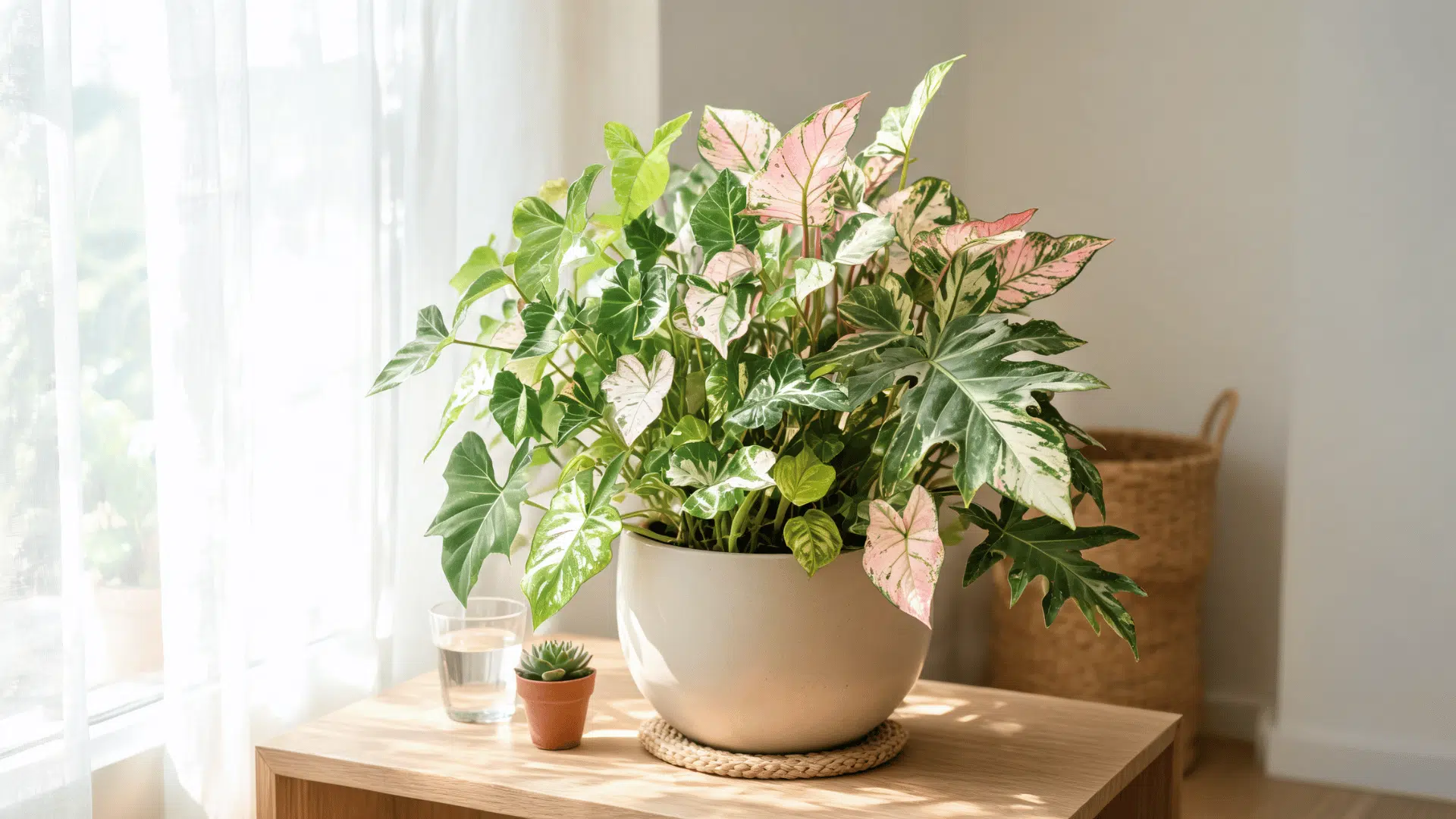
The Arrowhead Plant (Syngonium podophyllum) is a popular houseplant valued for its arrow-shaped leaves, changing foliage, and easy-care nature.
Native to Central and South America, it grows in warm, humid conditions and grows well indoors as a trailing or climbing plant.
Its leaves change as the plant matures, starting with simple arrow shapes before developing more divided patterns.
Available in green, white, pink, cream, and variegated varieties, it adds visual interest to indoor spaces.
Fast-growing and compact, the Arrowhead Plant suits small areas and beginner plant owners looking to add common house plants to their indoor spaces.
How to Care for an Arrowhead Plant
Arrowhead Plants grow well indoors with balanced watering, proper light, and well-draining soil. The right humidity and temperature help maintain healthy leaves and steady growth.
1. Water Arrowhead Plants Properly

Arrowhead Plants prefer consistently moist soil but do not tolerate soggy conditions.
Water when the top inch of soil feels slightly dry to keep roots healthy and prevent moisture-related issues.
Use room-temperature water and ensure proper drainage after each watering. During cooler months, reduce watering frequency as slower growth lowers the plant’s water needs.
Tip: Check soil moisture with your finger before watering to avoid overwatering.
2. Provide The Right Sunlight

These plants grow best in bright, indirect light, which promotes healthy leaf growth and maintains vibrant foliage. Direct sunlight can scorch leaves and cause color fading.
Low light may slow growth and weaken leaf patterns. Place the plant near a window with filtered light to provide the right balance for steady development.
Tip: Rotate the plant occasionally to ensure even growth. Avoid placing it in harsh afternoon sunlight.
3. Soil Type for Arrowhead Plant

Arrowhead Plants grow best in soil that provides both moisture control and proper drainage. The right potting mix helps maintain healthy roots and supports steady growth.
- Well-draining mix: Use peat, coco coir, and perlite to improve drainage and root health.
- Balanced moisture: Keep the soil lightly moist while allowing airflow around the roots.
- Repot regularly: Refresh the growing medium every few years to support continued growth.
A suitable soil mix creates a healthier growing environment for Arrowhead Plants. Good drainage, balanced moisture, and occasional repotting help prevent common root problems and encourage stronger foliage.
4. Maintain Humidity And Temperature

Such plants prefer warm temperatures and moderate to high humidity, similar to their tropical environment.
Keep them away from cold drafts and sudden temperature changes, which can stress the plant. Maintaining humidity levels around 40% to 60% helps support healthy leaves and steady growth.
Misting or using a humidifier can help raise humidity around plants in dry indoor spaces.
5. Removing Damaged Leaves

Yellow or damaged leaves can result from overwatering, low light, or natural aging. Removing affected leaves helps the plant direct energy toward healthier growth.
Use clean scissors to trim leaves close to the stem, avoiding healthy tissue. Regularly checking the plant can help identify and manage issues early.
How to Propagate an Arrowhead Plant?
Arrowhead Plants are easy to propagate from stem cuttings, allowing you to grow new plants or share them with others. Cuttings can develop roots in water or soil within weeks.
Choose a healthy stem with one or two leaf nodes, as roots grow from these points. Use clean, sharp scissors or a knife to cut below the node.
Place the cutting in water or moist, well-draining potting mix. Change water every few days to keep it fresh and support healthy root growth.
Keep the cutting in bright, indirect light with consistent moisture. Roots usually appear within two to three weeks. Transfer water-rooted cuttings into soil once roots are 1–2 inches long.
Fertilizing Tips For Your Arrowhead Plant
Arrowhead Plants benefit from regular feeding during active growth to encourage fuller leaves and healthy development.
A balanced, water-soluble fertilizer applied correctly helps provide essential nutrients while preventing problems caused by overfeeding.
- Feed every four to six weeks during spring.
- Dilute fertilizer to half strength before application.
- Reduce feeding during fall and winter months.
- Flush soil regularly to prevent salt buildup.
Over-fertilizing can cause salt buildup in soil, leading to brown leaf tips or root damage while proper fertilizing keeps Arrowhead plants healthy and supports steady growth.
Note: Avoid excess fertilizer, as it can damage roots and cause brown leaf tips.
Common Pests Affecting Arrowhead Plants
Arrowhead Plants are fairly pest-resistant but can occasionally attract spider mites, aphids, and mealybugs, especially in dry indoor air or overly damp soil.
Catching an infestation early makes it easier to treat. Spider mites appear as fine webbing with tiny specks on the undersides of leaves, often in low-humidity conditions.
Aphids and mealybugs show up as small clustered insects or white, cottony spots along stems and leaf joints.
Wipe leaves down with a damp cloth to remove pests, then treat with neem oil or insecticidal soap, reapplying every seven to ten days until the infestation clears.
You can learn more about common houseplant insects and pests to identify and manage indoor plant infestations effectively.
Common Arrowhead Plant Care Mistakes to Avoid
Small care mistakes can affect Arrowhead Plant growth, leaf color, and overall health. Avoiding common issues with watering, lighting, soil, and maintenance helps the plant stay stronger.
- Overwatering: Excess moisture can damage roots, causing yellow leaves and slow growth.
- Wrong lighting: Direct sunlight may burn leaves, while low light can weaken growth and affect patterns.
- Poor soil drainage: Heavy soil can trap moisture and lead to root problems over time.
- Neglecting humidity and care: Sudden temperature changes and poor maintenance can stress the plant.
Providing consistent care and checking the plant regularly can help prevent these problems. Proper conditions allow Arrowhead Plants to maintain healthy leaves and steady growth indoors.
Conclusion
Proper arrowhead plant care helps maintain healthy leaves, steady growth, and a stronger indoor plant over time.
Providing the right balance of light, water, humidity, and soil keeps the plant fresh and vibrant.
Small changes in your care routine can prevent common problems and support better growth.
With consistent maintenance and attention, your arrowhead plant can thrive indoors and continue adding natural beauty to your space.
Have questions or tips about arrowhead plant care? Share them in the comments below.
Frequently Asked Questions
Can Arrowhead Plants Grow Permanently in Water?
Arrowhead plants can grow in water temporarily, especially from cuttings. For permanent growth, they usually need soil, nutrients, and proper care to develop stronger roots and healthier foliage.
Are Arrowhead Plants Toxic to Pets?
Yes, Arrowhead Plants are toxic to cats, dogs, and other pets because they contain calcium oxalate crystals. According to the ASPCA toxic plant list, chewing this plant may cause mouth irritation, drooling, vomiting, or discomfort.
How Fast Does an Arrowhead Plant Grow?
Arrowhead plants grow quickly with proper light, water, humidity, and nutrients. They can produce new leaves regularly and become fuller with pruning and consistent maintenance.