One flower, three origin stories, endless ways to get it wrong.
A lily is rarely just a lily. The same bloom that belongs on a wedding altar can be the wrong choice at a celebration, depending on who receives it and where they are from.
Types of lilies and their meanings vary by species, color, and cultural tradition. Florists will confirm that the most common gifting mistakes involve lilies specifically, not roses or tulips.
The associations run deeper than most flower guides acknowledge. Several conflicts across cultures in ways that matter in practice.
In this blog, each section below covers each type, each color, and every cultural context where the meaning shifts for each flower.
The History of Lily Meanings
Lily meanings were not inherent to the flower. They developed through three distinct cultural systems that shaped the symbolism behind types of lilies and their meanings.
The first was Christian iconography. The Madonna lily symbolized the Virgin Mary’s purity, which is why white lilies still appear at weddings and funerals today.
Greek mythology also influenced lily symbolism, with red lilies said to have sprung from Hera’s breastmilk, linking them to passionate, divine love.
The third was Victorian floriography, the 19th-century practice of sending coded messages through flowers.
It standardized color meanings across all lily types and remains a major source for modern floral symbolism, with many lily meanings tracing back to these traditions
Types of Lilies and What Each One Means
Not all lilies are the same; each type has its own look, fragrance, and meaning that make it suited for different occasions.
Understanding these differences helps you choose a lily that matches the message you want to share.
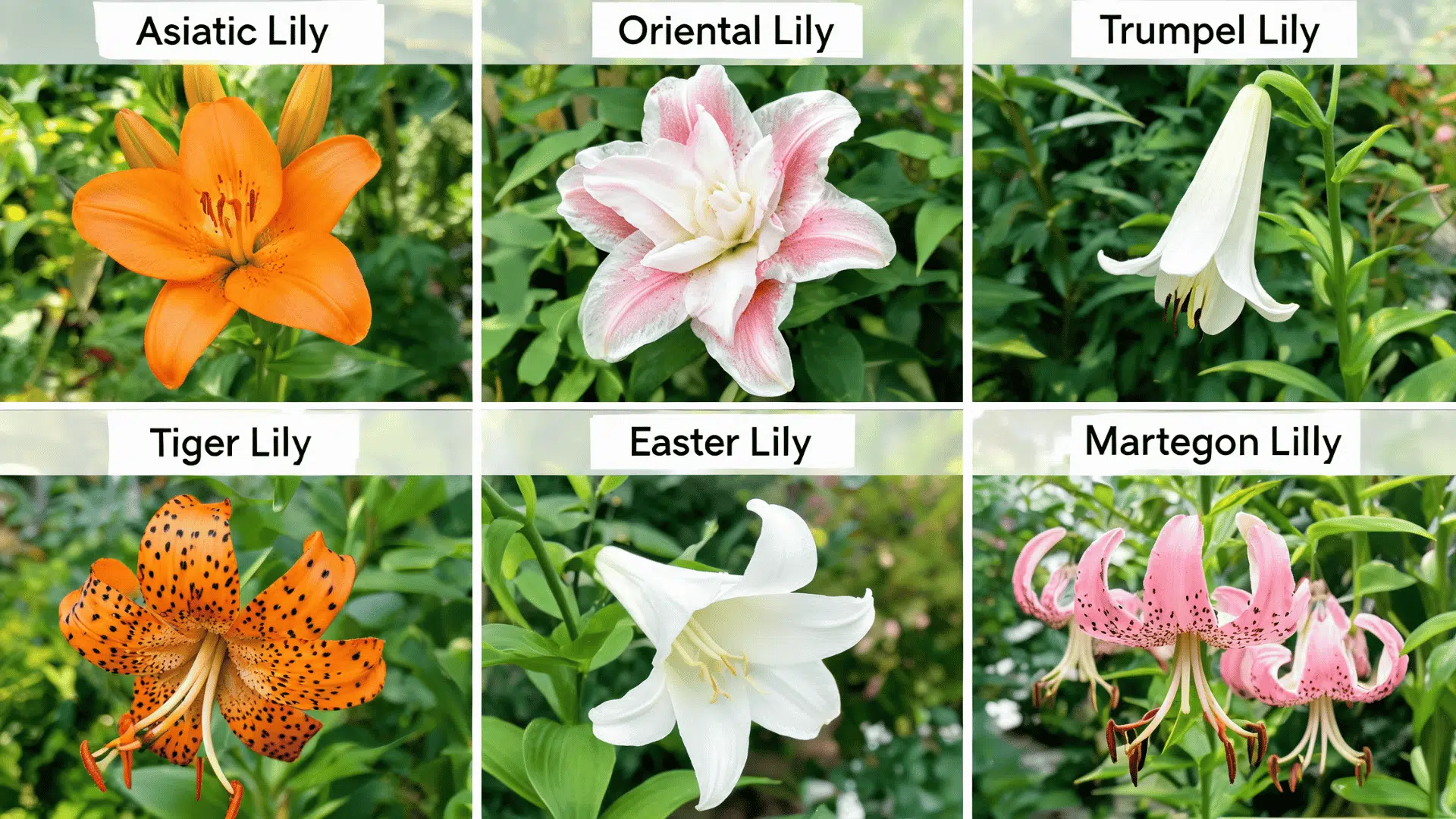
1. Asiatic Lily: Confidence and Positivity

The Asiatic lily symbolizes confidence, enthusiasm, and new beginnings. Its blooms face upward, are completely unscented, and appear in early summer in vibrant,
It is the most widely available true lily in retail floral and garden markets, which makes it the benchmark against which other lily types are measured.
Best for birthdays, congratulations, and casual gifting where the message is celebratory and uncomplicated.
2. Oriental Lily: Romance and Deep Admiration

The Oriental lily symbolizes passion, prosperity, and sophisticated love — large, fragrant, speckled blooms opening mid to late summer.
Stargazer is an Oriental cultivar, not a standalone species, carrying ambition and sympathy associations depending on context.
Best for romantic occasions and meaningful celebrations where the gesture is meant to be remembered.
3. Trumpet Lily (Aurelian Lily): Majesty and Triumph

The Trumpet lily symbolizes triumph, renewal, and celebration, with elongated trumpet-shaped blooms on tall stems with a sweet, pervasive fragrance opening in mid-summer.
It carries strong ceremonial weight, reading as formal without being funereal. Lilium candidum, the Madonna lily, is the oldest and most recognized variety in this group.
Best for weddings, graduations, and memorial arrangements where elegance and presence are the intention.
4. Easter Lily: Hope and Spiritual Rebirth

The Easter lily (Lilium longiflorum) symbolizes hope, purity, and spiritual renewal — its identity rooted in Christian resurrection imagery.
Most associated with Easter and sympathy arrangements, its white form communicates both reverence and consolation.
Best for religious ceremonies, memorial arrangements, and sympathy gifting where hope and renewal are the intended message.
5. Tiger Lily: Wealth and Fiery Confidence

The Tiger lily symbolizes wealth, pride, and bold confidence vivid orange petals with black spots, nodding downward, unscented (Lilium lancifolium).
Its visual boldness makes it a natural fit for achievement-based and celebratory gifting, where subtlety would undercut the message.
Best for congratulations, milestones, and occasions where energy and confidence are the intended message.
6. Martagon Lily: Aspiration and Natural Grace

The Martagon lily symbolizes aspiration and perseverance, a woodland-native form with recurved Turk’s cap petals that reads as quiet strength rather than display.
Less common in retail floral markets, the Martagon appears most often in cottage arrangements and naturalized garden designs where its architectural pendant form adds vertical interest.
Best for understated gifts that carry meaning without demanding attention.
7. Orienpet / OT Hybrid: Strength and Endurance

The Orienpet lily symbolizes strength and endurance, a fragrant, towering Oriental-Trumpet cross with robust stems that outlast most cut lily varieties.
Most competing sources omit or underexplain Orienpets entirely. This is the category that rewards gardeners and florists who discover it.
Best for large-scale arrangements and occasions where physical presence and longevity both matter.
How Lily’s Colors Change Meaning?
Lily color is not decorative; each color carries a distinct meaning inherited from Victorian floriography, and knowing it changes what the flower communicates.
| Color | Primary Meaning | Notes |
|---|---|---|
| White | Purity, innocence, spiritual passage | Carries mourning associations in Chinese and Korean contexts, pairs with another color when gifting across cultures |
| Pink | Grace, admiration, warm affection | Stargazer (pink-white) adds aspiration and condolence layers depending on the occasion |
| Red | Passion, love, courage | Traces to Greek mythology, slightly more mythic register than red roses |
| Orange | Confidence, energy, enthusiasm | Tiger lily is the primary orange variety, celebratory rather than intense |
| Yellow | Joy, gratitude, healing | Older European floriography associated yellow with jealousy largely dormant today |
| Purple | Royalty, pride, admiration | True purple is rare in the genus Lilium, usually achieved through breeding |
Tip: When gifting internationally, research the recipient’s traditions first or ask a local florist. A quick check can prevent an innocent gift from carrying an unintended message.
What Lilies Mean in Different Cultures
The Western meanings covered above, purity, devotion, and rebirth, are not universal. Other traditions built their own associations, and several conflict directly.
- Ancient Egypt: Fertility, rebirth, and eternal life. Lily motifs on tomb walls predate Christian iconography by over a millennium.
- China: Good fortune and longevity. White lilies carry mourning associations here, not purity, the starkest cross-cultural conflict in lily symbolism.
- Japan: Innocence and spiritual clarity in hanakotoba. Also connected to mono no aware, the beauty of impermanence, a meaning no Western tradition shares.
- France: The fleur-de-lis established the lily as a royal symbol in the 12th century, long before Victorian floriography standardized color meanings.
- Greece and Rome: Sacred to Hera, worn in bridal crowns, linked to divine love and fertility. Christianity reframed these associations in terms of moral purity.
The meaning a lily carries depends entirely on which of these traditions the sender and recipient share.
Conclusion
Understanding types of lilies and their meanings turns a simple flower choice into a deliberate one. White carries purity in one tradition and mourning in another.
Red traces to mythology, not sentiment. A Stargazer reads differently at a birthday than beside a casket.
The type sets the register, the color narrows the message, and the cultural context determines whether it lands the way it was intended.
No other common flower carries this many variables, which is exactly what makes lilies worth understanding before choosing.
Pick the type, confirm the color, consider the recipient’s background, and the right lily becomes obvious.
Which lily type do you reach for most, and what occasion was it for? Drop it in the comments below.
Frequently Asked Questions
How Long Do Lilies Last in a Vase?
Cut lilies typically last 10 to 14 days in a vase. Removing pollen, trimming stems at an angle, and changing water every two days extends vase life significantly.
Does the Number of Lilies in a Bouquet Have a Meaning?
In general, odd numbers are preferred for gifting. A single stem signals sincerity, three suggest affection, and larger arrangements carry ceremonial weight.
What Flowers Go Well With Lilies in an Arrangement?
Roses, eucalyptus, baby’s breath, and hydrangeas pair well with lilies. They complement without competing, letting the lily remain the focal bloom while adding texture and volume.