
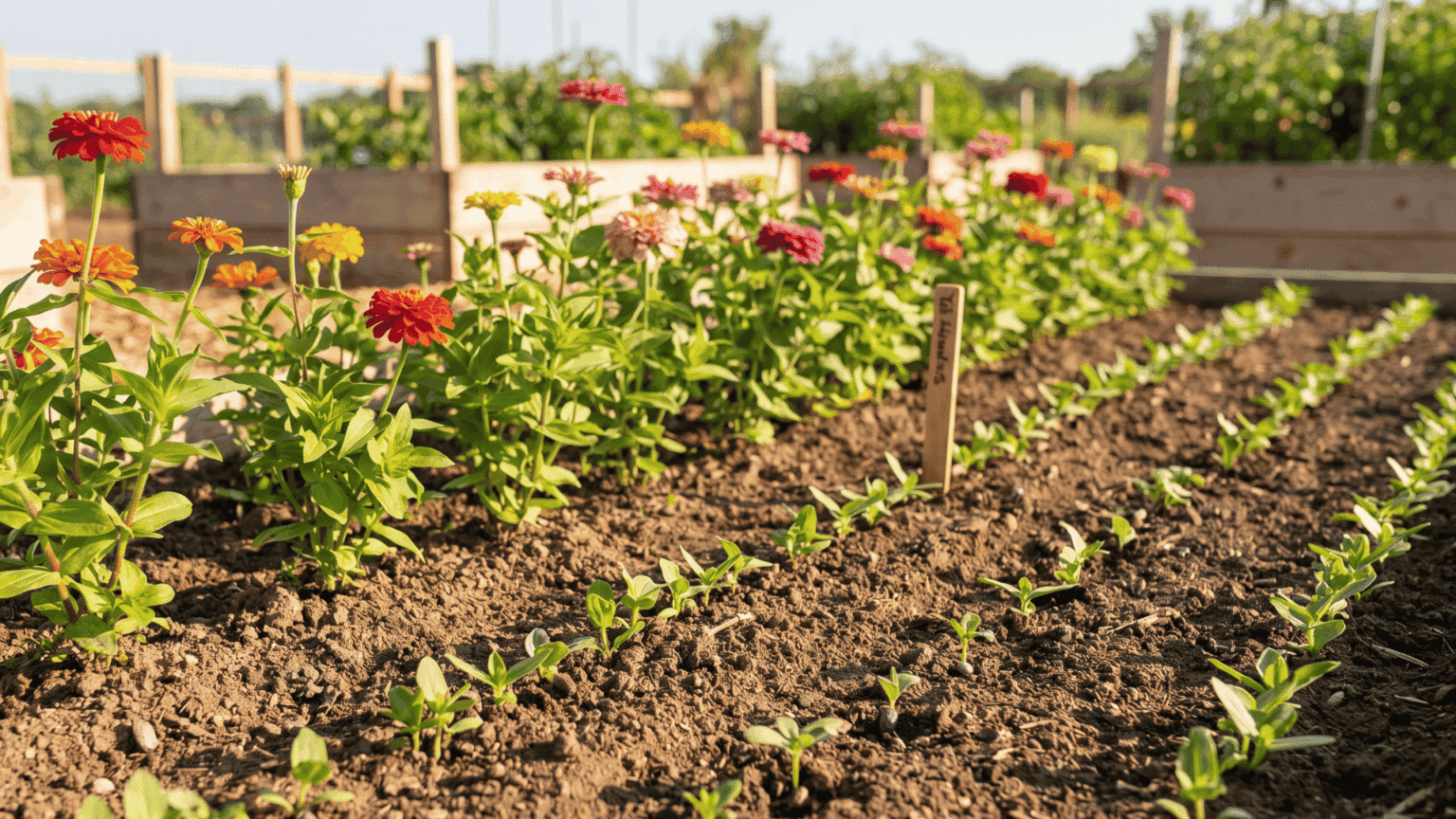
Many zinnia growing problems start long before the flowers bloom.
Poor germination, weak stems, and mildew issues are often caused by planting at the wrong time, using cold soil, or crowding seedlings too closely early on.
Planting zinnia seeds correctly can make a major difference in how evenly plants grow and flower through the season.
In many home gardens, seeds that fail are usually planted too deeply or watered too heavily during the first few days after sowing.
Zinnias are easy to grow, but they still respond best to the right spacing, warmth, and moisture levels. The steps below make the planting process simpler and more reliable.
Types of Zinnia Seeds
Zinnia seeds vary by plant size, bloom shape, and use. The right type depends on your garden space and how you want the flowers to grow.
| Type of Zinnia Seed | Best For | Key Growing Note |
|---|---|---|
| Dwarf Zinnia Seeds | Containers, borders, and small garden beds | Stay compact and need less spacing than taller types |
| Standard Zinnia Seeds | Garden beds and mixed flower borders | Grow taller than dwarf types and need room for airflow |
| Tall or Giant Zinnia Seeds | Large blooms and fuller garden displays | Need wider spacing for stem strength and flower growth |
| Cut Flower Zinnia Seeds | Vase flowers and regular cutting | Produce strong stems and steady blooms with proper care |
| Cactus Zinnia Seeds | Fuller, textured-looking blooms | Have narrow, twisted petals that add shape to flower beds |
| Pom-Pom Zinnia Seeds | Borders, containers, and compact spaces | Produce small, rounded blooms on tidy plants |
Choose compact types for small areas and taller types for larger beds. Good spacing helps each plant grow with better airflow and stronger blooms.
What Month Is Best to Sow Zinnia Seeds?
The best month to sow zinnia seeds depends on your local frost date. It also depends on when the soil starts feeling warm after winter.
In most gardens, zinnias grow best after the frost season has passed. Wait until the days feel warm and the soil is no longer cold.
Timing by USDA Zone
Use your USDA zone as a general guide, then adjust based on your local frost date.
- USDA zones 3–5: May to early June
- USDA zones 6–7: April to mid-May
- USDA zones 8–10: March onward
Containers follow the same timing rule as garden beds. Wait until the soil is no longer cold before planting, since cold soil can slow sprouting or cause seeds to rot.
Choosing the Right Spot
Zinnias need at least 6 hours of direct sunlight daily. Too much shade can lead to weak stems and fewer flowers.
Plant in loose, well-draining soil with compost mixed in. Avoid soggy areas because excess moisture can cause seeds to rot before sprouting.
How to Plant Zinnia Seeds: The Actual Steps
Moisten the soil first, plant seeds shallowly, space them properly, and water gently after sowing.
Warm soil, light coverage, and good airflow help zinnia seeds germinate evenly and grow into stronger plants.
Step 1: Moisten the Soil Before You Sow
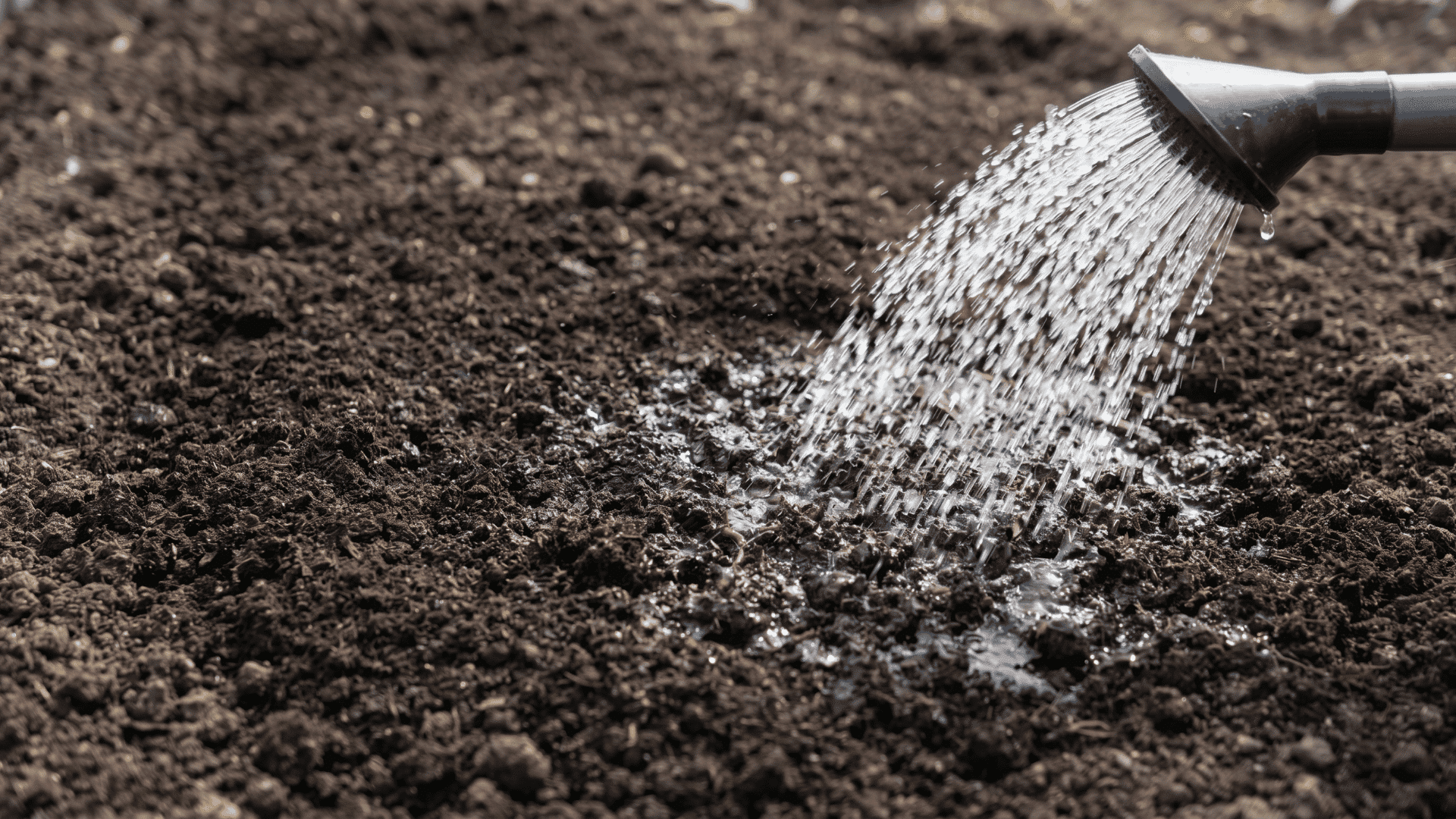
Water the planting area before sowing, so the seeds get moisture immediately after planting. The soil should feel evenly damp in the top few inches, not muddy or soaked.
Dry soil can delay germination and cause uneven sprouting across the bed. Adding compost also helps the soil hold moisture more evenly around the seeds.
Step 2: Choose Your Planting Method
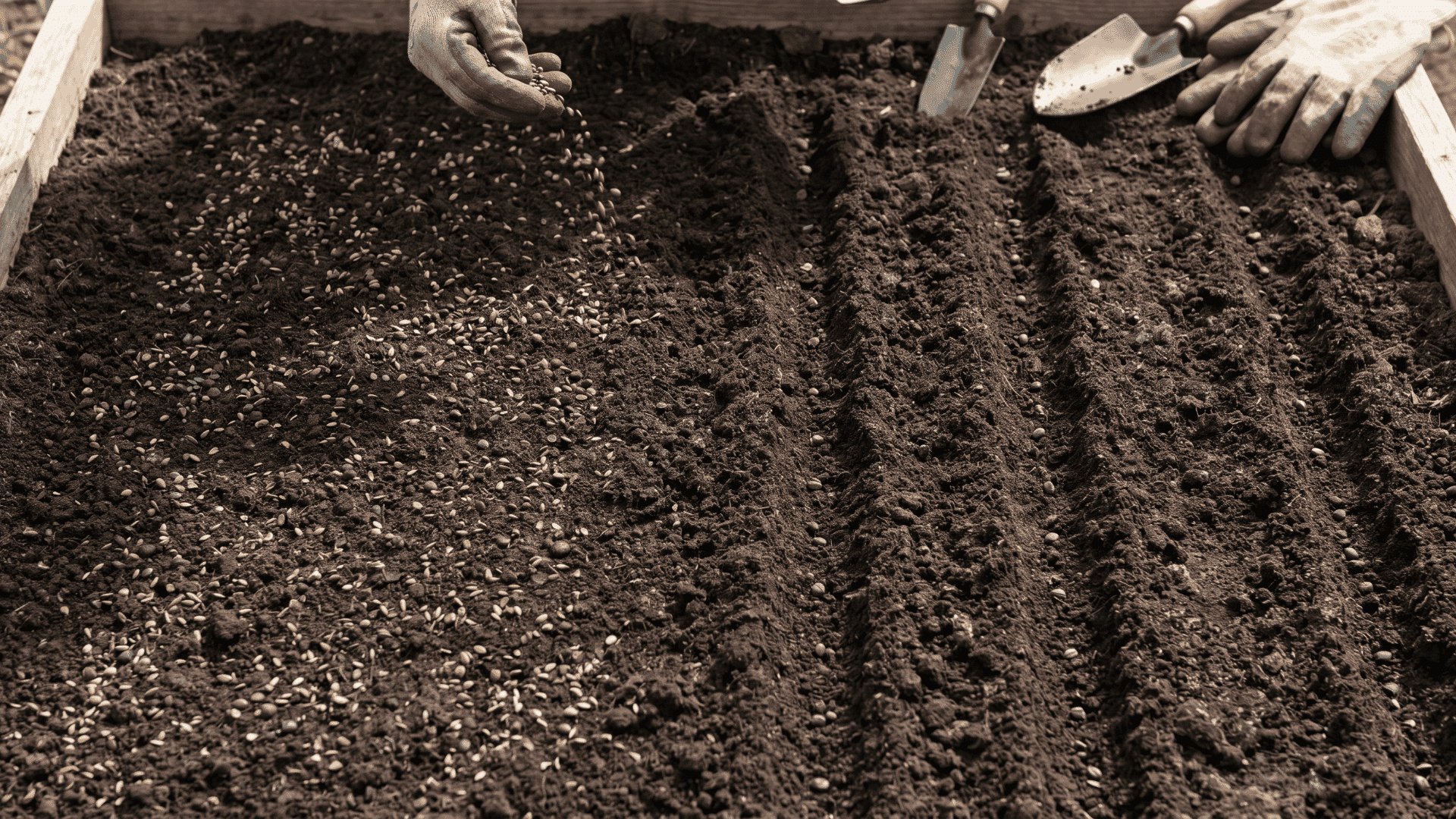
You can scatter zinnia seeds or place them individually in rows or containers. Both methods work well because soil contact and shallow depth matter more than the planting style itself.
Scatter planting works best for natural flower patches and large beds. For neater spacing, place 1–2 seeds per spot and lightly cover them with soil.
Step 3: Set Depth at ¼ Inch

Plant zinnia seeds about ¼ inch deep, similar to the depth of a fingernail pressed into loose soil. This depth gives seeds enough moisture while still allowing seedlings to reach sunlight easily.
Seeds planted too shallowly may dry out before rooting properly. Seeds planted deeper than ½ inch often fail because seedlings cannot push through the soil surface.
Step 4: Space With Disease Prevention in Mind
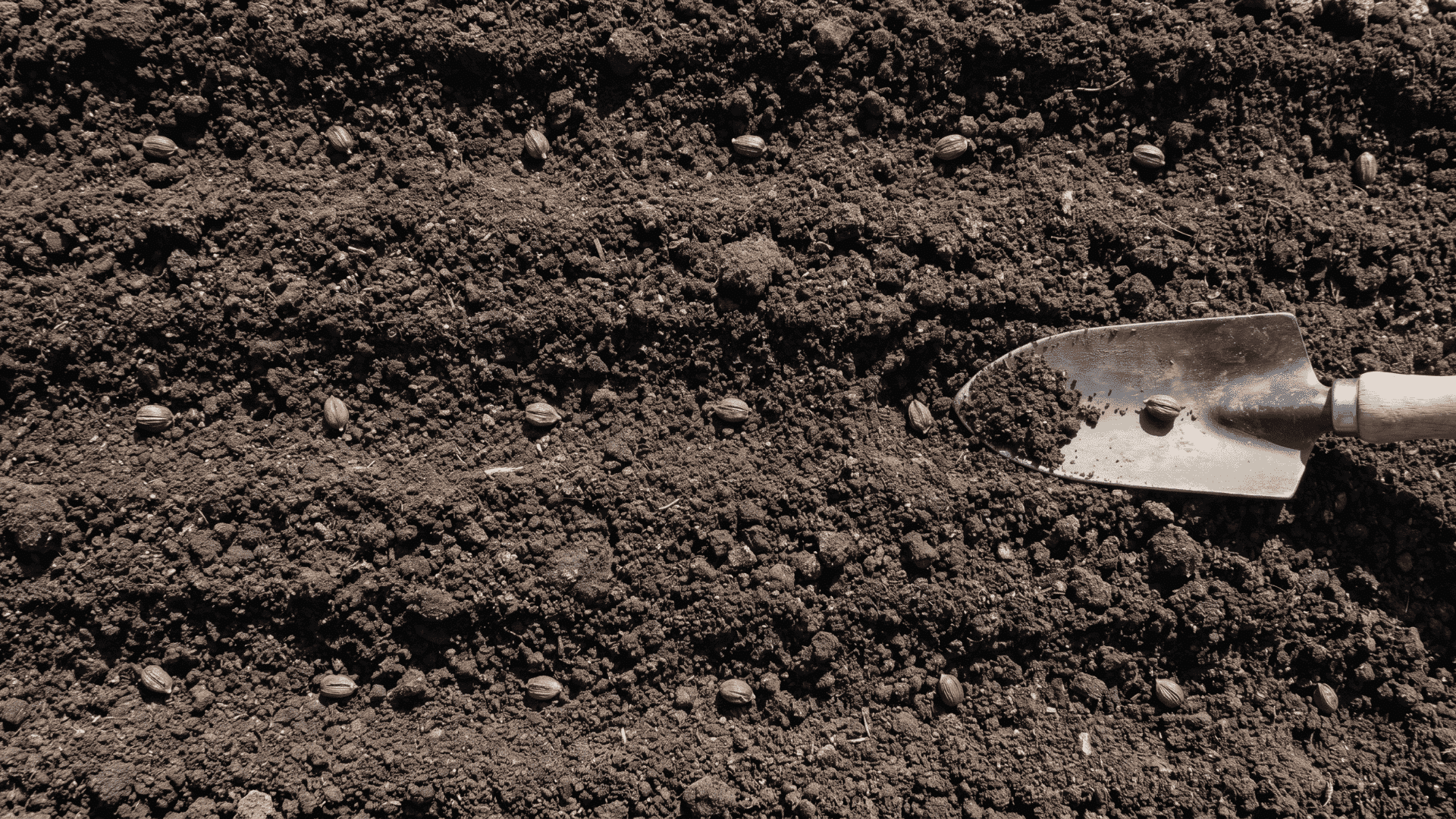
Crowded zinnias trap humidity around the leaves, which creates the right conditions for powdery mildew growth. As mildew spreads, plants lose healthy leaf surface area and produce fewer flowers over time.
Space plants based on variety size for better airflow and healthier growth. Dwarf varieties need about 6 inches, standard types 9–12 inches, and tall varieties 12–18 inches apart.
Step 5: Water in Gently After Sowing
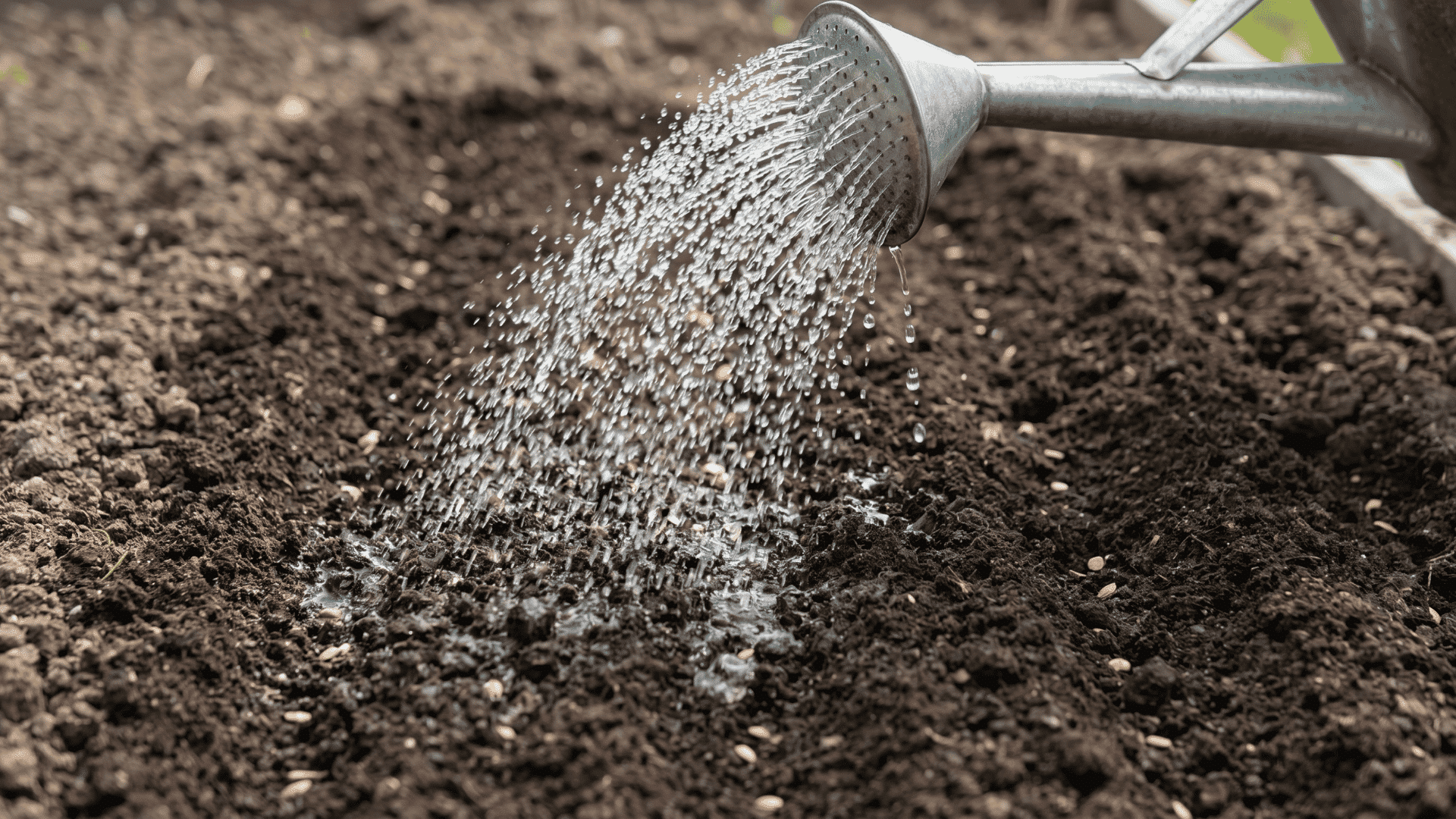
Water newly planted seeds with a mist setting or soft spray to keep seeds in place. Gentle watering settles the soil without exposing or washing seeds into crowded clumps.
The goal is lightly moist soil, not heavy saturation after planting. Too much water can shift seed depth and reduce even germination across the bed.
Start Indoors if Needed: Use peat pots since zinnia roots dislike transplant disturbance. Start seeds 4–6 weeks before the last frost and move them outside once the soil reaches 70°F.
Can I Just Sprinkle Zinnia Seeds?
Yes, you can sprinkle zinnia seeds over a garden bed. This works best for large beds, borders, or natural flower patches.
Still, the seeds need good soil contact to sprout well. Press them lightly into moist soil and cover them with about ¼ inch of loose soil.
After seedlings grow, thin crowded areas for better spacing. This helps improve airflow and gives each plant more room to bloom.
Tips to Keep Zinnia Plants Healthy After Planting
A few simple care steps can help zinnias grow stronger, stay healthier, and produce more flowers through the season.
- Keep Soil Moist During Germination
- Water Deeply Once Plants Mature
- Water at the Base to Keep Leaves Dry
- Thin Seedlings Early for Better Airflow
- Pinch Plants to Encourage More Blooms
- Deadhead Spent Flowers Regularly
Consistent watering, good airflow, and regular pruning help zinnias stay fuller and bloom more heavily all season long.
Why Planting Zinnia Seeds Fails and What to Do About It
Most zinnia problems come from simple planting or care mistakes. Fixing watering, spacing, sunlight, and planting depth usually improves growth quickly.
- Poor Germination: Cold soil or deep planting can stop seeds from sprouting.
- Seedlings Collapse: Overwatering may cause damping off near the soil line.
- Weak, Tall Plants: Too much shade leads to stretched stems and fewer blooms.
- Powdery Mildew: Crowded plants trap humidity around the leaves.
- Few Flowers: Skipping pinching can reduce branching and bloom production.
Good airflow, proper watering, and full sun help prevent most zinnia growing problems.
Common Planting Zinnia Seed Problems and Quick Fixes
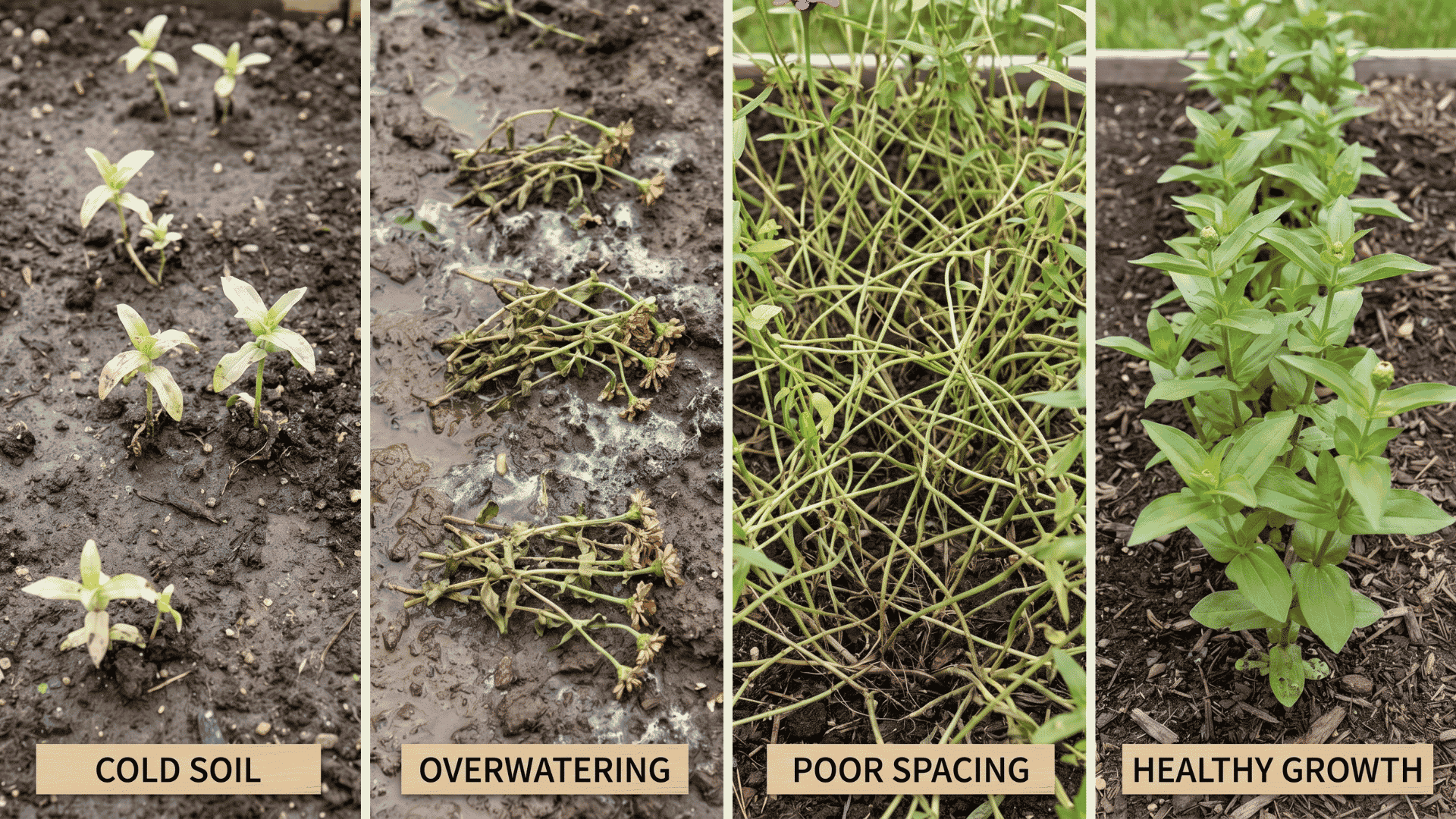
Most zinnia seed failures come from timing, watering, spacing, or planting depth rather than bad seeds.
Small growing mistakes are usually easy to fix once the cause is identified.
| Problem | Cause | Quick Fix |
|---|---|---|
| Seeds do not germinate | Cold soil or planting too deeply | Wait for soil temperatures near 70°F and plant seeds about ¼ inch deep |
| Seedlings collapse | Overwatering or poor drainage is causing damping off | Keep the soil lightly moist and improve drainage with compost |
| Plants grow tall and weak | Not enough direct sunlight | Move plants into full sun with at least 6 hours of light |
| Powdery mildew appears | Plants spaced too closely | Improve airflow and avoid wetting the leaves during watering |
| Healthy plants have few blooms | Pinching was skipped early | Pinch plants at 6–8 inches tall to encourage branching |
Crowded plants trap humidity and reduce blooming. Proper spacing and watering help zinnias stay healthy longer.
Conclusion
Growing zinnias from seed becomes much easier when timing, soil warmth, spacing, and watering are handled correctly.
Planting zinnia seeds properly can help prevent weak growth, poor germination, and common fungal problems before they begin.
Simple steps like shallow planting, proper airflow, and regular deadheading can lead to fuller plants and longer-lasting blooms through the season.
Whether planted in garden beds or containers, zinnias reward consistent care with bright and steady color.
Start planting at the right time and enjoy healthier blooms all season long. Share your favorite zinnia growing tips in the comments below.
Frequently Asked Questions
Can Zinnias Survive Heavy Rain or Extreme Heat?
Zinnias handle heat well once established, but heavy rain and constant humidity can increase powdery mildew and stem damage in crowded plantings.
Should Zinnia Seeds Be Soaked Before Planting?
Zinnia seeds do not usually need soaking because they germinate quickly in warm, moist soil with proper planting depth and good soil contact.
How Often Should Zinnias Be Watered in Hot Weather?
Zinnias usually need deep watering every few days during extreme heat, especially in containers or fast-draining soil that dries quickly.