
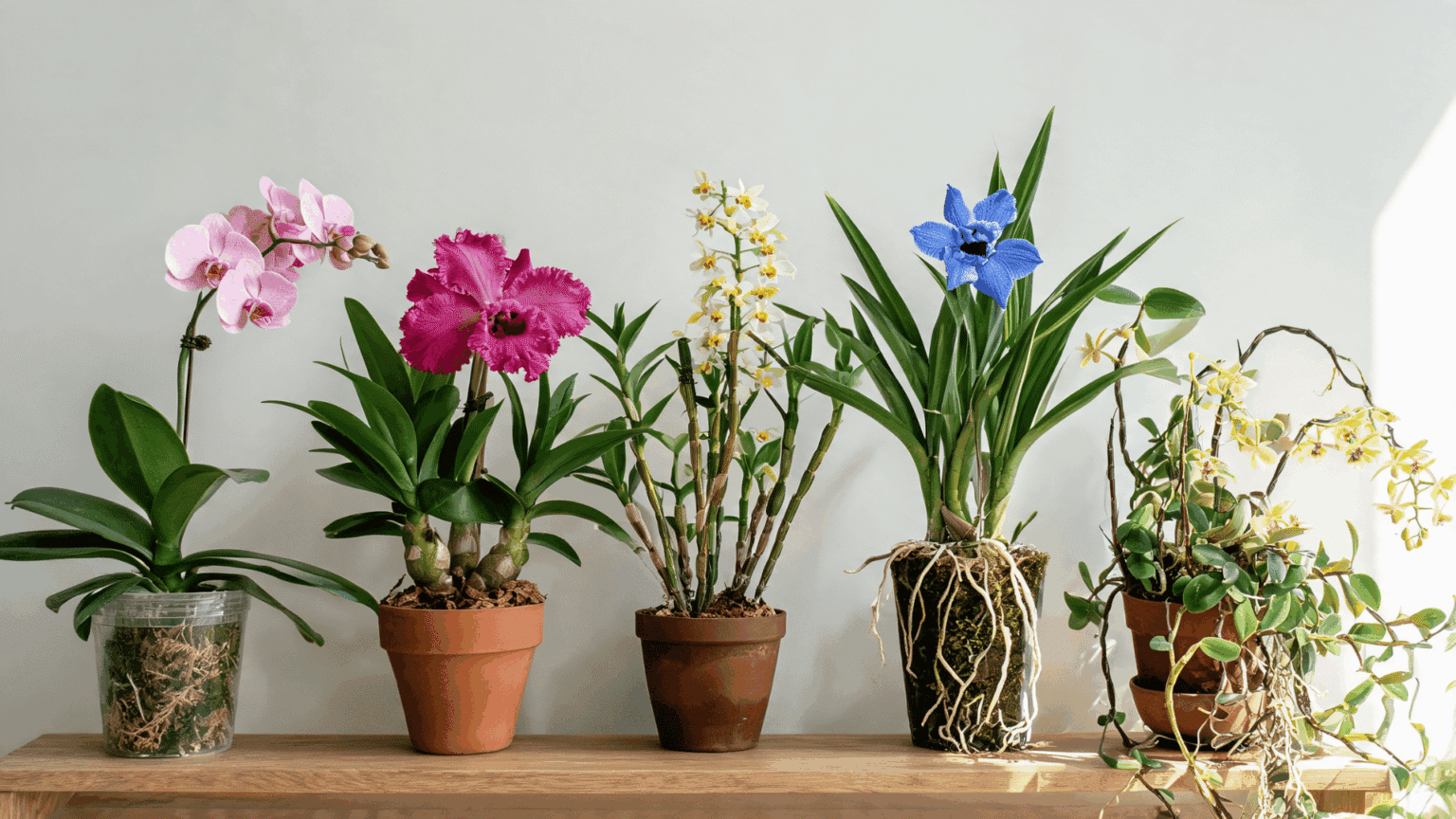
Walk into any nursery, and orchids all start to look the same. That’s why knowing common orchid names makes such a difference.
Once you can tell one type apart, choosing gets easier.
Some orchids grow on tree bark and draw moisture from the air, while others root in soil and have different needs.
Flower shape, leaf pattern, and root type indicate what an orchid needs to thrive indoors, and small differences here often determine how well a plant settles in.
Here are some of the popular orchid types, from moth orchids to vanilla orchids, covering how each looks, grows, and blooms, plus which suit beginners.
How Are Orchid Types Classified?
Orchid types are mainly classified by how they grow in their natural habitat. This system explains their root structure, moisture needs, and the best potting method for healthy growth.
- Epiphytic orchids: They grow on tree bark or branches, using thick, exposed roots to absorb moisture from the surrounding air and rain.
- Terrestrial orchids: They grow in soil or leaf litter, with finer roots that prefer steady moisture and a nutrient-rich growing mix.
- Semi-terrestrial orchids: These grow near rocks or soil edges, combining exposed and soil-based roots that tolerate short periods of drying.
Knowing an orchid’s growth type makes care easier. It helps growers select the right potting mix, watering schedule, airflow, and moisture level, while reducing the risk of root rot or dehydration during routine care.
Common Orchid Names & Types
Orchids come in a wide variety with distinct flowers, colors, and growth habits. Common orchid names make it easier to identify popular types.
From moth orchids to vanilla orchids, different varieties offer standout blooms and care needs. Below are common orchid types and their key features:
1. Phalaenopsis Orchid (Moth Orchid)
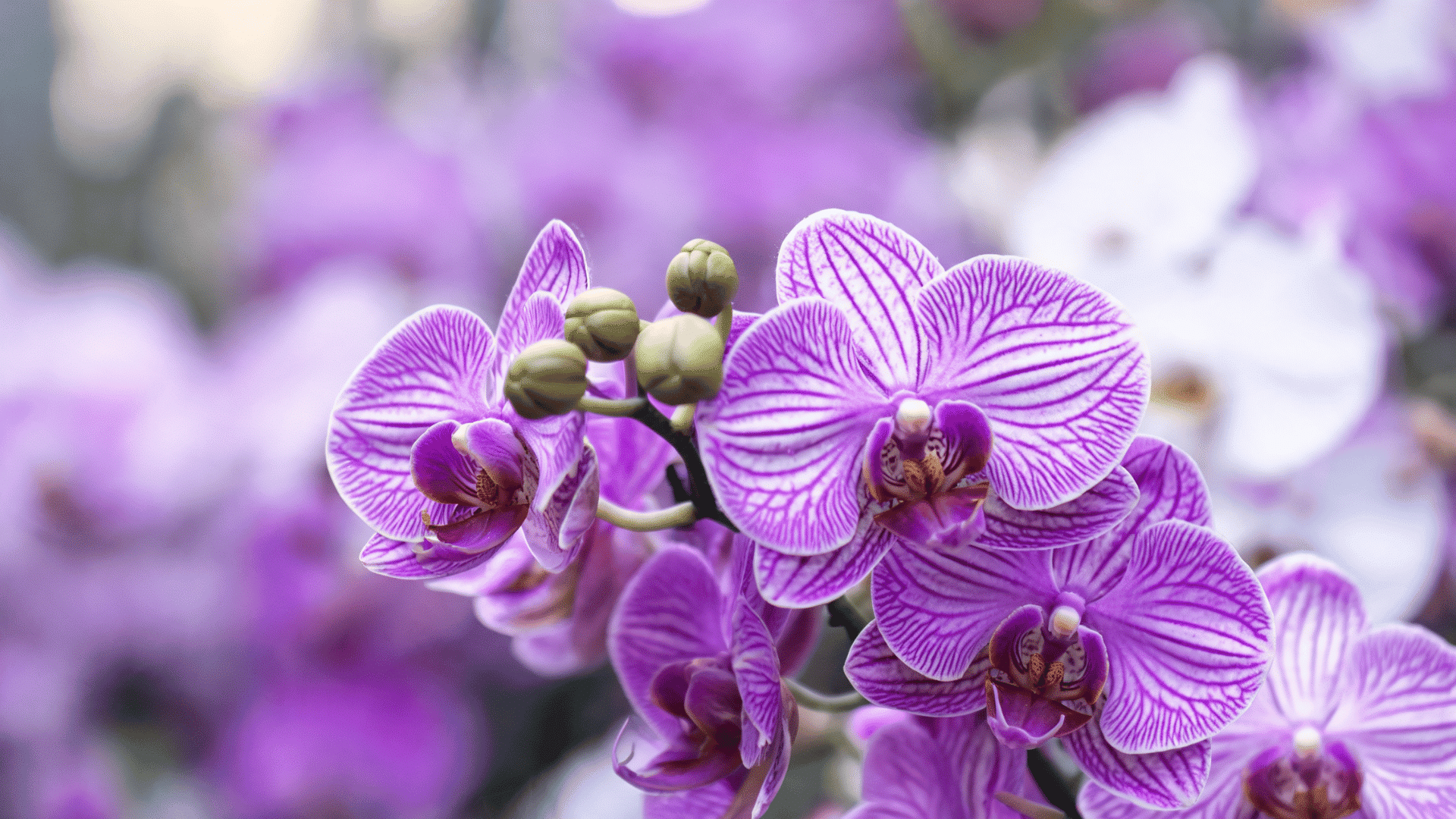
Phalaenopsis orchids are one of the most popular indoor orchid varieties because they are easy to grow and produce long-lasting flowers.
Their butterfly-like blooms appear on tall flower spikes and are available in shades of white, pink, purple, yellow, and patterned varieties.
These orchids prefer lower to moderate indirect light and are a good choice for beginners. Their reliable blooming habit makes them one of the most common orchids found in homes.
2. Cattleya Orchid (Corsage Orchid)
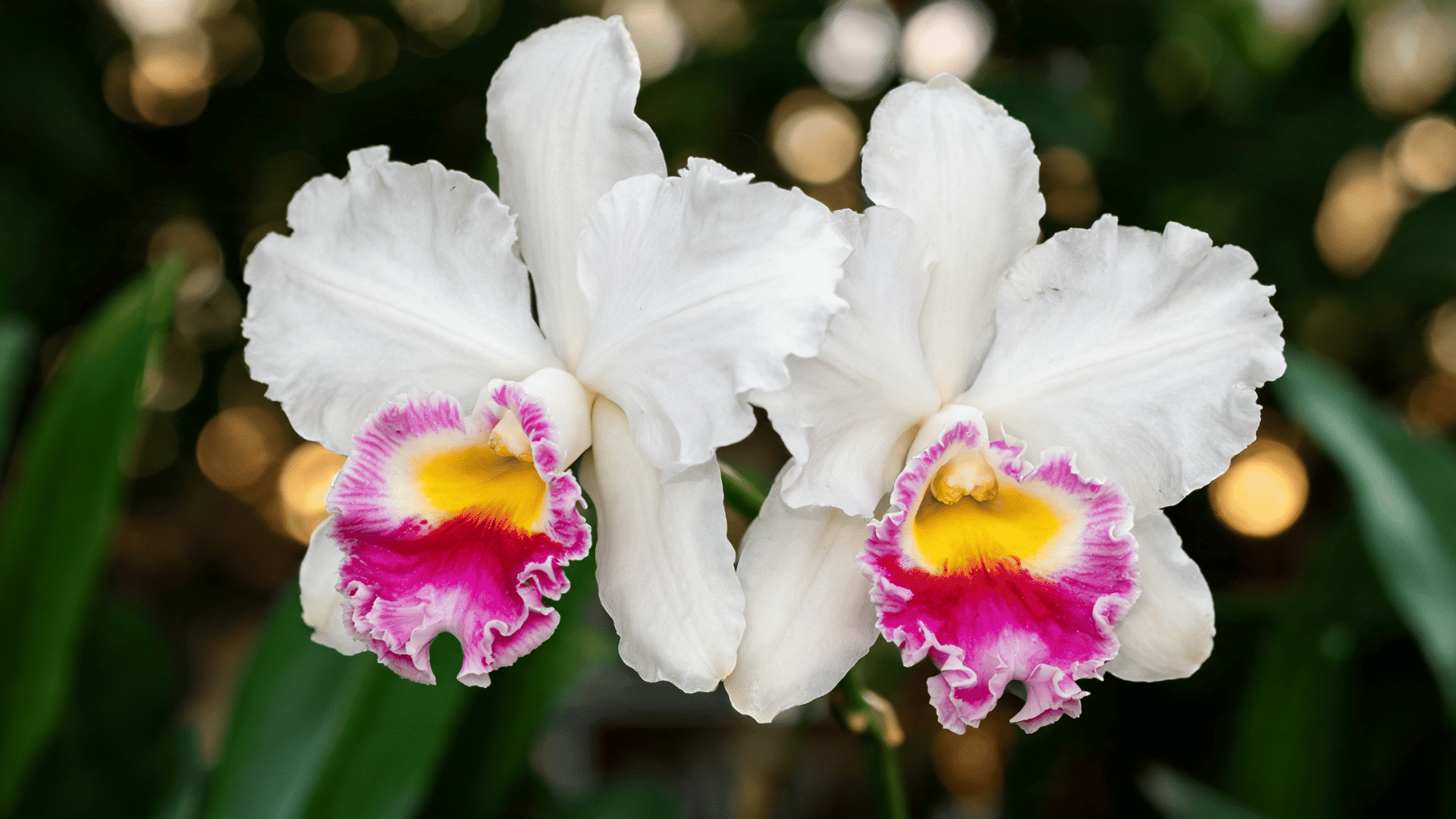
Cattleya orchids are popular for their large, colorful, and fragrant flowers. They are often called corsage orchids because of their showy blooms.
Their flowers appear in bold shades like purple, pink, white, and yellow, creating an attractive display in orchid collections.
Cattleya orchids prefer brighter indirect light and are a good choice for growers who want large, decorative blooms.
3. Dendrobium Orchid
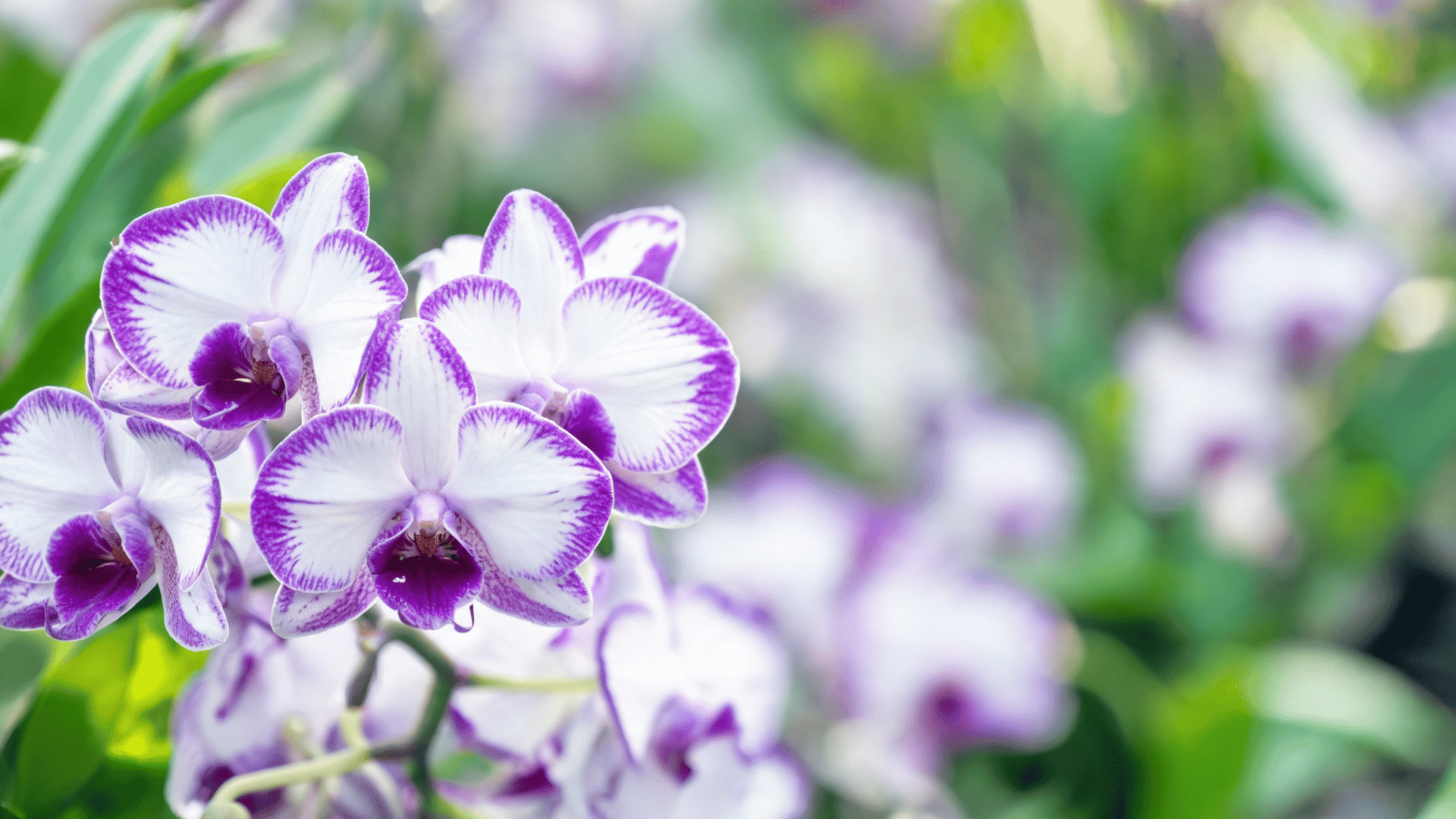
Dendrobium orchids are among the largest orchid groups, with a wide variety of varieties that differ in flower shape, size, and growing preferences.
Their flowers usually grow along tall stems, creating an attractive display when in bloom.
Different Dendrobium varieties may have different temperature and care needs. They are popular among orchid growers because many types produce long-lasting flowers.
4. Cymbidium Orchid (Boat Orchid)
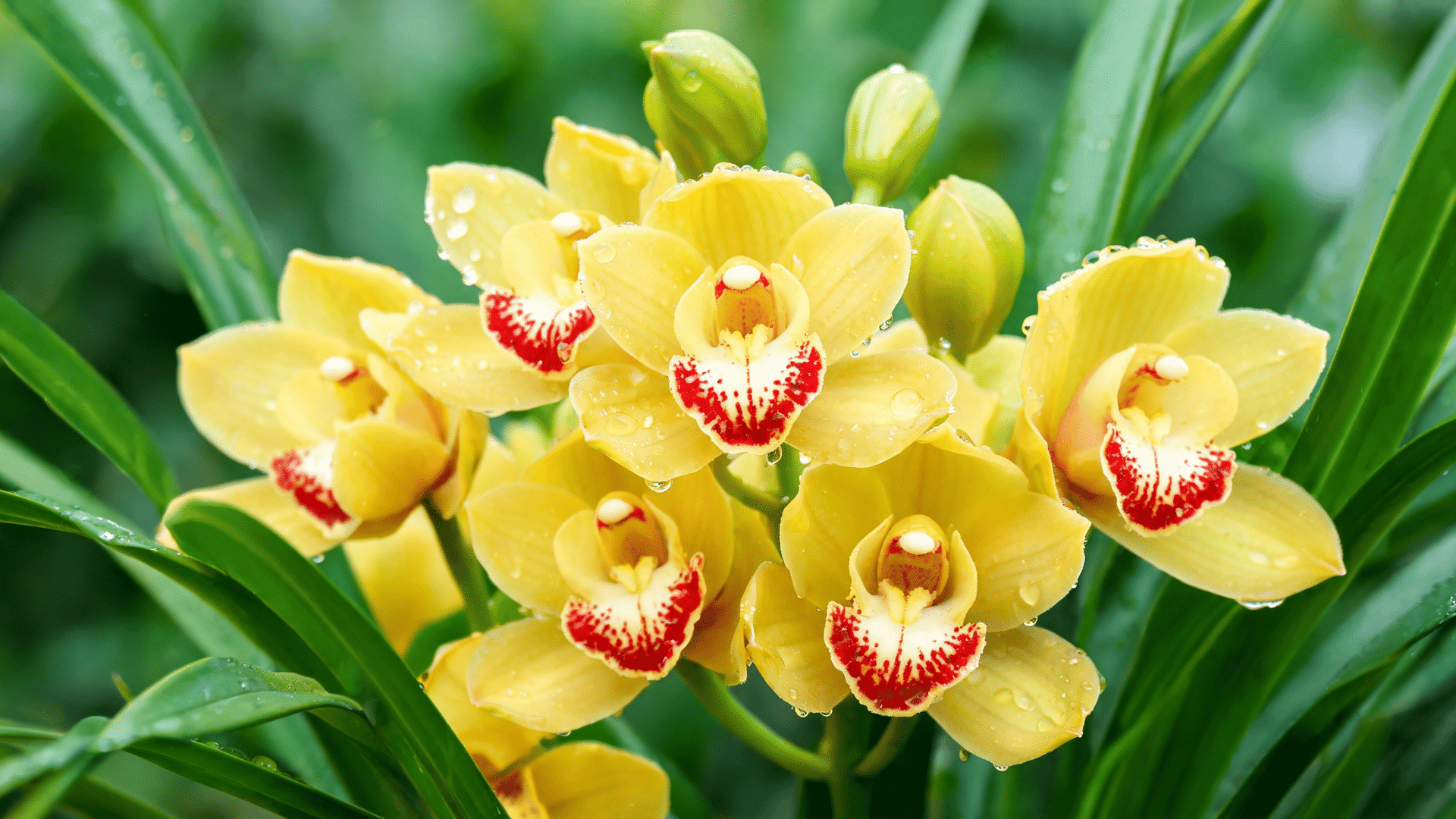
Cymbidium orchids are recognized by their tall flower spikes, long leaves, and clusters of blooms.
They can produce several flowers at once and are commonly used as cut flowers for their long-lasting appearance.
These orchids produce flowers in colors such as white, pink, green, yellow, and purple. They prefer cooler growing conditions compared with many tropical orchid varieties.
5. Paphiopedilum Orchid (Lady’s Slipper Orchid)
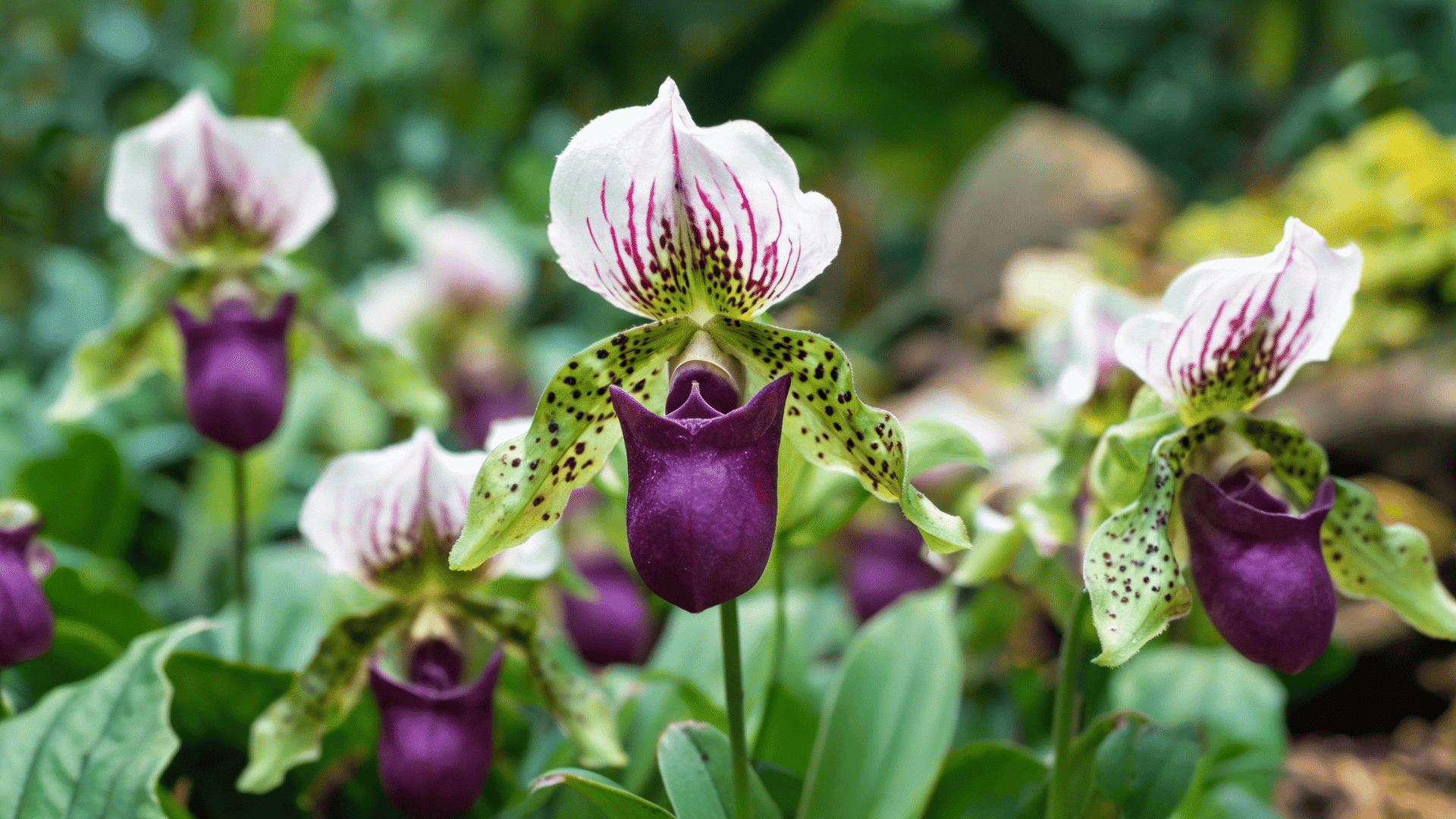
Paphiopedilum orchids are easily identified by their pouch-shaped flowers, which give them the common name lady’s slipper orchid. Their blooms often feature unique patterns, stripes, and spots.
They perform well in lower light conditions and are suitable for indoor spaces with limited sunlight. Their unusual flower shape makes them a favorite among orchid collectors.
6. Oncidium Orchid (Dancing Lady Orchid)
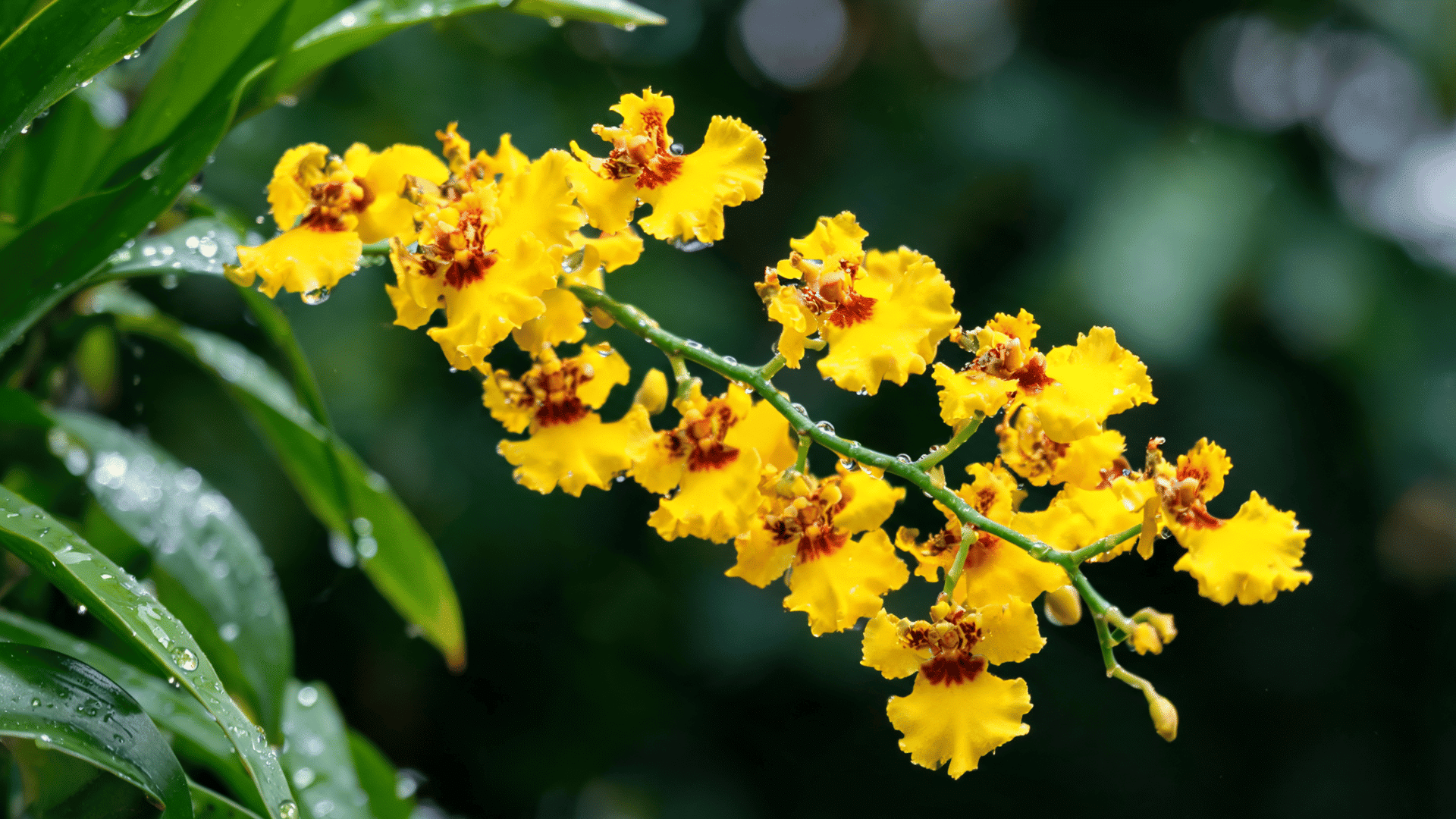
Oncidium orchids produce small flowers arranged on branching sprays. Their blooms often feature yellow and brown patterns and are named “dancing lady orchids” for their unique appearance.
These orchids can produce many flowers at once, creating a bright and decorative display. They are a good choice for growers who enjoy orchids with abundant blooms.
7. Vanda Orchid
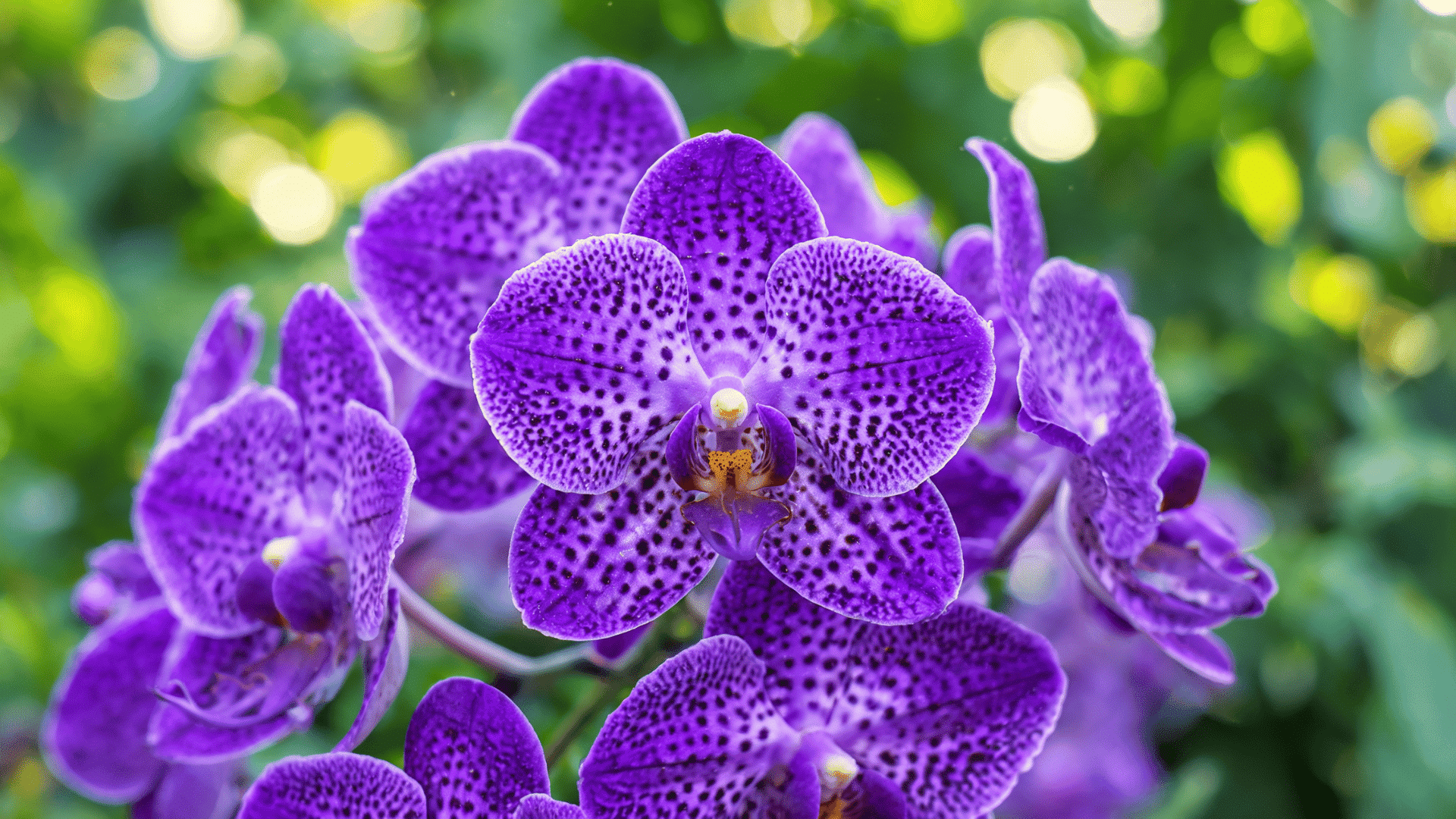
Vanda orchids are known for their vibrant flowers, exposed aerial roots, and striking appearance.
Their large blooms come in bright colors and often feature interesting patterns.
These orchids require brighter light and higher humidity than the more common indoor varieties, so they reward the same warm, humid care that other tropical houseplants prefer.
8. Zygopetalum Orchid
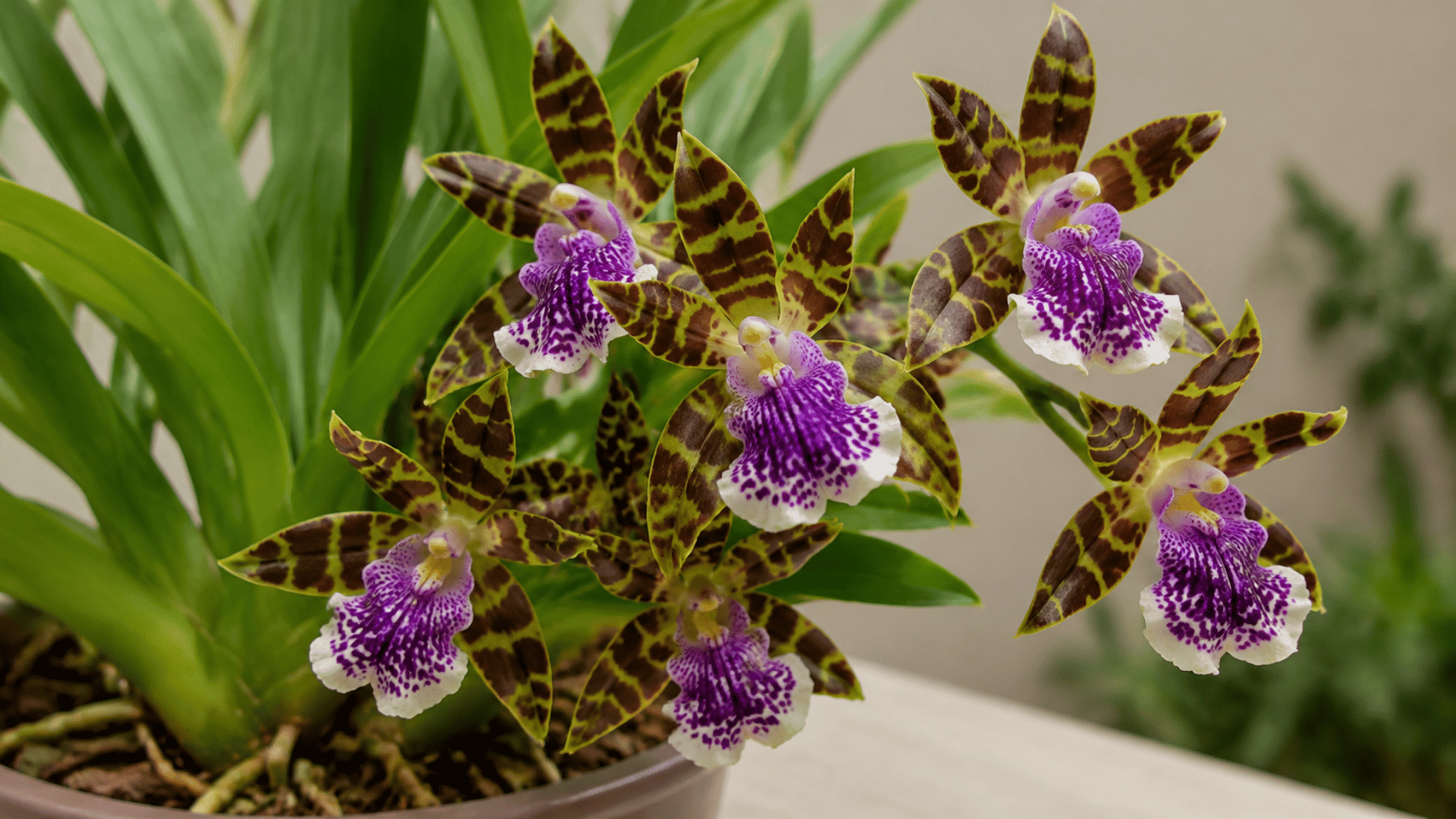
Zygopetalum orchids are popular for their strong fragrance and colorful flowers.
Their blooms often feature combinations of green, purple, white, and brown shades with attractive markings.
They prefer consistent moisture and suitable humidity levels. These orchids are a good option for growers who want a scented flowering plant.
9. Miltonia Orchid (Pansy Orchid)
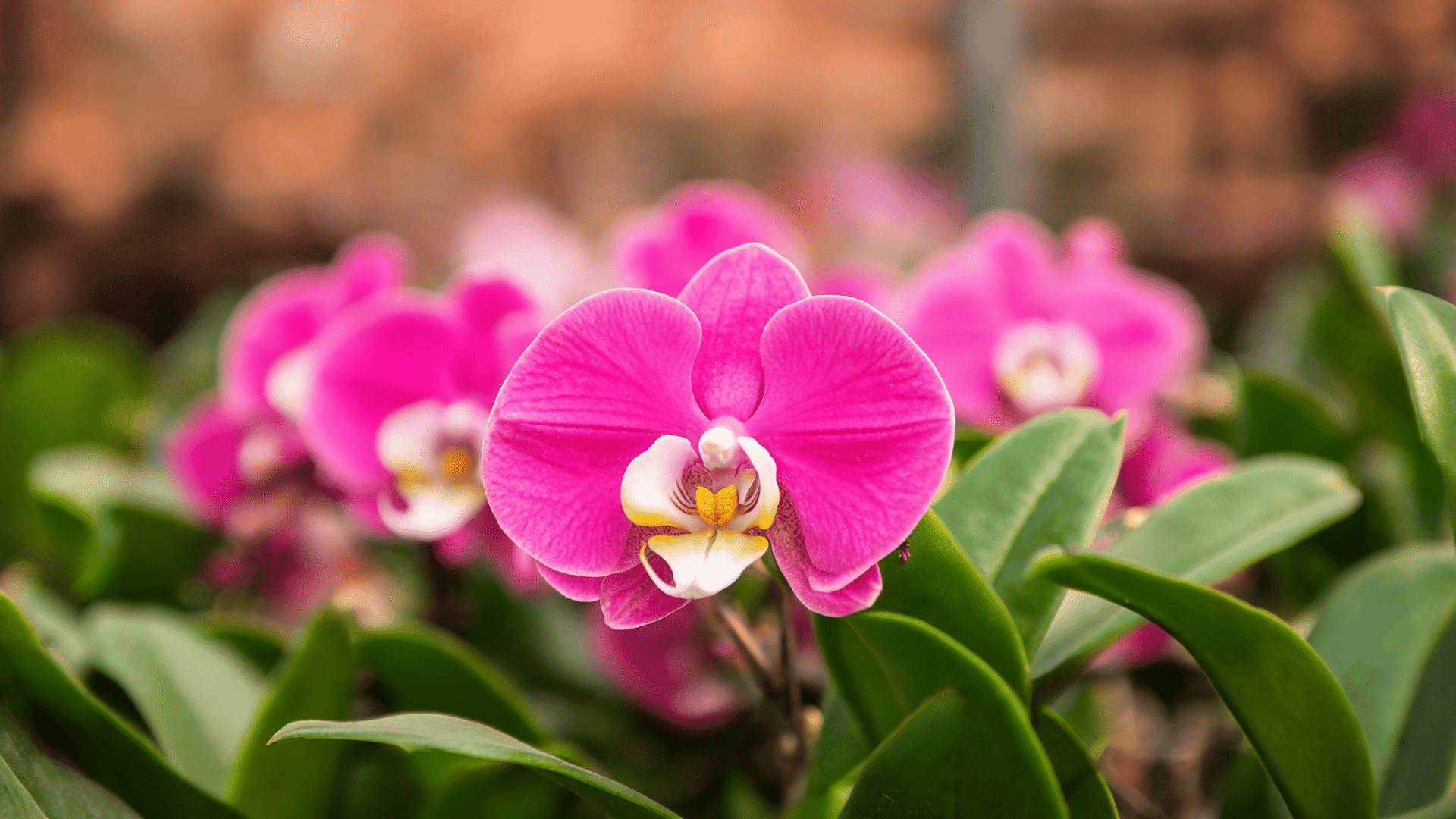
Miltonia orchids are called pansy orchids because their flat flowers resemble garden pansies. Their colorful blooms often feature attractive patterns and soft color combinations.
They prefer moderate temperatures and humidity to maintain healthy growth. Their decorative flowers make them a popular choice for indoor orchid collections.
10. Ludisia Orchid (Jewel Orchid)
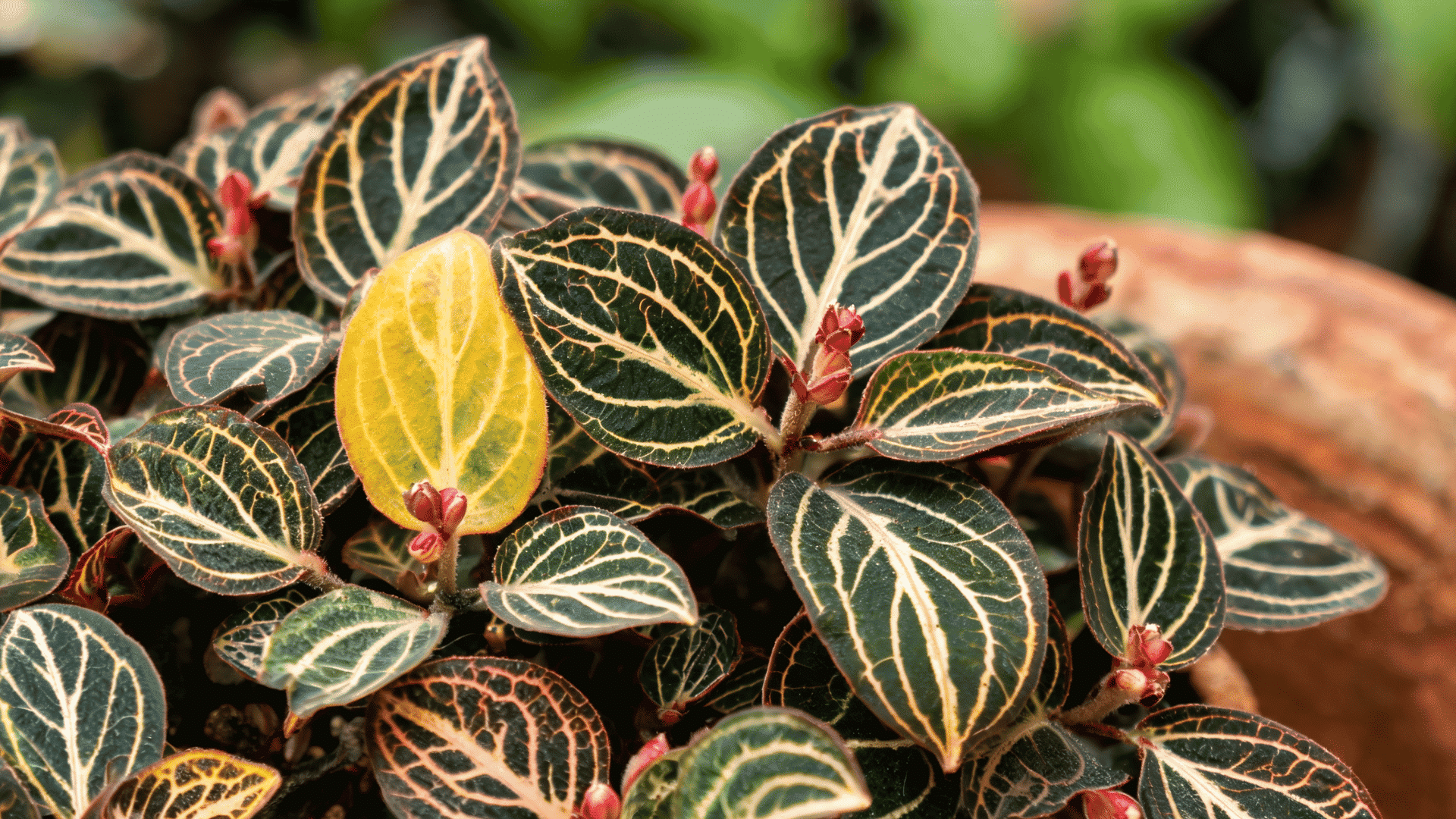
Ludisia orchids are mainly grown for their decorative foliage rather than their flowers. Their dark, velvet-like leaves often have colorful veins that create a unique appearance.
They are considered easier to grow indoors compared with many other orchids. Small white flowers appear on upright spikes, adding extra interest to the plant.
11. Phragmipedium Orchid
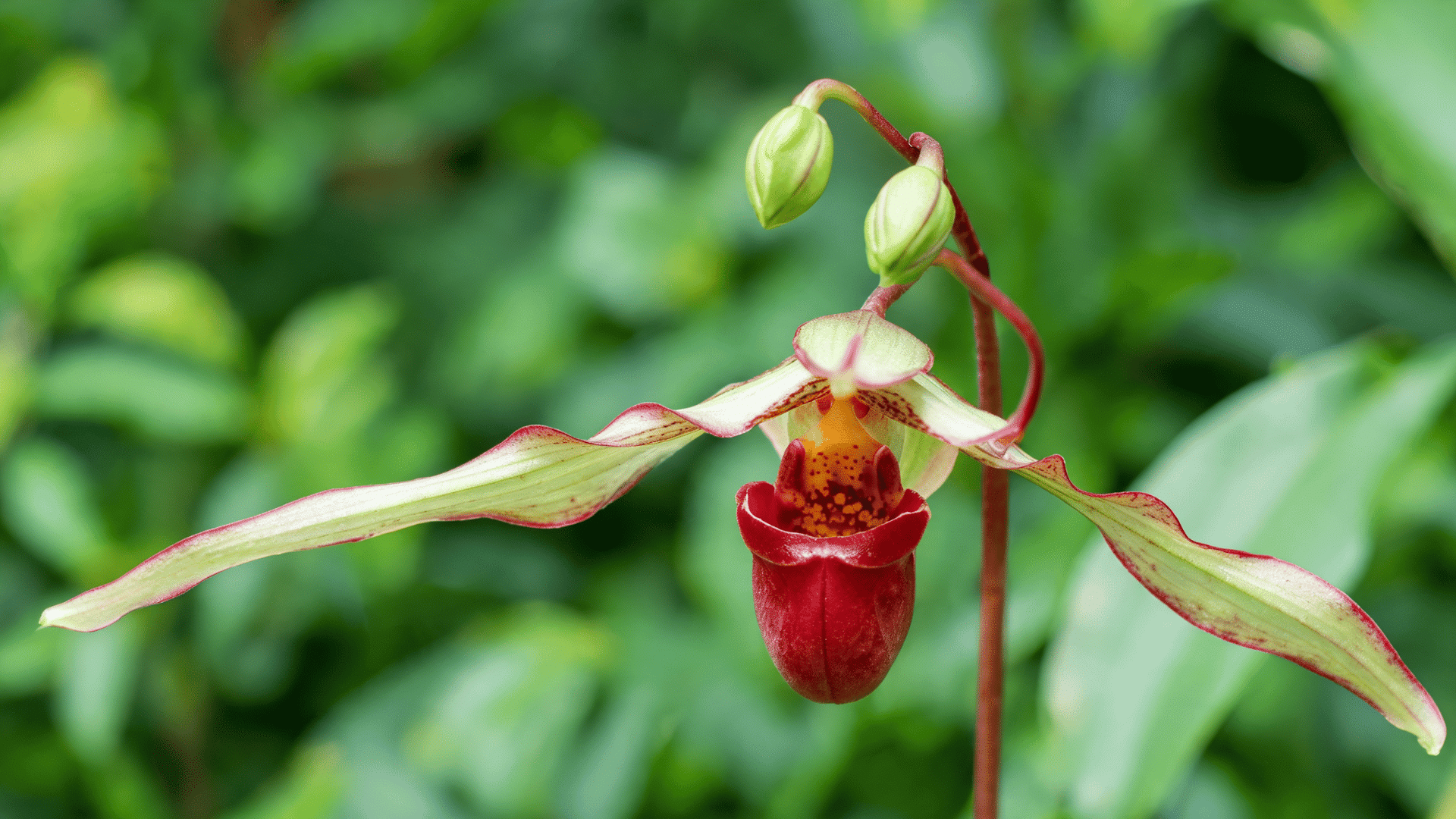
Phragmipedium orchids belong to the lady’s slipper orchid group and are recognized by their pouch-like lower petals. Their unusual flowers come in colors such as green, pink, orange, red, and yellow.
These orchids need consistent moisture to grow well. Their distinctive flower shape makes them appealing to growers looking for unique orchid varieties.
12. Brassia Orchid (Spider Orchid)
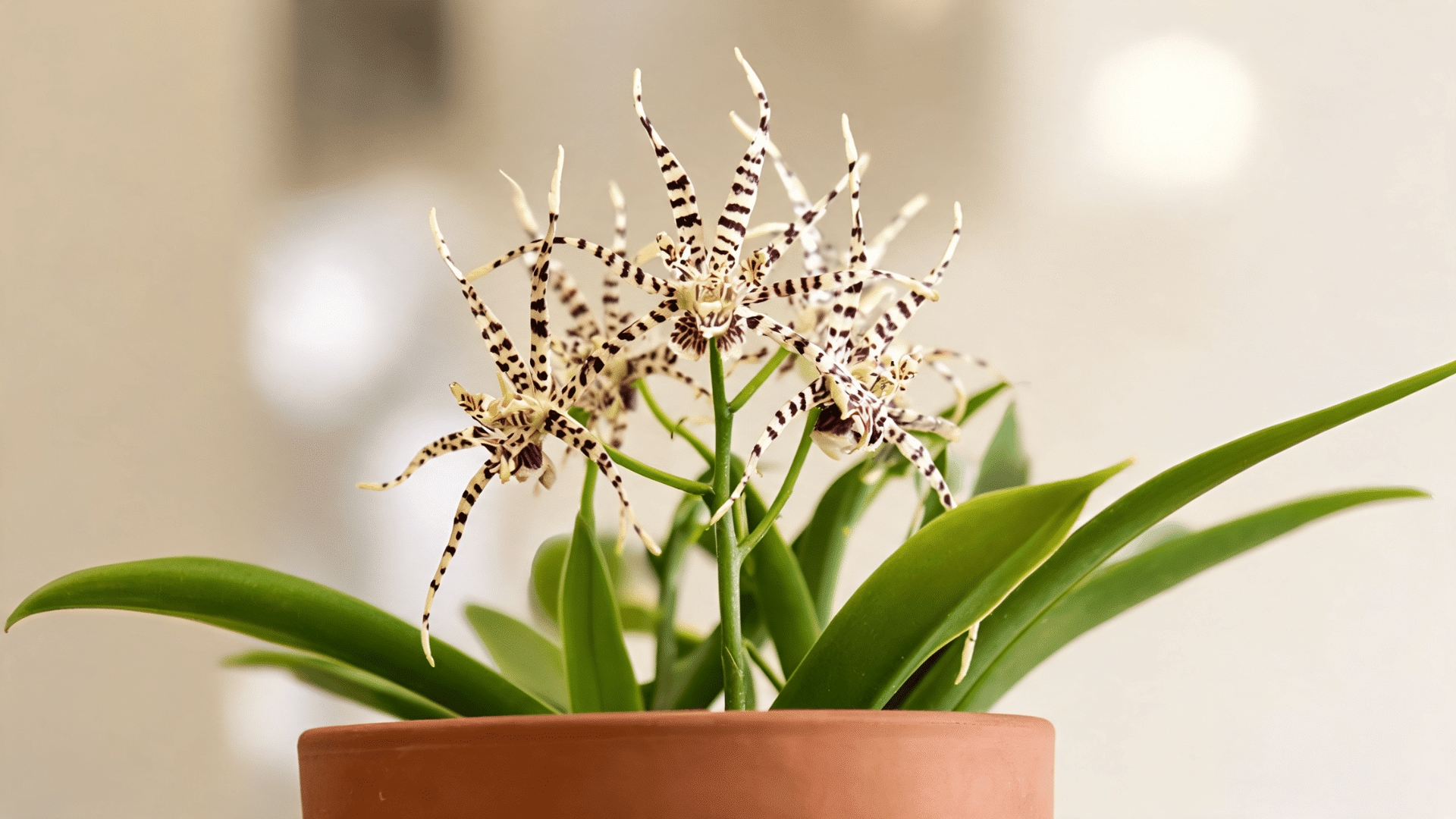
Brassia orchids are known as spider orchids because of their long, narrow petals that create a spider-like appearance. Their star-shaped flowers often feature spots or stripes.
They are a popular choice for growers who want an orchid with an unusual flower structure. Their unique blooms make them different from more traditional orchid varieties.
13. Masdevallia Orchid
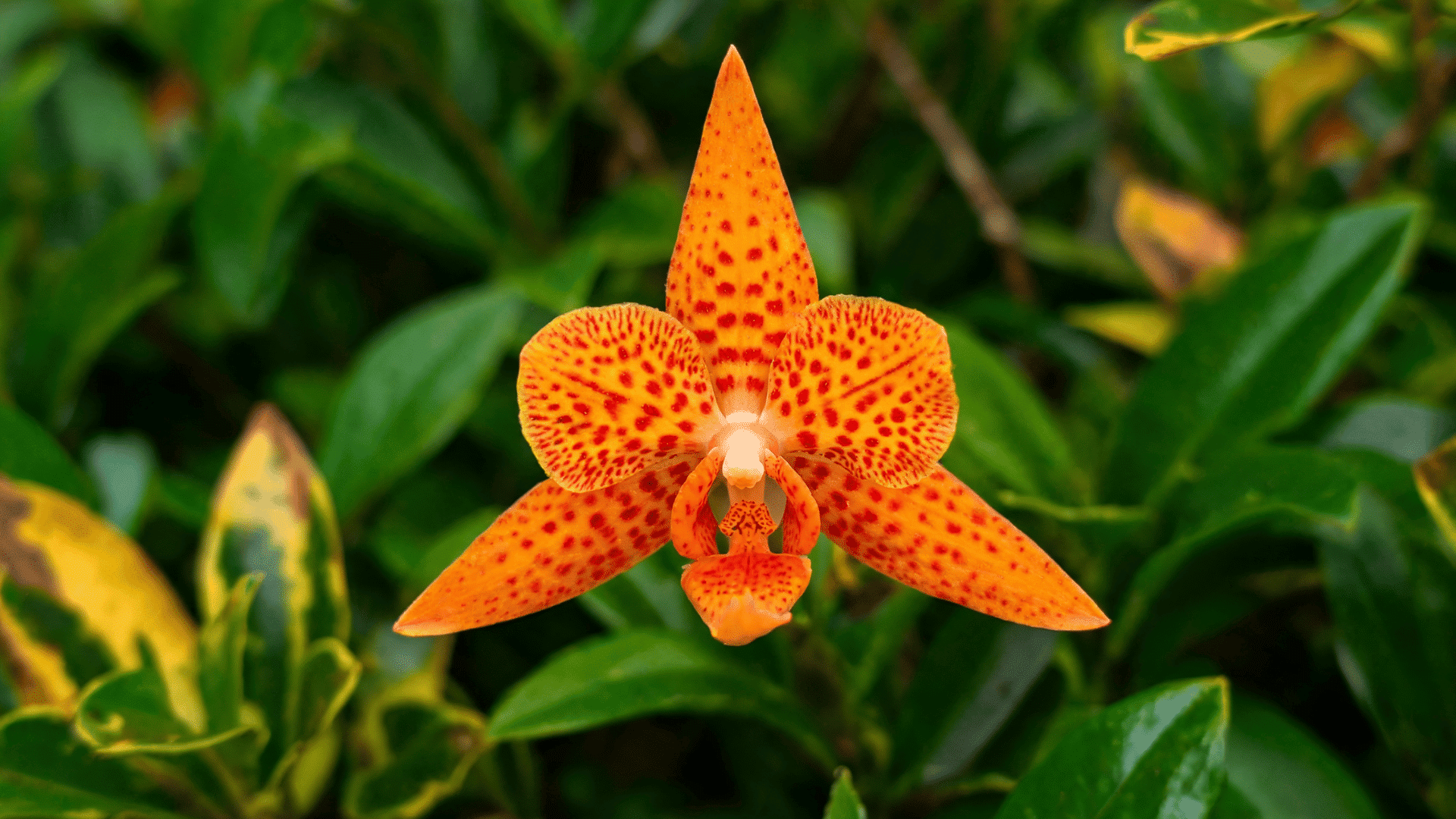
Masdevallia orchids are known for their unusual triangular flowers and bright colors. Their unique shapes make them popular among orchid collectors and enthusiasts.
These orchids prefer cooler temperatures and stable growing conditions. They are best suited for growers who can provide a consistent environment.
14. Vanilla Orchid
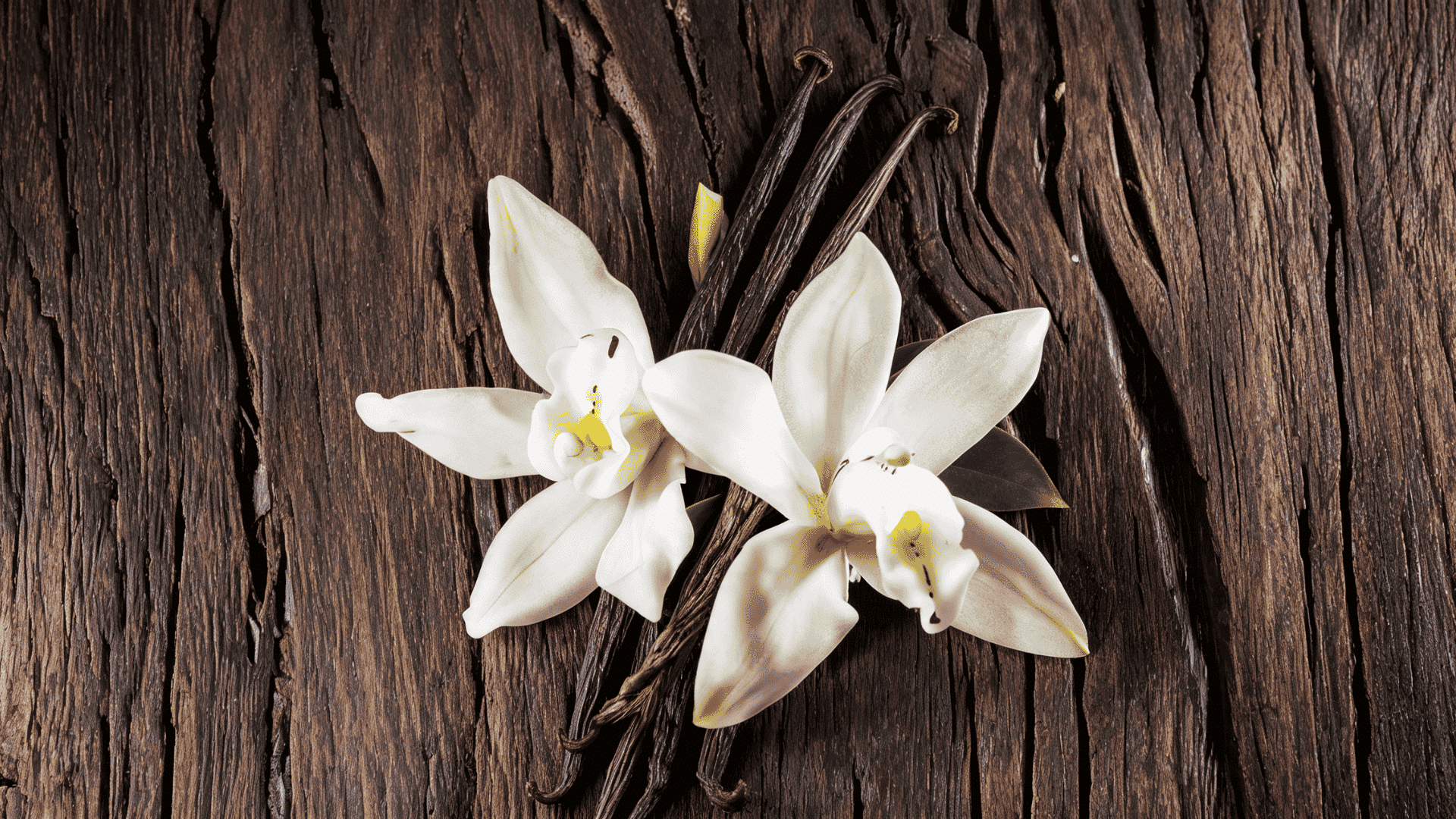
Vanilla orchids are famous for producing vanilla pods used for flavoring. Unlike many decorative orchids, this variety grows as a climbing vine with long stems.
They require warm, humid conditions and support for their climbing growth habit. Their connection to vanilla production makes them one of the most recognizable orchid species.
Which Orchid Types Are Best for Beginners?
Phalaenopsis orchids, also called moth orchids, are considered the best orchids for beginners.
They adapt well to indoor conditions, bloom for several weeks, and tolerate minor care mistakes better than wide varieties.
- Phalaenopsis orchids: Easy to find, long-blooming, and suitable for bright, indirect light.
- Dendrobium orchids: Produce colorful flowers on tall stems and grow well with consistent light and watering.
- Paphiopedilum orchids: Prefer cooler temperatures, filtered light, and slightly moist growing media.
- Oncidium orchids: Develop sprays of small flowers and need good airflow with regular moisture.
Beginner-friendly orchids still require proper drainage, suitable light, and careful watering, and many growers rely on bottom watering to keep roots moist without leaving them soggy.
Conclusion
Learning orchid names makes it easier to understand how each variety grows and what care it needs. Every orchid has its own preferences for light, water, airflow, temperature, and potting material.
Matching those needs to your home supports stronger roots, healthier leaves, and longer-lasting blooms.
Beginners should start with an easy-care orchid and learn how to read signs such as wrinkled leaves, pale foliage, or damaged roots.
As experience grows, choosing and caring for different orchid types becomes much simpler.
Already growing orchids? Share which type is your favorite in the comments below.
Frequently Asked Questions
Are Orchids Toxic to Pets Like Cats and Dogs?
Most orchids are non-toxic to pets, making them a safer choice for houseplants. Chewing leaves or flowers may still cause mild stomach upset.
How Long Can an Orchid Plant Live with Proper Care?
With good care, orchid plants can live for decades, blooming year after year. Some collectors even pass them down for generations.
Can Orchids Be Grown Outdoors Instead of Indoors?
Some orchid types can grow outdoors in warm, humid climates, as in their natural habitat. In cooler regions, most suit indoor growing better.