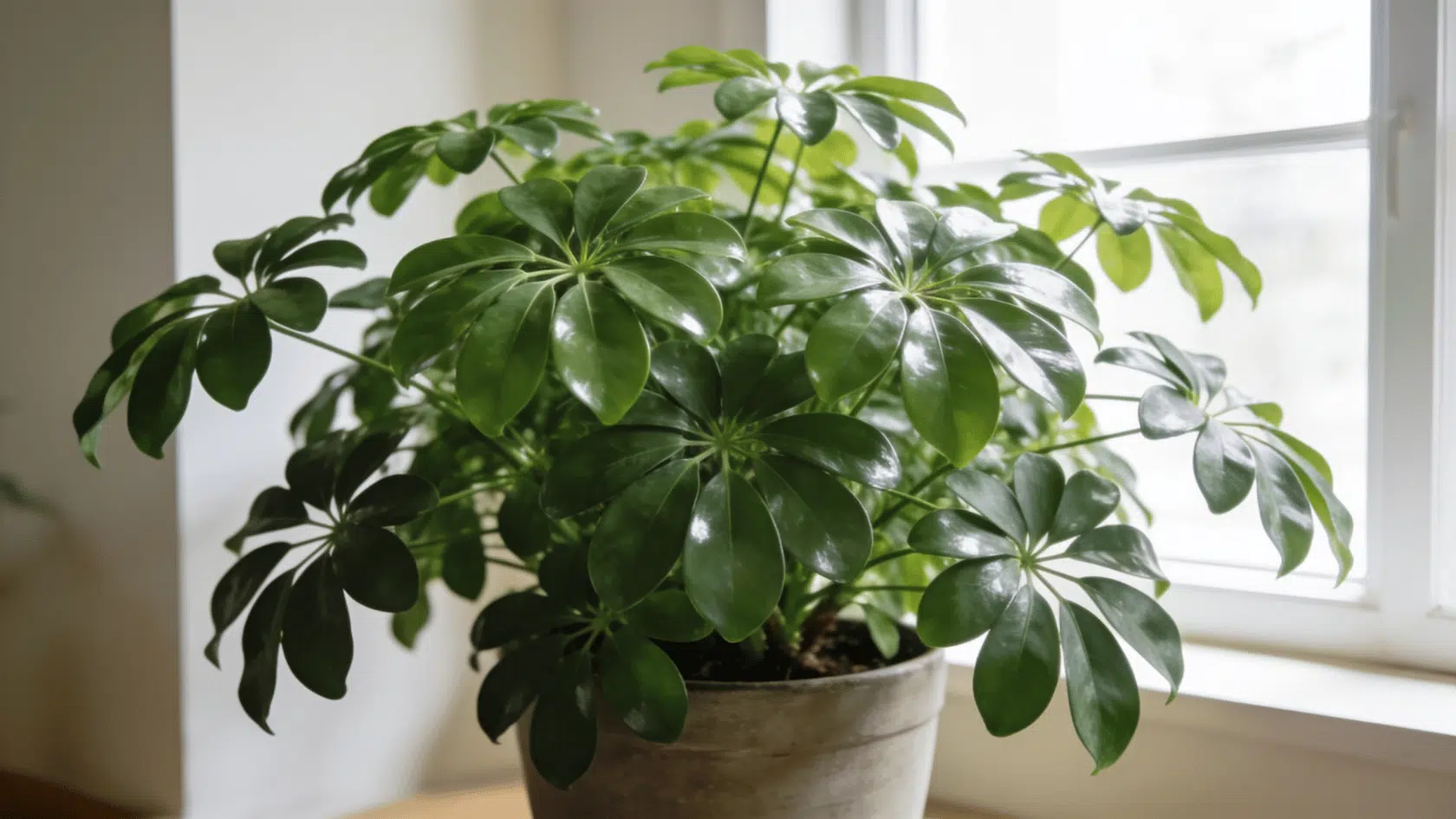
Schefflera is one of the easiest houseplants to love, with its glossy, umbrella-shaped leaves and forgiving nature. But even easy plants need the right care to grow well indoors.
Get schefflera plant care wrong in small ways- too much water, too little light- and you’ll see it in drooping or yellowing leaves fast.
Get it right, and you’ll have a lush, full plant that lasts for years with minimal fuss.
By the end, you’ll know exactly how much light and water your schefflera needs, how to feed and prune it for fuller growth, and how to spot and fix common problems before they get worse.
Understanding Schefflera Plant Basics
Schefflera is a tropical houseplant native to Asia, Africa, Australia, and the Pacific Islands.
Two varieties are common indoors: Schefflera arboricola (dwarf umbrella plant) and Schefflera actinophylla (umbrella tree), which share the same care needs but differ in size.
Before bringing, check that your space can offer:
- A bright spot with filtered light, away from direct sun
- Room to grow, especially for the larger umbrella tree
- Stable indoor temperatures, away from cold drafts
- A watering routine based on soil checks
- Occasional pruning to keep growth full
Schefflera is largely low-maintenance, but it responds poorly to sudden change. Frequent moves or abrupt shifts in light and water stress it faster than steady, moderate neglect.
How Much Light Does a Schefflera Plant Need?

Schefflera needs bright indirect light to maintain healthy growth. The right placement helps prevent leaf damage and supports fuller foliage.
Too little or too much light quickly shows up in the leaves, so getting placement right matters more than any other single factor.
Ideal Placement:
- East-facing windows
- West-facing windows with filtered light
- Bright rooms away from harsh sunlight.
Signs Your Schefflera Needs Better Light:
| Sign | Meaning |
|---|---|
| Long, gappy stems | Reaching for light |
| Slow/weak growth | Needs more light |
| Smaller leaves | Light is insufficient |
Light Adjustment Tip: Move Schefflera slowly when relocating. Sudden changes in light exposure can cause stress and leaf drop.
How Should You Water a Schefflera Plant?

Watering is where most Schefflera problems start, so checking soil moisture rather than following a fixed schedule often solves most issues. Follow the steps below to get it right.
- Check the Top Inch of Soil: Press a finger about an inch into the soil near the base of the plant. If it feels dry, it’s ready for water; if cool or damp, wait a few days and check again.
- Water Deeply: Pour slowly until moisture reaches the entire root ball, not just the surface. A deep soak encourages downward root growth.
- Let Excess Water Drain. Water should flow freely from the drainage holes within a few minutes. If it doesn’t drain at all, the soil may be too dense, or the pot may lack proper holes.
- Empty the Saucer: Standing water left under the pot keeps the soil constantly damp, undoing the benefit of drainage. Empty it within 30 minutes of watering.
After watering, let gravity do its job. Water should flow freely out through the drainage holes within a few minutes, carrying away excess moisture that roots don’t need.
Tip: Yellow leaves and soggy soil mean overwatering; drooping and leaf drop mean underwatering. Keep soil slightly moist, letting the top dry between waterings.
What Soil Does Schefflera Need?

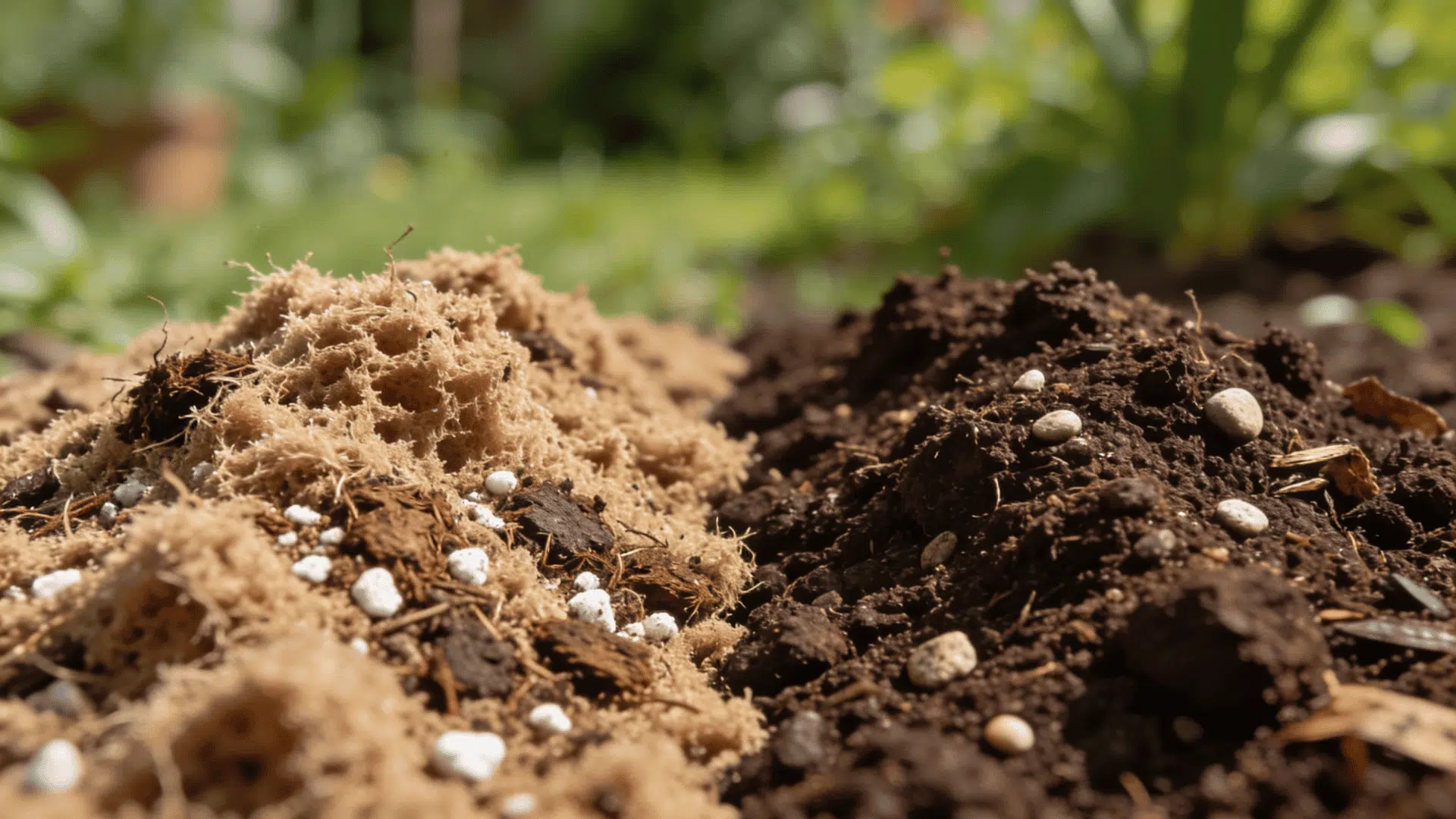
Schefflera grows best in a rich, well-draining potting mix that allows air and water to move through the roots. Heavy soil that holds too much moisture can increase the risk of root problems.
A regular indoor potting mix combined with materials like peat, pine bark, or compost can provide a suitable growing medium.
Best Soil Mix for Schefflera:
- Drains excess water quickly.
- Holds enough moisture for steady growth.
- Allows roots to receive oxygen.
Choose a pot with drainage holes to prevent water from collecting around the roots. Even the right soil mix can cause problems in a container that traps moisture.
How Should You Fertilize a Schefflera Plant?
Schefflera benefits from feeding during its active growing season, typically spring and summer, when it’s putting out new growth.
Use a balanced liquid houseplant fertilizer, following the dilution and frequency instructions on the label, usually every two to four weeks.
Reduce feeding to once a month or stop entirely in fall and winter, since growth slows and the plant can’t use nutrients as efficiently.
Avoid feeding more often than recommended. Excess fertilizer can build up salts in the soil, harming roots and causing scorched leaf edges. Slightly underfeeding is safer than overfeeding.
How Do You Propagate Schefflera From Cuttings?
Schefflera propagates easily through stem cuttings, so getting the process right matters more than any special equipment.
If you’re new to plant propagation, these same basic steps carry over to most houseplants. Follow the steps below to get it right:
Step 1: Select a Healthy Stem

Choose a healthy stem, ideally with a few nodes (the points where leaves attach), and avoid any that are weak, damaged, or overly woody.
A 6-inch section with several leaves works well for most cuttings. This is the foundation for a cutting that actually takes root.
Step 2: Prepare the Cutting

Cut the stem at a 45-degree angle, then remove the lower leaves, leaving just four or five at the top. Dip the cut end in rooting hormone to speed up root development.
This improves the cutting’s chances of rooting successfully. If the stem feels soft, let the cut end callus for an hour or two before planting to reduce the risk of rot.
Step 3: Encourage Root Development

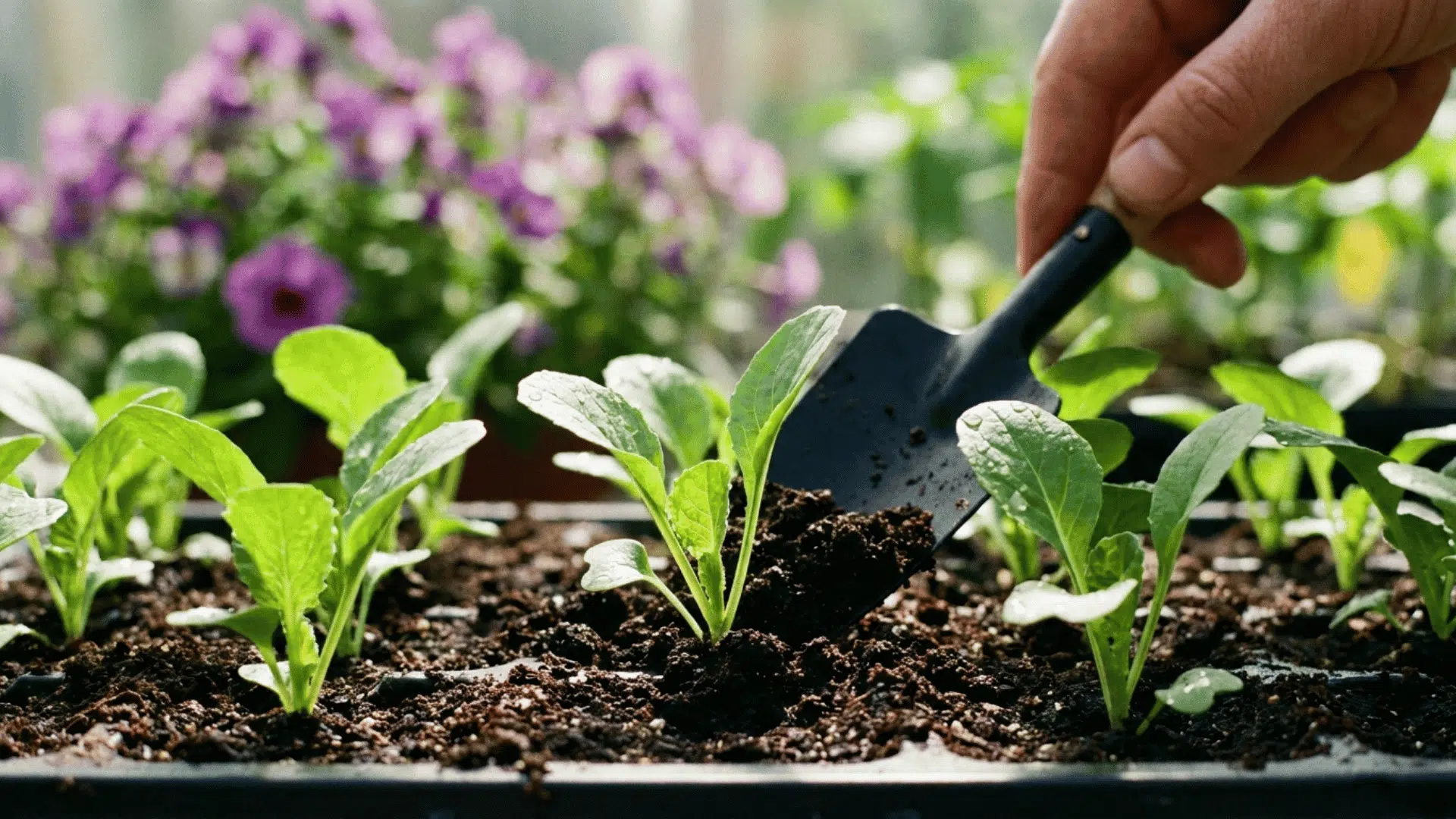
Place the treated end a couple of inches deep in moist potting mix, then loosely cover the pot with a plastic bag to retain humidity, lifting it briefly every few days to improve airflow.
Keep it in bright, indirect light, and check for roots after a few weeks by gently tugging the stem; resistance means roots have formed.
Step 4: Transplant the Rooted Cutting

Once rooted, remove the plastic cover and continue growing the cutting as a young plant, watering it the same way you would an established Schefflera.
Give it a few weeks to adjust before moving it into a larger pot. Hold off on fertilizing during this adjustment period, since young roots are sensitive and can be easily burned by even a diluted feed.
Tip: Take two or three cuttings at once instead of just one; not every cutting roots successfully, and having a few gives you better odds of at least one thriving new plant.
How Should You Prune a Schefflera Plant?
Pruning helps maintain the size and shape of a Schefflera while encouraging fuller growth. Without enough light, the plant can become tall and thin as it stretches toward available light.
Prune a Schefflera When:
- The plant becomes too large for its space.
- Stems look long and bare.
- You want a bushier shape.
Remove dead or overcrowded stems first, then shape further by cutting healthy stems. Cutting back a stem triggers new growth just below the cut.
For Shaping: Pick a form, rounded, single-stemmed, or bushy, and prune to match. Vary cut lengths for a natural look, and rotate the pot if growth leans one way.
How to Repot Schefflera Plants?
Repot Schefflera every one to two years or when roots start filling the container, circling the bottom, or appearing above the soil.
Choose a pot only 1–2 inches larger than the current one. A much larger pot can retain excess moisture.
Always use a container with drainage holes and fresh, well-draining soil.
Water the plant the day before repotting, gently loosen the tight roots, and place it in the new pot with fresh potting mix.
If you want to limit growth, delay repotting slightly, but refresh the topsoil occasionally to maintain nutrients.
Tip: Repot in spring, when the plant is entering active growth and recovers faster from the disturbance.
Common Schefflera Problems and How to Fix Them
Many Schefflera problems are connected. Yellow leaves, brown spots, and leaf drop often come from watering, light, or root issues.
The table below shows common symptoms, causes, and solutions:
| Symptom | Likely Cause | Solution |
|---|---|---|
| Yellowing leaves | Overwatering | Let the soil dry out further between waterings; check the pot drainage |
| Brown spots | Underwatering | Water more consistently, especially in the growing season |
| Sudden leaf drop | Environmental stress (cold draft, temperature swing, relocation) | Move to a warmer spot with indirect light; resume regular watering |
| Leggy growth, sparse leaves | Insufficient light | Move gradually to a brighter, indirect-light spot |
| Soft, mushy stems | Root rot from overwatering | Reduce watering significantly; repot in fresh, well-draining soil if severe |
| Sticky residue, sooty mold | Aphids | Treat with insecticidal soap spray |
Most of these issues trace back to watering habits or light exposure, so getting those two right prevents the majority of Schefflera problems before they start.
Common Maintenance Tips for Schefflera Plant
Schefflera stays healthy the longest when a few small habits are followed consistently, rather than relying on any single fix when problems arise.
- Rotate the pot every few weeks for even light exposure and growth.
- Wipe leaves with a damp cloth to remove dust and support photosynthesis.
- Keep away from heating vents, AC units, and cold drafts.
- Check the undersides of leaves regularly for early signs of pests, such as gnats in plants that thrive in damp soil.
- Refresh the top inch of soil yearly if not repotting.
- Group with humidity-loving plants or use a pebble tray for extra moisture.
Taking these small steps consistently does more for a Schefflera’s long-term health than any single corrective action after a problem arises.
Wrapping Up
Good Schefflera plant care comes down to consistency. Bright indirect light, proper watering, and occasional feeding keep your umbrella plant healthy for years.
Most problems that pop up along the way trace back to just two things: too much water or too little light, so catching those early saves you a lot of troubleshooting down the road.
With a little attention and the right habits in place, Schefflera rewards you with lush, low-maintenance greenery that fits almost any home.
Start applying these Schefflera plant care tips today, and watch your umbrella plant thrive.
Have a Schefflera care tip or question of your own? Drop it in the comments below; we’d love to hear from you!
Frequently Asked Question
Does a Schefflera Plant Purify Indoor Air?
Yes, Schefflera has been studied for its ability to filter certain airborne toxins, though the effect indoors is modest compared to controlled lab settings.
Is Schefflera Toxic to Pets?
Yes. Every part of the Schefflera plant is toxic to pets, particularly cats and dogs, and mildly toxic to humans if ingested. Contact a vet promptly if ingestion is suspected.
Is Schefflera Safe to Keep Near Aquariums or Fish Tanks?
Schefflera itself isn’t inherently risky near tanks, but its toxic sap can be harmful if leaves or trimmings fall into the water. Keep cuttings and fallen leaves away from any tank to be safe.