
Your coral bells looked perfect at the nursery, so why are they suddenly losing color, turning mushy, or developing brown edges?
These changes often happen when light, moisture, or planting conditions are slightly off. Good coral bells care starts with understanding what your plants need before problems appear.
Overwatering, poor drainage, and planting the crown too deeply can slowly damage roots and foliage.
In this guide, you’ll learn how to choose the right spot, plant correctly, and maintain colorful, healthy coral bells throughout the growing season.
About Coral Bells
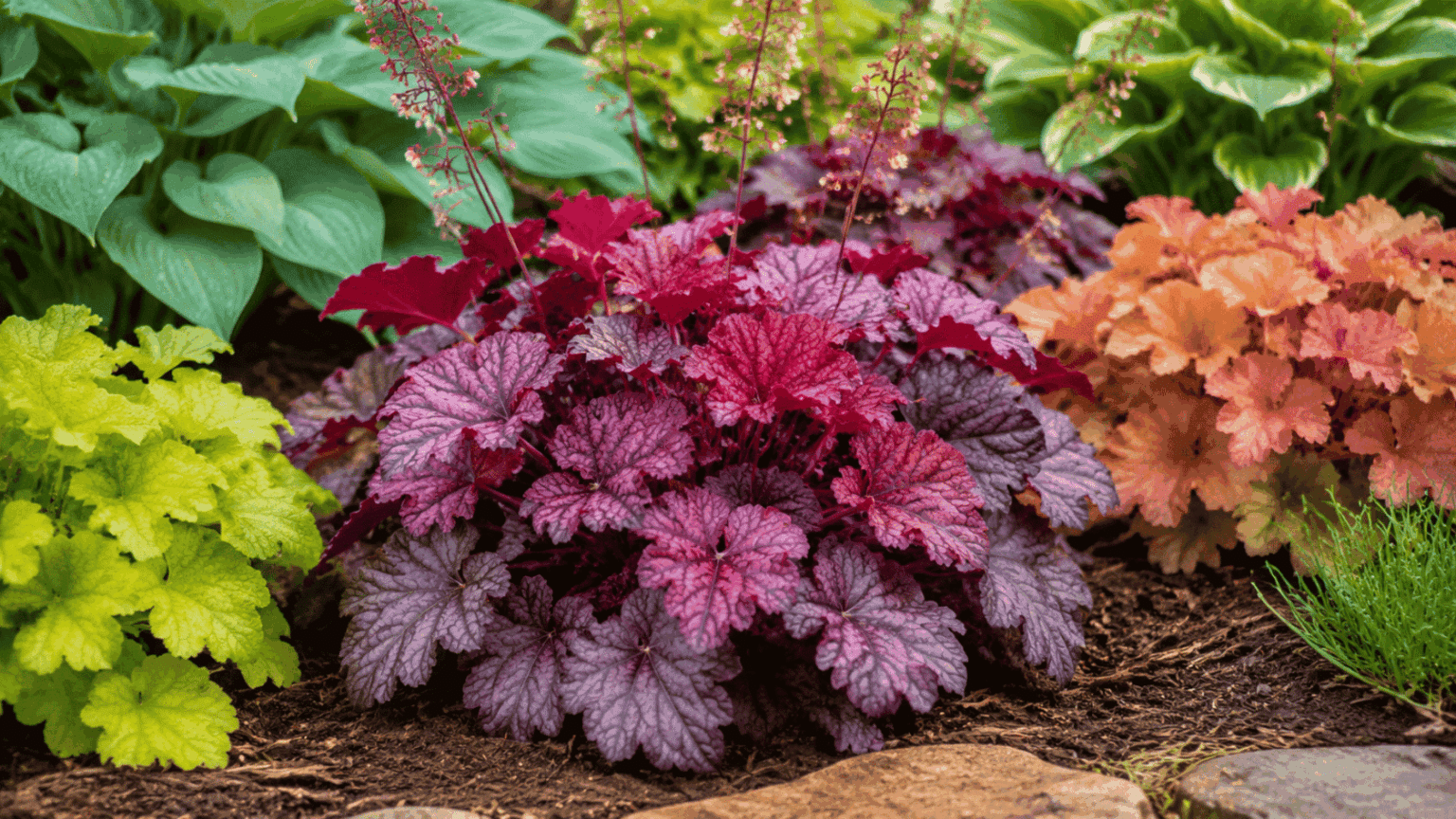
Coral bells are colorful perennial plants known for their attractive foliage rather than flowers.
They produce rounded leaves in shades of purple, bronze, green, silver, and burgundy, adding texture and color to gardens.
While coral bells produce small bell-shaped flowers on tall stems, their leaves remain the main reason gardeners grow them, valued for long-lasting color and compact growth.
The plant is popular among gardeners for borders, containers, and shaded areas, and its blooms attract hummingbirds and pollinators.
Hardy in USDA zones 4–9, coral bells tolerate a wide range of light, soil, heat, cold, humidity, and drought, though they grow best in well-draining soil with partial shade and regular moisture.
Popular Coral Bells Varieties
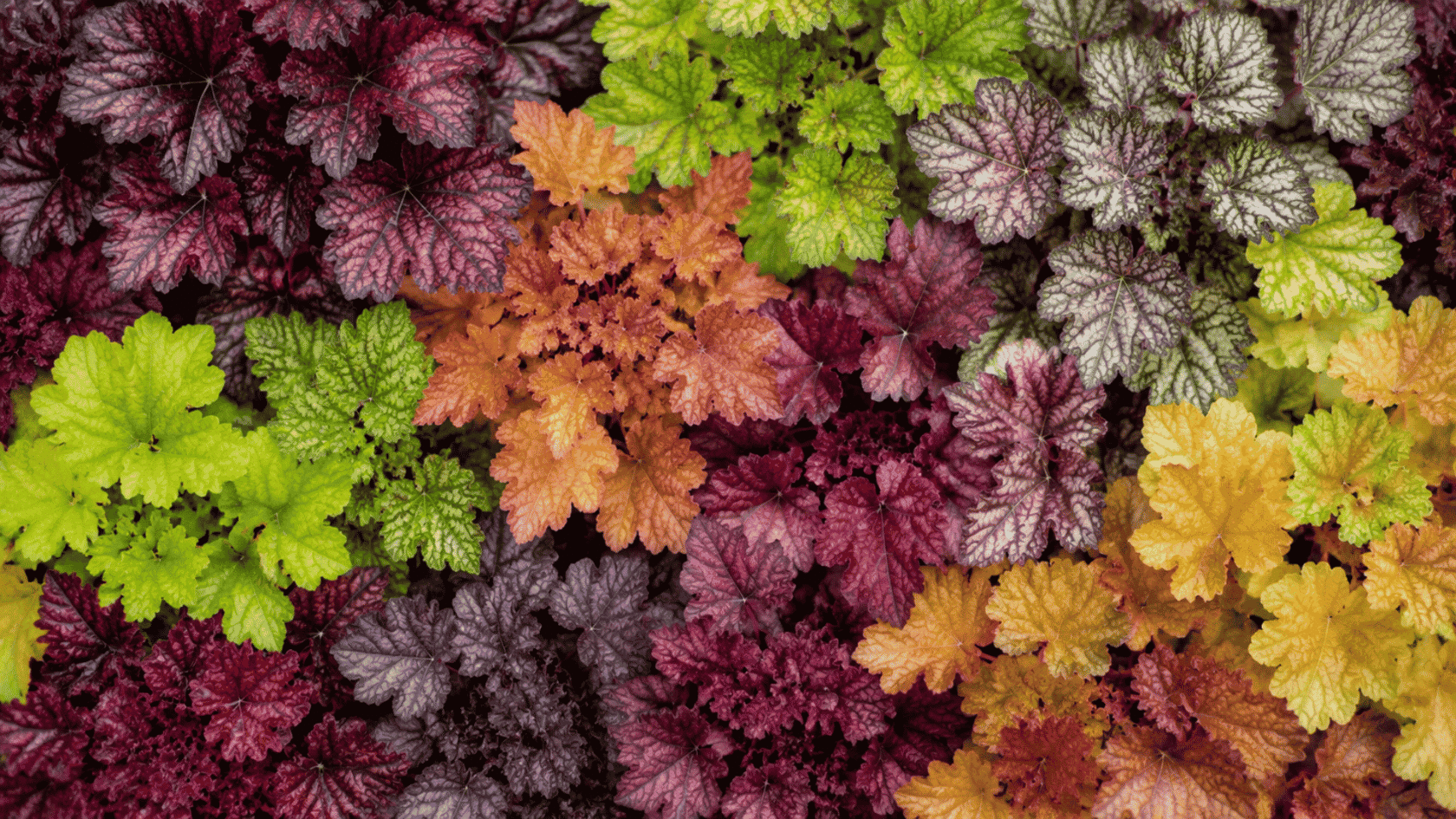
Coral bells fall into a few distinct color groups, and knowing them helps you pick the right variety for your garden and light conditions.
Each group has slightly different sun needs, so matching foliage color to available light makes coral bells care much easier from the very start.
| Variety | Leaf Color | Light Preference |
|---|---|---|
| Palace Purple | Deep purple | Handles more sun |
| Obsidian | Near-black | Handles more sun |
| Caramel | Amber-orange | Partial shade |
| Citronelle | Gold | More shade |
| Lime Rickey | Lime green | Partial shade |
Dark, richly pigmented varieties like purples and blacks handle direct sun best, while pale and gold-leaved types prefer more shade to stay vibrant.
Picking a variety suited to your specific light conditions keeps coral bells care simple and low-effort right from the very start.
Choosing the Right Spot for Coral Bells
Coral bells do best in part shade, 4–6 hours of gentle light, morning sun and afternoon shade. Some direct light is still needed for good foliage color.
They grow best in humus-rich, well-draining soil kept slightly moist, since soggy soil can cause crown rot. Amend poor drainage with compost, a berm, or a raised bed.
Plant in spring after the last frost, or fall at least 6 weeks before the ground freezes.
Zone 4–5 gardeners should stick to spring; milder Zones 6–7 can plant either season.
If your garden soil drains poorly, usingraised garden bedscan create better growing conditions and prevent excess moisture around coral bells roots.
If clay soil makes amending impractical, use a raised bed or container instead. Once sited right, coral bells are genuinely low-maintenance.
How to Plant Coral Bells the Right Way
Getting coral bells in the ground correctly is the foundation of good coral bells care for years to come.
Follow these four steps to give your coral bells the best possible start, whether you’re planting in a garden bed or a container:
Step 1: Dig the Right Hole

Dig a hole wider than the root ball, but not deeper. Loosen the surrounding soil so the shallow roots can spread out easily as the plant establishes.
In heavier soils, roughing up the sides of the hole also helps prevent roots from circling instead of growing outward.
Step 2: Set the Crown at the Right Depth

Position the crown level with or slightly above the soil surface. Burying it too deep is the top cause of early rot, not planting too shallow.
It’s tempting to plant deeper for stability or winter protection, but getting this depth right matters more than almost any other step.
Step 3: Space Plants Properly

Space plants 1 to 2 feet apart, depending on mature size, so each one can reach its natural spread without competing for room.
Maintainingproper spacing improves airflow between plants and helps reduce problems caused by crowded growth.
Good spacing also improves airflow, helping leaves dry faster after rain and keeping growth compact instead of leggy.
Step 4: Backfill and Water
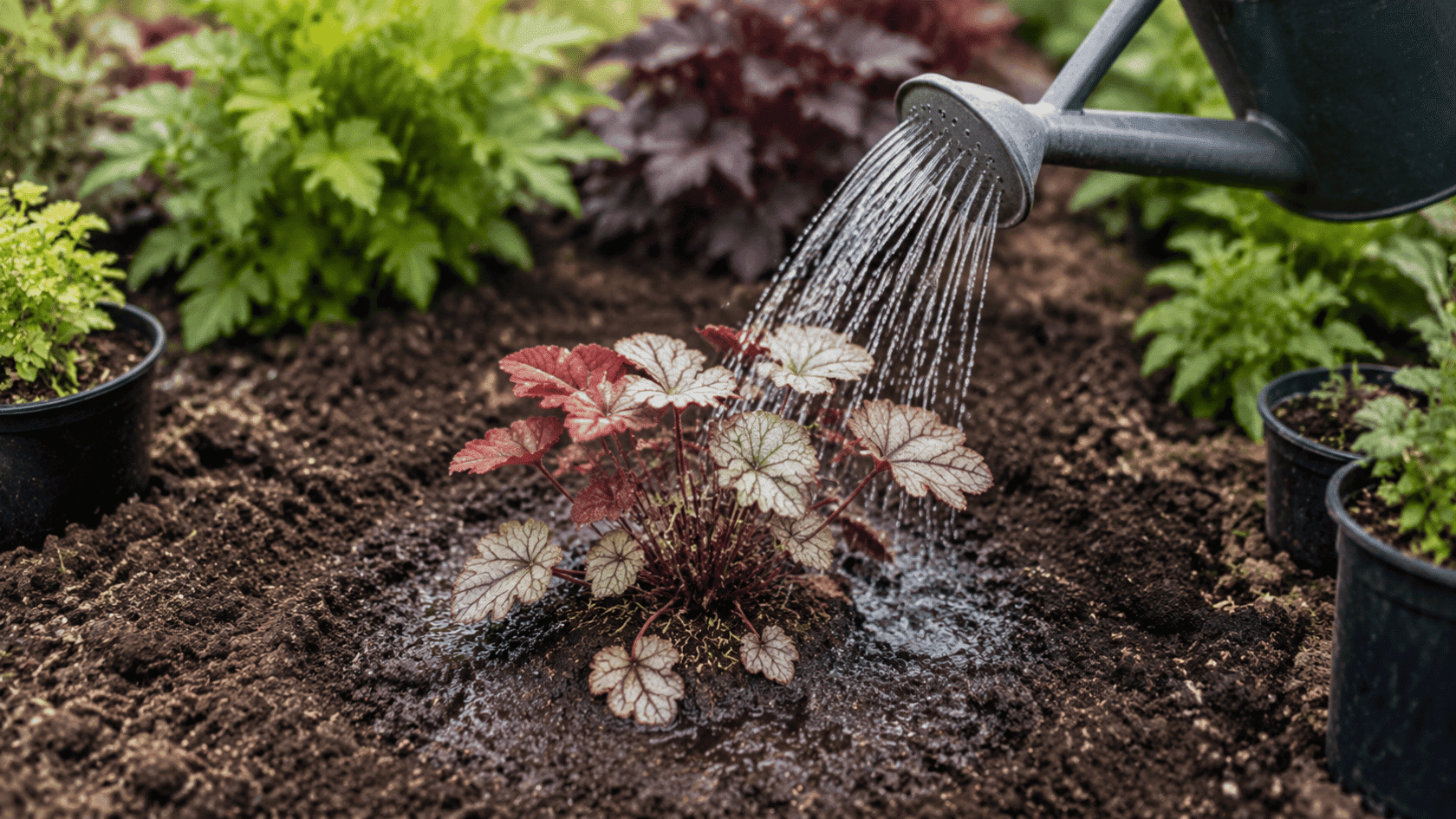
Backfill around the root ball, firming gently to remove air pockets. Water deeply right away to help the soil settle.
For container plantings, make sure there are drainage holes at the base, since standing water causes the same crown problems as soggy ground. On slopes, natural drainage works in your favor too.
How to Care for Coral Bells?
Once planted, coral bells need simple care to maintain colorful foliage and steady growth. Regular watering, feeding, and pruning keep plants healthy.
- Watering: Keep soil evenly moist but not soggy. Provide extra water during hot periods, especially for plants growing in full sun.
- Feeding: Add compost each spring or use a light slow-release fertilizer to support healthy growth.
- Pruning: Remove damaged leaves in spring and trim spent flower stalks after blooming to encourage fresh foliage.
Consistent care helps coral bells stay vibrant and compact throughout the growing season. Small maintenance tasks can prevent common issues and support stronger plants.
How to Use Coral Bells in Your Landscape
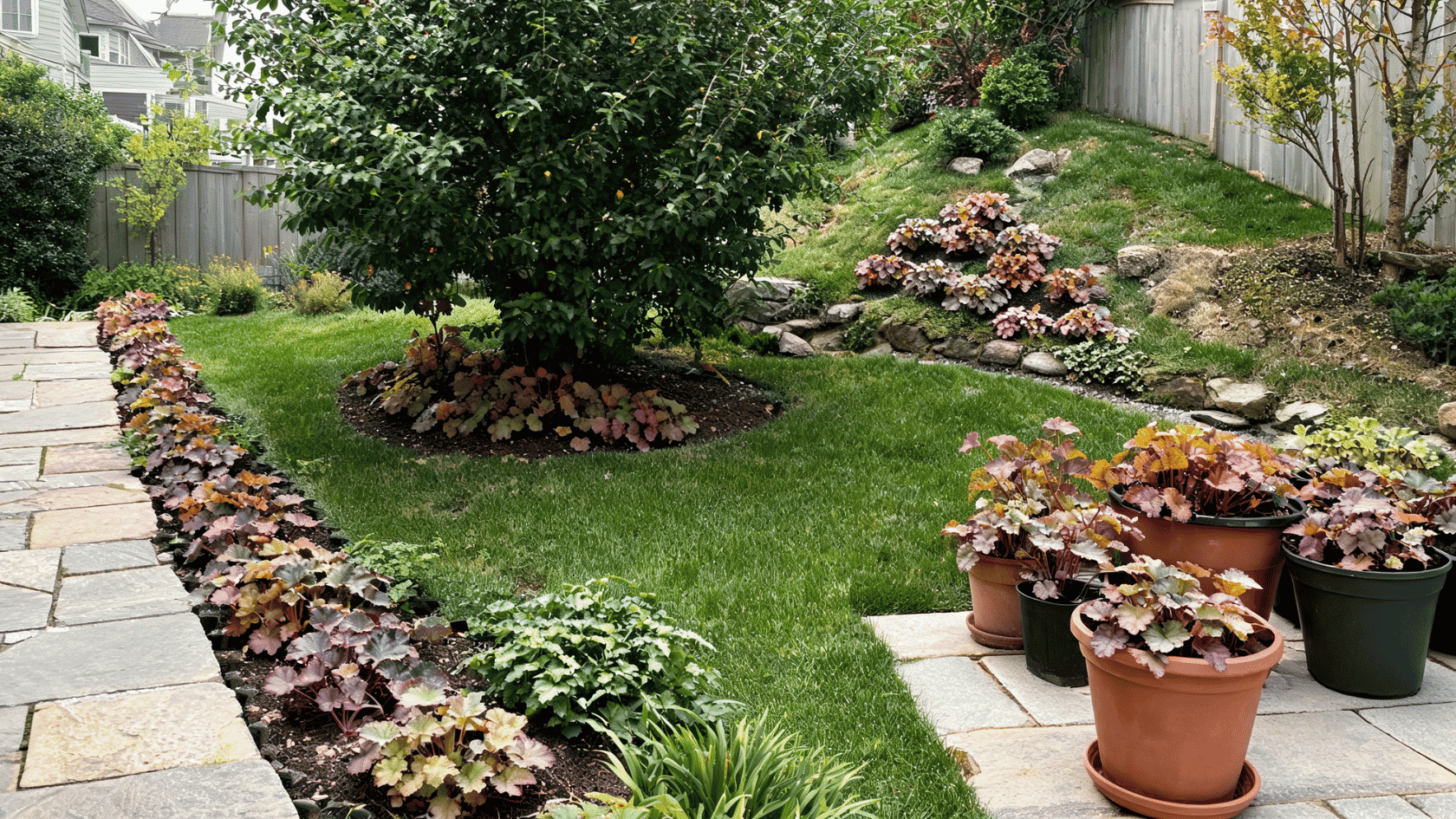
Coral bells fit many garden areas because of their compact size and colorful foliage. They add steady color along borders, pathways, and shaded spaces.
They work as groundcover on shaded slopes, filling empty areas with low-growing foliage.
Planting them under trees or shrubs takes advantage of their shade tolerance.
Coral bells also grow well in containers, either alone or with other part-shade plants. Their foliage adds interest with little maintenance.
With the right placement, coral bells provide lasting color and texture throughout the growing season.
Common Coral Bells Care Mistakes to Avoid
Small care mistakes can quietly affect coral bells’ growth over time, from faded color to crown damage. Spotting these issues early makes them easy to correct before they weaken your plants.
- Crown heaving: Freeze-thaw cycles push the crown above the soil, exposing it to cold stress.
- Planting too deep: Burying the crown below the surface is the top cause of early rot.
- Overwatering: Constantly soggy soil suffocates the shallow roots and triggers crown rot.
- Poor drainage: Heavy clay traps water around the roots, weakening the plant over time.
- Too much sun: Intense afternoon light scorches foliage, causing brown edges and dry, faded leaves.
- Crowded spacing: Planting too close reduces airflow and encourages leggy, weak, disease-prone growth.
Conclusion
Caring for coral bells becomes simple when you provide the right growing conditions, including suitable light, healthy soil, and proper watering habits.
Following these basics of coral bells care helps prevent common issues while encouraging colorful foliage and steady growth throughout the year.
With regular maintenance and early attention to problems like leaf damage or poor drainage, coral bells can remain a beautiful, low-maintenance addition to any garden.
Keep giving your plants the care they need, and they will continue adding lasting color and texture to your outdoor space.
Have questions about your coral bells? Drop them in the comments.
Frequently Asked Questions
Are Coral Bells Toxic to Pets?
Coral bells are considered non-toxic to dogs and cats. However, pets should still avoid regularly chewing the foliage, as excessive plant consumption may cause mild digestive discomfort.
Can Coral Bells Be Grown from Seed?
Yes, coral bells can grow from seed, but many cultivars may not produce plants identical to the parent. Division or nursery-grown plants offer more reliable results.
Do Coral Bells Need to Be Fertilized Every Year?
Coral bells do not always need yearly fertilizer. A layer of compost each spring usually provides enough nutrients, while excessive feeding can reduce foliage color and blooms.