
Some plants seem determined to punish beginners, wilting at the first missed watering or dropping leaves the moment light shifts. The pothos is the opposite.
This hardy tropical vine shrugs off neglect, tolerates dim corners, and grows fast enough to make anyone feel like a natural.
That forgiving nature is exactly why pothos plant care has become the starting point for so many first-time plant owners. It rewards a little attention without demanding perfection, thriving through missed schedules and imperfect conditions.
Behind that easygoing reputation, though, lies a handful of simple habits that separate a surviving vine from a lush, trailing one that keeps growing for years.
About Pothos Plant
Pothos (Epipremnum aureum), or devil’s ivy, is a fast-growing tropical vine known for its attractive foliage.
It naturally climbs trees in warm climates but adapts easily to indoor spaces.
Its low-maintenance nature makes it ideal for beginners. It thrives in bright indirect light with proper moisture and good drainage.
Variegated varieties usually require more light to maintain their leaf patterns.
Varieties of Pothos Plant
Pothos comes in several varieties, each with its own leaf pattern and growth style, so there’s an option to suit almost any space or light condition.
| Pothos Variety | Leaf Appearance | Growth Characteristics |
|---|---|---|
| Golden Pothos | Green leaves with yellow patterns | Fast-growing variety with strong trailing vines |
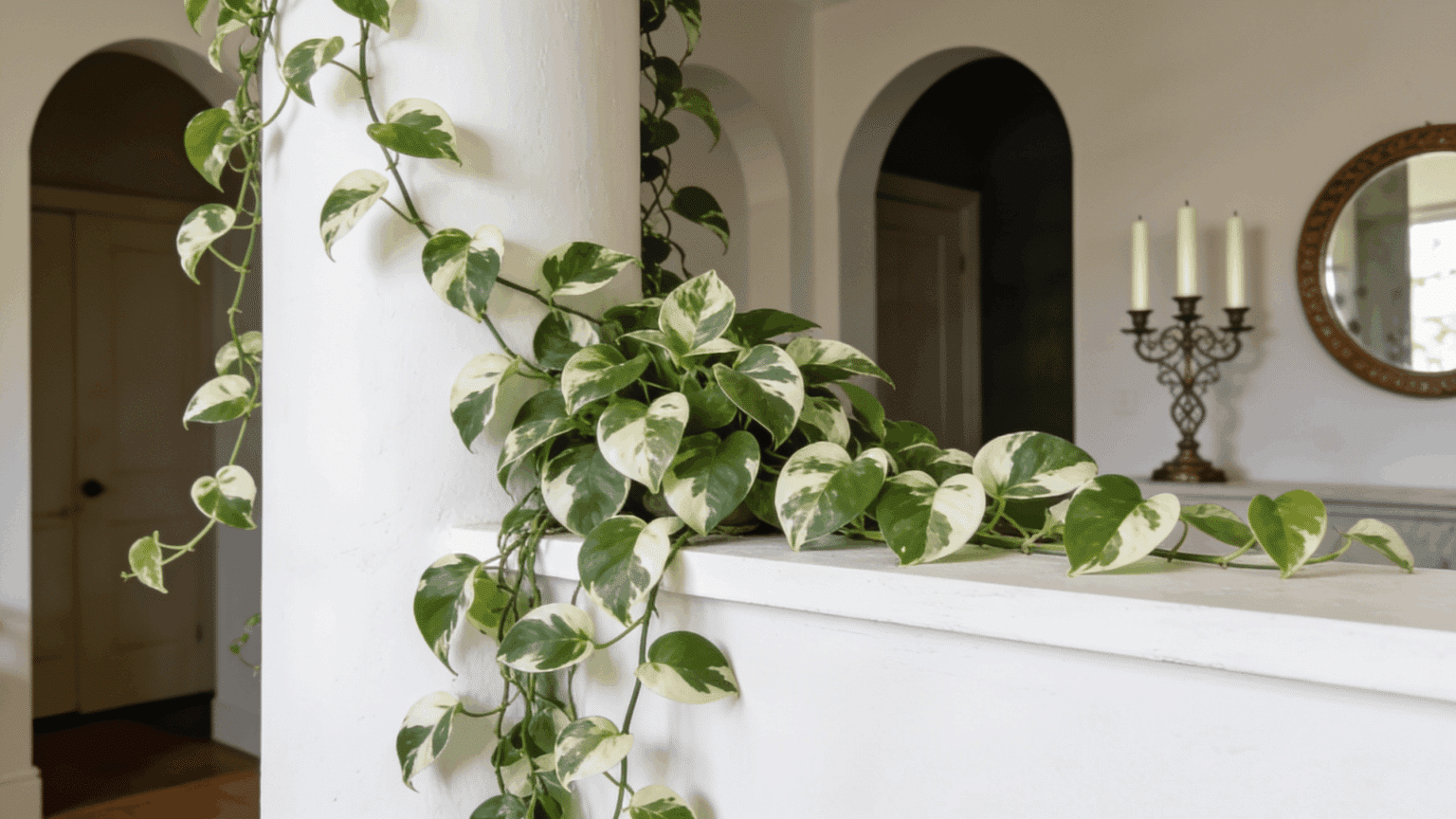
| Marble Queen Pothos | White-and-green variegated leaves | Needs brighter light to maintain its leaf patterns |
| Neon Pothos | Bright chartreuse-green leaves | Adds a bold pop of color to indoor spaces |
| Jade Pothos | Solid green leaves | Handles lower light conditions better than variegated varieties |
| N’Joy Pothos | White-and-green variegated leaves with compact growth | Smaller, bushier variety with attractive leaf patterns |
Whichever variety you choose, the same easy-care routine applies, making it simple to build a collection of different pothos types.
How To Care For A Pothos Plant
Pothos is one of the easiest houseplants to care for, forgiving even when conditions aren’t perfect. With just a few basics- light, water, and soil- you can keep it thriving for years.
1. Light Conditions
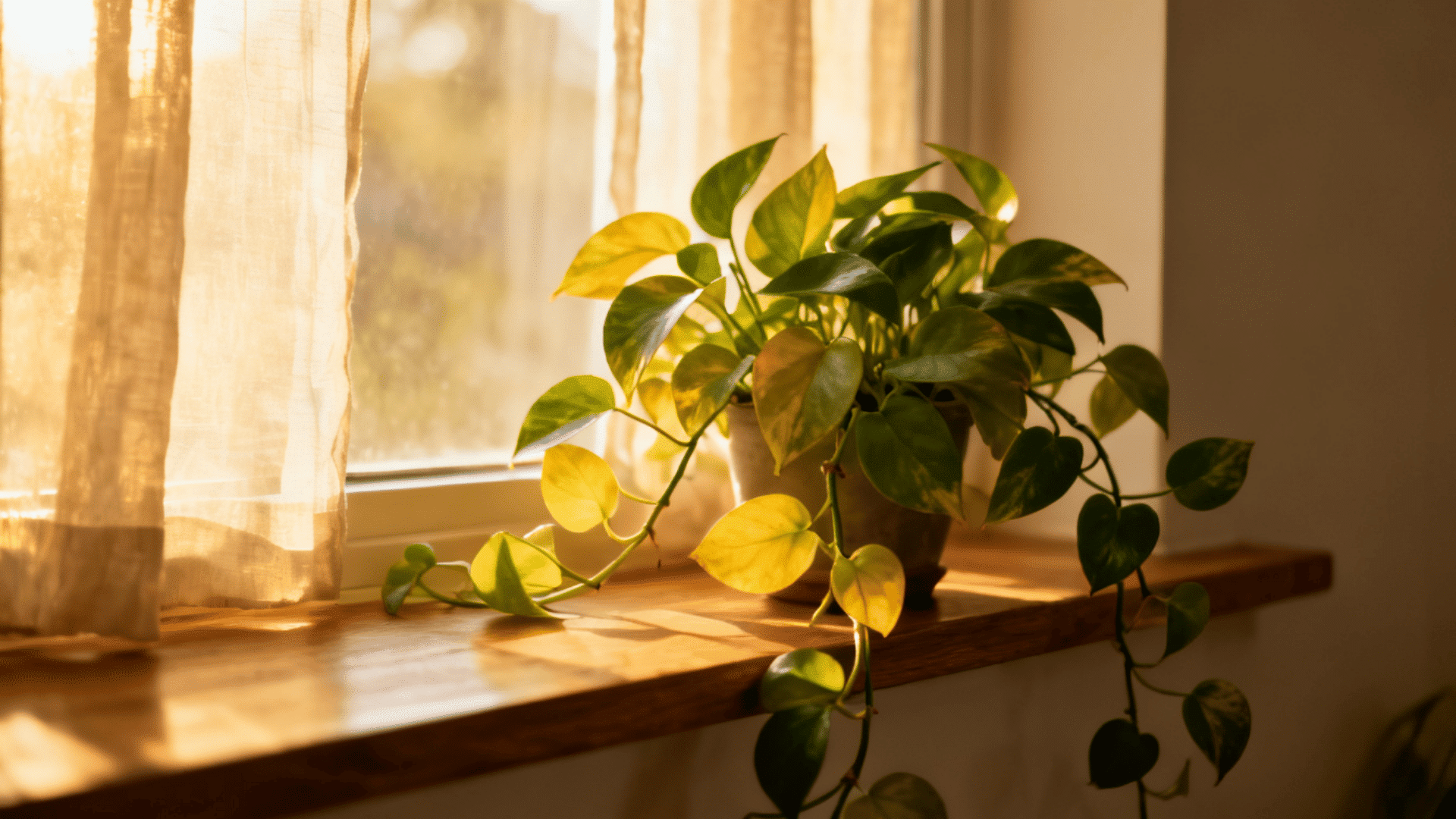
Pothos grows best in bright, indirect light, like near an east- or north-facing window, without harsh direct sun.
Low light slows growth and causes leaves to shrink, and variegated varieties may turn greener without enough light.
Avoid strong afternoon sun, which can burn leaves. Rotate the plant occasionally for even growth.
2. Water Frequency
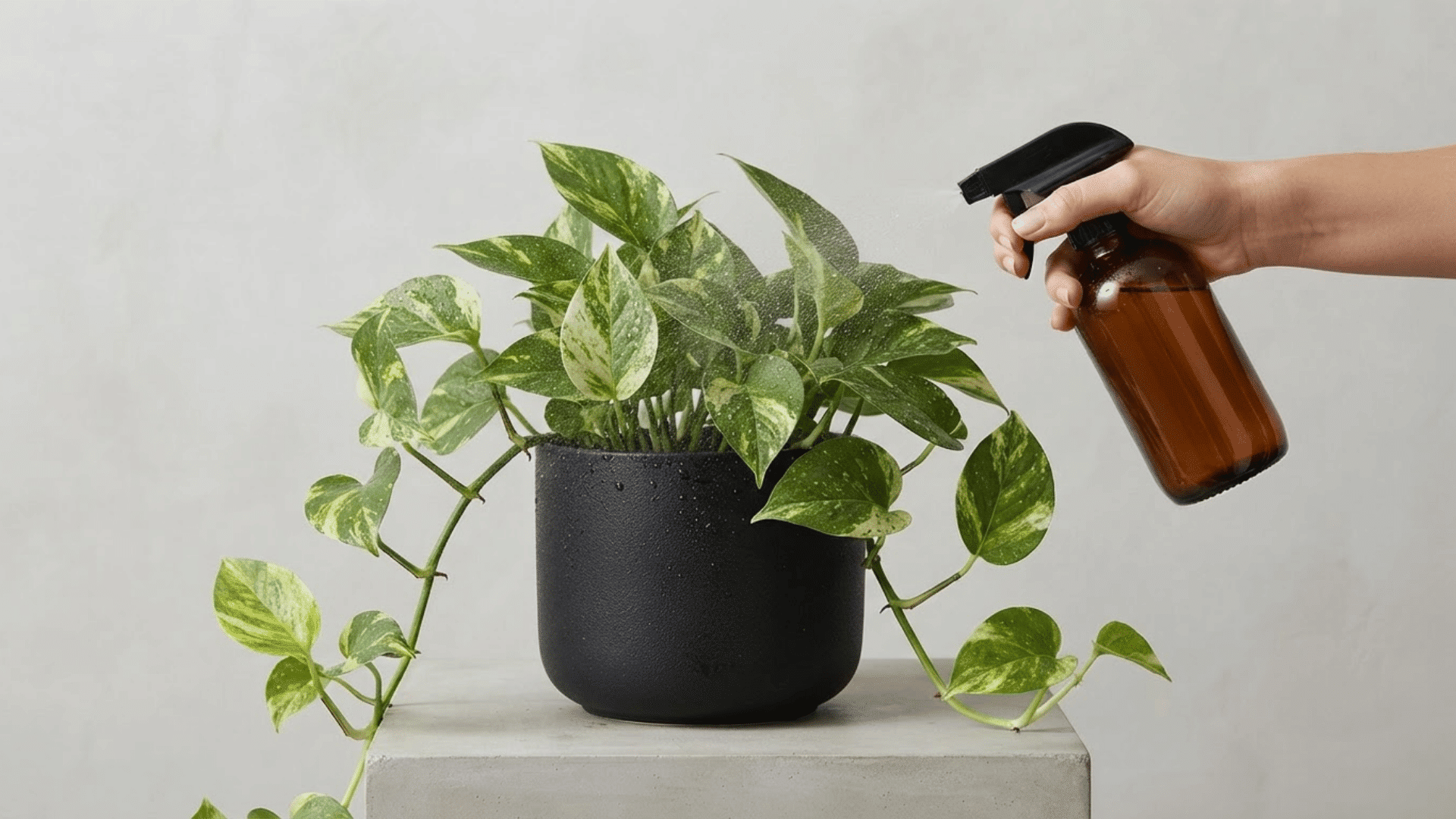
Pothos prefers slightly dry conditions over constantly wet soil. Let the top layer dry out before watering again.
A simple watering routine:
- Check the top 1–2 inches of soil with your finger.
- Water thoroughly when the soil feels dry.
- Allow excess water to drain completely.
- Empty the standing water from the saucer.
If your pothos dries out unevenly, bottom watering lets the roots draw moisture up from below. Adjust your schedule based on temperature, humidity, pot size, and season.
3. Soil
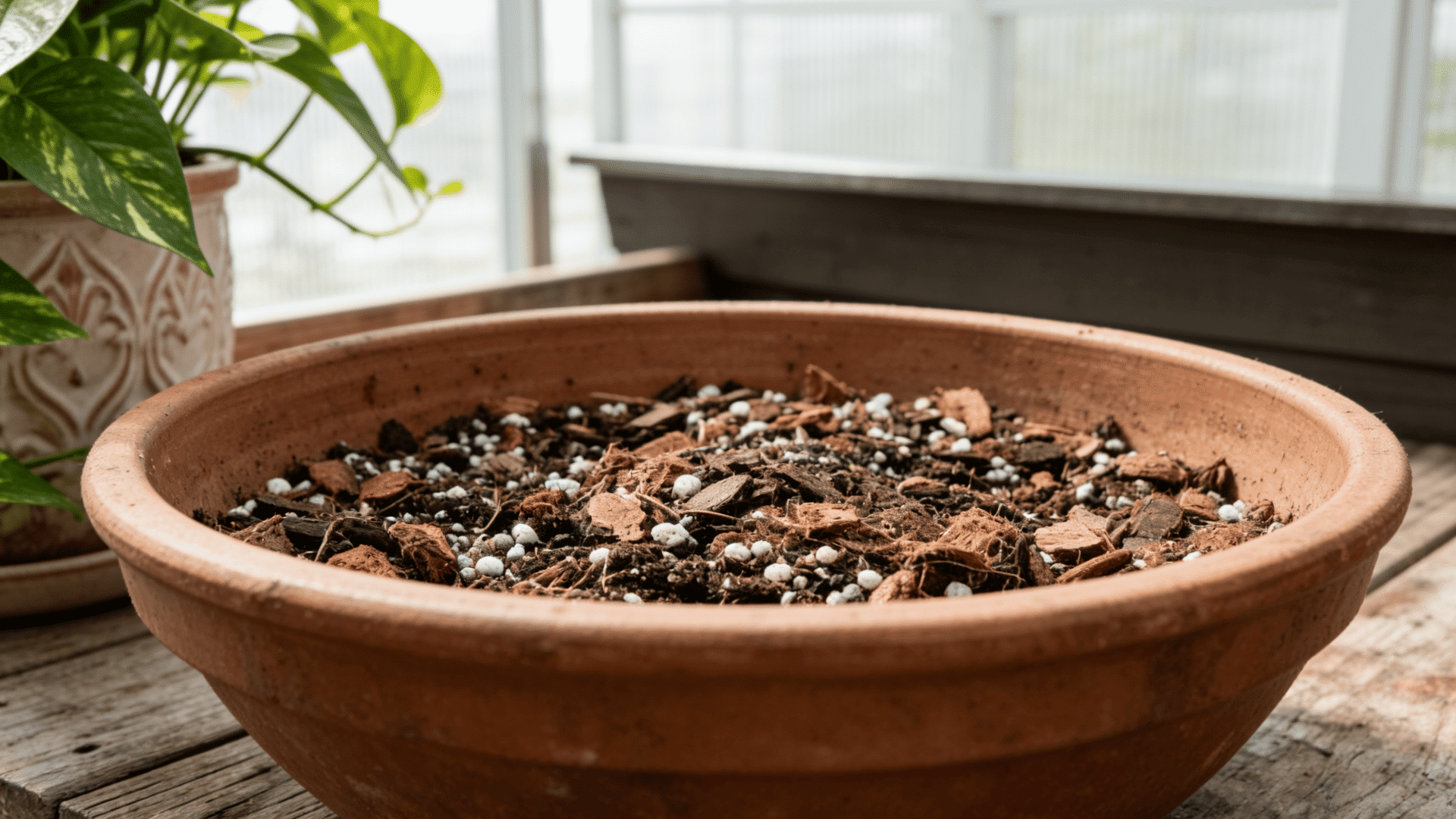
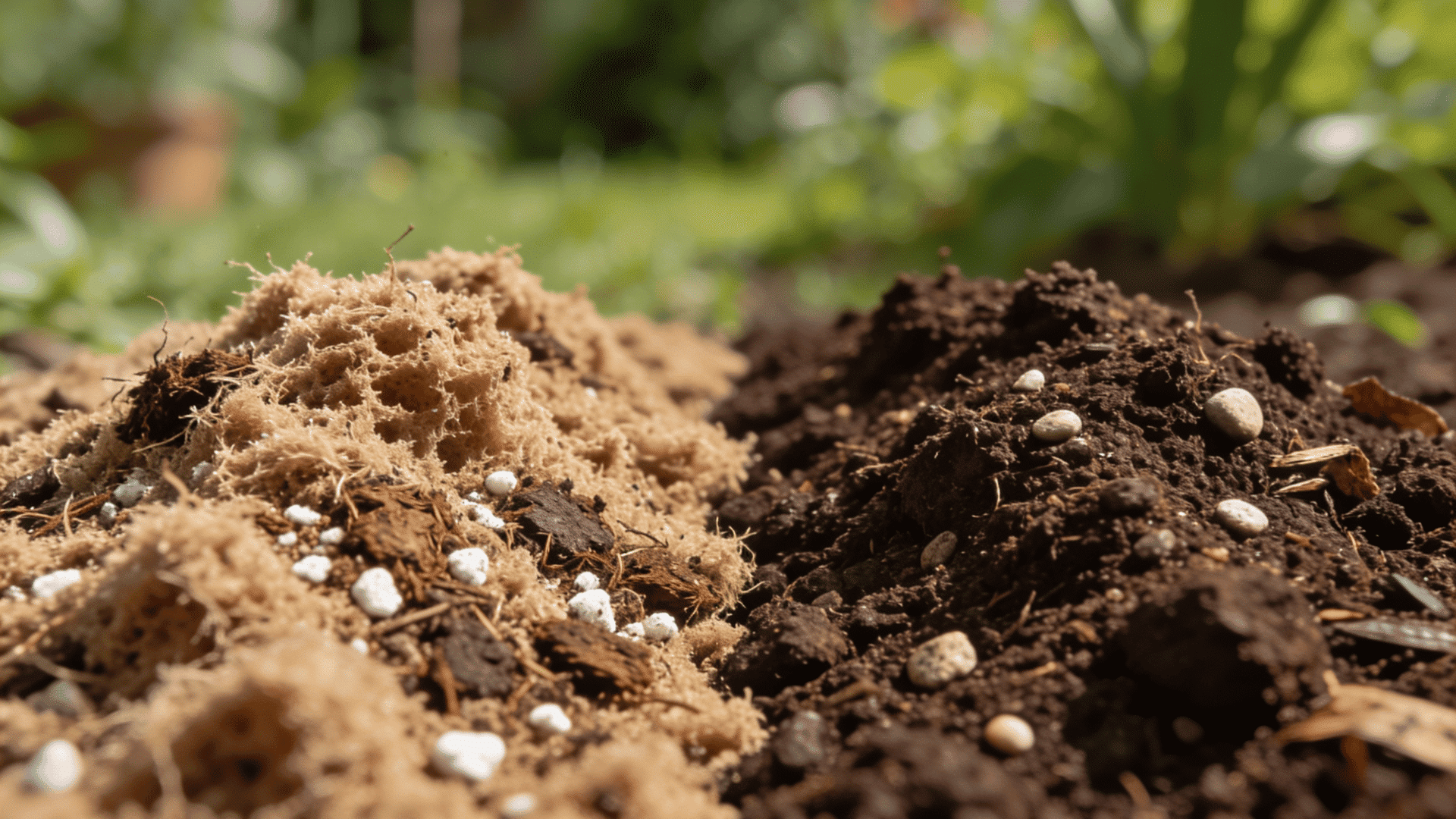
Pothos does not require a complicated soil mix, but it needs good drainage to prevent water from pooling around the roots.
A suitable mix includes:
- Quality indoor potting soil
- Perlite for better airflow
- Orchid bark for extra drainage
Avoid using garden soil indoors because it is usually too dense and can hold excess moisture. A pot with drainage holes is essential because it allows extra water to escape after watering.
4. Temperature & Humidity
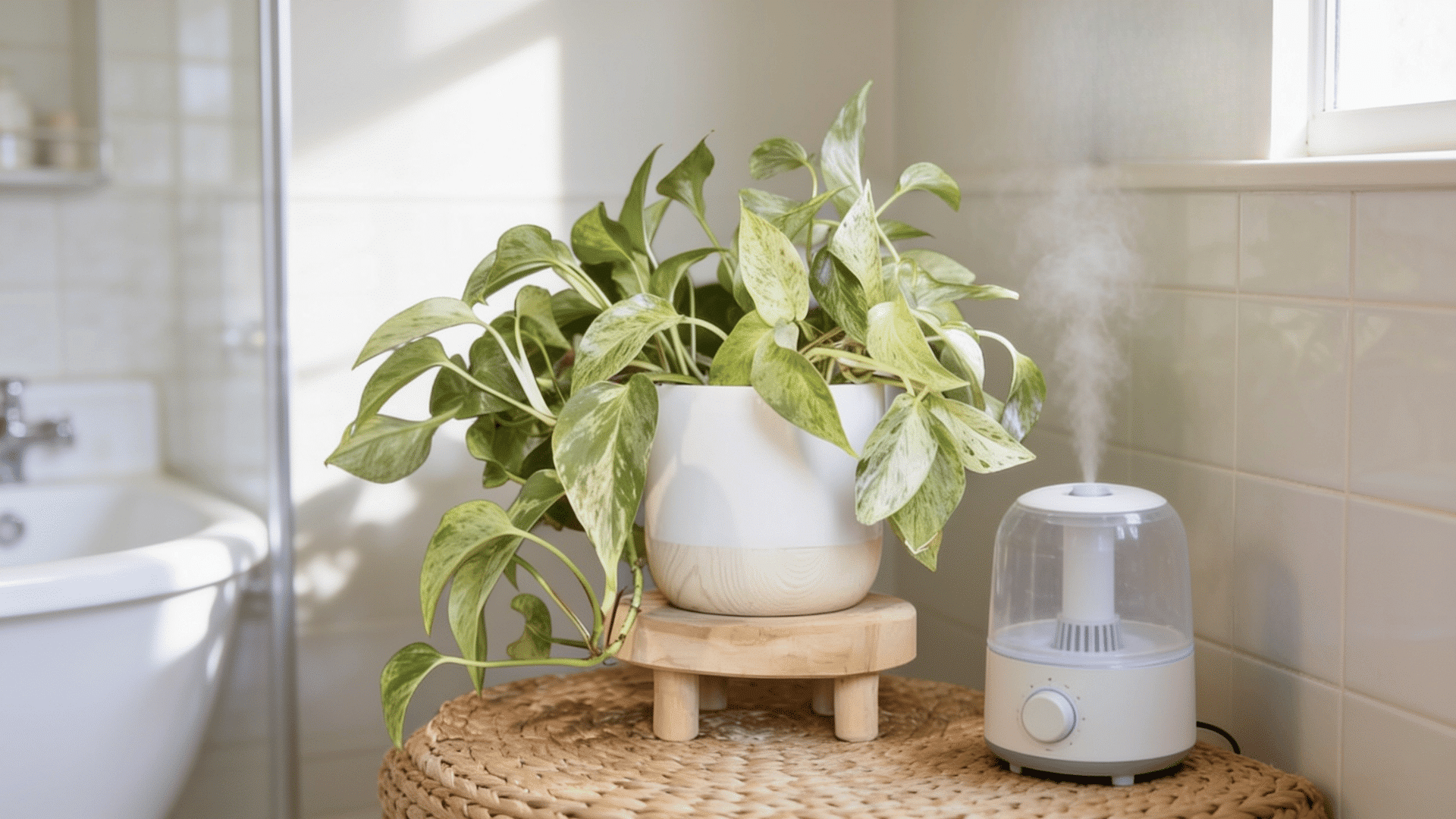
Pothos isn’t fussy about temperature; if your home feels comfortable, it’ll suit your plant too. Just keep it away from cold drafts and heating.
Though tropical by origin, pothos adapts well to average household humidity.
Very dry air can cause brown tips, so a humidifier or a naturally humid spot like a bathroom can help.
5. Fertilizer
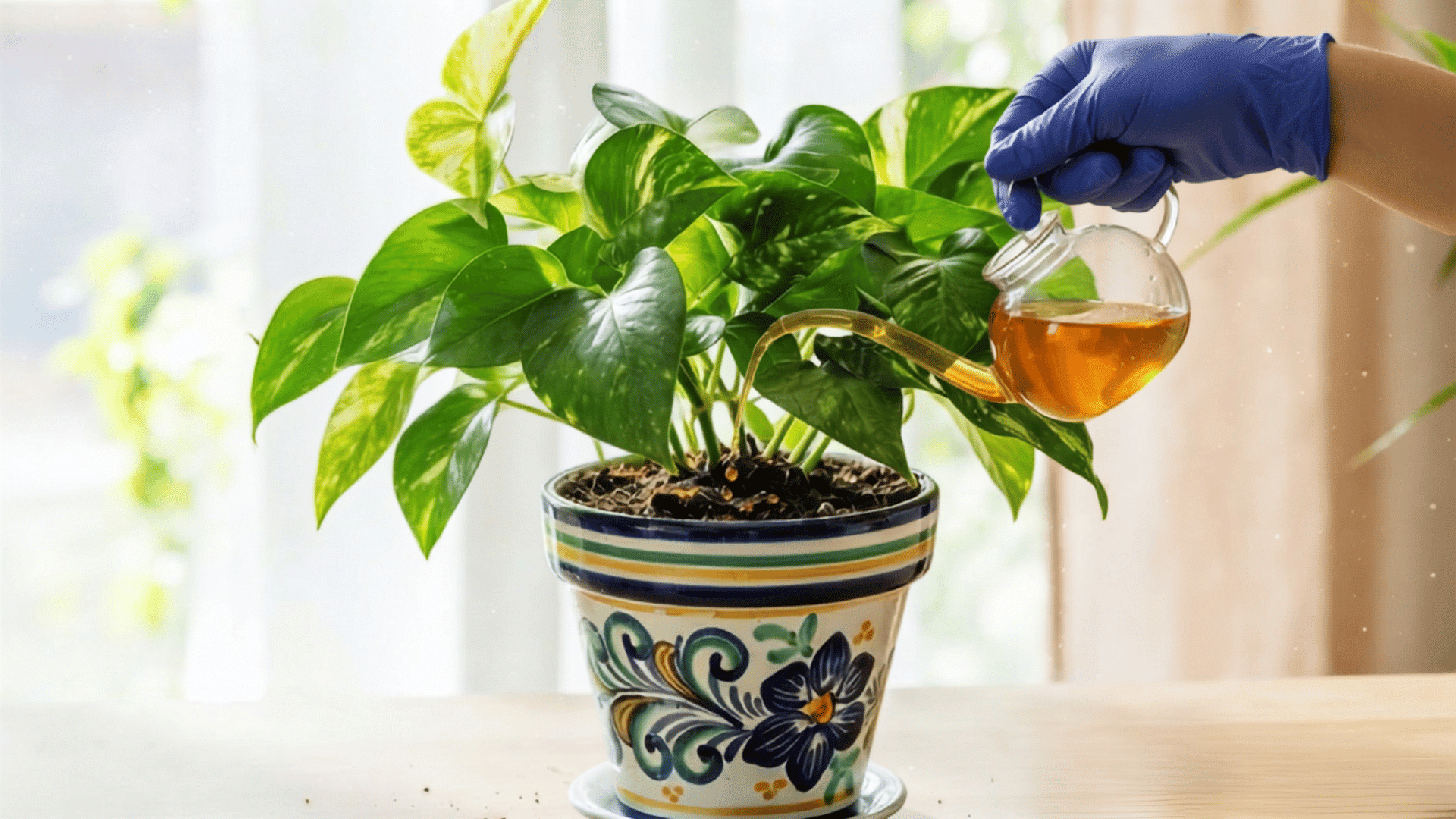
Pothos does not need heavy feeding. Too much fertilizer can damage roots and create leaf problems.
For healthy growth:
- Fertilize during spring and summer.
- Use a balanced liquid houseplant fertilizer.
- Follow the recommended amount on the label.
- Reduce feeding during colder months.
Avoid fertilizing stressed plants that are extremely dry or overwatered.
How To Prune Pothos For Fuller Growth?
Regular pruning keeps your pothos full and prevents vines from growing long and bare. Cut stems just above a leaf node to encourage fresh growth from the remaining stem.
Pruning helps control vine length, remove damaged growth, and encourage a bushier plant. Spring and summer are the best times, since the plant is actively growing.
Healthy cuttings can be replanted in the same pot once they develop roots. Adding several cuttings together creates a noticeably thicker, fuller look.
This technique works especially well for pothos with long, leggy vines that have lost leaves near the base.
How To Propagate Pothos From Cuttings
Pothos propagation is simple and works well even for beginners, especially when done in water.
A few easy steps can help cuttings root quickly and successfully:
- Cut a healthy vine just below a leaf node.
- Remove the lower leaves from the cutting.
- Place the cutting in a glass of water.
- Keep the node submerged while leaves stay above water.
- Set it in bright indirect light.
- Transfer to soil once roots have developed.
Taking the time to follow these steps properly gives roots the best chance to form. With the right conditions, pothos cuttings usually root within a few weeks.
When To Repot A Pothos Plant
Pothos doesn’t need frequent repotting, but refreshing the soil now and then supports healthy growth. You can even blend your own pothos soil mix for the job.
Watch for signs like roots peeking from drainage holes or water draining too quickly.
Other signs include slower growth or a root-bound plant that’s outgrown its pot. These signals mean it’s time to give your pothos more room.
Choose a pot only slightly larger than the current one when repotting. An oversized pot can hold excess moisture, raising the risk of root problems.
Common Pothos Problems And Solutions
Pothos plants can show a few common issues, but most problems are easy to identify and fix.
Knowing the cause helps you respond with the right solution quickly:
- Yellow leaves: overwatering or poor drainage; reduce watering, improve drainage.
- Brown tips: dry air or inconsistent watering can cause them; water regularly.
- Small leaves: in low light, move to a brighter spot.
- Drooping leaves: soil too dry or wet; check moisture before watering.
- Leggy vines: not enough light; prune and improve lighting.
Taking the time to spot these signs early helps keep your pothos healthy. With the right adjustments, your plant can bounce back and continue thriving.
Final Thoughts
Pothos plant care doesn’t have to feel complicated. With the right light, a simple watering routine, and occasional pruning, this plant practically takes care of itself.
It’s forgiving, fast-growing, and perfect for building confidence as a plant parent.
The real takeaway? Consistency matters more than perfection.
Check the soil, give it bright indirect light, and trim when needed; that’s really all it takes to keep your pothos thriving for years.
Have questions about your pothos? Drop them in the comments below; we’d love to help!
Frequently Asked Questions
Is Pothos Toxic to Pets?
Yes, pothos contains calcium oxalate crystals that are toxic to cats and dogs if chewed. Keep it out of reach of curious pets.
Can Pothos Grow in Water Permanently without Soil?
Yes, pothos can live indefinitely in water alone. Just refresh the water every couple of weeks and add a little liquid fertilizer occasionally.
How Long Does a Pothos Plant Typically Live?
With proper care, pothos can live for many years, even decades. Its long lifespan makes it a great long-term addition to any home.