A neighbor once tore out her “dead” hibiscus every October, only to watch a new one appear in the exact same spot every spring; hers, it turned out, had been very much alive underground the whole time.
That mix-up says a lot about why so many people ask: are hibiscus perennials in the first place?
The truth sits somewhere between yes and it depends, tangled up in the different types of hibiscus that all wear the same flashy blooms but behave nothing alike once temperatures drop. Some vanish and return like clockwork.
Others need to come indoors before the first frost ever touches them. Sorting out which is which changes everything about how you treat this plant once the season turns.
Are Hibiscus Perennials?
Yes, hibiscus plants can be perennials, but the answer depends on the type of hibiscus and the local climate.
Some varieties return every year, while others survive outdoors only in warm regions.
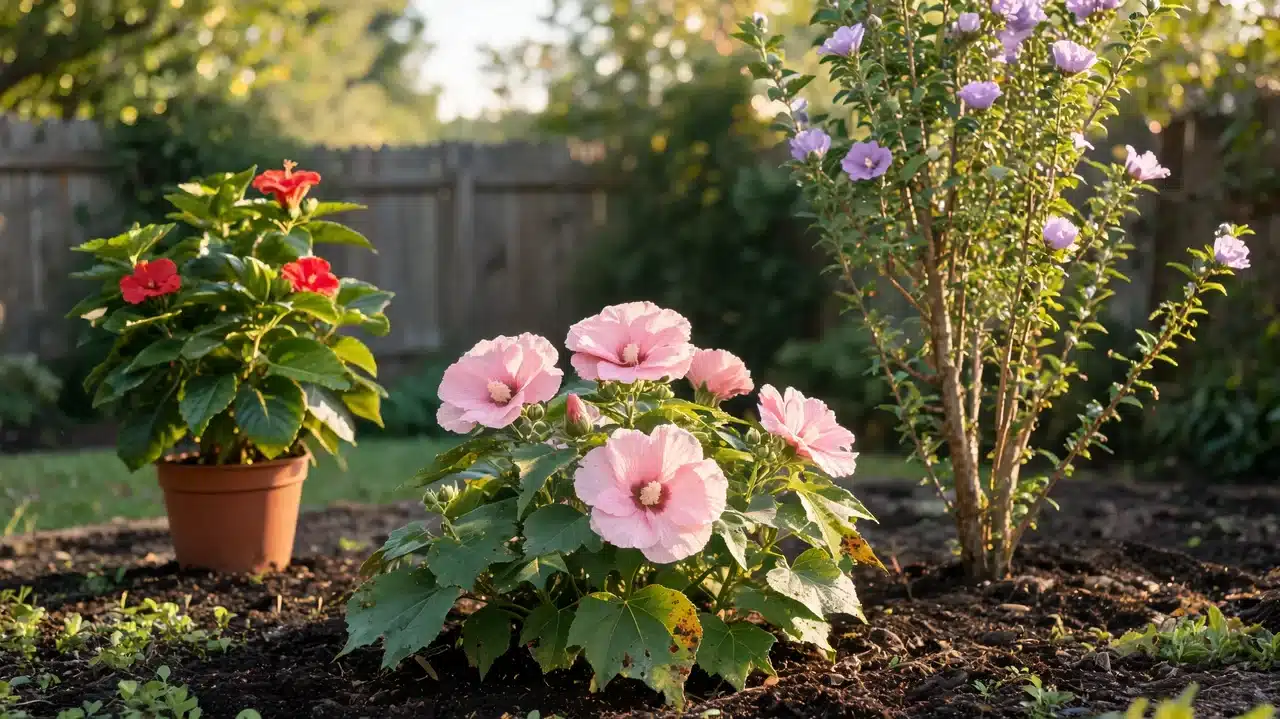
- Hardy hibiscus: A true perennial that dies back in winter and returns from the roots in spring, usually in USDA zones 4 to 9.
- Tropical hibiscus: A perennial in USDA zones 9 to 11 but often grown as an annual or indoor plant in colder climates.
- Rose of Sharon: A woody perennial hibiscus that grows as a flowering shrub and returns each year.
- Cold climate care: Tropical hibiscus must be moved indoors before frost to survive winter.
To know whether a hibiscus will return each year, identify the variety and compare its hardiness range with the local USDA growing zone.
How Big Do Hibiscus Plants Get?
Hibiscus plants typically grow 2 to 15 feet tall and 2 to 10 feet wide, depending on the variety, climate, pruning routine, and available space.
Compact hardy cultivars remain relatively small, while woody types such as Rose of Sharon can develop into large shrubs.
| Hibiscus Type | Typical Height | Typical Width |
|---|---|---|
| Compact hardy hibiscus | 2–4 feet | 2–4 feet |
| Standard hardy hibiscus | 4–8 feet | 4–6 feet |
| Tropical hibiscus | 3–10 feet | 2–6 feet |
| Rose of Sharon | 8–15 feet | 4–10 feet |
| Scarlet rose mallow | 5–7 feet | 3–4 feet |
| Cranberry hibiscus | 3–5 feet | 2–3 feet |
| Cotton rose mallow | 8–15 feet | 6–10 feet |
Hardy hibiscus regains its seasonal height from new shoots each year. Woody types keep their branch structure and become larger over several growing seasons.
Types of Hibiscus
Years of mixing up a hardy variety with a tropical one and losing a plant or two along the way made it clear that flowers alone never tell the full story.
Leaves, stems, and growth habits reveal far more about what’s actually in the ground.
1. Hardy Hibiscus (Hibiscus Moscheutos)
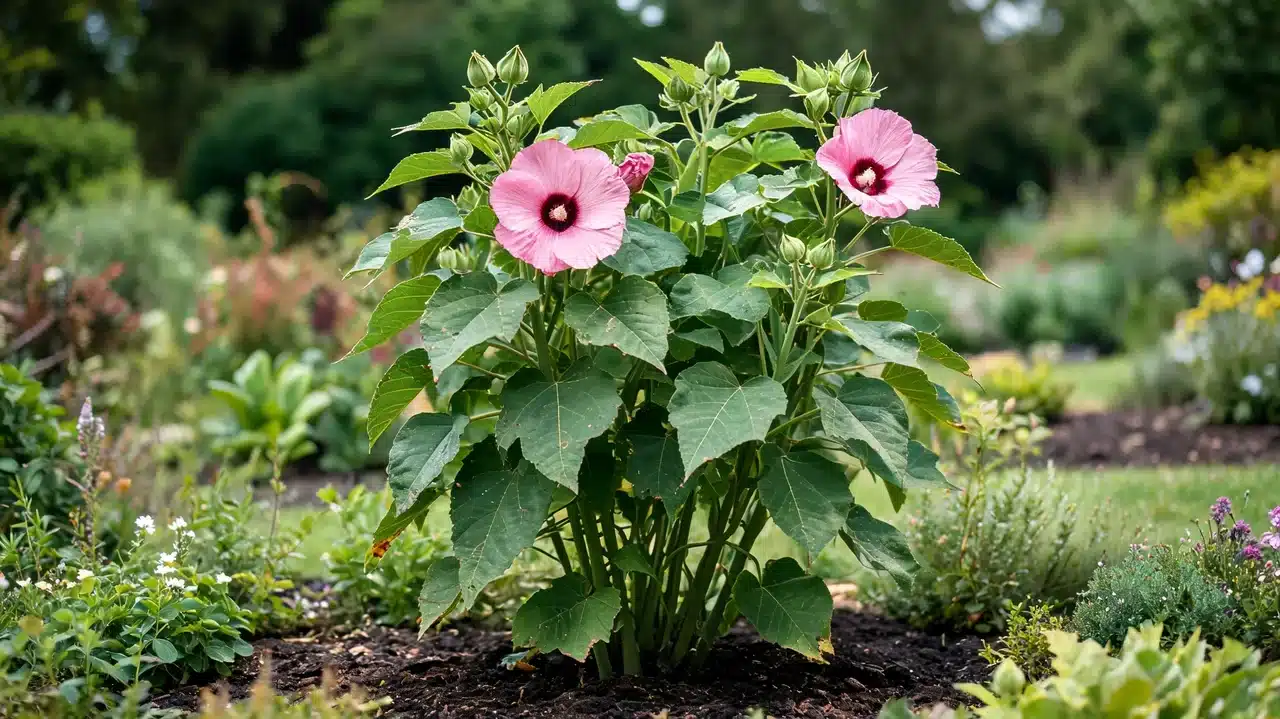
Hardy hibiscus is a herbaceous perennial suited to Zones 4–9. It has broad, dull green leaves and flat flowers measuring up to 12 inches across. Upright stems grow from a single underground crown.
Frost kills the visible growth, but the roots remain alive. New shoots emerge from the soil as temperatures warm, often later than those of other garden perennials.
2. Chinese Hibiscus (Hibiscus Rosa-Sinensis)
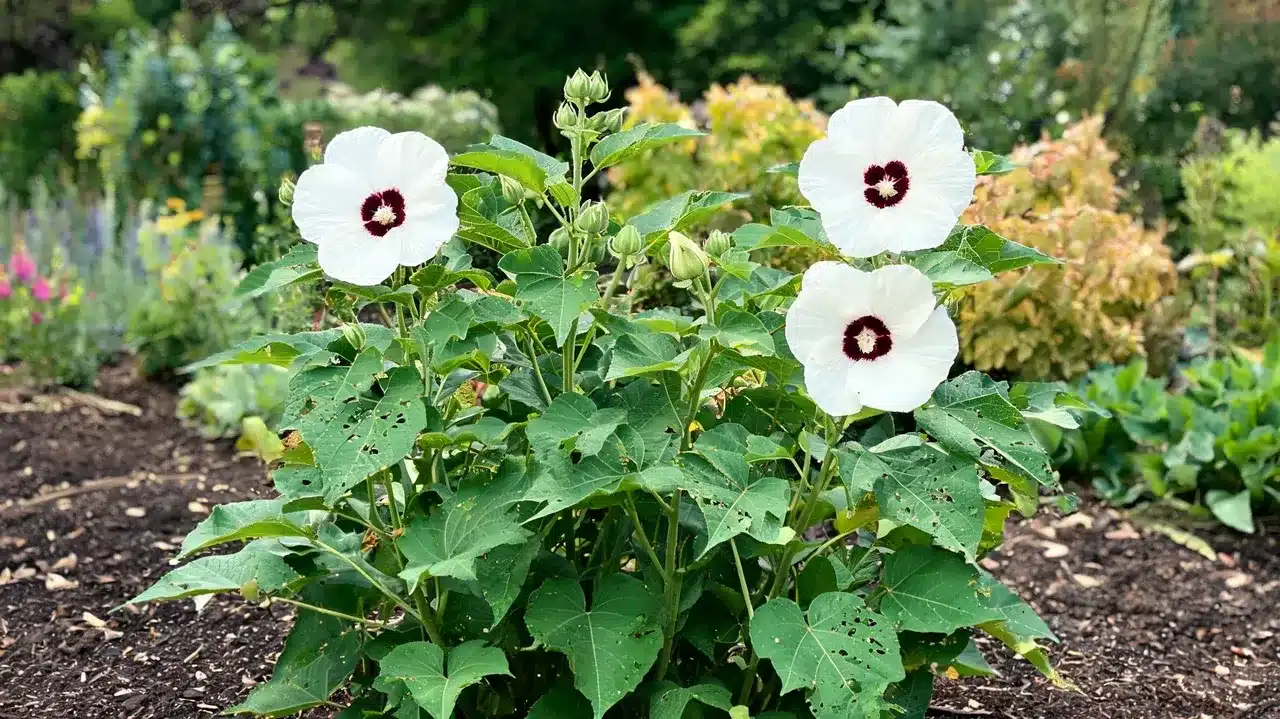
Tropical hibiscus is a tender perennial suited to Zones 9–11. Glossy oval leaves, woody stems, and a long central stamen help identify it.
Flowers may be single or double and appear in many colors.
The plant often remains evergreen in warm climates. Frost damages its foliage and branches, so cold-region plants require indoor shelter or seasonal replacement.
3. Rose of Sharon (Hibiscus Syriacus)
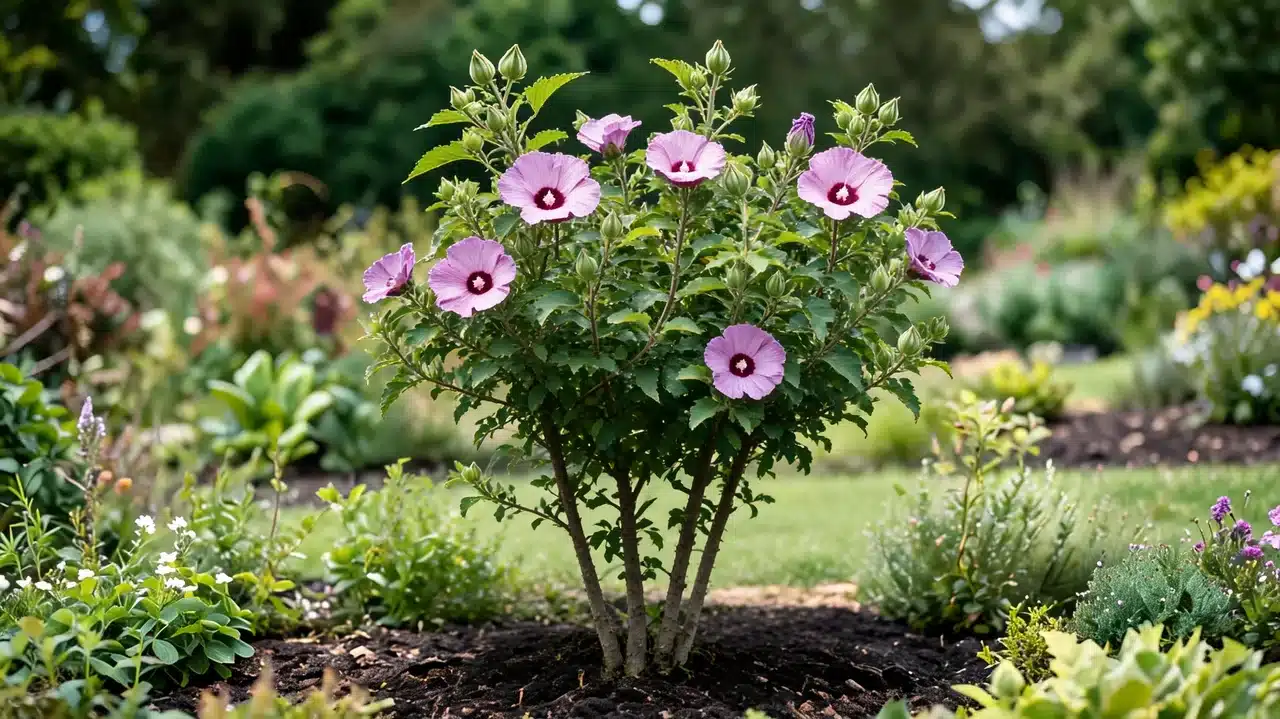
Rose of Sharon is a deciduous perennial shrub hardy in Zones 5–9. It develops upright woody branches covered with smaller, toothed leaves. Numerous flowers open along the stems during warmer months.
The shrub drops its leaves during dormancy but retains its permanent structure, slowly gaining size each year like other flowering shrubs.
New foliage grows from existing branches rather than forming a completely new clump at ground level.
4. Scarlet Rose Mallow (Hibiscus Coccineus)
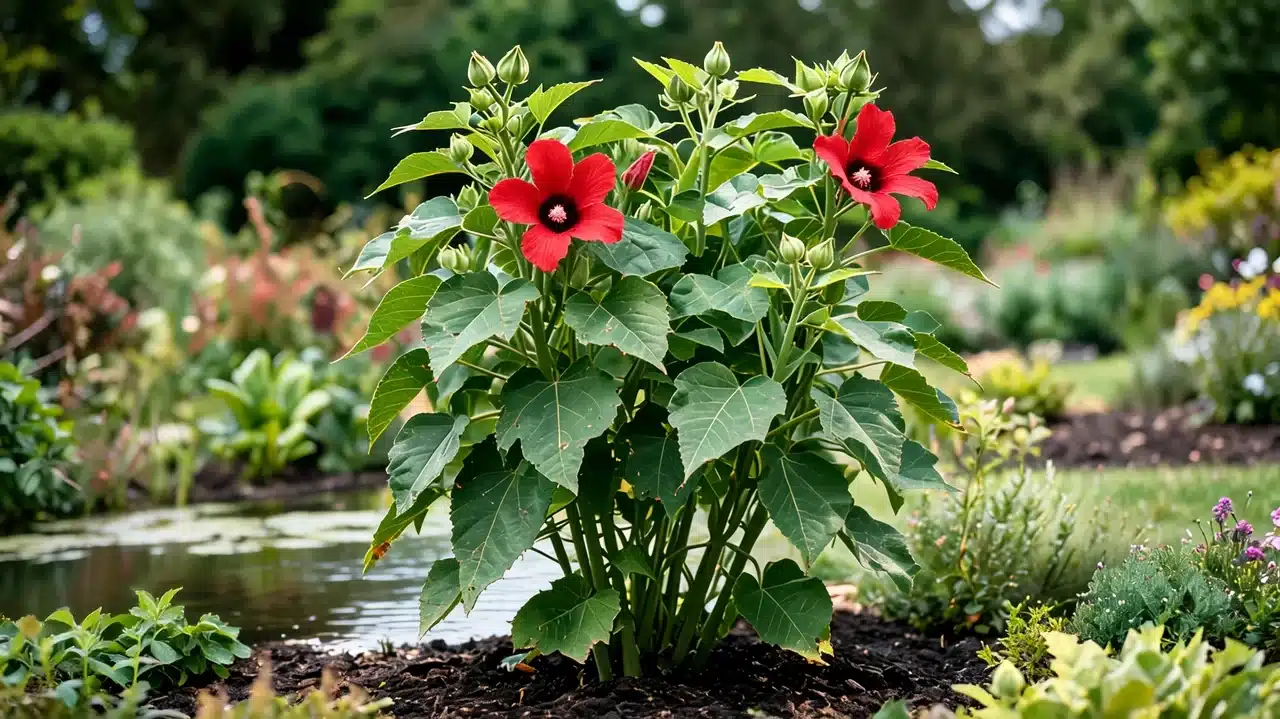
Scarlet rose mallow is a herbaceous perennial suited to Zones 6–9. Its bright red flowers have narrow, separated petals that create a clear star shape.
Deeply divided leaves with finger-like lobes distinguish it from other hibiscus plants.
It prefers full sun and damp ground, tolerates occasional flooding, and produces new stems from its underground crown after dormancy ends.
5. Cotton Rose Mallow (Hibiscus Mutabilis)
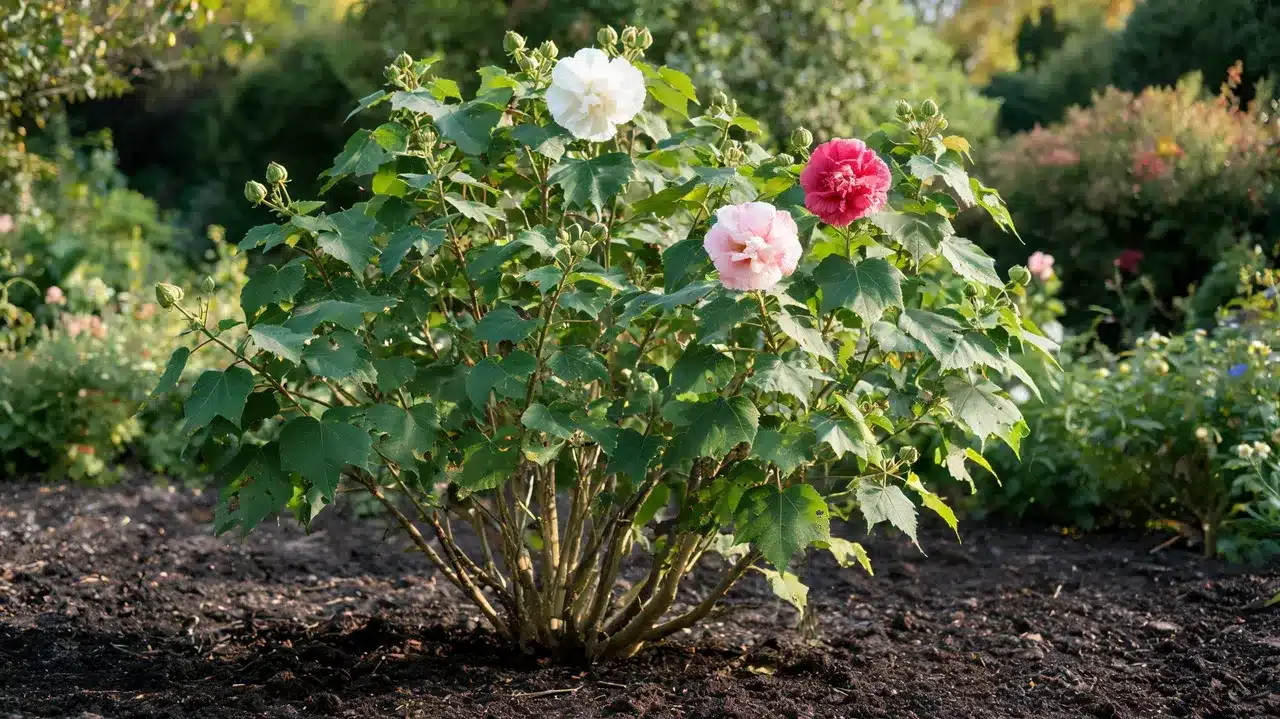
Cotton rose mallow is a shrub-like perennial generally hardy in Zones 7–9. Its flowers often open white before changing to pink and then deeper red as they age.
The plant may die back in cooler parts of its range but retain woody stems in mild climates.
Its broad, spreading form requires more garden space than compact hardy or tropical hibiscus cultivars.
6. Cranberry Hibiscus (Hibiscus Acetosella)
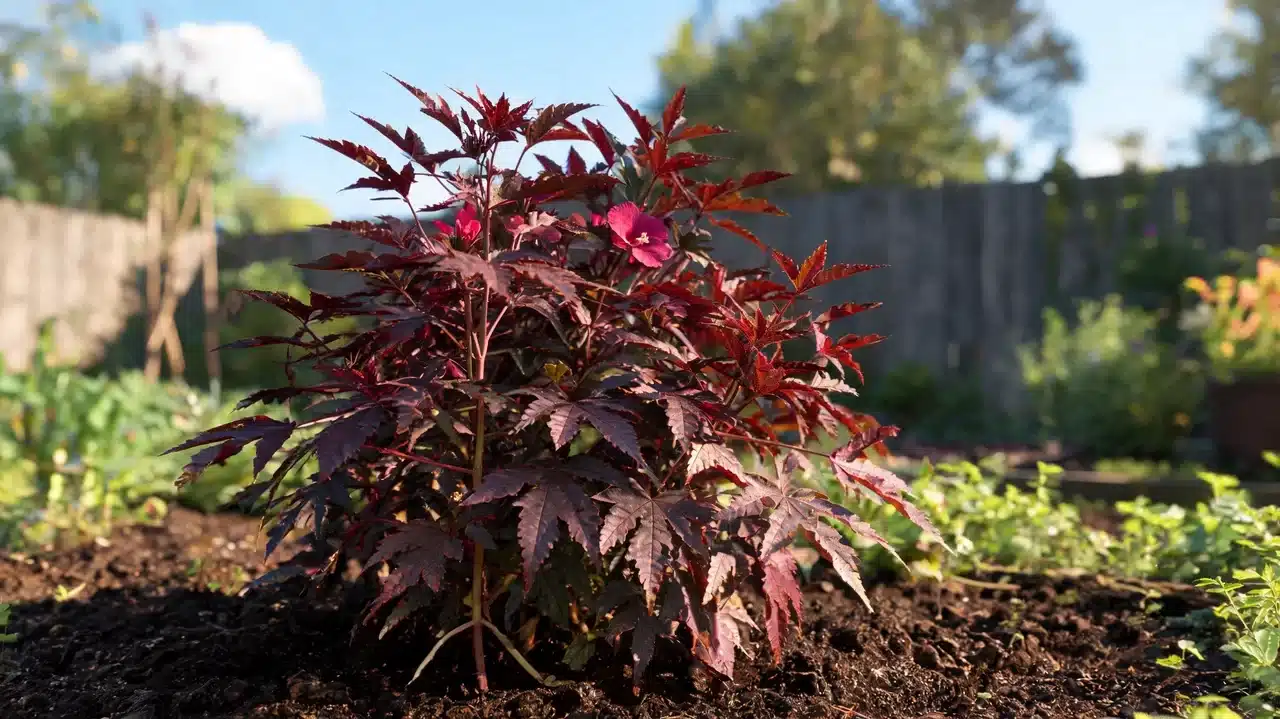
Cranberry hibiscus is a tender perennial recognized by its burgundy or reddish foliage. Its crimson-purple flowers are smaller and less noticeable than its deeply colored leaves.
The plant is commonly grown as an annual outside Zone 9 because freezing temperatures damage it.
Container specimens can be moved indoors before frost and kept near a bright window until outdoor conditions become suitable.
7. Swamp Rose Mallow (Hibiscus Grandiflorus)
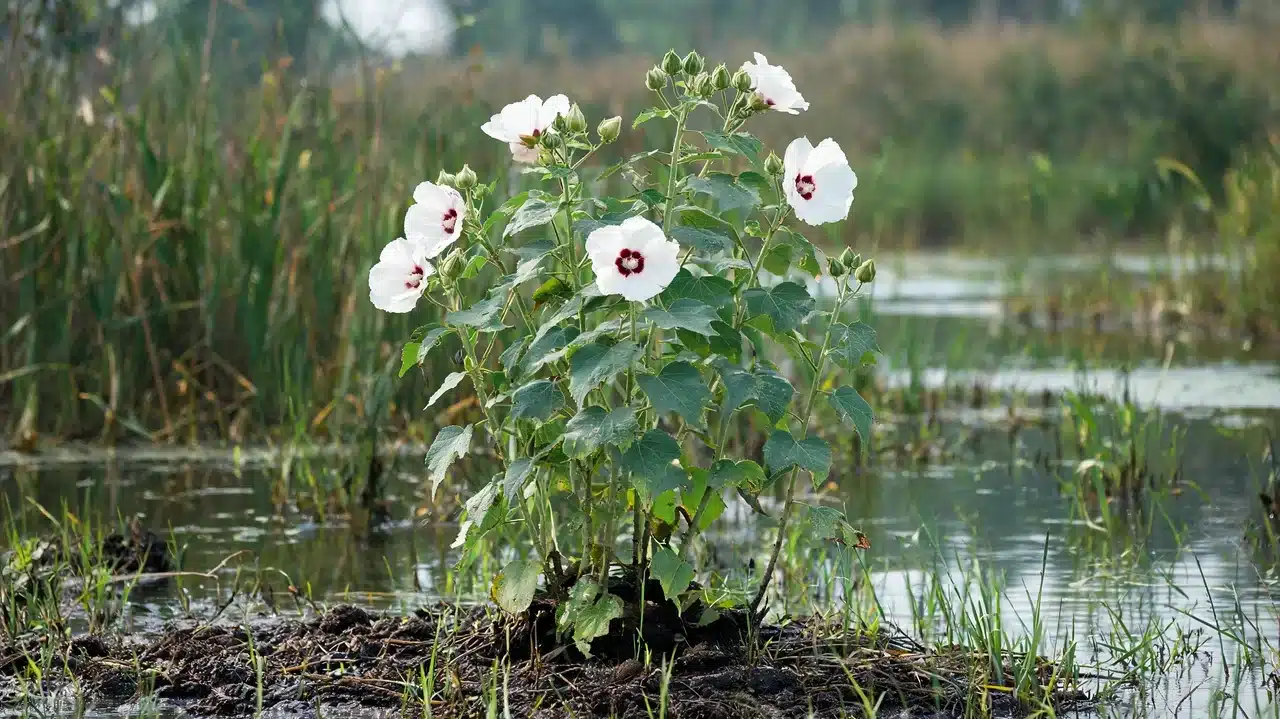
Swamp rose mallow is a wetland herbaceous perennial generally suited to Zones 8–11. It has upright stems, large flowers, and broad leaves with a soft, velvety surface.
This species naturally grows in marshy or occasionally brackish ground.
It suits rain gardens, pond edges, and consistently damp areas where hibiscus plants needing drier conditions may develop weak roots or poor growth.
Growing Conditions for Perennial Hibiscus
The first hardy hibiscus in my garden went into a dry, sunny corner because that’s where hostas had always struggled turns out that was almost the opposite of what it wanted.
According to Clemson’s Home & Garden Information Center, hardy hibiscus can be added to rain gardens since the plants are adapted to consistently moist soil, which explained a lot about that first rough season.
Since then, growing needs have mattered more than looks when deciding where each type goes:
- Hardy hibiscus: Full sun and consistently moist soil work best. Native to wetlands and damp meadows, prolonged dryness tends to show up fast as leaf or bud drop.
- Rose of Sharon: A sunny spot with well-drained soil suits it well. Once established, it tolerates dry spells noticeably better than moisture-loving hardy types.
- Tropical hibiscus: Warm temperatures, bright light, regular watering, and freely draining soil are non-negotiable; cold snaps or soggy roots can damage the plant within days.
Giving each type room to reach its mature spread matters just as much as soil and sun. Crowded stems block airflow and sunlight, which often means weaker growth and noticeably fewer blooms come summer.
The Clemson Extension guide on hardy hibiscus is worth a look if you’re mapping out a rain garden or wetter corner of the yard
Will Hibiscus Return Next Year?
Yes, hibiscus can return next year, but survival depends on the variety, local climate, and winter care.
Hardy hibiscus is a true perennial that dies back after frost while its crown and roots remain alive underground.
It usually produces new shoots in late spring. Rose of Sharon also returns annually because its woody branches survive winter, although its leaves fall.
Tropical hibiscus survives outdoors only in warm climates and should be moved indoors before temperatures drop below 50°F.
Potted hibiscus needs extra protection because exposed roots freeze faster than roots planted in the ground.
Note: Keep newly planted hibiscus lightly moist before freezing, prevent standing water, and add mulch around hardy varieties.
Common Hibiscus Identification and Care Mistakes to Avoid
Several hibiscus species produce similar flowers, making incorrect identification easy. Checking leaves, stems, botanical names, growing zones, and winter habits helps prevent these problems.
- Using flower size alone: Hardy hibiscus often produces larger flowers than tropical varieties, so leaf and stem features also matter.
- Removing dormant plants too early: Hardy hibiscus can emerge late, so allow the soil to warm before assuming the crown has died.
- Treating every perennial as cold-hardy: Tropical hibiscus is perennial by nature but cannot survive freezing temperatures outdoors.
- Cutting Rose of Sharon to the ground: This removes the permanent branch structure that supports future leaves and flowers.
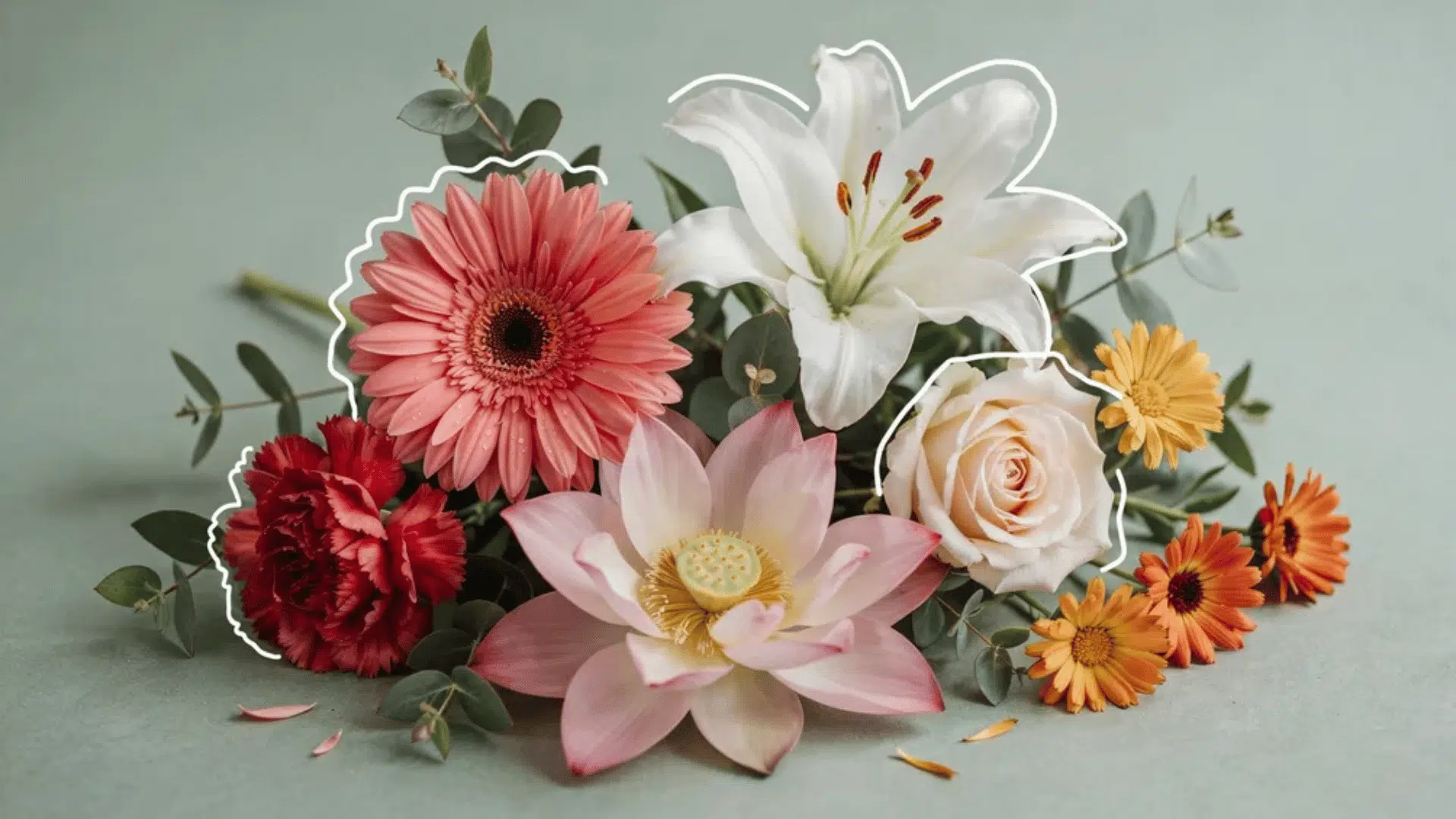
- Relying only on flower color: Hardy, tropical, and shrub hibiscus may share similar red, pink, white, or purple blooms.
- Confusing hibiscus with hollyhock: Hollyhock flowers grow along tall, upright spikes, while hibiscus flowers develop on branching stems.
Conclusion
Hibiscus plants can return for years, but their winter behavior depends on the species and local climate.
If you’re still wondering, “Are hibiscus perennials?” the answer is usually yes, though tropical types need warmth or indoor protection.
Hardy hibiscus grows back from its underground crown, while Rose of Sharon keeps its woody branches.
You can identify each type by checking its botanical name, leaves, flowers, stems, and USDA zone.
I recommend waiting for the soil to warm before removing a hardy plant that appears dead. These checks help you choose the right winter care and avoid losing a healthy plant.
Share your hibiscus flower, leaf, and stem details in the comments below.
Frequently Asked Questions
How Long Does One Hibiscus Flower Last?
Many hibiscus flowers stay open for only one day. Healthy plants produce fresh buds regularly, extending the overall flowering period for several weeks.
Do Hibiscus Plants Attract Hummingbirds?
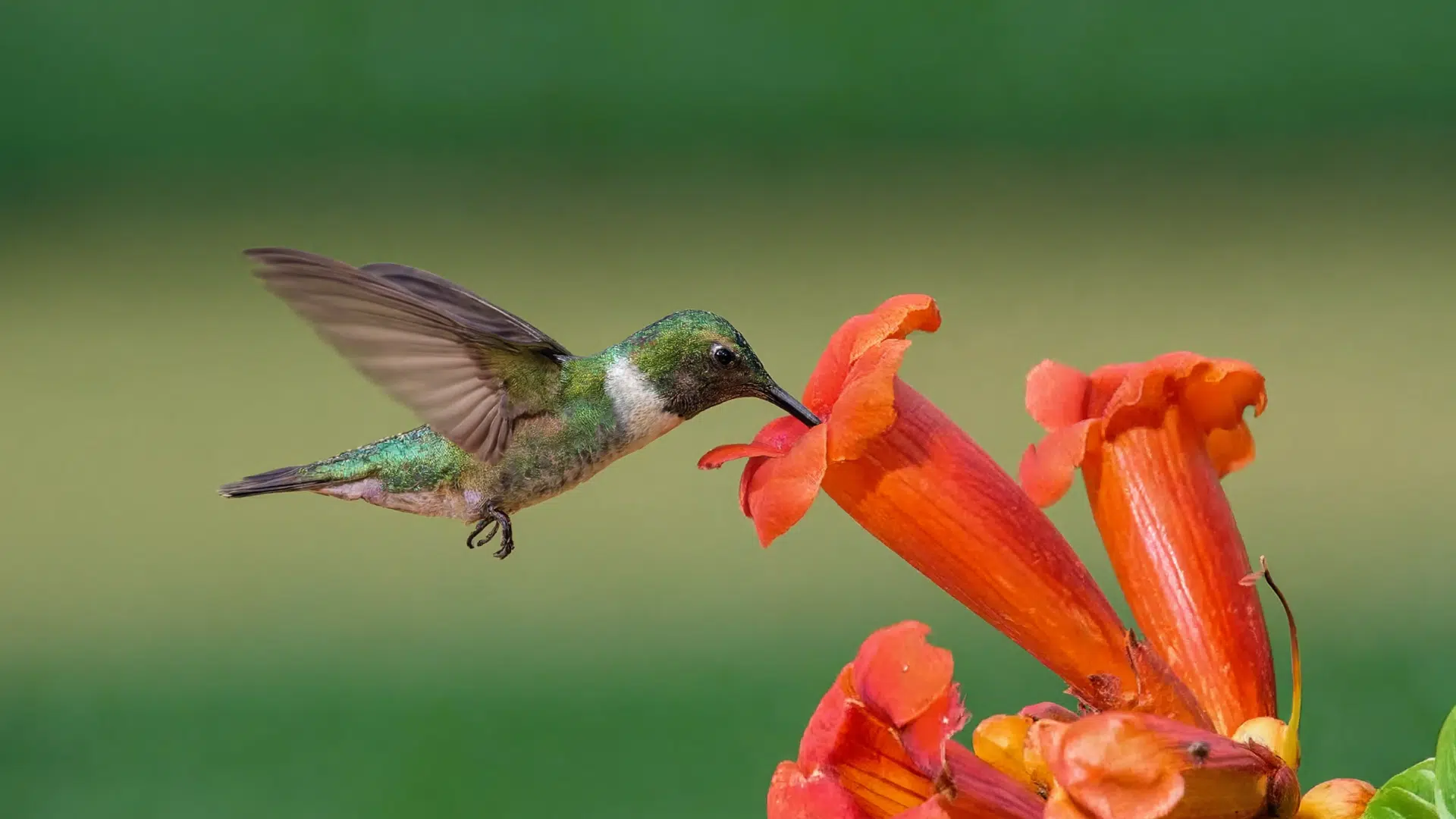
Hibiscus flowers attract hummingbirds, butterflies, and bees with their nectar. Scarlet rose mallow is especially attractive to hummingbirds in sunny, moist gardens.
Can Hibiscus Spread Through the Garden?
Some Rose of Sharon cultivars produce many seedlings around the parent shrub. Seedless or low-seed cultivars are easier to manage in smaller gardens.