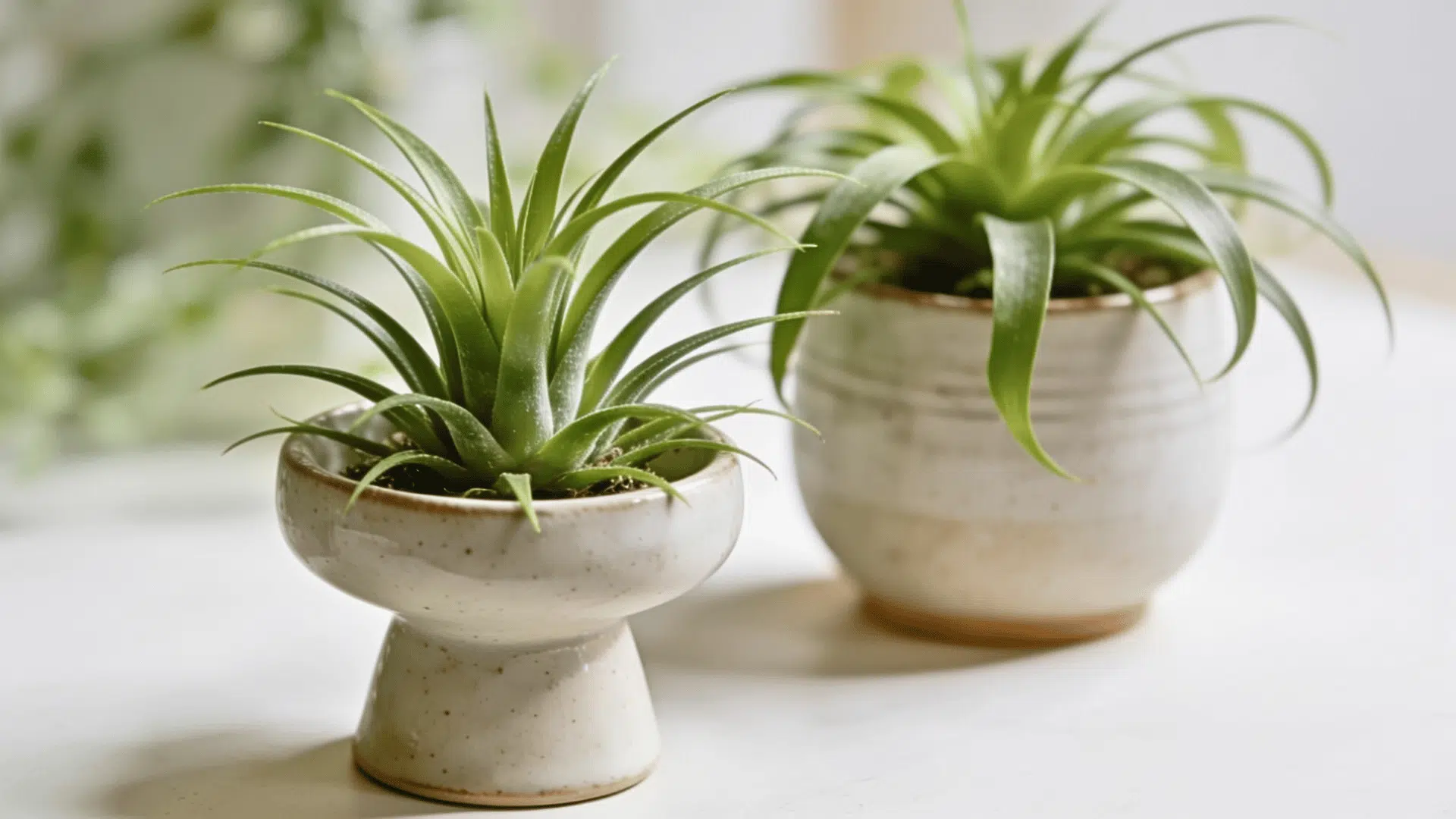
My first air plant nearly died within a month no soil, no pot, just a curious little rosette sitting on my windowsill- and I had no idea what it actually needed. That mistake taught me more about air plant care than any book ever did.
Over the years, through trial, error, and plenty of shriveled leaves, I’ve learned what actually keeps these strange little plants thriving.
This air plant care guide pulls together everything I wish someone had told me back then: the light they crave, the water they tolerate, and the small habits that separate a plant that merely survives from one that truly flourishes on your shelf.
About Air Plant
Air plants are epiphytic members of the Tillandsia genus, native to forests, mountains, and deserts across Central and South America.
They grow without soil, clinging to trees, rocks, and other surfaces while drawing moisture and nutrients directly through specialized leaf scales.
| Attribute | Details |
|---|---|
| Botanical Name | Tillandsia spp. |
| Family | Bromeliaceae |
| Growth Type | Epiphytic (non-parasitic, grows on surfaces) |
| Root Function | Anchoring only, not water/nutrient absorption |
| Leaf Function | Absorbs water and nutrients via trichomes |
| Common Habitat | Trees, rocks, cliffs, desert shrubs |
| Lifespan | Several years; blooms once before producing pups |
| Light Needs | Bright, indirect sunlight |
| Ideal Use | Indoor décor, terrariums, hanging displays |
Common Air Plant Types and Varieties
Choosing the right type depends on your space, experience level, and preferred display style.
The table below compares popular air plant varieties, their leaf features, and ideal uses:
| Common Variety | Leaf Type | Best For |
|---|---|---|
| Tillandsia Ionantha | Thick, compact rosette leaves | Beginners, small displays |
| Tillandsia Xerographica | Silvery, curled leaves | Centerpieces, décor |
| Tillandsia Bulbosa | Thin, twisting leaves | Terrariums, containers |
| Tillandsia Caput-Medusae | Bulbous base, curling leaves | Hanging displays |
Each air plant variety has different growth patterns, colors, and care preferences. Understanding these differences helps you select a plant that fits your space.
If you’re just starting out, grab an Ionantha first. I killed two Xerographicas before I understood how slowly they actually drink water. Ionantha forgives beginner mistakes a lot more kindly.
Indoor and Outdoor Air Plant Care
I’ve kept Tillandsia thriving on a shaded patio and on a plain windowsill, and both taught me the same lesson: light, water, temperature, and airflow matter far more than where the plant actually sits.
Here’s what I’ve learned works best in each setting:
1. Light Requirements

Bright, indirect light supports the strongest air plant care results, with an east-facing window offering ideal filtered sun.
Too little light leads to pale, weak leaves and slower growth, while intense afternoon sun scorches foliage and causes browning.
Outdoors, shaded patios or filtered morning light work best. Related bromeliads, covered in this bromeliad care guide, share similar light preferences, which makes managing a mixed indoor collection much simpler.
2. Watering Methods
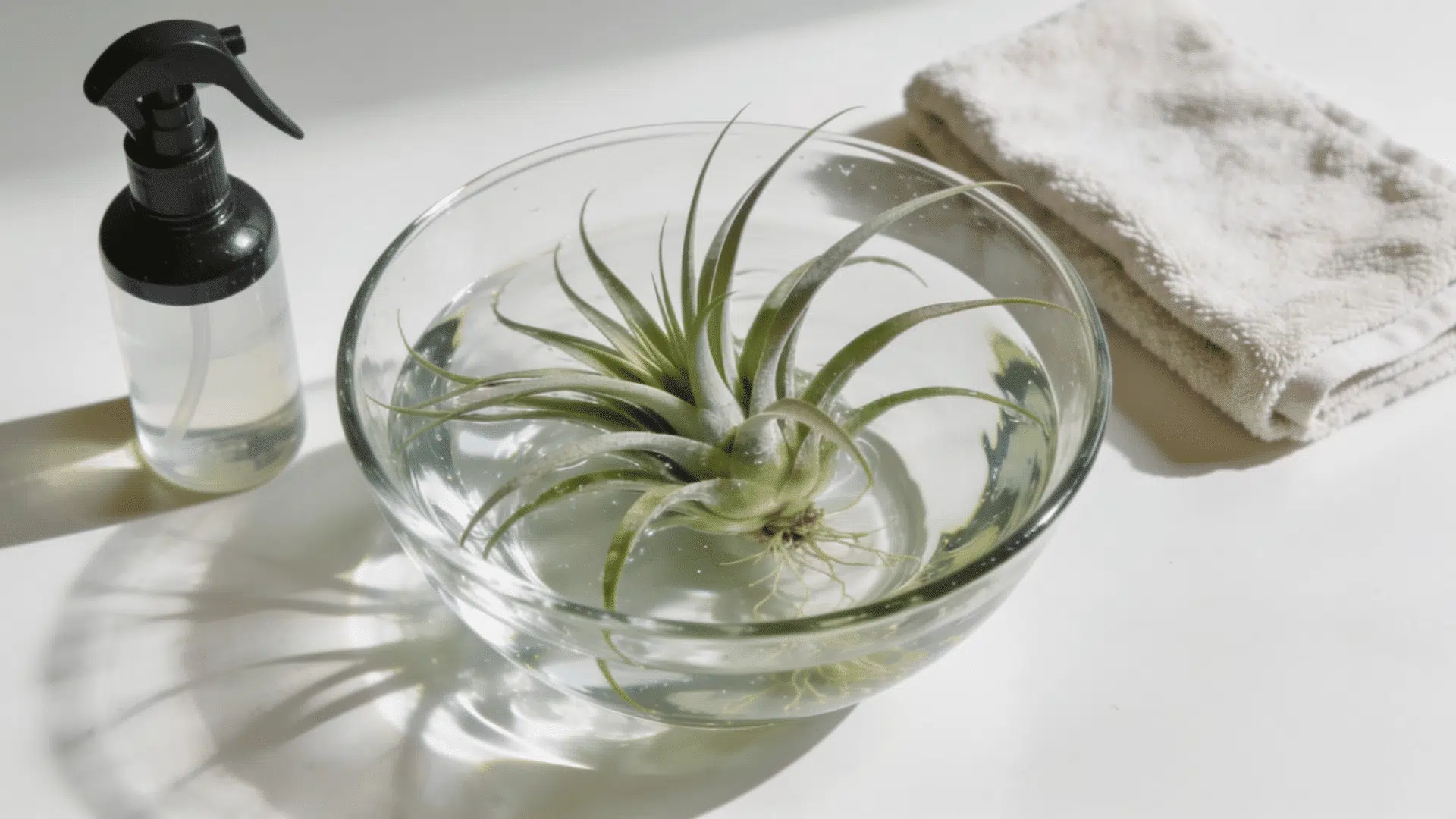

Rainwater, filtered water, or chlorine-free water works best for air plant care watering, since softened water often carries salts that damage delicate leaves over time.
| Method | Frequency | Best Climate |
|---|---|---|
| Soaking | Once weekly for 20–30 minutes | Most indoor environments |
| Misting | Several times weekly when needed | Dry climates with low humidity |
| Rinsing | Every few weeks or between soakings | Humid areas with regular airflow |
Misting works best as extra hydration in dry conditions but does not always replace regular soaking.
3. Drying After Watering

Most air plants are lost right here. After a soak, shake off excess water, then rest the plant upside down or on its side until dry to the touch, usually within three to four hours. Standing water at the base invites rot overnight.
4. Ideal Temperature and Humidity

Air plants prefer moderate temperatures between 50–90°F and should be protected from frost. Avoid placing them near cold drafts, heaters, or extreme temperature changes.
Most Tillandsia enjoy humidity but need good airflow because trapped moisture can increase the risk of rot.
5. Display and Mounting Options for Air Plants

Air plants can be displayed on driftwood, shells, glass globes, and wire holders without soil. Choose displays that allow enough space for air circulation around the leaves.
Avoid sealed containers because trapped moisture can encourage rot and fungal problems. Open displays help plants dry properly while adding natural décor to indoor spaces.
6. Feeding Air Plants for Healthy Growth

Since air plants absorb minerals through their leaves rather than roots, a diluted air-plant or bromeliad fertilizer applied monthly during the growing season is usually enough.
For a gentler alternative, a homemade plant food recipe can supply light nutrients without the risk of overfeeding.
The plants that struggled most in my collection were the ones stuck in a single spot year-round. Rotating a Tillandsia between a bright indoor shelf in winter and a shaded outdoor nook in summer seems to mimic its natural rhythm better than keeping it static; growth noticeably picks up once the plant gets that seasonal shift.
What is the Lifespan of Air Plants?
Most air plants live between two and five years, though some species stretch well beyond that with consistent care.
An individual plant reaches the end of its cycle after blooming, since Tillandsia flowers only once before redirecting energy into producing pups.
Species, growing conditions, and propagation method all influence how long a plant lasts, but those offsets keep the lineage growing well past any single plant’s natural lifetime.
How to Care for Air Plants During Blooming and Flowering
Air plants bloom once in their lifetime, producing colorful flowers before shifting their energy toward new growth.
Proper care during this stage helps Tillandsia stay healthy and supports the development of new pups after flowering.
- Maintain proper light: Bright indirect sunlight helps support healthy blooms and plant strength.
- Continue watering routine: Regular soaking keeps the plant hydrated during the flowering stage.
- Avoid disturbing blooms: Handle flowers gently to prevent damage while they develop.
Once flowers fade, remove spent blooms carefully to maintain appearance. Continue normal care to help the plant complete its natural growth cycle.
What are Common Air Plant Problems?
Air plants are tough little survivors, but they aren’t completely pest-proof.
In several years of keeping a windowsill collection, the only real trouble ever traced back to a new plant brought in without a quarantine check something that’s easy to overlook when a Tillandsia looks so low-maintenance.
A weekly glance is usually enough to catch problems early:
- Mealybugs: small, cottony white clusters that gather where leaves meet, often leaving behind sticky honeydew and weakened growth.
- Scale: tiny brown, shell-like bumps on the underside of leaves that slowly cause yellowing and leaf drop.
- Aphids: sticky residue and curled leaf tips, usually a sign of stress or overcrowding.
Isolating an affected plant immediately prevents pests from spreading to neighboring Tillandsia, and a diluted insecticidal soap treatment typically clears mild infestations within a couple of applications.
According to NC State Extension, mealybugs are among the most common scale insects affecting ornamental plants and cause significant crop damage and control costs each year, which is a good reminder that even hardy plants benefit from routine inspection.
Catching these issues early, before they spread past a leaf or two, keeps recovery simple and growth on track.
How to Propagate Air Plants
Air plants can be propagated by separating pups, which are small new plants that grow from the base of the mother Tillandsia after flowering.
These offsets gradually develop their own leaves and roots, allowing you to create new plants without seeds. Wait until the pups reach about one-third to one-half the size of the parent plant before separating them.
Gently pull the pup away or use a clean tool to divide them without damaging the plant.
After separation, place the new air plant in a location with bright indirect light, regular watering, and good airflow.
Proper care helps young Tillandsia grow stronger and develop into healthy mature plants over time.
Do Air Plants Like to Be Touched?
Occasional handling won’t harm Tillandsia, and gentle touch is often necessary during mounting, repositioning, or removing spent leaves.
However, frequent squeezing or rough handling can bruise delicate leaf tips and stress the plant over time.
Treat air plants the way you’d treat any living, breathing organism curious hands are fine, but constant poking or tight gripping isn’t something these lightweight plants particularly enjoy.
Wrapping Up
Looking back, every dried-out leaf and rotted base taught something these plants never spelled out directly: air plant care rewards attention more than effort.
Light, water, airflow, and a little patience turn a fragile-looking rosette into something that quietly thrives for years.
From choosing the right variety to reading the warning signs of pests or overwatering, these air plant care instructions cover the groundwork, but real confidence comes from watching your own plant respond to small changes.
No soil, no pot, just a living thing that asks for the basics done right. That’s the whole trick, really.
Now it’s your turn: drop a comment below and share your favorite air plant variety, a hard-earned lesson, or a display idea that’s worked in your space. Growing better together starts with swapping stories.
Frequently Asked Questions
Why Does My Air Plant Have Brown Leaf Tips?
Brown tips often appear due to dehydration, dry air, or excessive sunlight. Adjust watering and placement to improve plant condition.
Do Air Plants Need a Drainage Hole?
Air plants don’t need drainage holes because they aren’t grown in soil, but they do need space for excess water to drain and dry.
Can Air Plants Be Kept Outside All Year?
Air plants can stay outdoors in suitable climates but should be protected from frost, extreme heat, and severe weather.