
Some peonies disappear completely each winter, leaving nothing but bare soil until spring. Others stand firm as woody shrubs, holding their shape through the coldest months.
Plant them side by side without knowing the difference, and a border quickly turns into a mismatch of uneven heights and wasted space.
The secret is that there are only a few types of peonies, and once the categories click into place, choosing the right one stops feeling like a gamble.
Growth habit, bloom form, and hardiness zone reveal almost everything before a single plant goes in the ground. What comes next makes that choice remarkably simple.
What Are the Major Categories of Peonies?
Peonies fall into three major categories: herbaceous peonies, tree peonies, and Itoh or intersectional peonies.
- Herbaceous peonies: They grow as soft perennial stems that die back to the ground each winter and return the following spring.
- Tree peonies: They are woody shrubs that remain upright through winter rather than die back, giving them a more permanent presence in a landscape.
- Itoh peonies: These peoniessit in between the two, combining the sturdy stems of tree peonies with the die-back growth habit of herbaceous types, which often gives them a longer bloom period.
Each type has its own growth habit, winter behavior, and best use in a garden, which makes them fairly easy to tell apart once you know what to look for.
What Are Peony Cultivars?
Peony cultivars are named varieties of peonies that are developed for specific traits, such as flower color, bloom shape, fragrance, plant height, flowering time, and garden performance.
Each cultivar has its own characteristics, even when two peonies belong to the same main type.
Popular peony cultivars like Sarah Bernhardt, Bartzella, and High Noon are grown for their unique blooms, reliable growth, and different garden uses.
Selecting the right cultivar helps gardeners find peonies that match their preferred color, space, climate, and planting goals.
Herbaceous Peony Cultivars
Herbaceous peonies are the most familiar type, growing as soft perennial clumps that die back each winter and return each spring.
They bloom in late spring with large, fragrant flowers, making them a natural fit for garden borders and cutting gardens.
1. Sarah Bernhardt
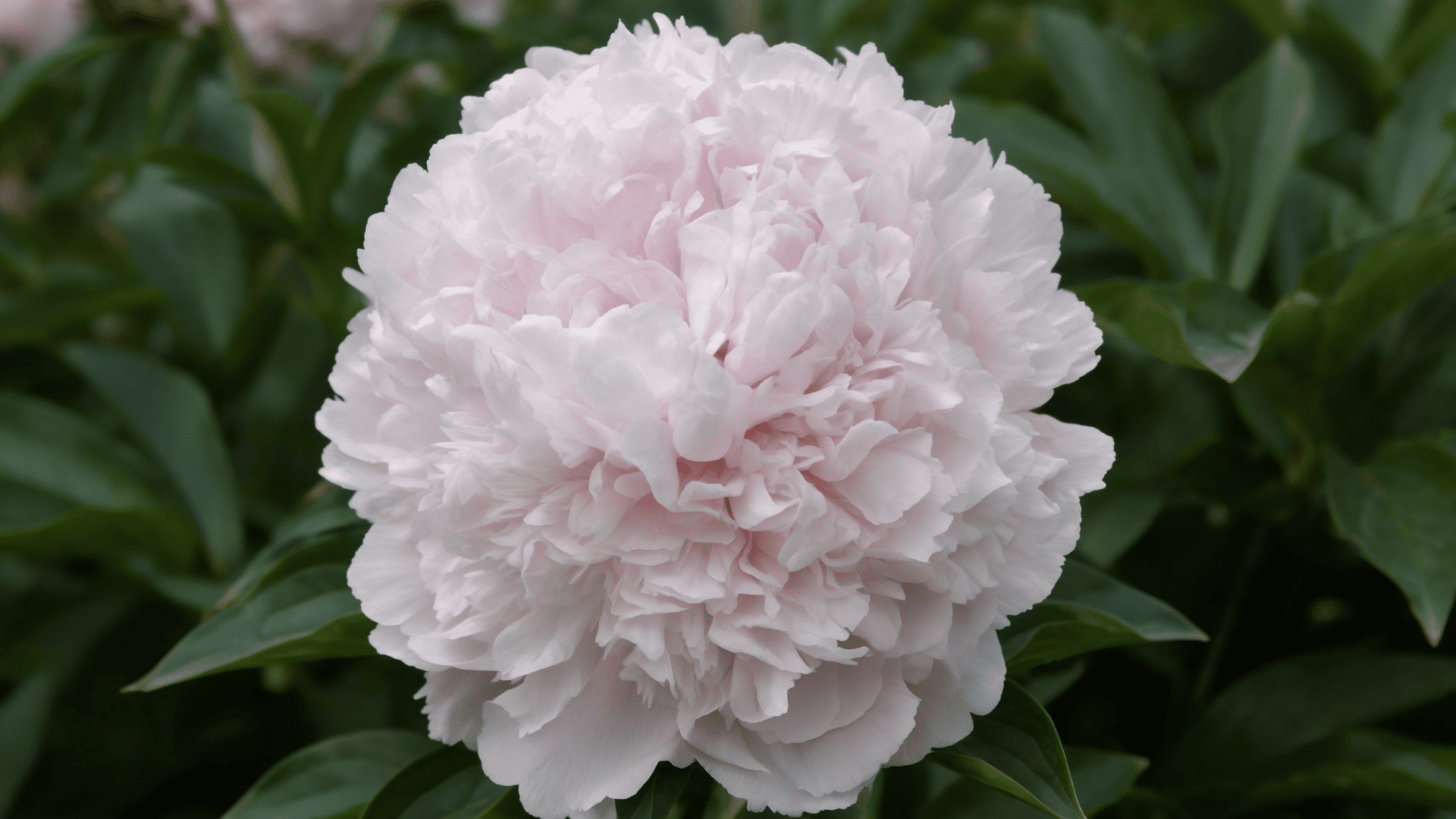
- Botanical Name: Paeonia lactiflora
- Height: 28 to 36 in (70 to 90 cm)
- Sun Requirements: Full sun to partial shade
- Hardiness Zone: 3 to 8
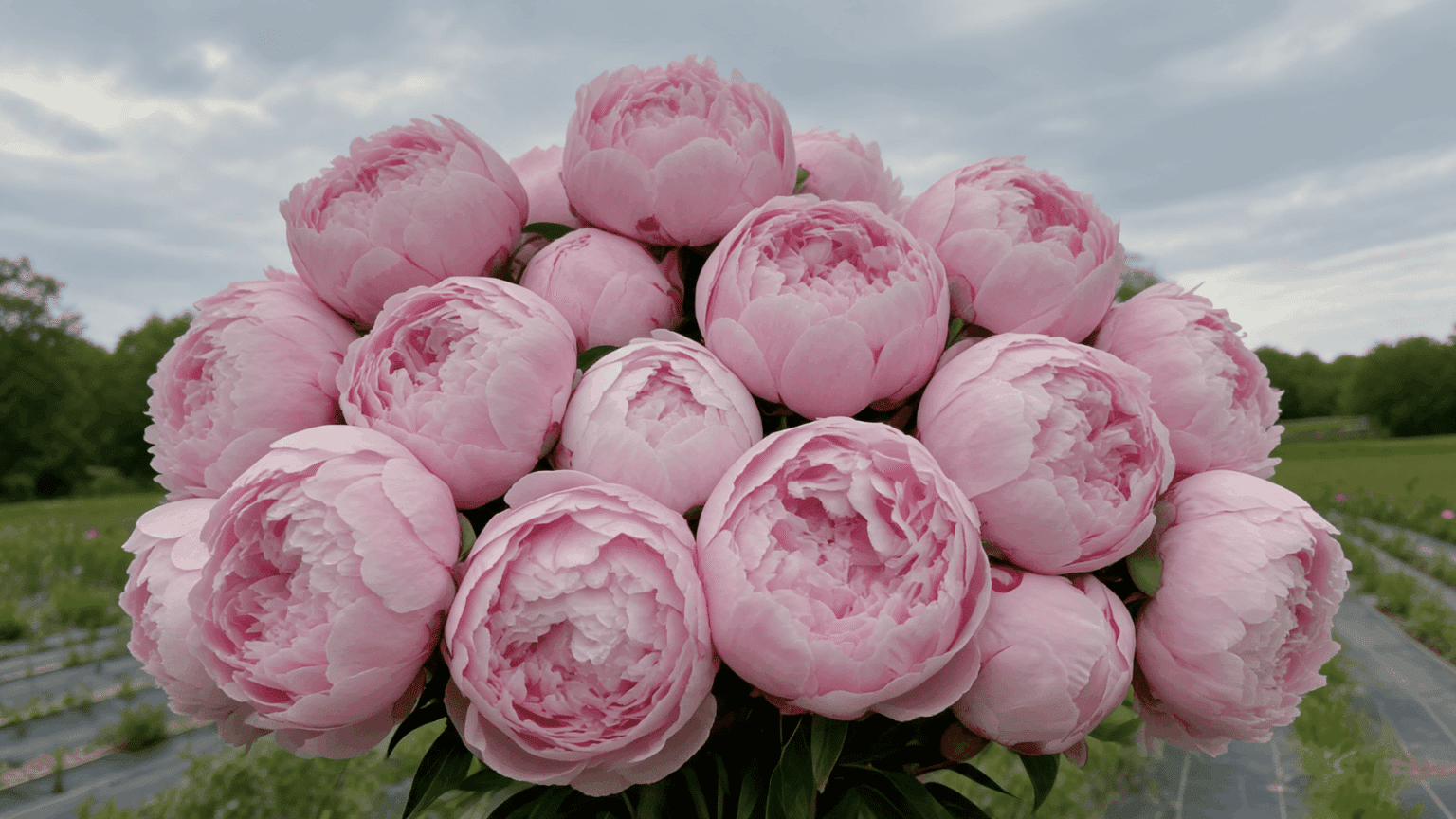
This cultivar produces large, heavily fragrant pink double blooms held on sturdy stems, making it a longtime favorite for classic garden borders.
The flowers open in ruffled layers and hold up well once cut, so gardeners often grow a dedicated row just for bringing blooms indoors during the short flowering window.
2. Festiva Maxima
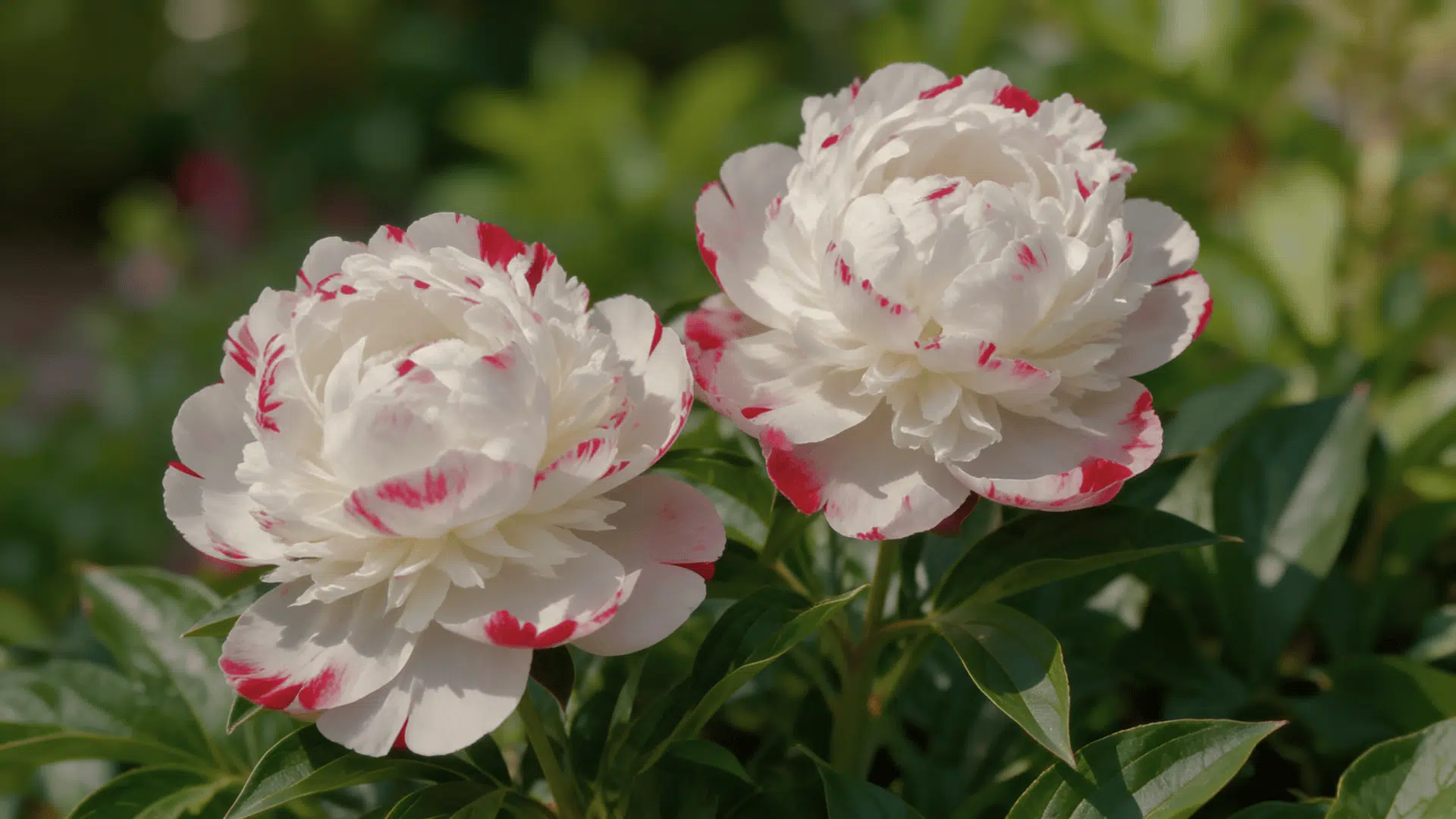
- Botanical Name: Paeonia lactiflora
- Height: 30 to 36 in (75 to 90 cm)
- Sun Requirements: Full sun
- Hardiness Zone: 3 to 8
Festiva Maxima carries white double blooms flecked with small streaks of red near the center, giving each flower a distinctive touch of color.
It carries a strong, sweet fragrance and blooms early in the season, which makes it a common anchor plant in formal and traditional garden layouts.
3. Coral Charm
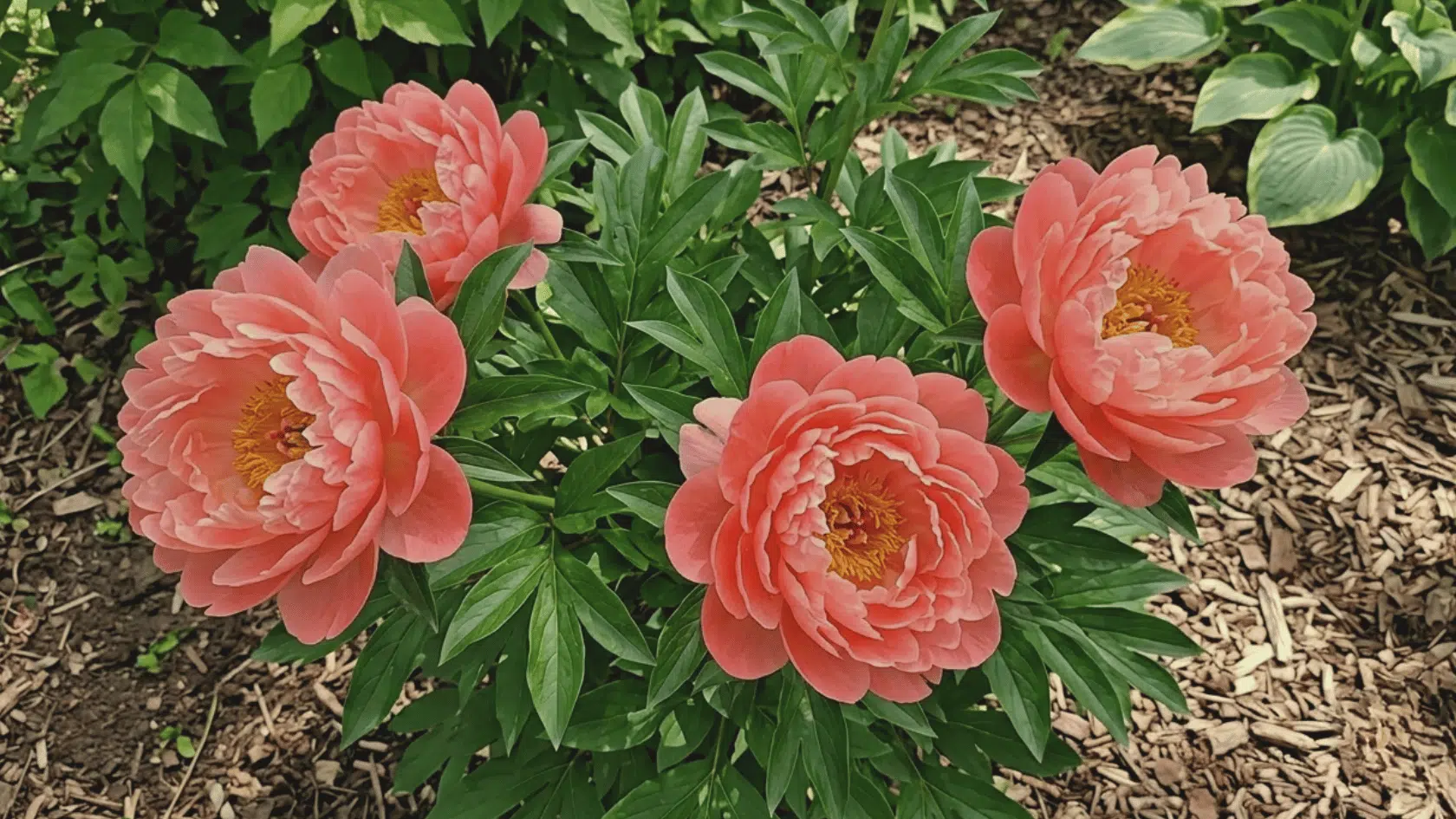
- Botanical Name: Paeonia lactiflora
- Height: 28 to 34 in (70 to 85 cm)
- Sun Requirements: Full sun
- Hardiness Zone: 3 to 8
Coral Charm opens in a bright coral shade and slowly shifts to a softer peach-and-pink tone as the bloom matures, giving a single plant several looks over its flowering period.
The semi-double flower form and unusual color make it a standout in mid-season borders.
4. Karl Rosenfield
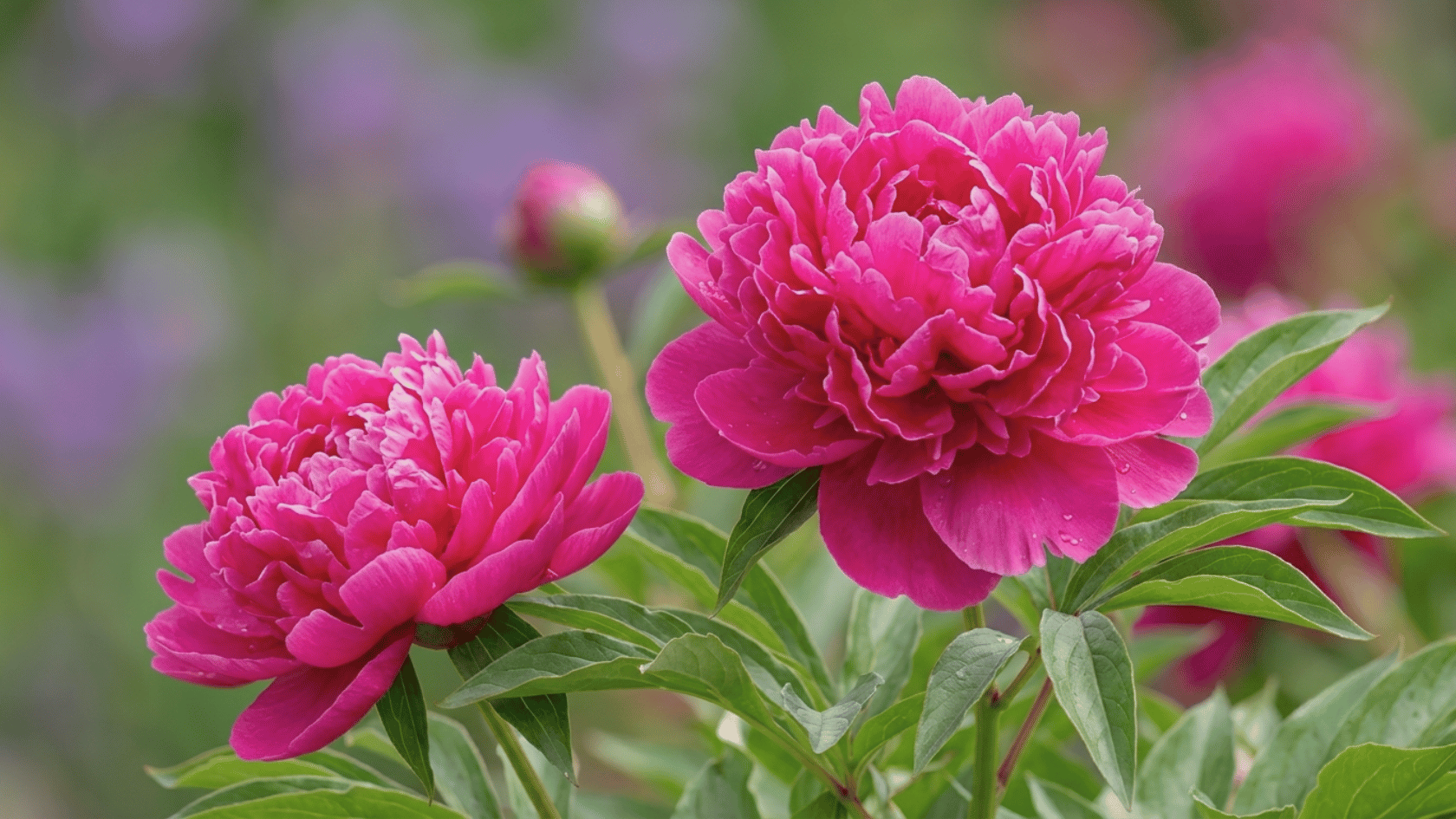
- Botanical Name: Paeonia lactiflora
- Height: 30 to 36 in (75 to 90 cm)
- Sun Requirements: Full sun
- Hardiness Zone: 3 to 8
This variety produces deep red double flowers with a rounded, full shape that reads clearly from a distance.
The strong stems hold the heavy blooms upright with minimal support, making Karl Rosenfield a reliable focal planting for garden beds that need a bold splash of color.
5. Shirley Temple
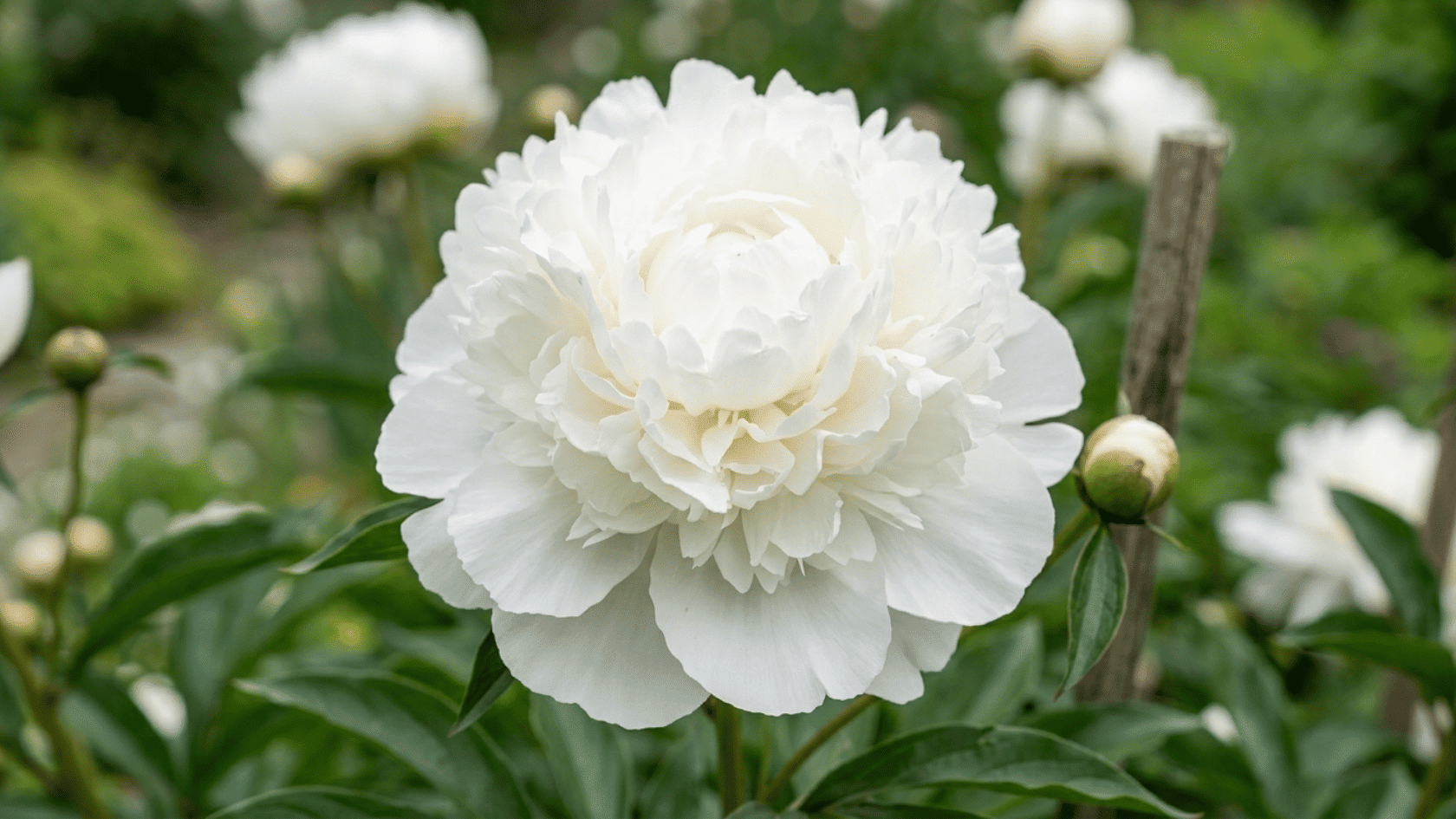
- Botanical Name: Paeonia lactiflora
- Height: 28 to 32 in (70 to 80 cm)
- Sun Requirements: Full sun
- Hardiness Zone: 3 to 8
Shirley Temple opens as a soft blush pink double bloom that fades to nearly white as it matures, giving borders a gentle, layered color effect.
Its light fragrance and rounded petal form make it a common choice for romantic garden themes and soft-toned flower arrangements.
6. Red Charm
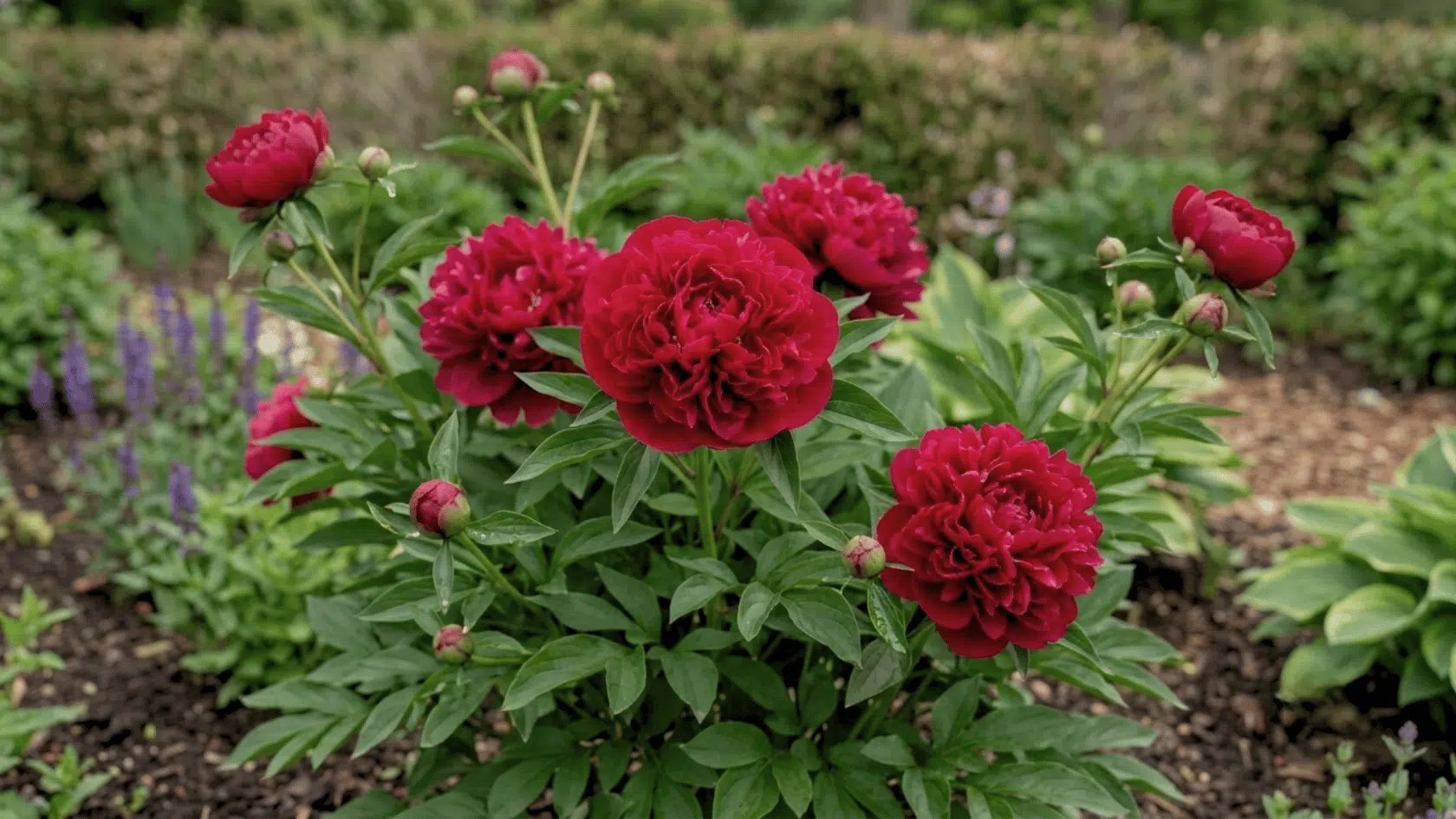
- Botanical Name: Paeonia lactiflora
- Height: 28 to 36 in (70 to 90 cm)
- Sun Requirements: Full sun
- Hardiness Zone: 3 to 8
Red Charm produces vibrant, deep-red double blooms with a dense, rounded shape that holds its color well throughout the bloom period.
The sturdy stems and strong color make it a popular pick for cutting gardens, where a few stems can carry an entire arrangement on their own.
7. Duchesse de Nemours
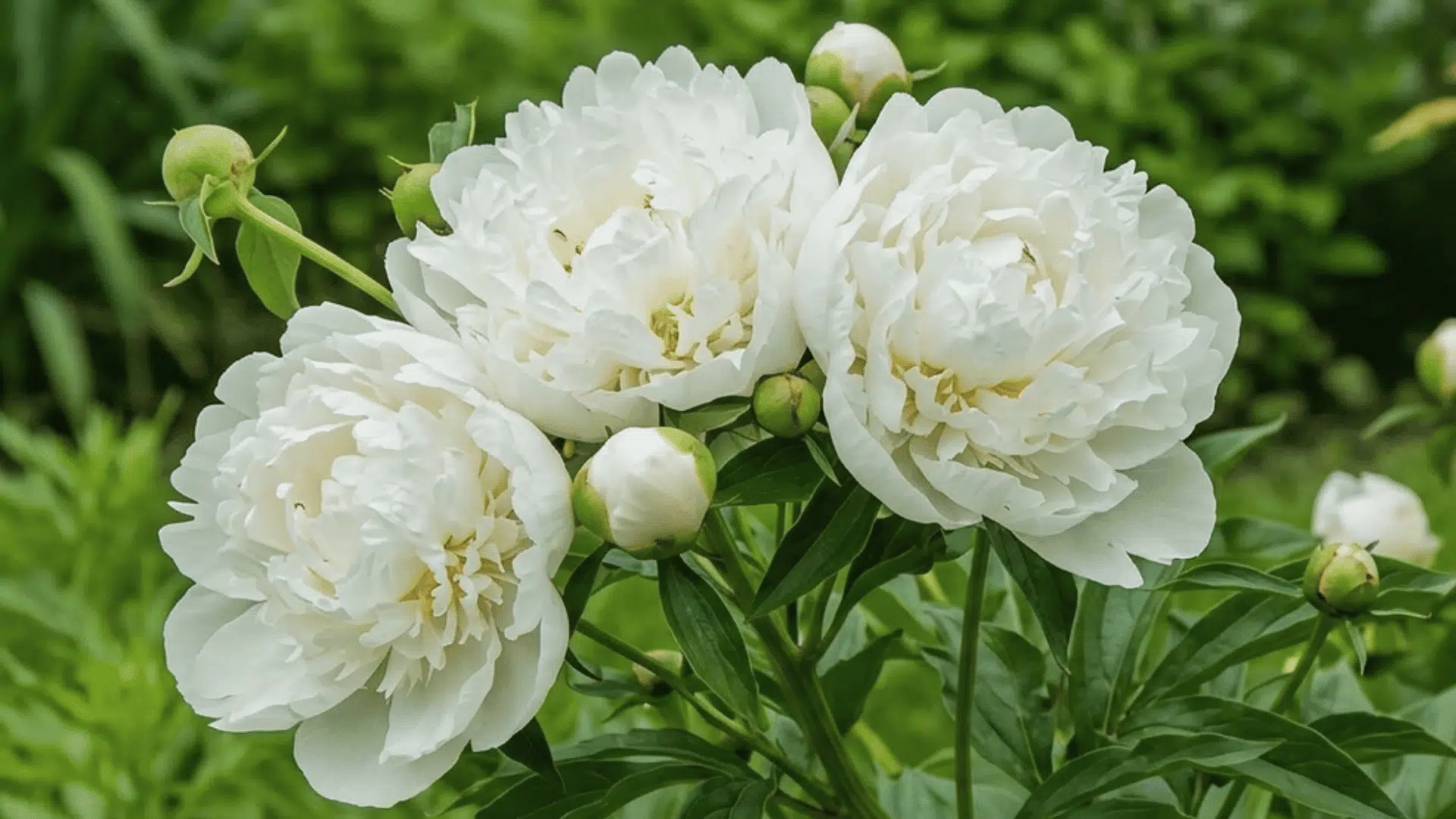
- Botanical Name: Paeonia lactiflora
- Height: 30 to 34 in (75 to 85 cm)
- Sun Requirements: Full sun
- Hardiness Zone: 3 to 8
This older cultivar produces large, pure white double flowers with a light yellow tint near the center and a strong, sweet fragrance.
Its classic form and clean color fit naturally into cottage-style gardens, and the plant has stayed popular for generations of gardeners for that reason.
8. Bowl of Beauty
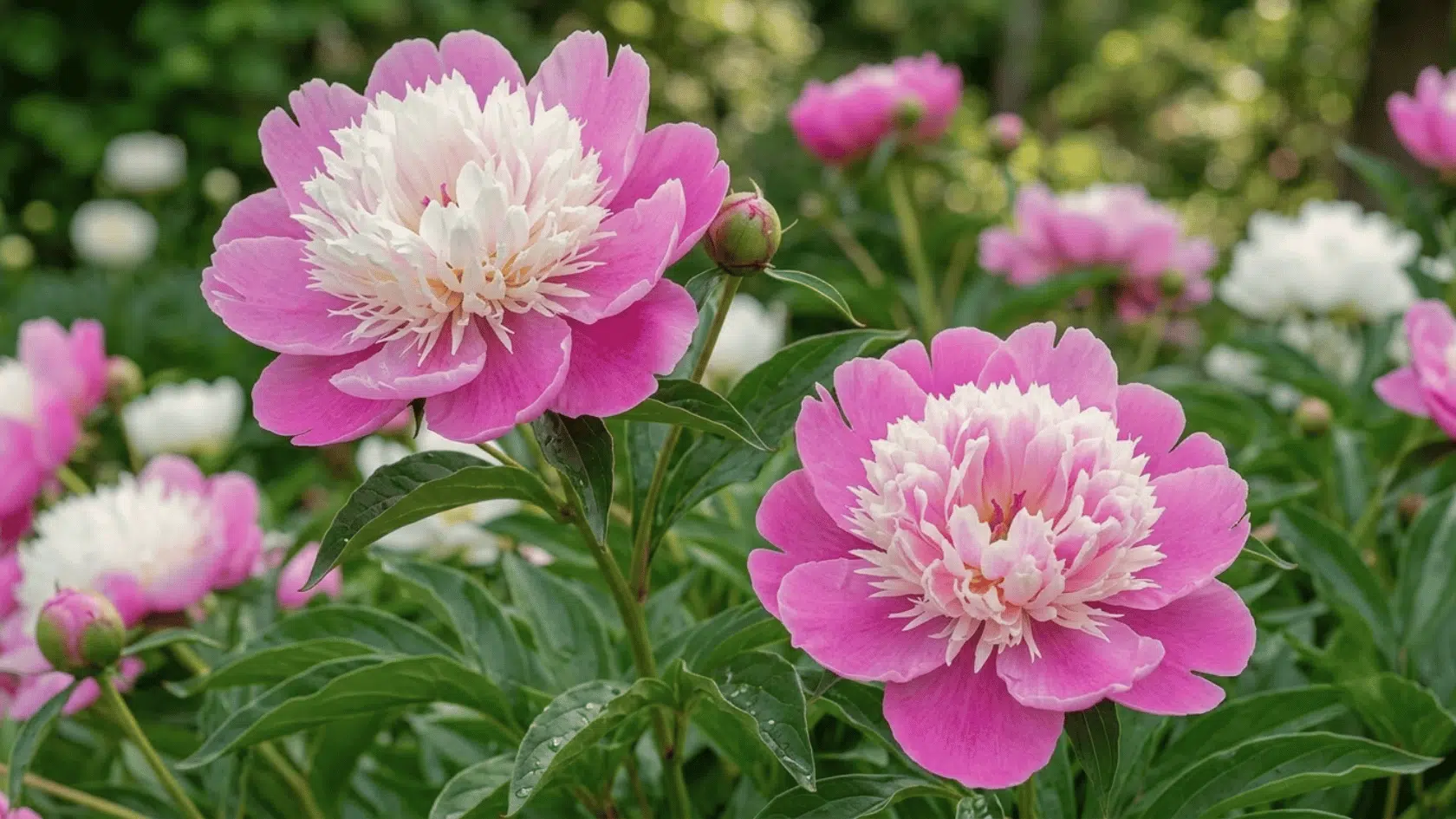
- Botanical Name: Paeonia lactiflora
- Height: 30 in (75 cm)
- Sun Requirements: Full sun
- Hardiness Zone: 3 to 8
Bowl of Beauty stands apart from double-flowered types with its distinctive anemone form, where pink outer petals surround a raised cluster of creamy yellow center petals.
This contrast in color and texture makes it a strong visual accent when planted alongside more traditional double-blooming peonies.
9. Buckeye Belle
- Botanical Name: Paeonia lactiflora
- Height: 28 to 32 in (70 to 80 cm)
- Sun Requirements: Full sun
- Hardiness Zone: 3 to 8
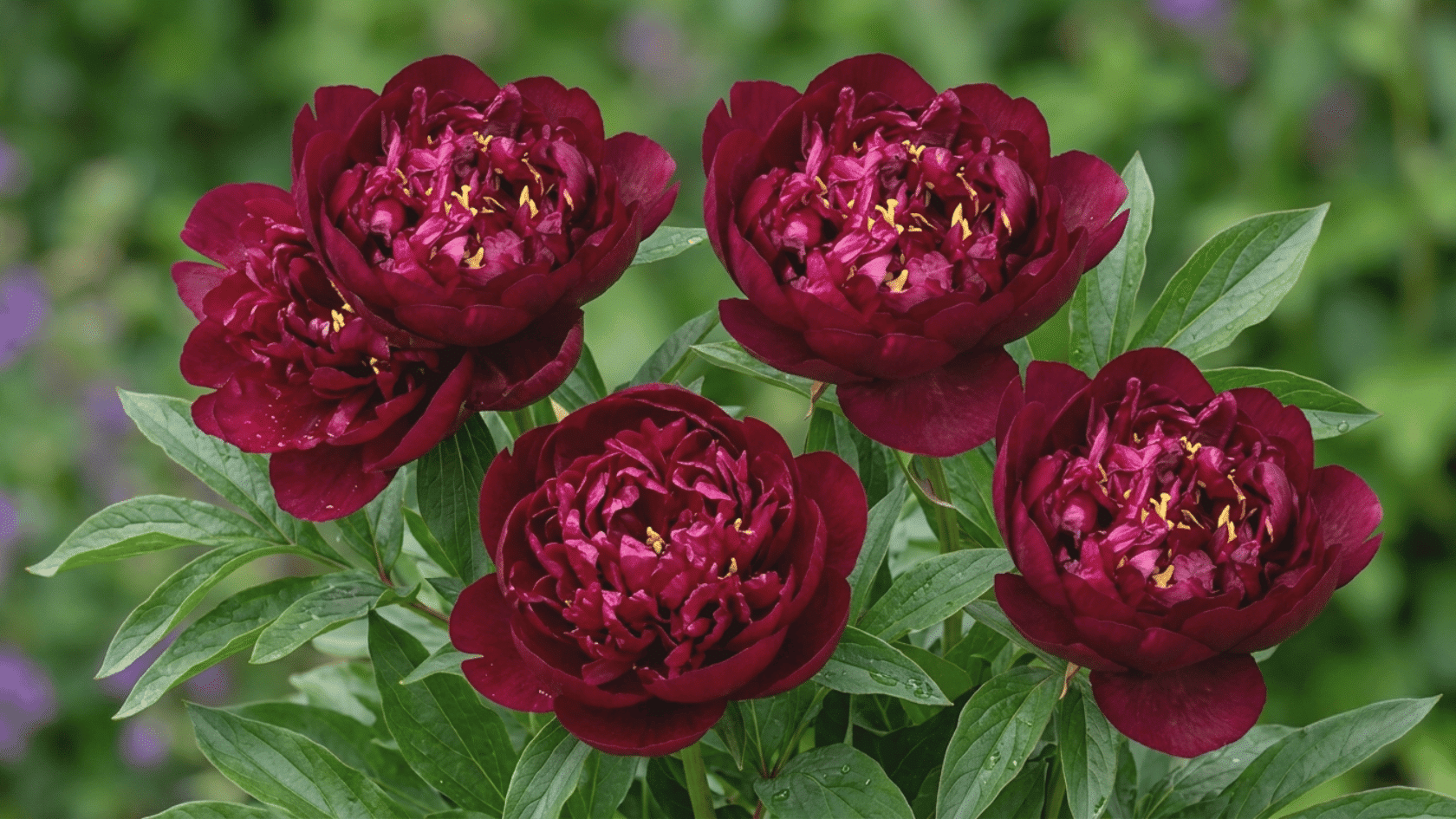
Buckeye Belle produces deep red, semi-double blooms on compact, strong stems that rarely need staking.
It tolerates a range of soil conditions and establishes quickly after planting, making it a practical starting point for gardeners growing peonies for the first time.
10. Monsieur Jules Elie
- Botanical Name: Paeonia lactiflora
- Height: 28 to 36 in (70 to 90 cm)
- Sun Requirements: Full sun
- Hardiness Zone: 3 to 8
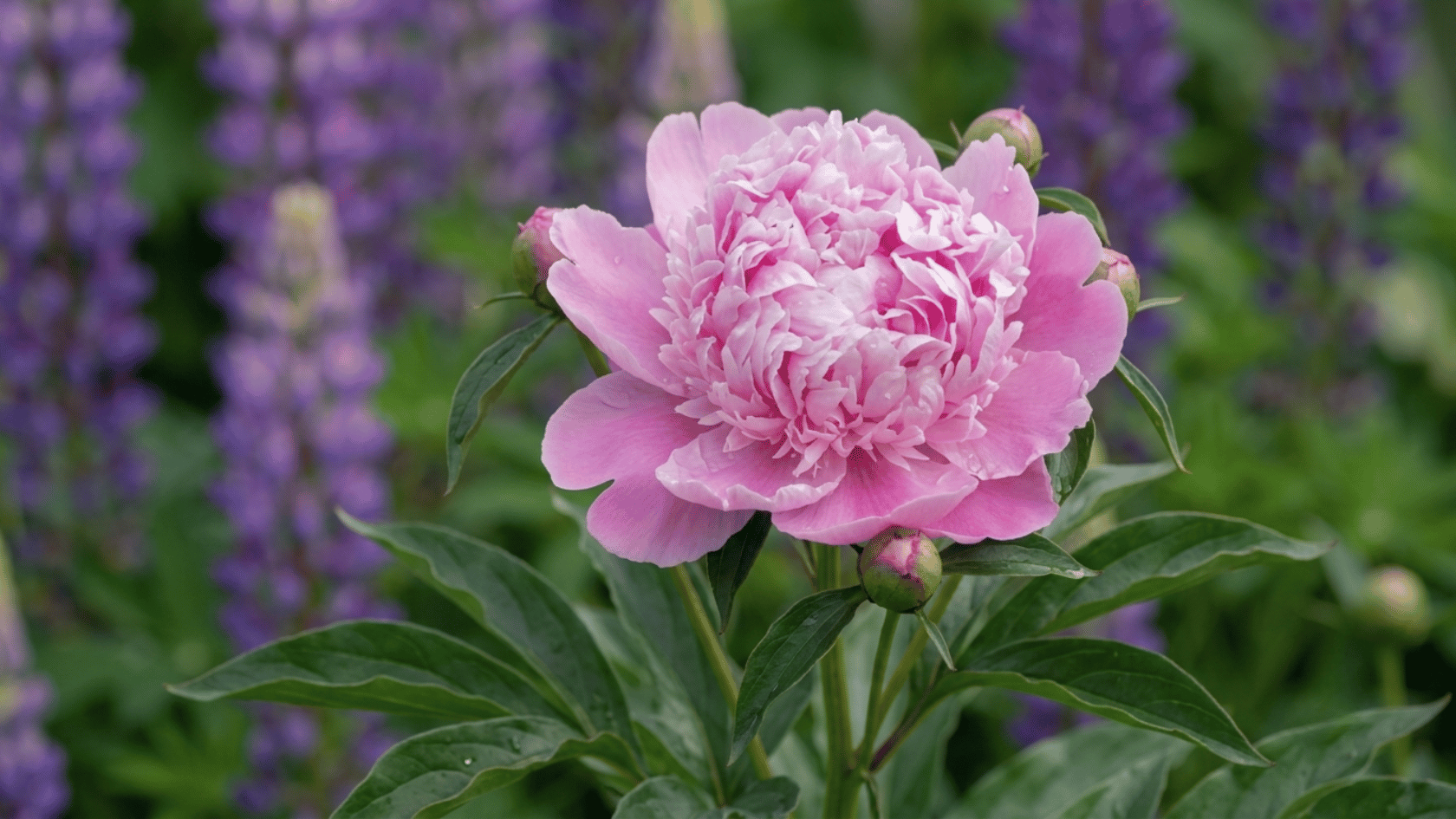
This cultivar produces large, dark pink to magenta double blooms with a strong fragrance and a slightly flattened, layered petal form.
It blooms early in the herbaceous season, and its height range makes it useful for layering plant heights within a mixed perennial border.
Tree Peony Cultivars
Tree peonies grow as woody shrubs that retain their branching structure through winter, rather than dying back like herbaceous types.
They bloom earlier in the season with large flowers, and their height makes them a strong standalone feature, so it helps to know where to plant peonies for the best blooms.
11. High Noon
- Botanical Name: Paeonia suffruticosa
- Height: 36 to 48 in (90 to 120 cm)
- Sun Requirements: Full sun to partial shade
- Hardiness Zone: 4 to 9
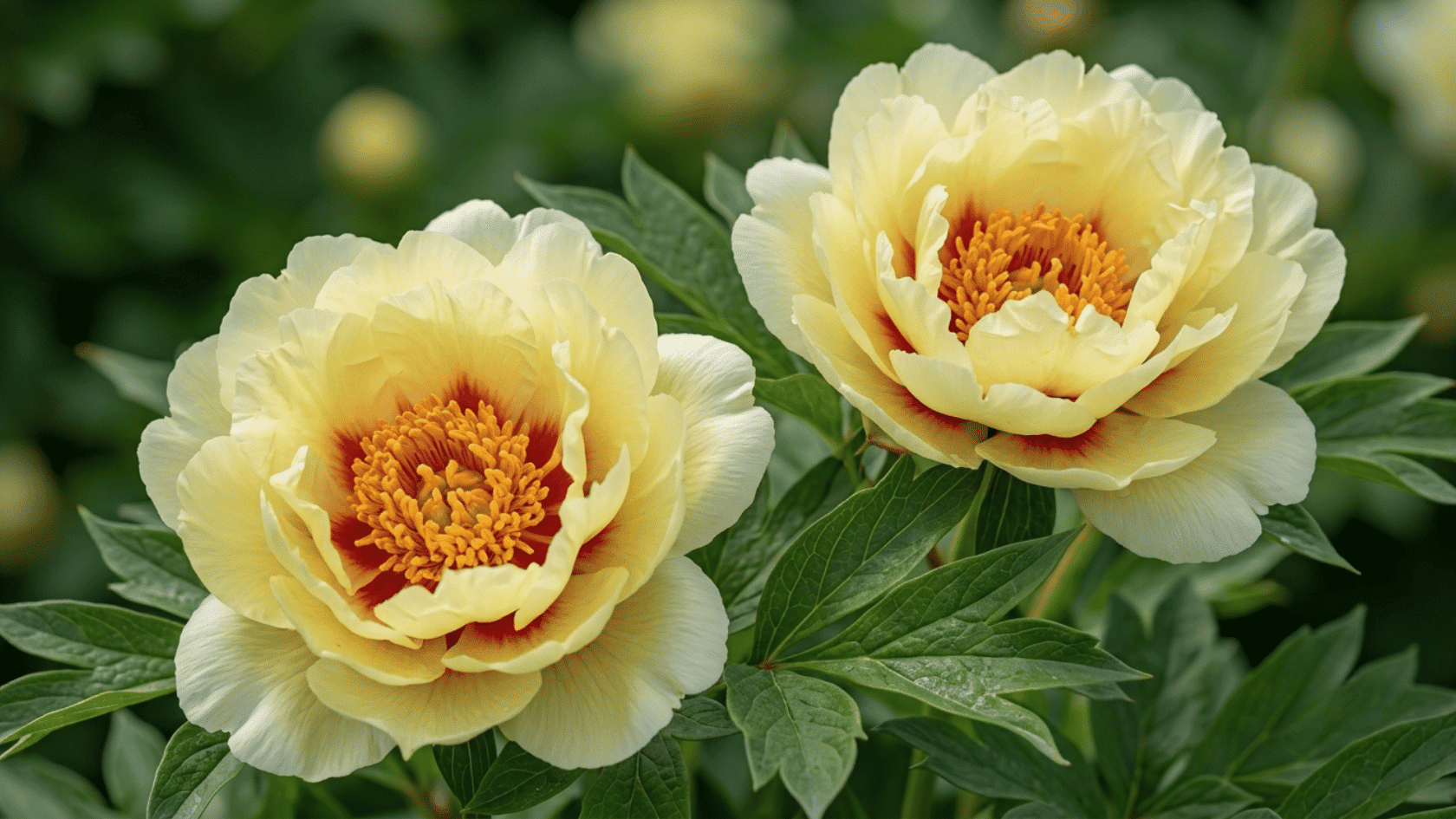
High Noon produces large, bright yellow blooms with a semi-double form that opens wide against dark green foliage.
As a woody shrub, it keeps its structure through winter, and its height and color make it a strong standalone focal point in a larger landscape planting.
12. Rengoku (White Jade)
- Botanical Name: Paeonia suffruticosa
- Height: 36 to 48 in (90 to 120 cm)
- Sun Requirements: Full sun
- Hardiness Zone: 4 to 9
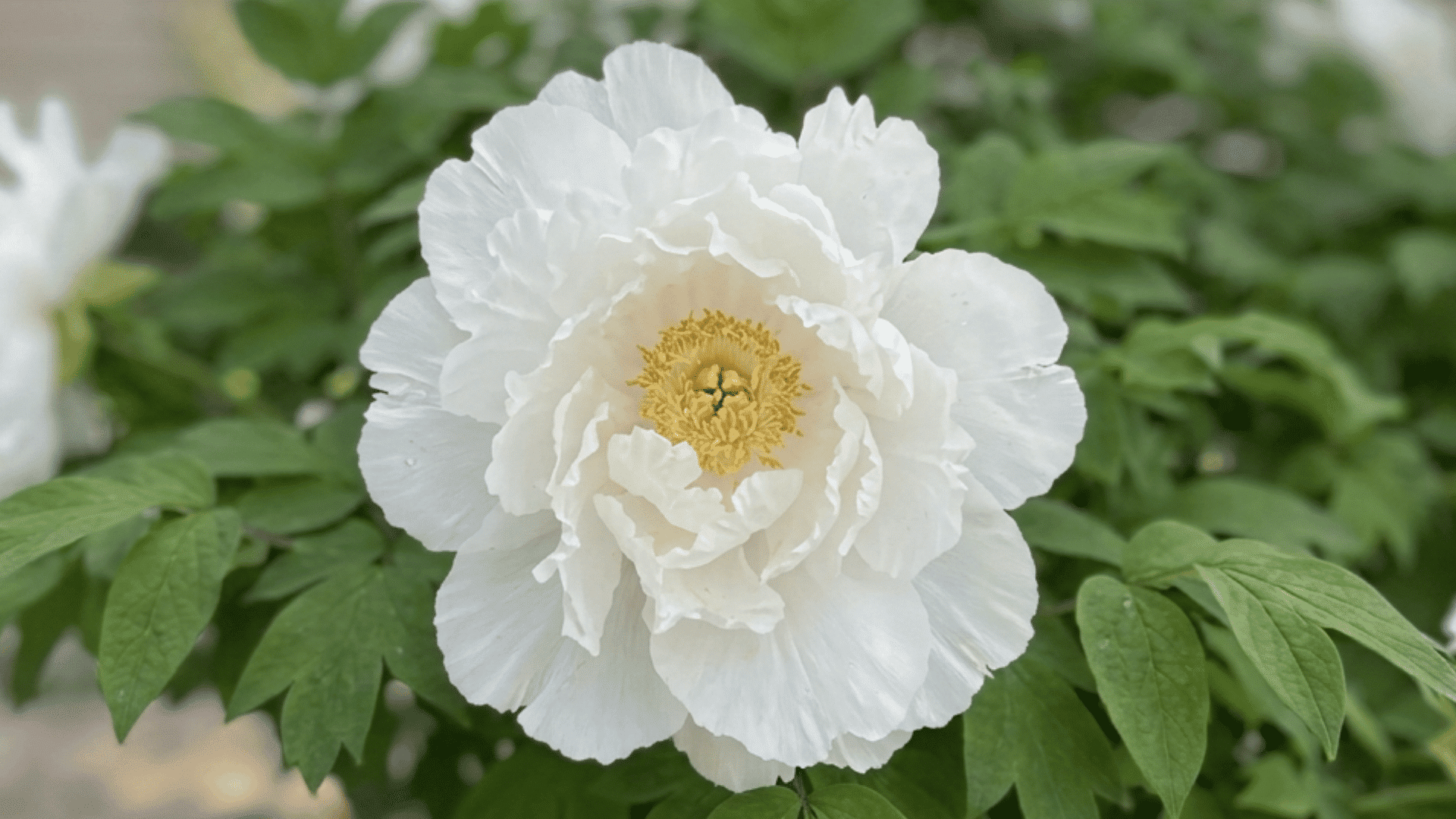
This traditional Japanese variety produces pure white, bowl-shaped flowers with a clean, simple petal arrangement and a light golden center.
Its restrained color palette and classic shape make it a common choice for gardens designed around a quiet, traditional Japanese planting style.
13. Kamata Nishiki
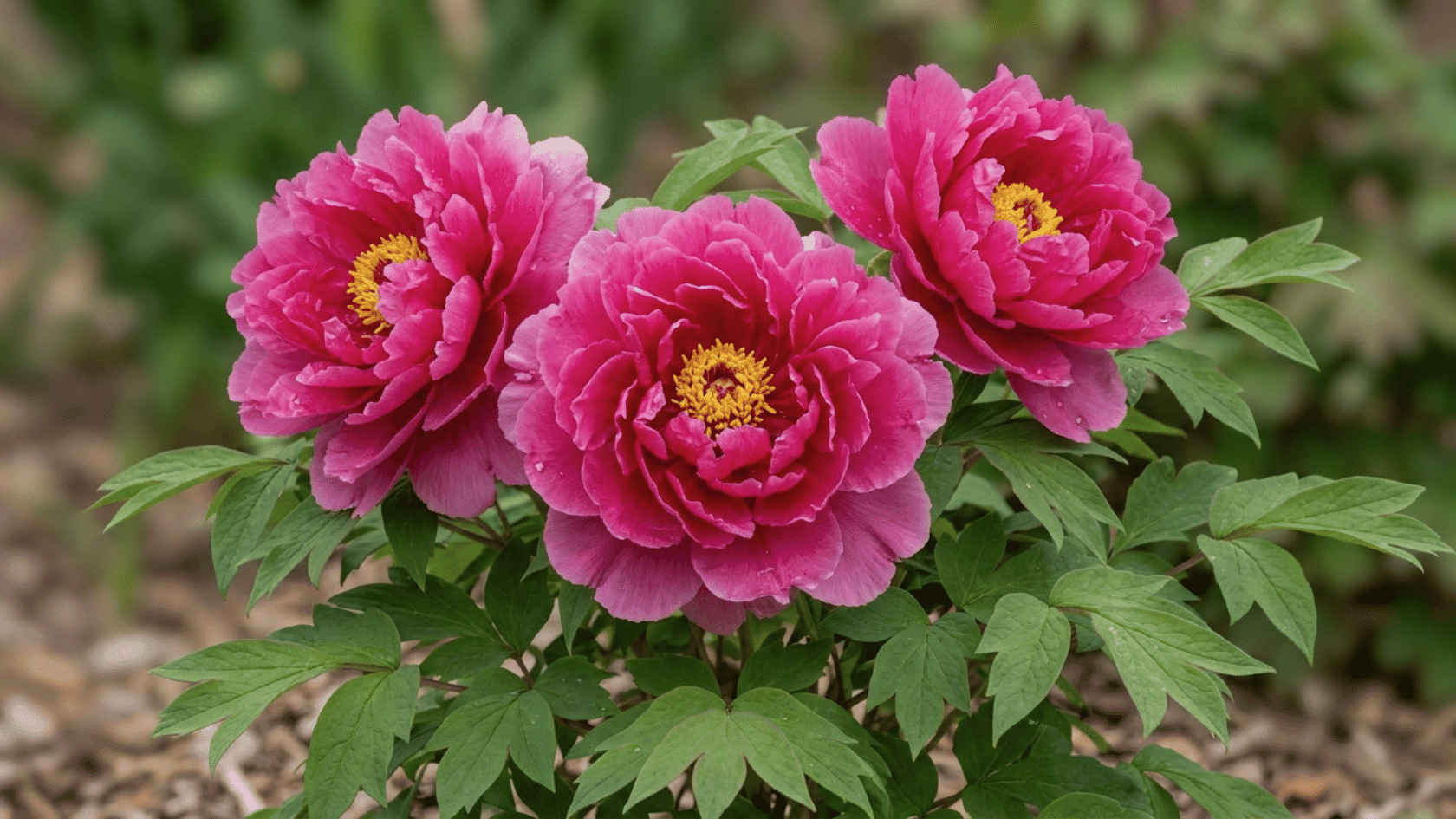
- Botanical Name: Paeonia suffruticosa
- Height: 36 to 50 in (90 to 125 cm)
- Sun Requirements: Full sun
- Hardiness Zone: 4 to 9
Kamata Nishiki stands out for its purple-and-white striped petals, a color pattern rarely seen in other tree peony cultivars.
The unusual pattern shifts slightly from bloom to bloom, so plantings often look a little different each season, adding variety to ornamental garden displays.
14. Golden Era
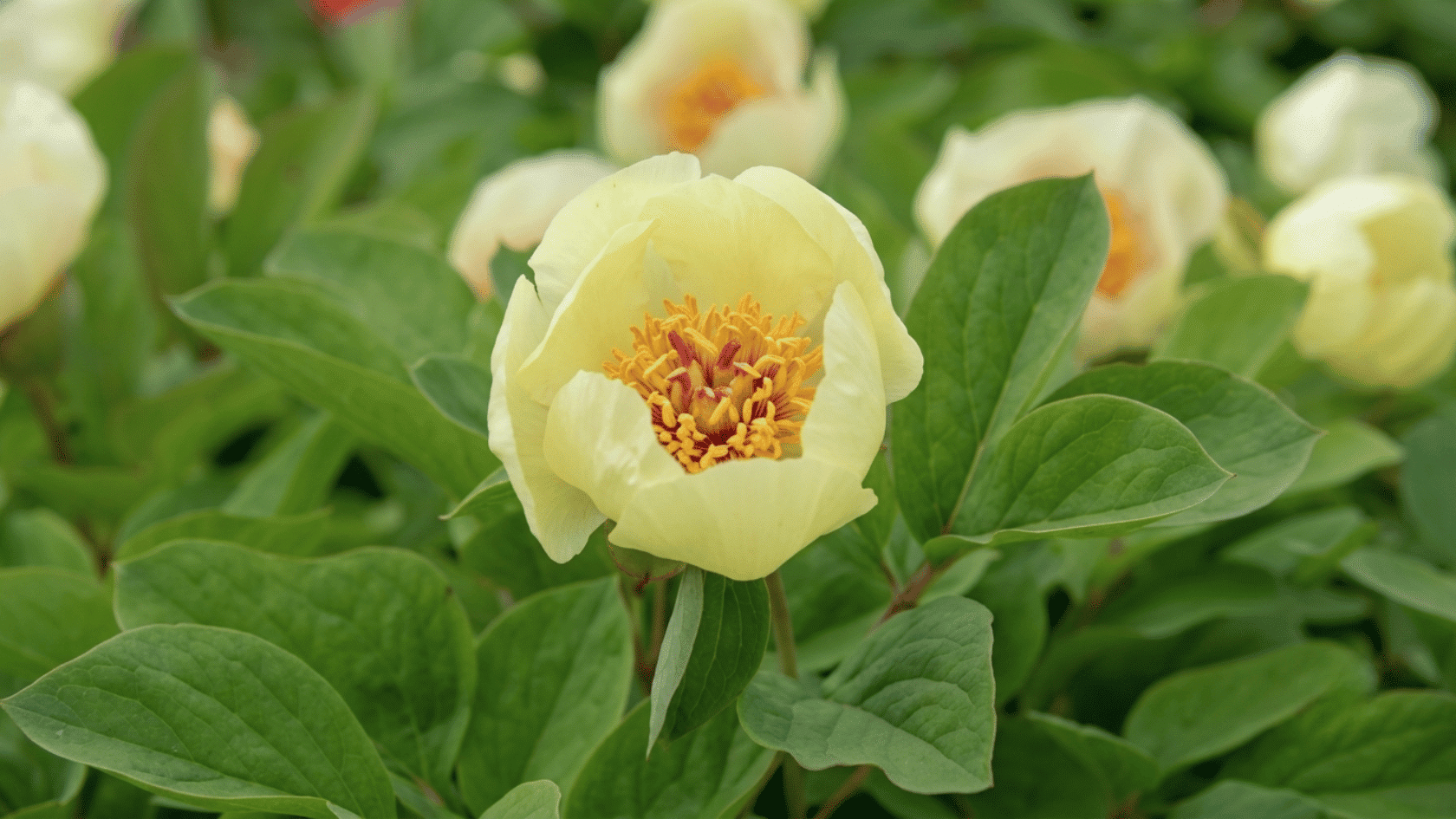
- Botanical Name: Paeonia suffruticosa
- Height: 36 to 50 in (90 to 125 cm)
- Sun Requirements: Full sun to partial shade
- Hardiness Zone: 4 to 9
Golden Era carries large, golden yellow blooms with a semi-double form and a slightly ruffled petal edge.
The rich color reads well from a distance, and the plant’s height makes it a good choice for the back of a mixed shrub border where it can stand out.
15. Age of Gold
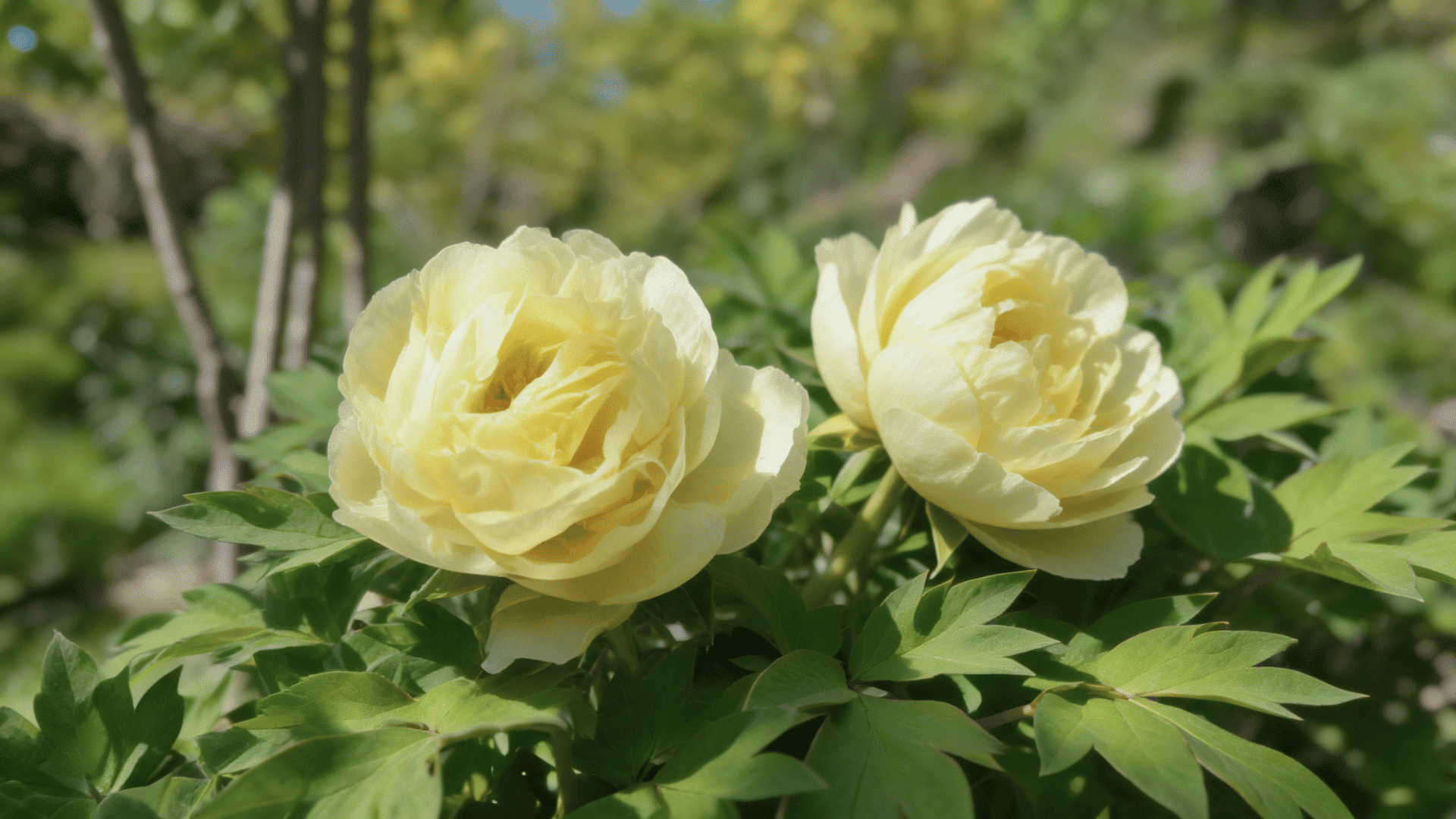
- Botanical Name: Paeonia suffruticosa
- Height: 36 to 48 in (90 to 120 cm)
- Sun Requirements: Full sun
- Hardiness Zone: 4 to 9
Age of Gold produces soft yellow flowers with rounded, slightly cupped petals that give the bloom a gentle, full shape.
It flowers in the middle of the tree peony season, filling a color gap between earlier- and later-blooming cultivars in a mixed woody shrub planting.
16. Black Panther
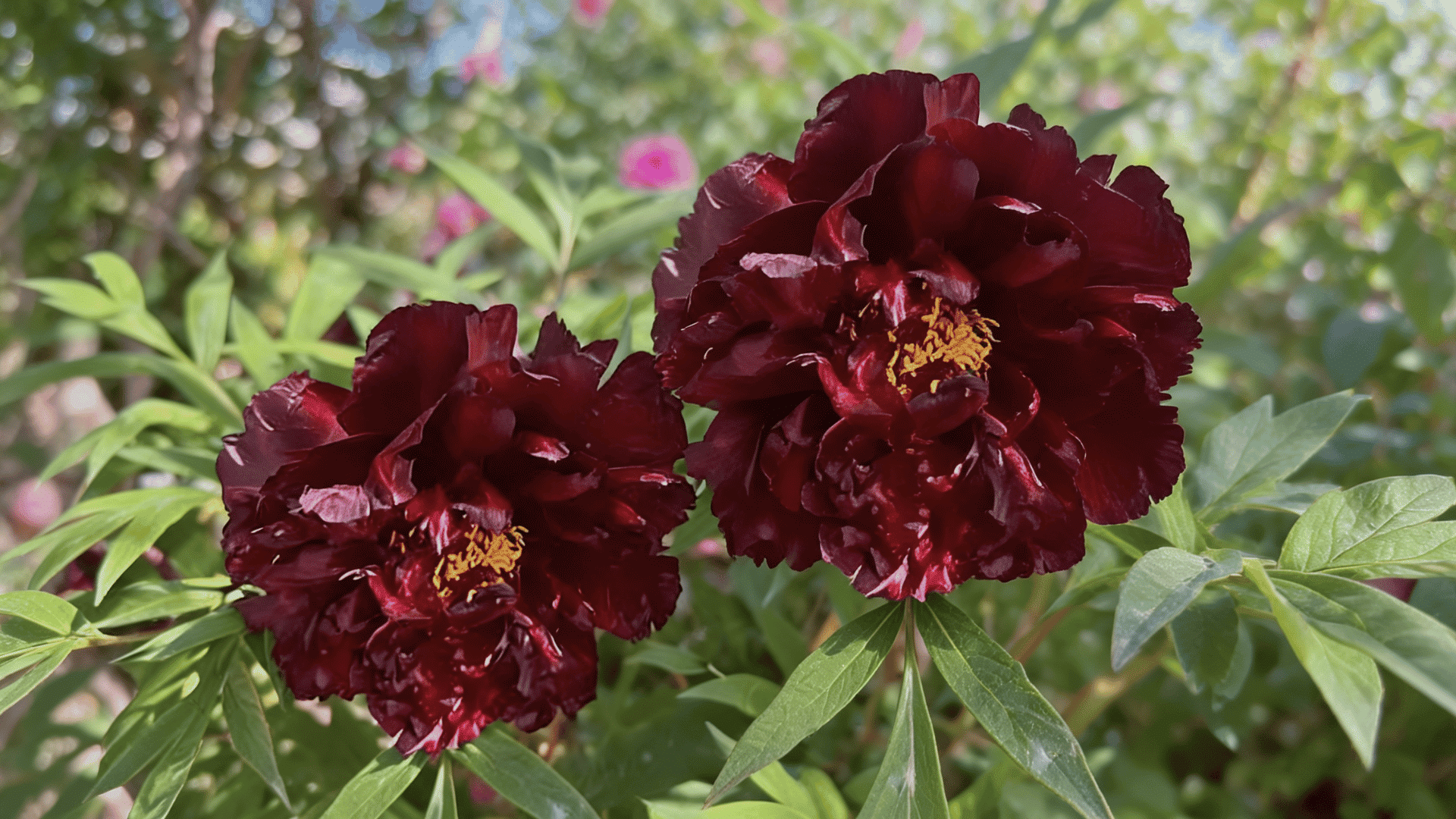
- Botanical Name: Paeonia suffruticosa
- Height: 36 to 48 in (90 to 120 cm)
- Sun Requirements: Full sun
- Hardiness Zone: 4 to 9
Black Panther is known for deep burgundy blooms that appear nearly black in low light, making it one of the darkest flower colors among tree peonies.
Planted against lighter colored shrubs or flowers, it creates a strong, dramatic contrast in mixed garden borders.
17. Hana Kisoi
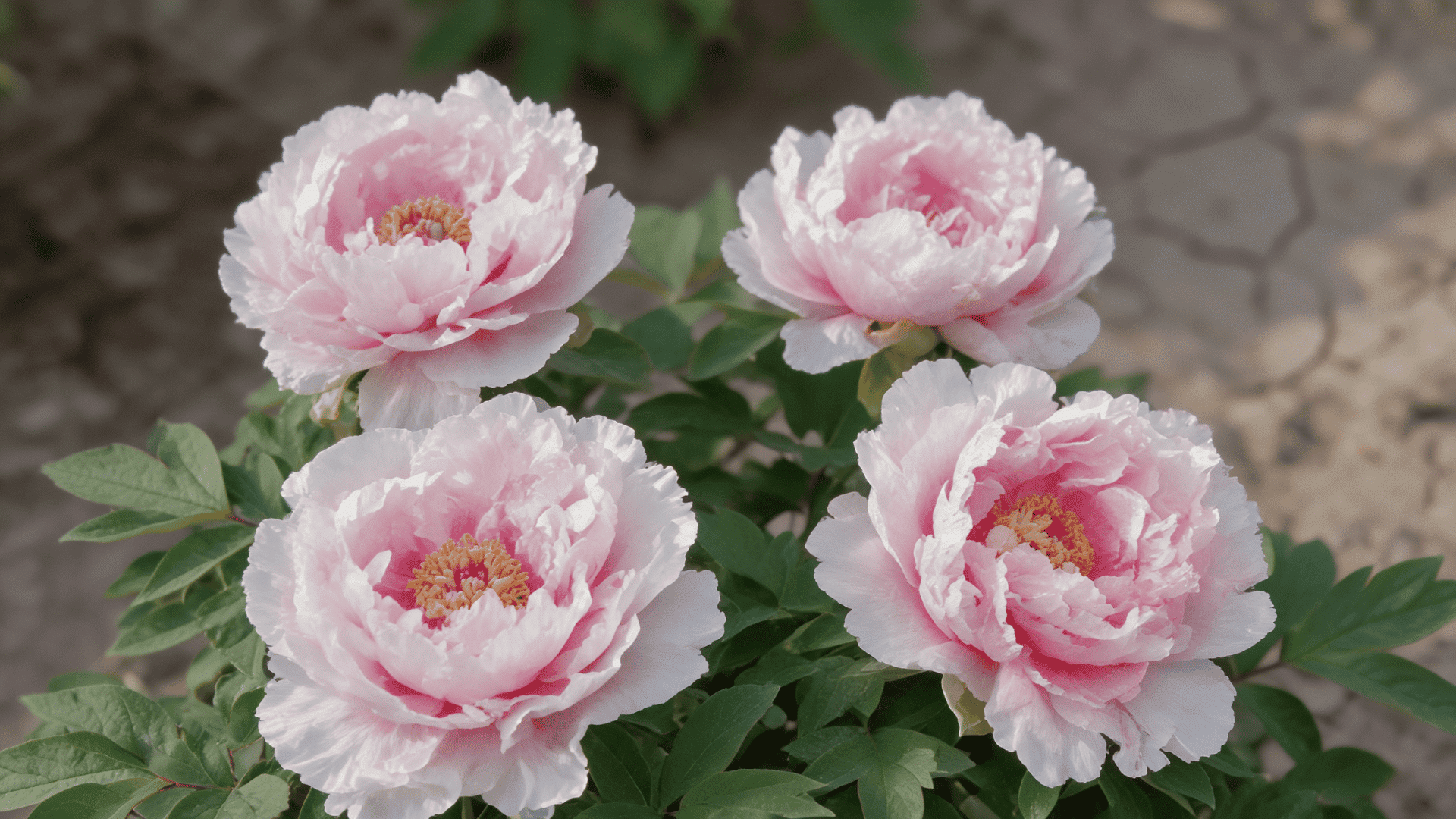
- Botanical Name: Paeonia suffruticosa
- Height: 36 to 48 in (90 to 120 cm)
- Sun Requirements: Full sun
- Hardiness Zone: 4 to 9
Hana Kisoi produces pink double blooms with a soft, layered texture and a slightly ruffled petal edge.
As a traditional Japanese tree peony variety, it is often grown for its refined color and form, and it performs reliably across a wide range of temperate climate zones.
18. Shimanishiki Peony
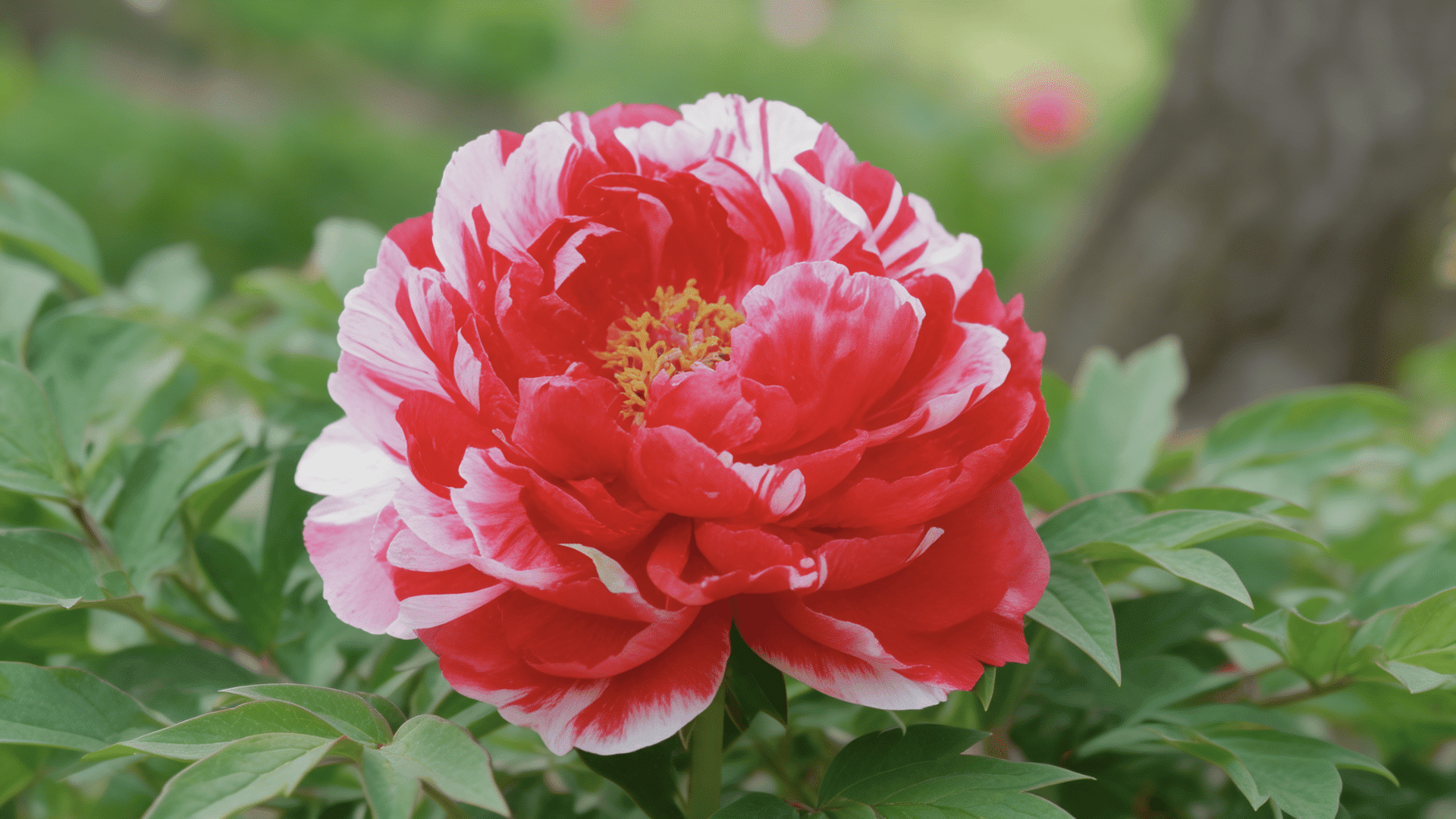
- Botanical Name: Paeonia suffruticosa
- Height: 36 to 48 in (90 to 120 cm)
- Sun Requirements: Full sun
- Hardiness Zone: 4 to 9
Shimanishiki carries striped magenta-and-white flowers with bold, uneven patterning that sets it apart from solid-colored tree peony varieties.
The strong contrast between the two colors makes each bloom stand out clearly, which is why it is often placed in formal garden settings.
19. Coral Sunset
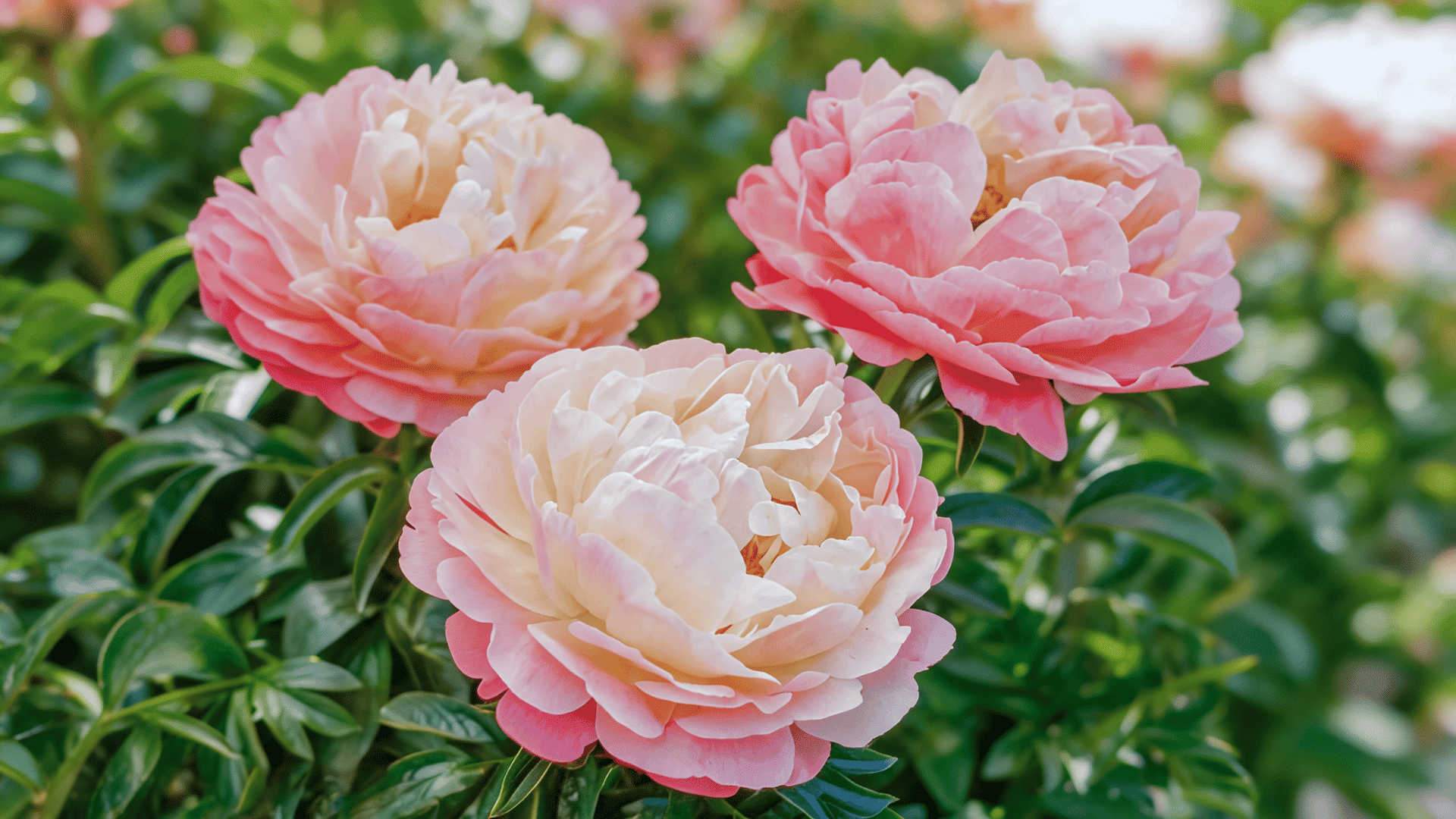
- Botanical Name: Paeonia suffruticosa
- Height: 36 to 50 in (90 to 125 cm)
- Sun Requirements: Full sun
- Hardiness Zone: 4 to 9
Coral Sunset blends coral and pink tones within a single bloom, giving a warm, layered color effect that shifts slightly as the flower opens and matures.
Its warm palette pairs naturally with summer garden accents and works alongside other soft-toned flowering shrubs.
20. Yae Zakura
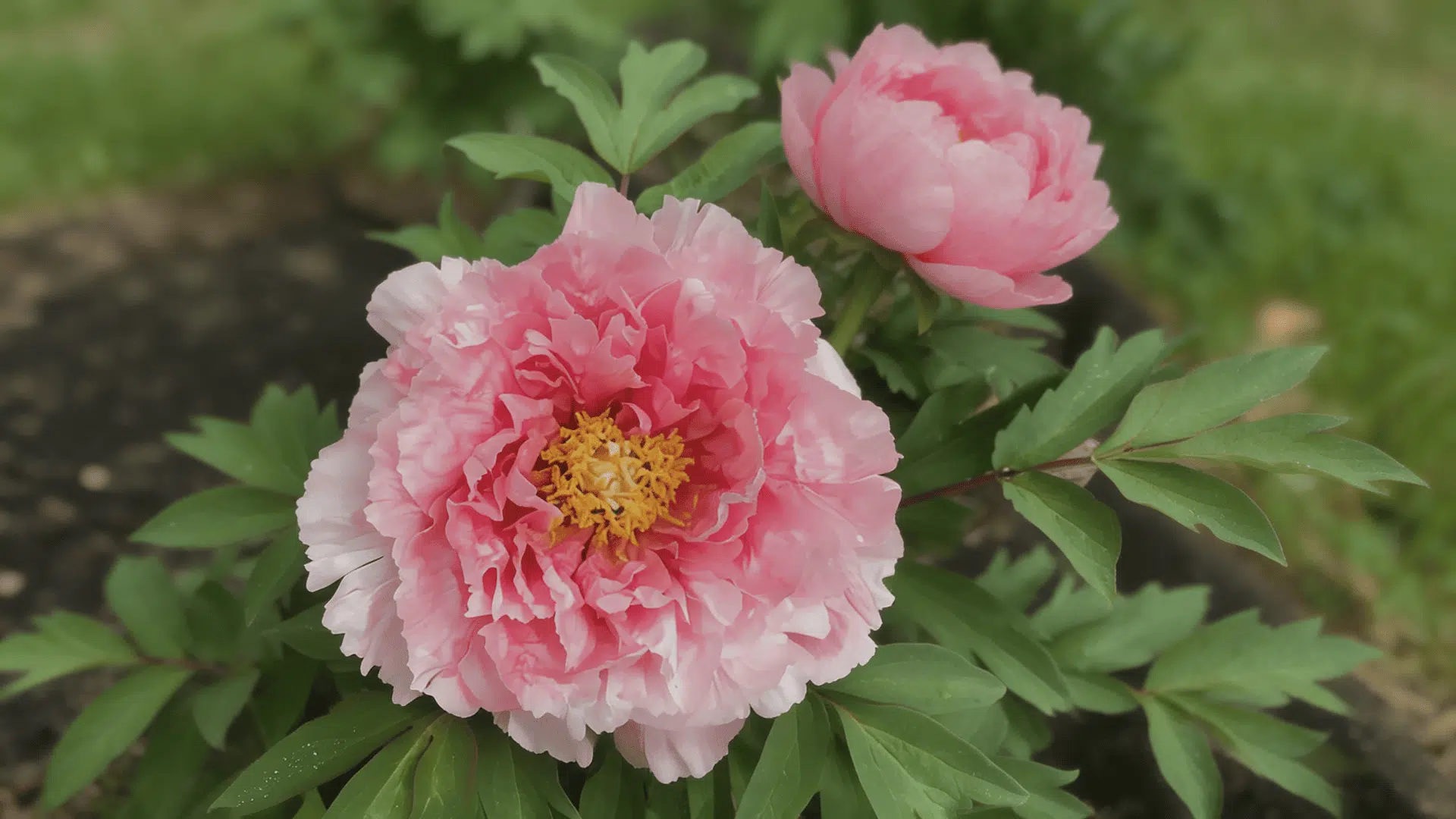
- Botanical Name: Paeonia suffruticosa
- Height: 36 to 48 in (90 to 120 cm)
- Sun Requirements: Full sun to partial shade
- Hardiness Zone: 4 to 9
Yae Zakura produces deep pink, layered petals arranged in a full, rounded form that gives the bloom significant visual weight.
As a traditional ornamental tree peony, it holds its shape well through the bloom period and fits comfortably into established landscape plantings.
Itoh Peony Cultivars
Itoh or intersectional peonies are a cross between herbaceous and tree types, combining sturdy stems with a compact, die-back growth habit.
They often bloom longer than herbaceous types and later than most tree peonies, making them a practical middle ground for mixed garden beds.
21. Bartzella Peony
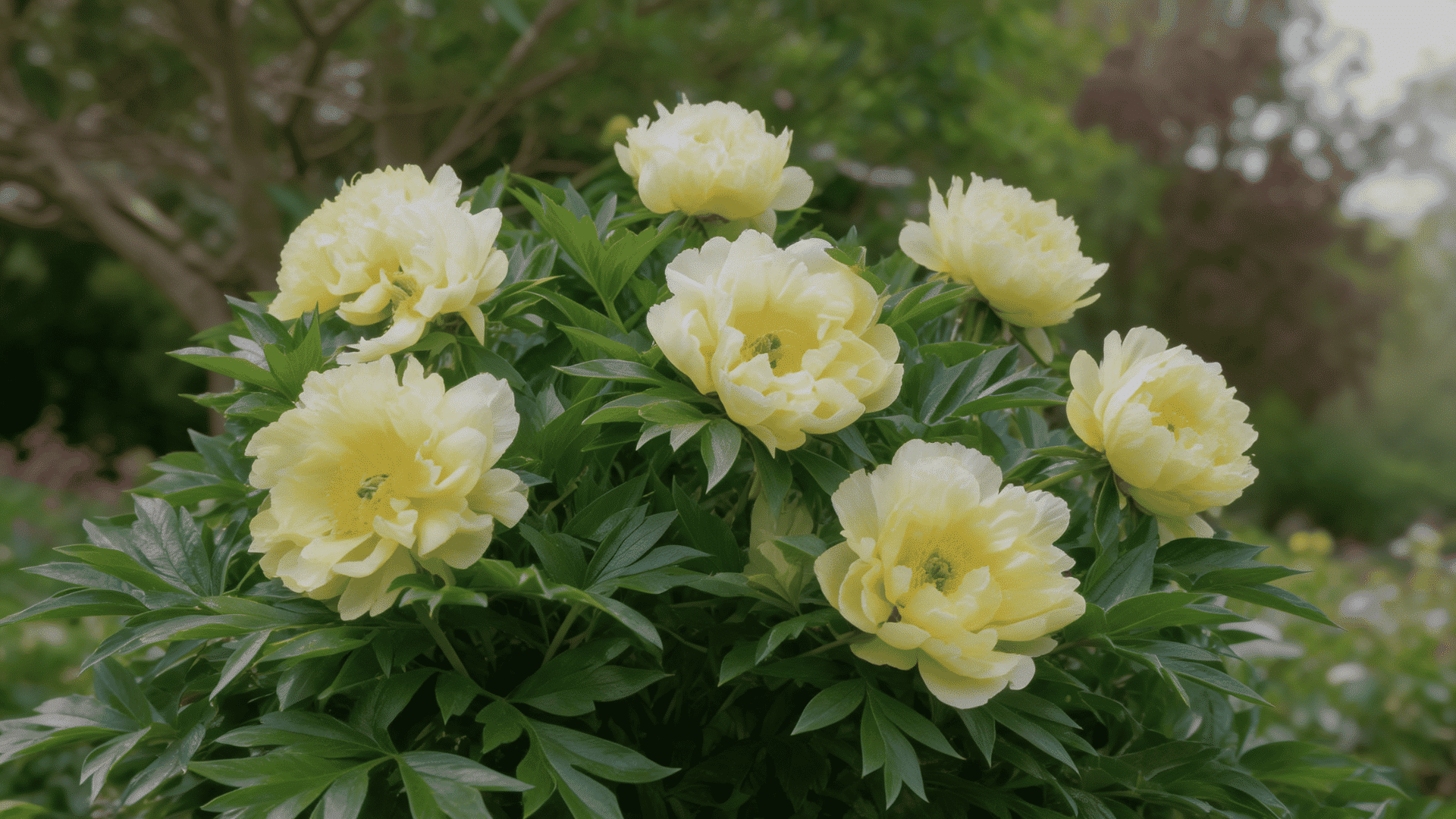
- Botanical Name: Paeonia × Itoh
- Height: 36 to 40 in (90 to 100 cm)
- Sun Requirements: Full sun
- Hardiness Zone: 4 to 8
Bartzella produces golden yellow double blooms on strong stems that rarely need staking, a common issue with some herbaceous types.
The plant combines the sturdy structure of tree peonies with the dieback habit of herbaceous types, and its color and stem strength make it a favorite for cut flowers.
22. Garden Treasure
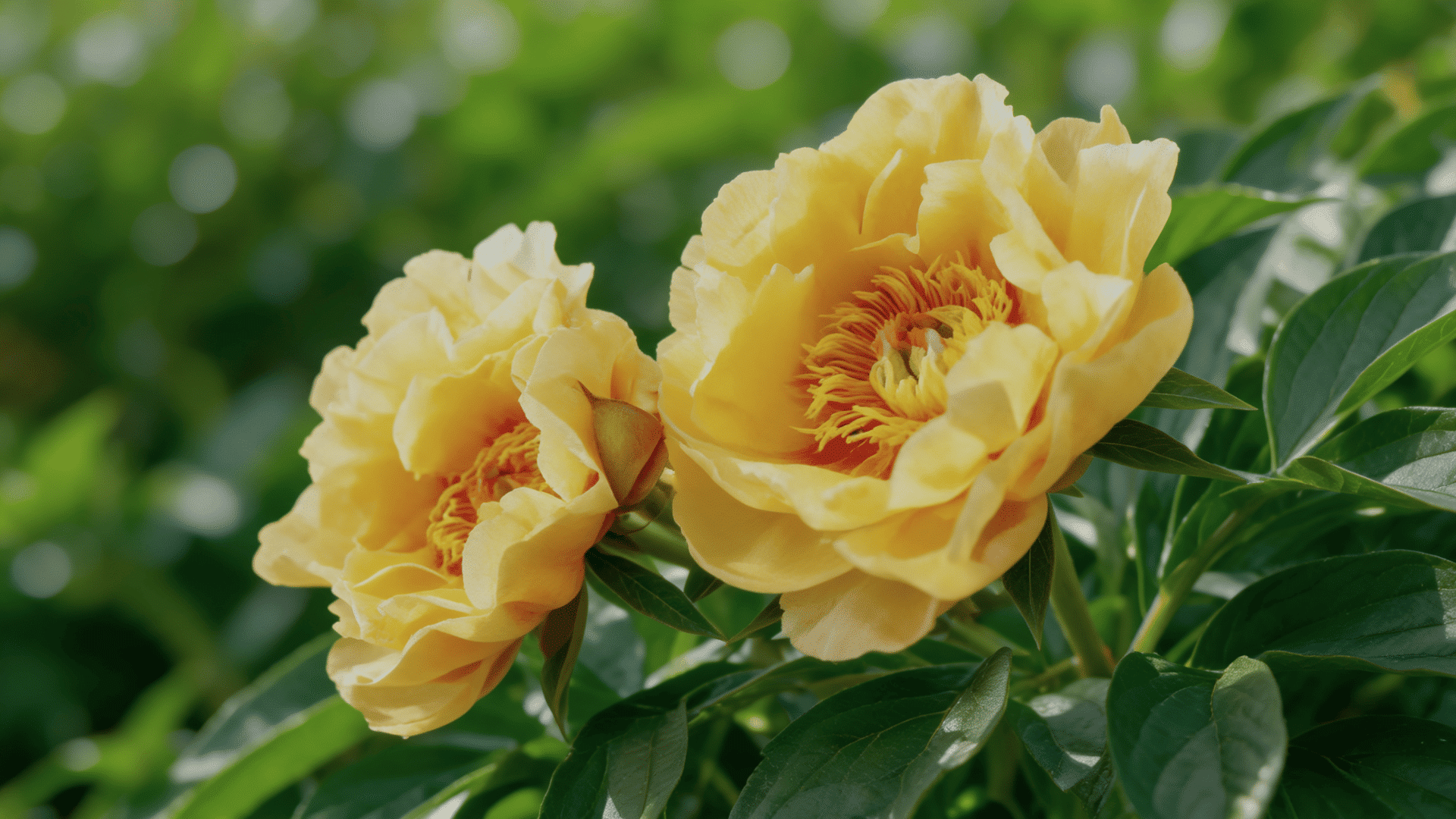
- Botanical Name: Paeonia × Itoh
- Height: 36 to 40 in (90 to 100 cm)
- Sun Requirements: Full sun
- Hardiness Zone: 4 to 8
Garden Treasure carries large golden-yellow flowers that open in late spring, extending the bloom season of the garden past the early-flowering herbaceous varieties.
Its full, rounded petal form and long-lasting blooms make it a dependable border extension option in mixed perennial plantings.
23. Cora Louise
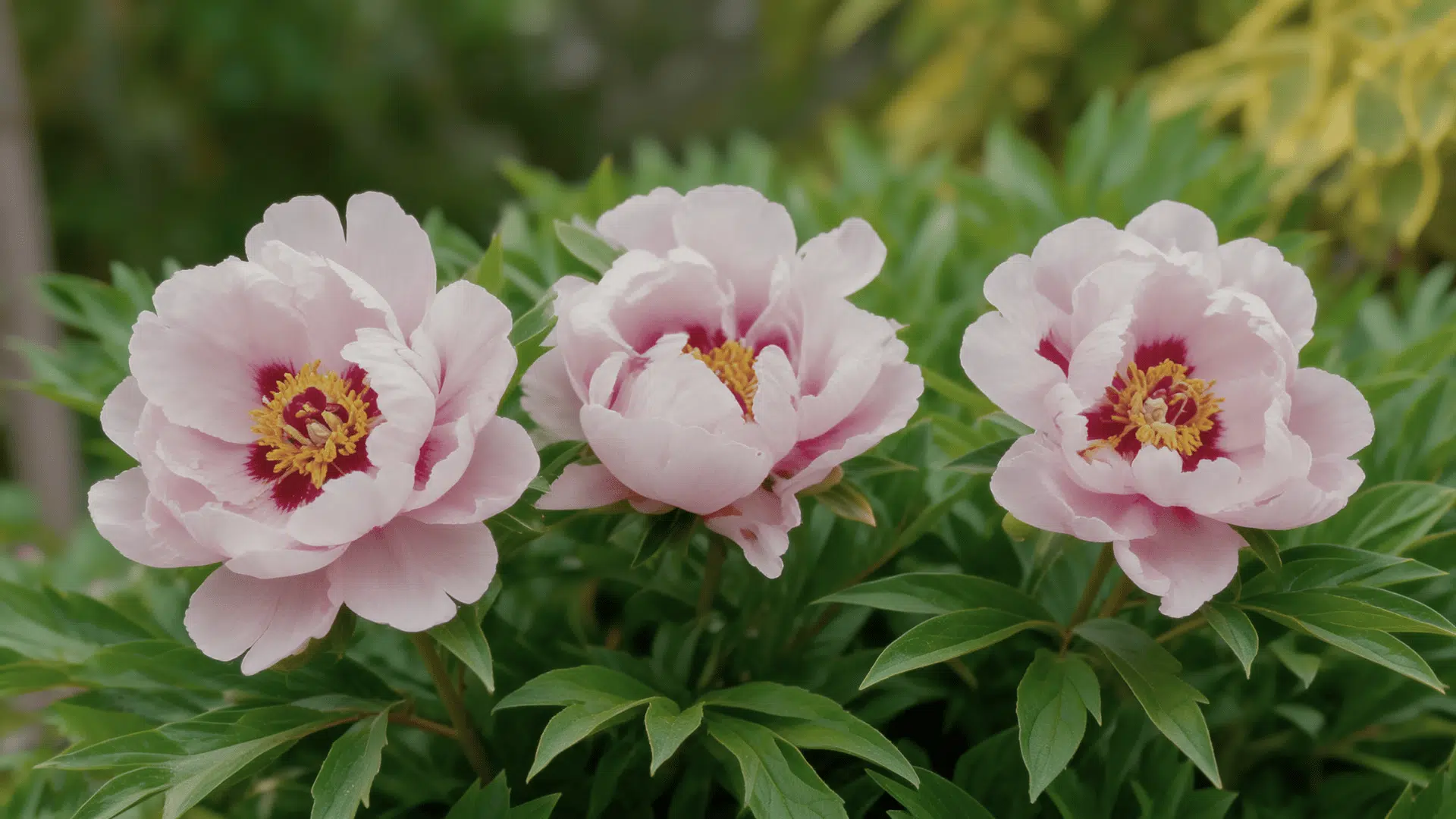
- Botanical Name: Paeonia × Itoh
- Height: 36 to 38 in (90 to 95 cm)
- Sun Requirements: Full sun
- Hardiness Zone: 4 to 8
Cora Louise features white petals surrounding a purple-flecked center, giving each bloom a clean look with a touch of contrast.
The flowers last longer than many herbaceous types, and the plant’s compact size fits well into a mixed border without crowding neighboring perennials.
24. Julia Rose
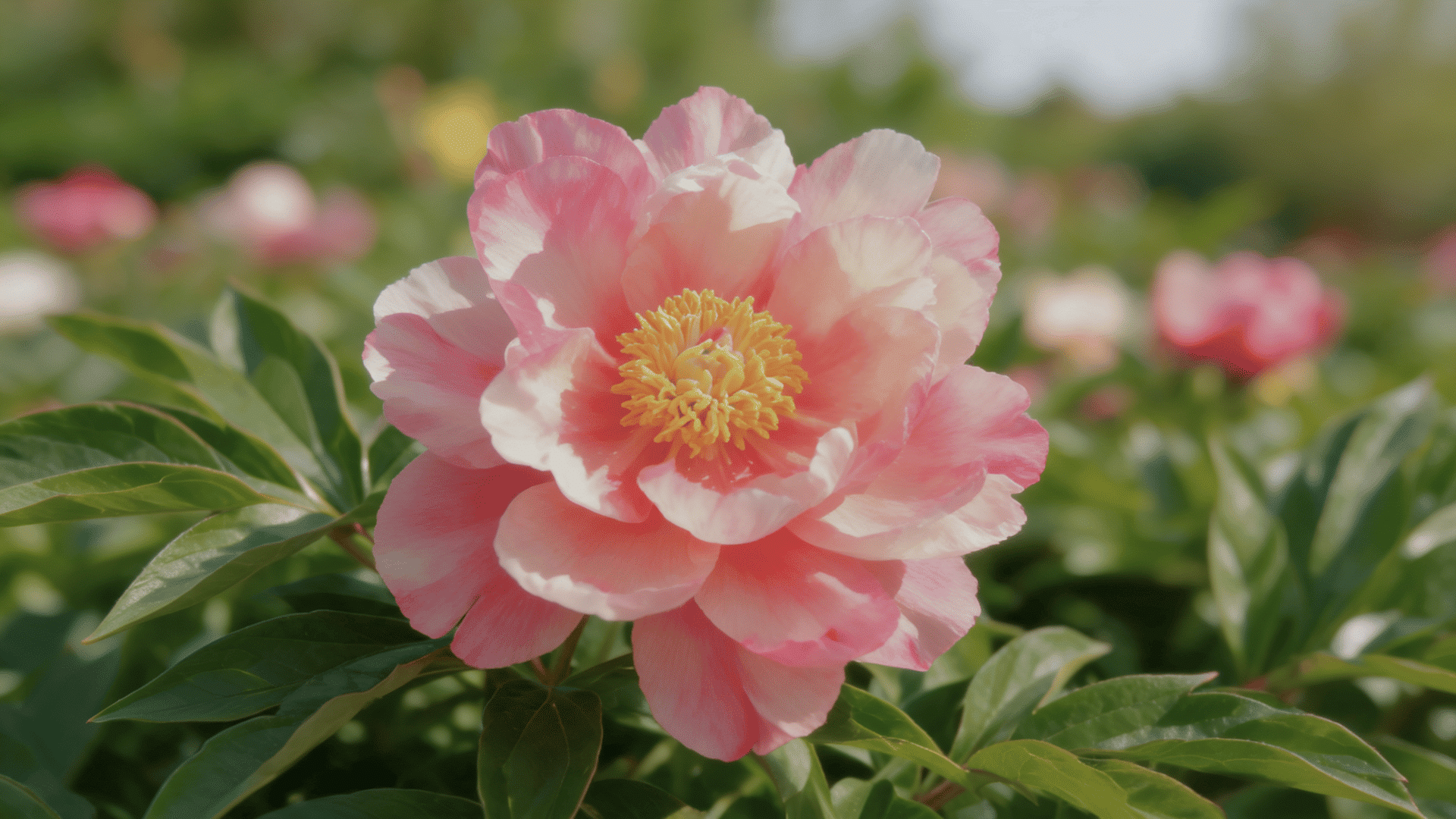
- Botanical Name: Paeonia × Itoh
- Height: 36 in (90 cm)
- Sun Requirements: Full sun
- Hardiness Zone: 4 to 8
Julia Rose produces soft pink blooms that subtly shift in tone as they open and mature, giving a single plant a changing color display throughout its flowering period.
It grows on a hardy, compact plant that adapts well to mid-sized garden spaces without much upkeep.
25. Hillary Peony
- Botanical Name: Paeonia × Itoh
- Height: 36 to 40 in (90 to 100 cm)
- Sun Requirements: Full sun
- Hardiness Zone: 4 to 8
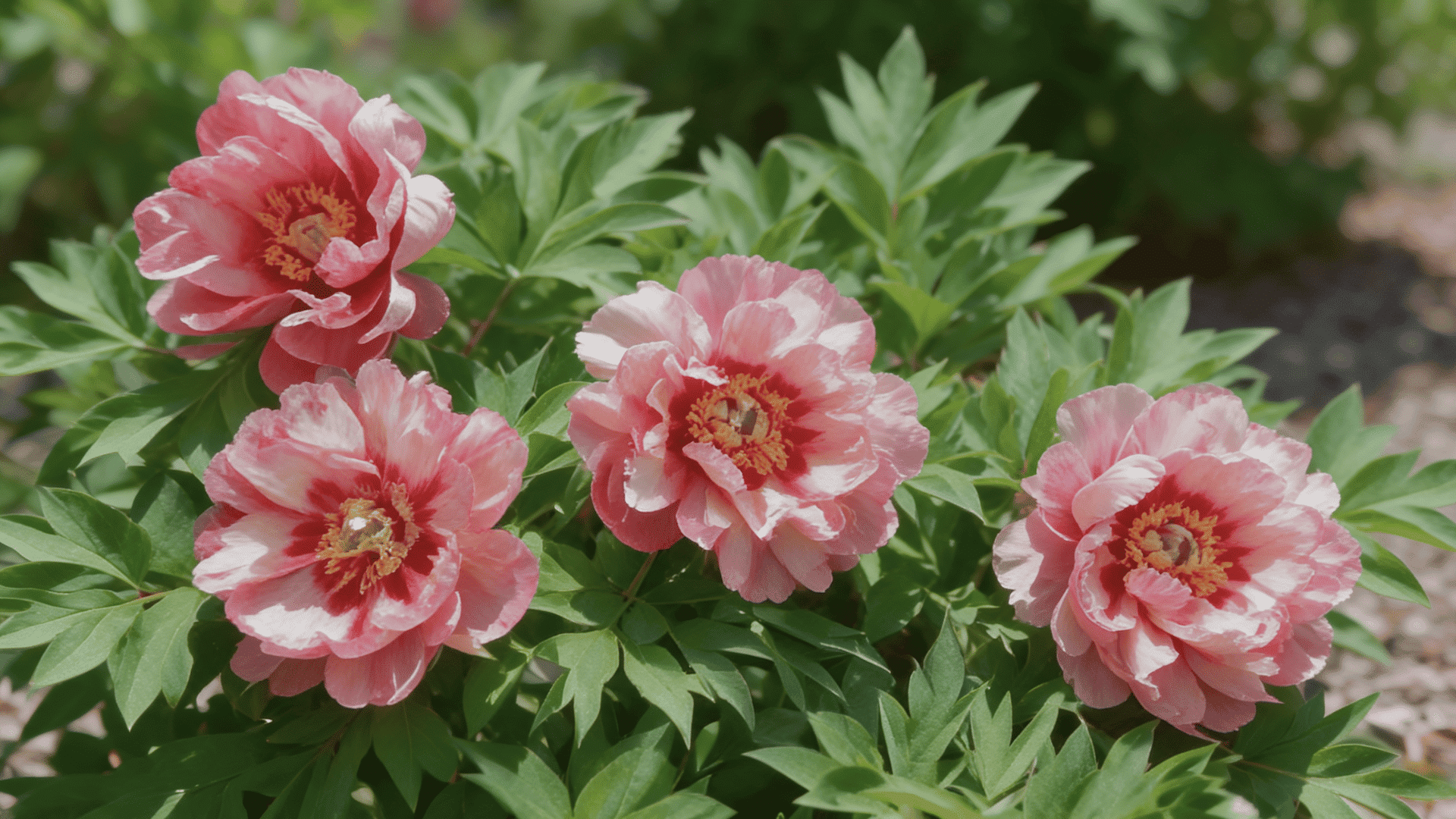
Hillary produces yellow flowers with a light fragrance, held upright by sturdy stems that resist flopping over after rain, a common trait of the Itoh group.
Its steady bloom performance and manageable height make it a reliable addition to mixed flower beds in most gardens.
26. Yellow Crown
- Botanical Name: Paeonia × Itoh
- Height: 36 to 38 in (90 to 95 cm)
- Sun Requirements: Full sun
- Hardiness Zone: 4 to 8
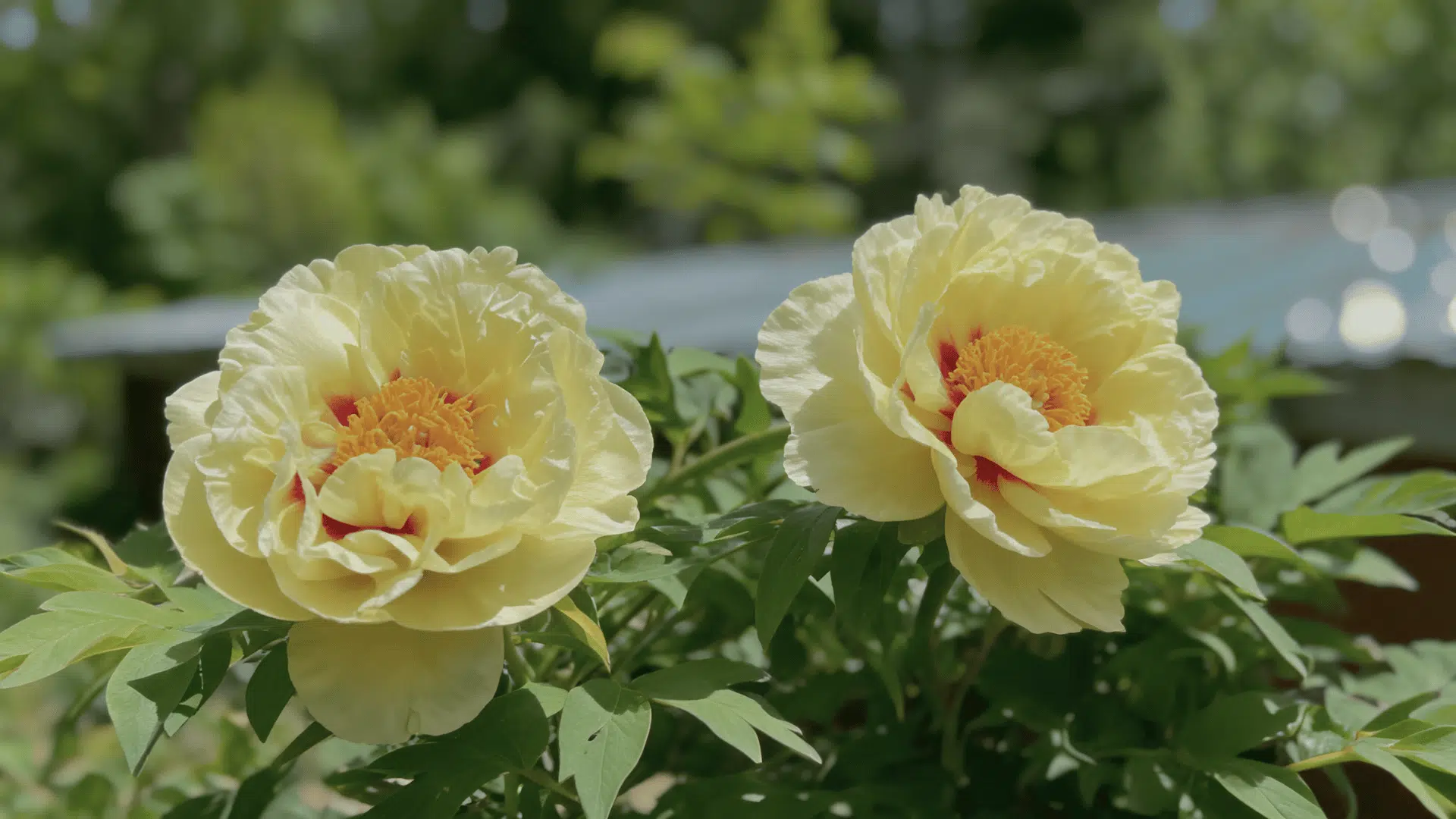
Yellow Crown produces bright yellow blooms with a rounded, full petal form that adds a cheerful accent to garden borders.
The plant blooms reliably each season and holds its color well in full sun, making it a strong pairing with darker-toned perennials.
27. First Arrival
- Botanical Name: Paeonia × Itoh
- Height: 36 in (90 cm)
- Sun Requirements: Full sun
- Hardiness Zone: 4 to 8
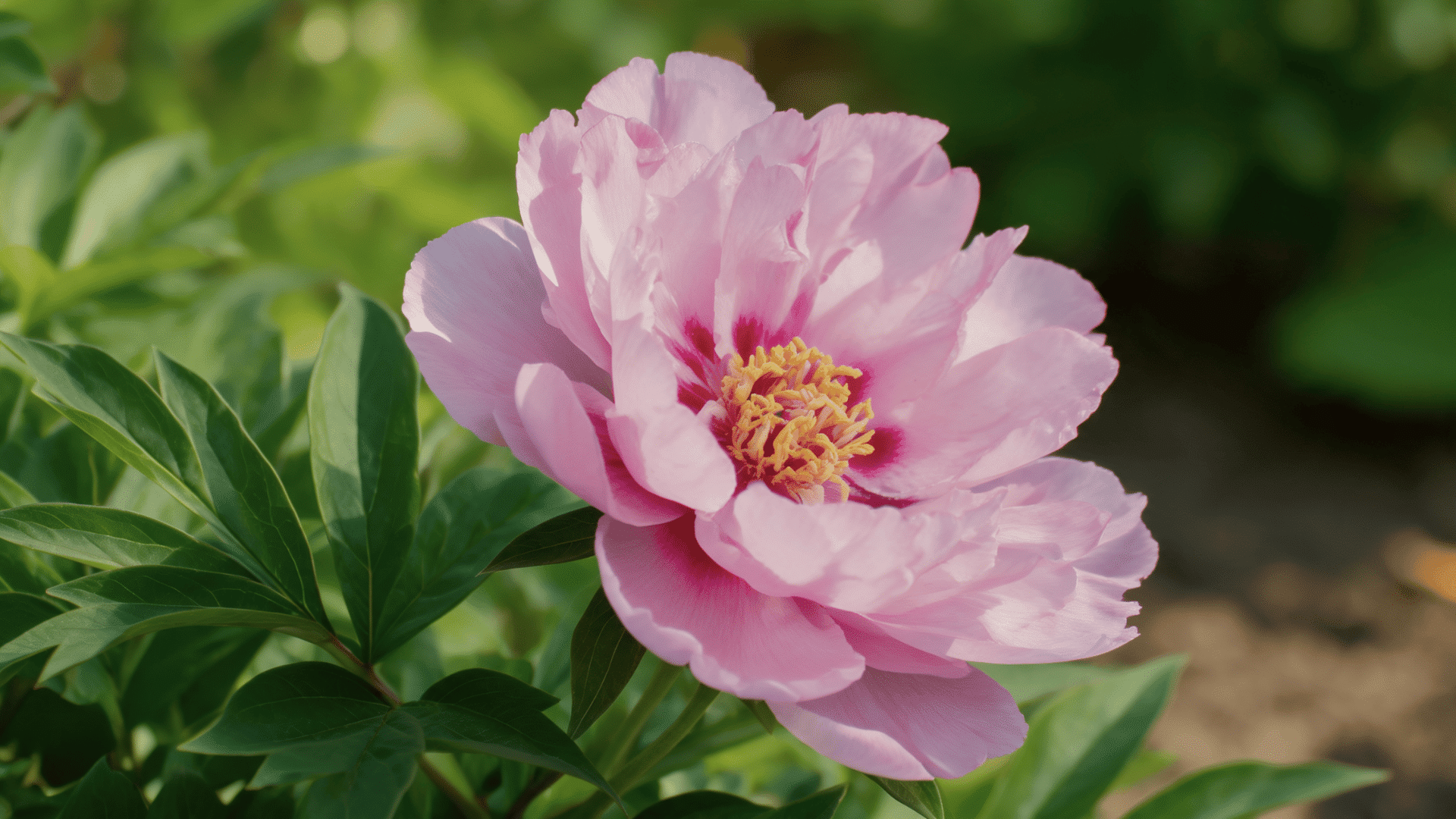
First Arrival produces soft pink blooms with slightly ruffled petal edges, opening earlier than other Itoh cultivars.
Its compact size and manageable height make it suitable for containers as well as mid-sized garden spaces where space for spreading perennials is limited.
28. Pastel Splendor
- Botanical Name: Paeonia × Itoh
- Height: 36 to 38 in (90 to 95 cm)
- Sun Requirements: Full sun
- Hardiness Zone: 4 to 8
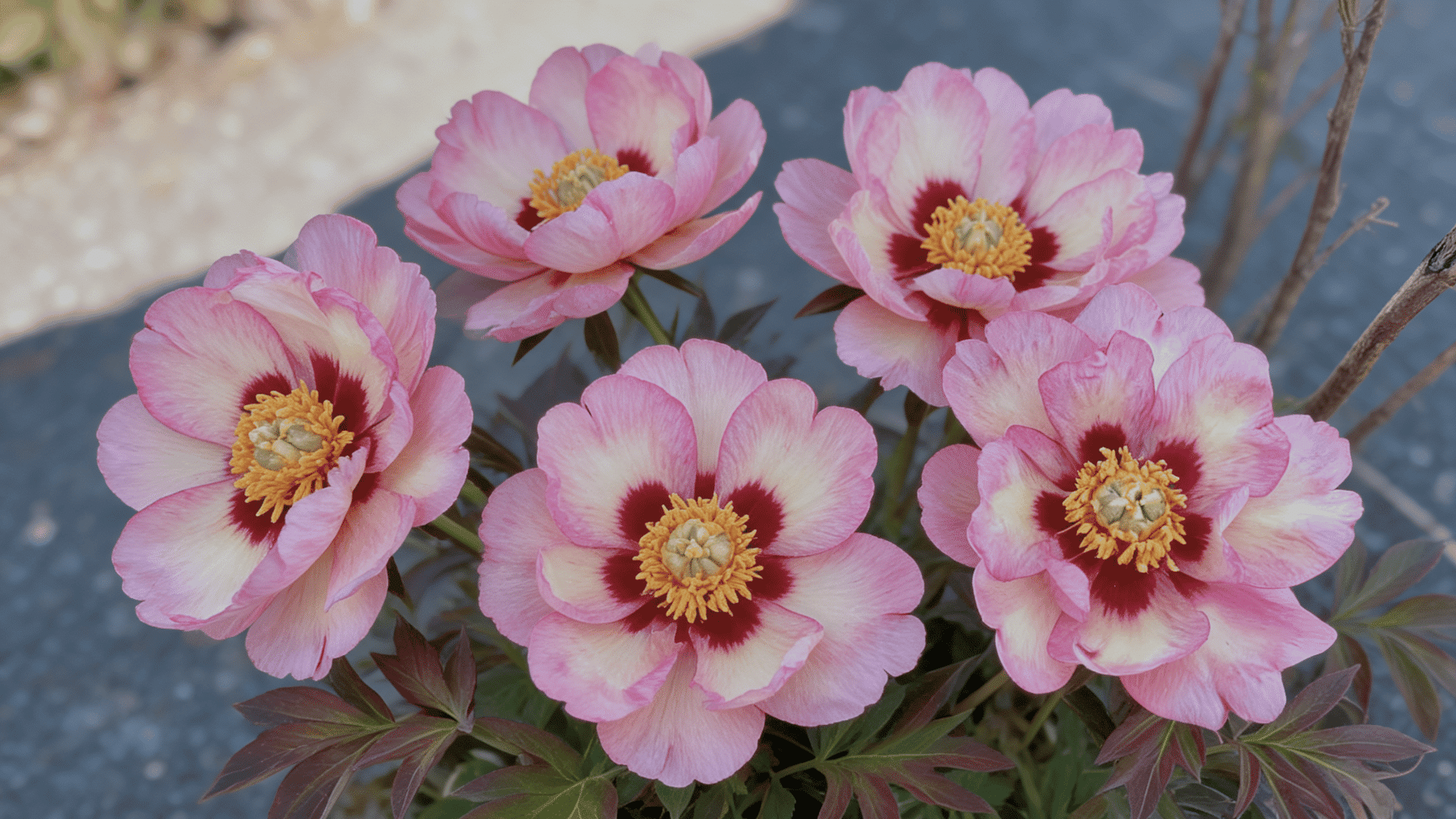
Pastel Splendor produces soft, pastel-toned blooms that shift between light pink and cream shades depending on light and bloom stage.
This subtle color range adds variety to a spring flower display, particularly when planted alongside more strongly colored peony cultivars for contrast.
29. Sonoma Floozy
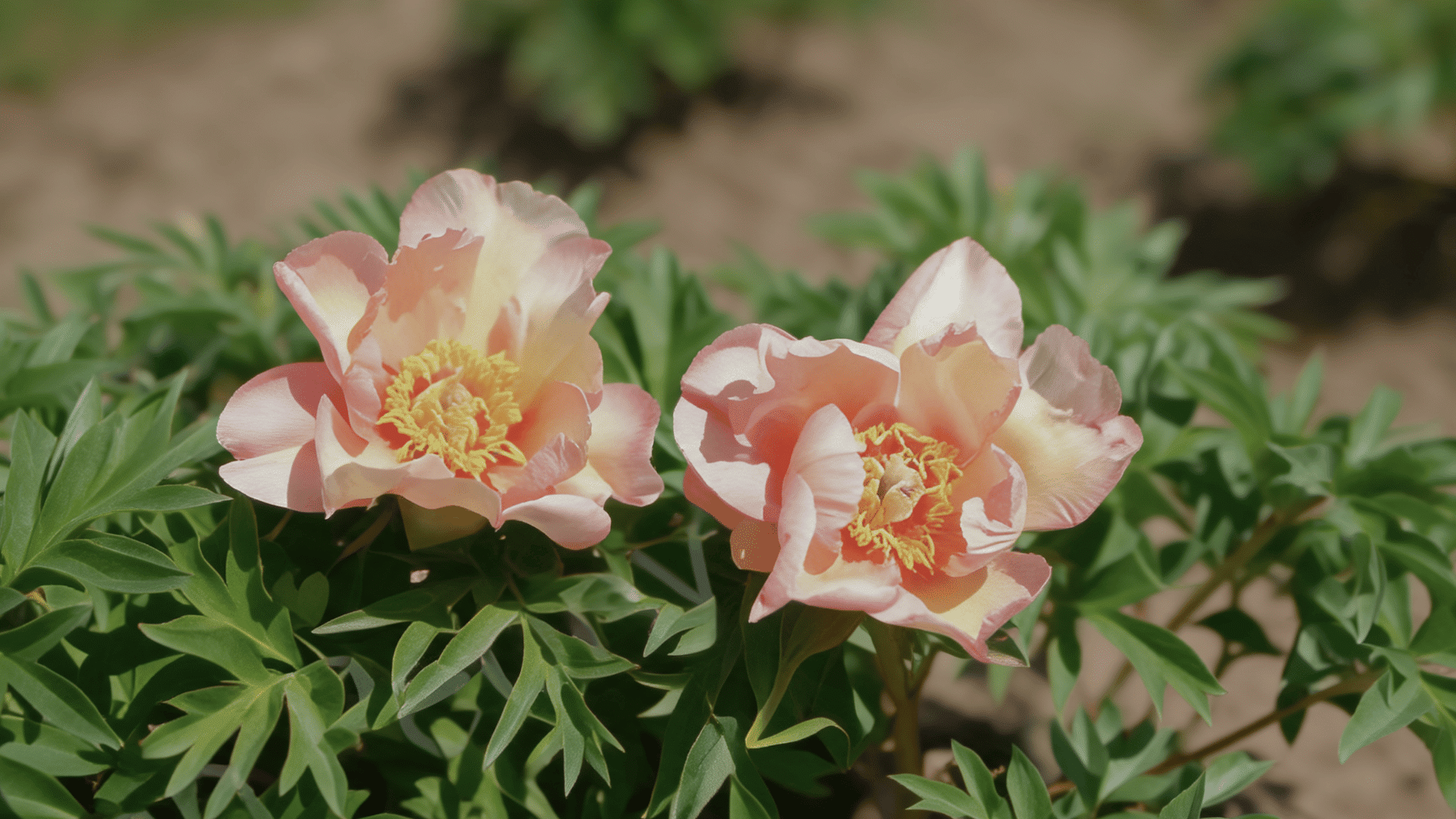
- Botanical Name: Paeonia × Itoh
- Height: 36 in (90 cm)
- Sun Requirements: Full sun
- Hardiness Zone: 4 to 8
Sonoma Floozy produces light pink blooms with fine, slightly curled petals that give the flower a soft, textured appearance.
The hardy hybrid plant holds its blooms longer than wide herbaceous varieties, making it a steady performer through the latter part of the season.
30. Singing in the Rain
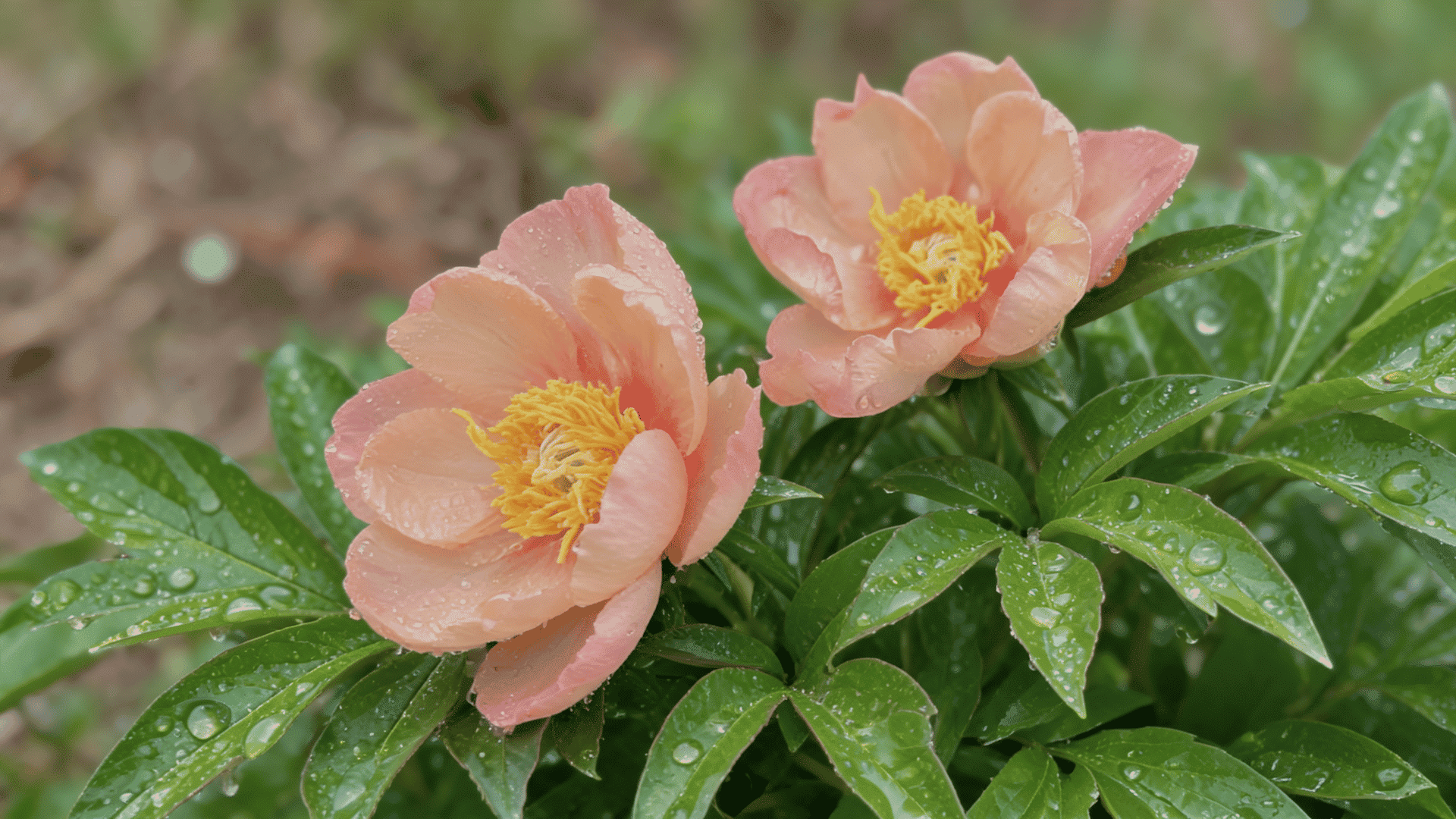
- Botanical Name: Paeonia × Itoh
- Height: 36 to 40 in (90 to 100 cm)
- Sun Requirements: Full sun
- Hardiness Zone: 4 to 8
Singing in the Rain produces creamy pink blooms with a yellow center, flowering reliably in mid-spring alongside other Itoh cultivars.
Its sturdy stems and dependable bloom timing make it a practical choice for gardeners who want steady color without heavy maintenance demands.
Types of Peonies Side-By-Side Comparison
Compare herbaceous, tree, and Itoh peonies side by side to see differences in growth, blooms, maintenance, and garden suitability.
| Feature | Herbaceous Peonies | Tree Peonies | Itoh Peonies |
|---|---|---|---|
| Plant Structure | Soft perennial stems | Woody shrub stems | Hybrid perennial |
| Winter Behavior | Dies back yearly | Remains above ground | Dies back partially |
| Height | Medium | Tall | Medium |
| Flower Size | Large | Largest blooms | Large blooms |
| Bloom Time | Late spring | Early to mid-season | Late spring |
| Garden Use | Borders and beds | Landscape focal points | Mixed gardens |
| Maintenance | Low to moderate | Low | Low |
| Stem Strength | Can flop in heavy rain | Strong, woody stems | Strong, rarely needs staking |
This comparison makes it easier to choose a peony type based on space, climate, bloom preferences, and care requirements.
How to Identify Types of Peonies and Cultivars?
Looking at a few visible traits makes it possible to identify a peony type and narrow down its likely cultivar.
- Stem and Growth Habit: Woody stems indicate tree peonies, soft stems that die back in winter indicate herbaceous types, and partially dying stems point to Itoh hybrids.
- Flower Form and Petal Layers: Single and Japanese anemone blooms show visible centers; semi-doubles have partly open centers; and double blooms fully cover the center.
- Bloom Timing: Early blooms often indicate tree peonies; late-spring blooms suggest herbaceous types; and later, longer-lasting blooms are common in Itoh hybrids.
- Color and Fragrance: Fragrant pastel blooms often appear in herbaceous cultivars like Sarah Bernhardt, while unusual colors and patterns are common in tree peonies.
- Hardiness Zone Listed: Plant tags help confirm types, with tree peonies commonly in zones 4 to 9, herbaceous peonies in zones 3 to 8, and Itoh hybrids in zones 4 to 8.
- Stem Strength After Rain: Herbaceous stems may flop after rain, while tree and Itoh peonies usually hold their blooms upright without support.
Conclusion
Once you know the three major types of peonies, choosing between them stops feeling like guesswork.
Growth habit, bloom form, and hardiness zone tell you almost everything you need before buying a single plant.
Herbaceous, tree, and Itoh cultivars each bring their own strengths to a garden bed. Picking a mix of all three stretches out bloom season and adds variety without extra upkeep.
Start with one cultivar from each category and compare how they grow in your own space. A small test bed this season makes next year’s planting decisions much easier.
Ready to plant your first peony bed? Tell us which types of peony you are planting first in the comments below.
Frequently Asked Questions
Which Peony Cultivars Are Best for Beginners?
Herbaceous cultivars such as Sarah Bernhardt or Buckeye Belle are considered best for beginners as they are generally simple to grow and tolerate a range of garden conditions.
Which Peony Varieties Are Best for Cut Flowers?
Many herbaceous peonies, such as Sarah Bernhardt and Red Charm, are popular for cutting because of their large blooms, fragrance, and attractive flower forms.
Can Different Types of Peonies Grow Together in the Same Garden?
Yes, herbaceous, tree, and Itoh peonies can be planted together. Combining different types can create variation in height, bloom timing, and flower appearance.