
Prayer plants can look healthy during the day, then shift their leaves after sunset, appearing noticeably different.
Good prayer plant care begins with recognizing that this movement is usually natural, not an immediate sign of trouble.
However, several plants share the same common name, and each may respond differently to watering, light, humidity, and propagation.
Correct identification helps prevent small care mistakes from causing curled leaves, faded patterns, or weak growth.
Botanical features and daily leaf behavior offer useful clues about what the plant needs.
You will also see how to maintain suitable soil moisture, warmth, drainage, feeding, and repotting conditions.
Prayer Plant Identification and Botanical Profile
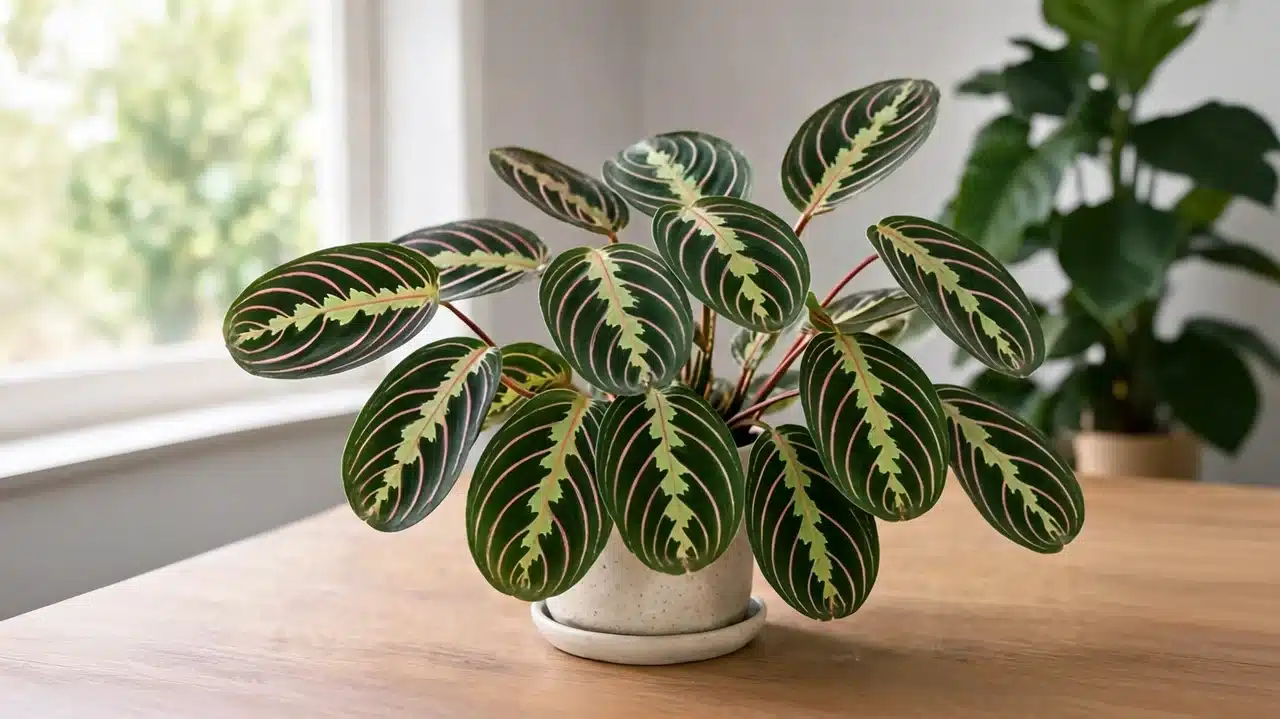
The classic prayer plant is Maranta leuconeura, a tropical perennial in the family Marantaceae. Its native range covers central and eastern Brazil, where it grows in wet tropical conditions beneath taller vegetation.
| Botanical detail | Prayer plant information |
|---|---|
| Botanical name | Maranta leuconeura |
| Plant family | Marantaceae |
| Native range | Central and eastern Brazil |
| Plant type | Tropical evergreen perennial |
| Growth habit | Low, spreading, and rhizomatous |
| Mature size | About 6–15 inches tall |
| Foliage | Oval leaves with patterned veins and markings |
| Flowers | Small white or pale purple blooms |
| Pet safety | Generally considered non-toxic |
For healthy indoor growth, place the plant in bright indirect light, water when the topsoil begins to dry, and keep the temperature between 60°F and 80°F.
Why Is It Called a Prayer Plant?
It is called a prayer plant because its leaves rise and fold in the dark, resembling hands held together in prayer.
During daylight, the leaves generally remain open or nearly horizontal. They move upward as the light fades and may open the following morning again.
This movement is known as nyctinasty. Changes in pressure within specialized joints near the leaf base allow the foliage to change position.
Nighttime movement is normal and does not mean the plant needs more water. Stress-related curling usually continues during the day and may be accompanied by brown edges, dry soil, fading, or drooping stems.
Calathea Prayer Plant and Related Species
Calathea and Maranta are closely related plants in the Marantaceae family. Both may be sold under the prayer plant name because their foliage responds to changes in light.
Many species previously placed in the Calathea genus are now classified as Goeppertia. Plant sellers may continue using “Calathea” because it remains familiar to houseplant owners.
Common plants sold as Calathea prayer plants include:
- Rattlesnake plant
- Peacock plant
- Network plant
- Orbifolia
- White Star plant
These plants generally form upright clumps rather than the horizontal stems found on Maranta.
How to Care for Indoor Prayer Plants
Prayer plants grow best when light, moisture, temperature, and humidity remain stable. Sudden environmental changes can cause curling, discoloration, or leaf loss.
1. Light Requirements
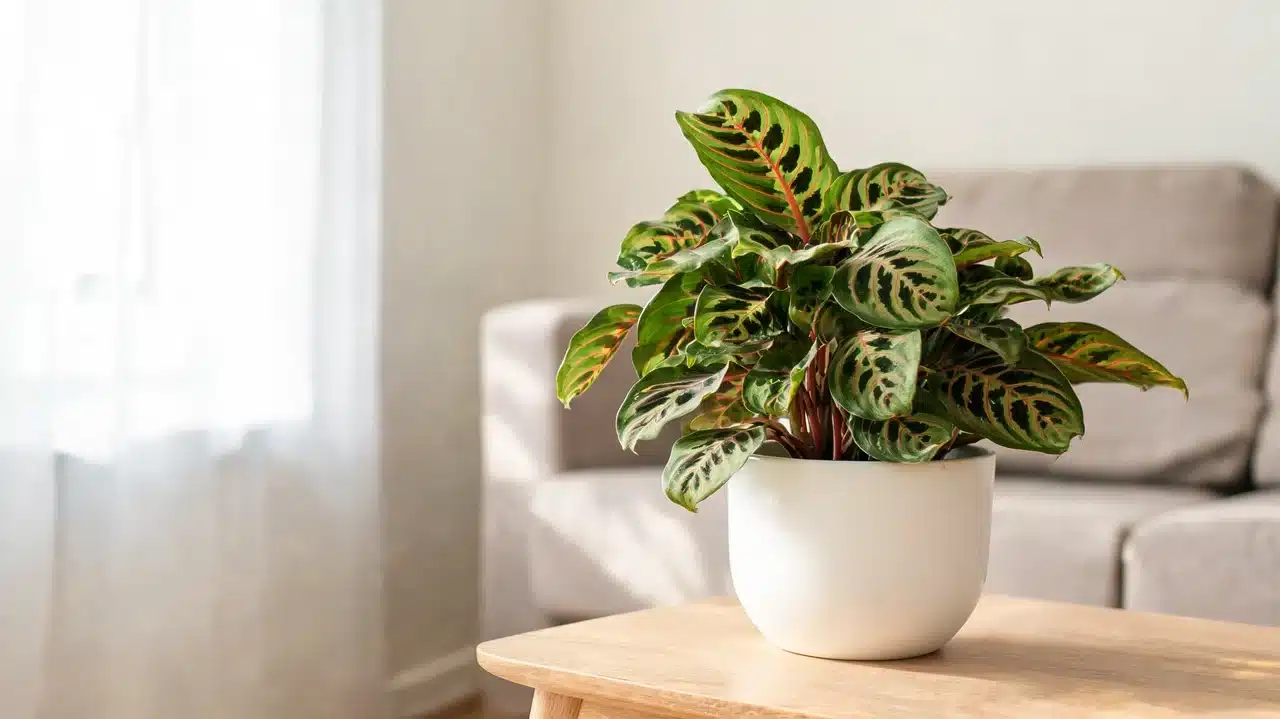
Prayer plants prefer bright to medium indirect light. Place the pot near an east- or north-facing window for gentle exposure.
Near south- or west-facing windows, move it several feet back or use a sheer curtain. Strong afternoon sunlight can bleach patterns, burn foliage, and create dry patches.
Very low light may cause slow growth, small leaves, weak coloring, and long stems. Rotate the pot occasionally so each side receives balanced light.
2. Best Soil Mix
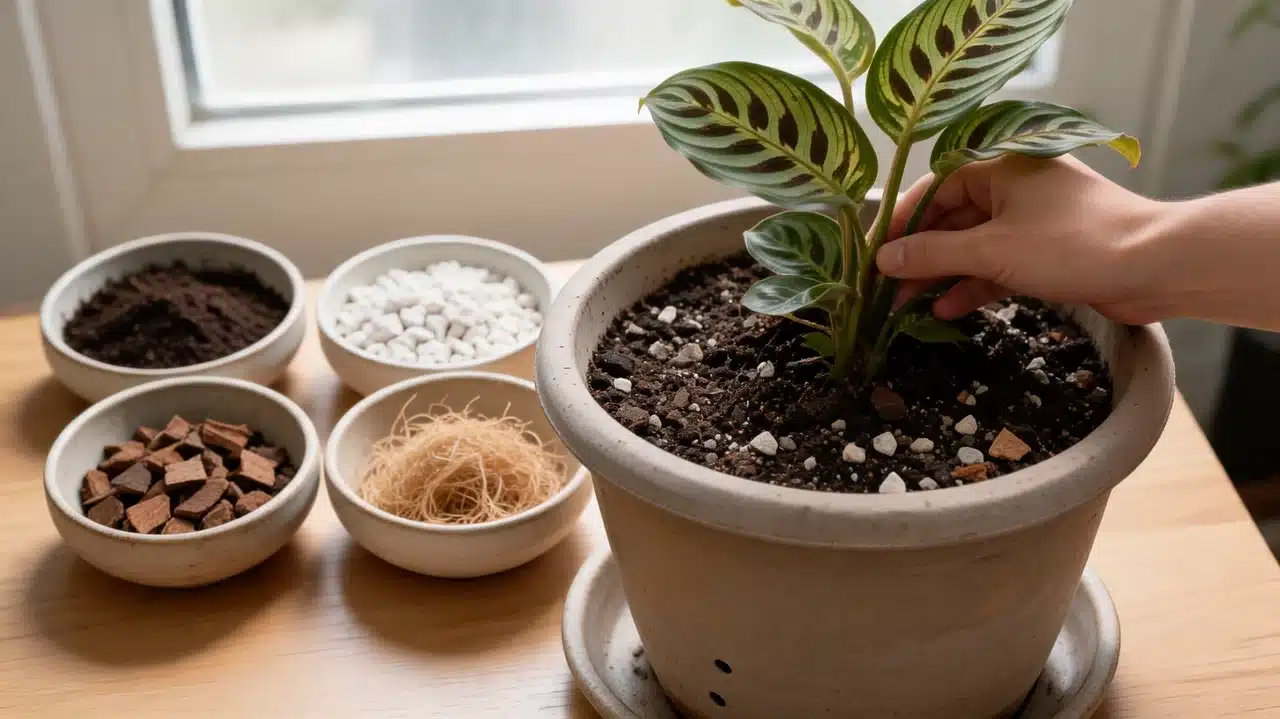
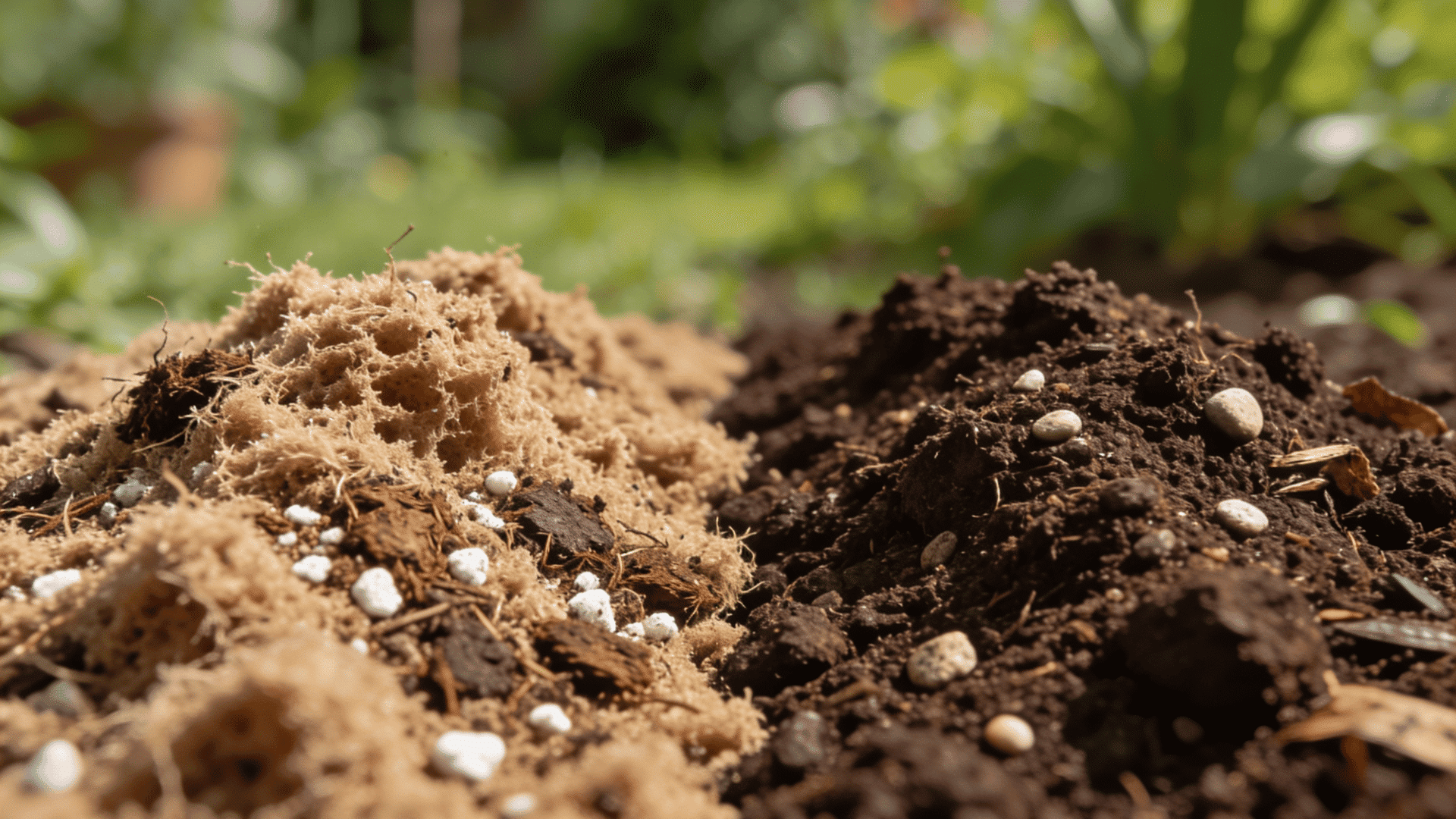
Prayer plant soil should retain light moisture while allowing excess water and air to move through the roots. A homemade well-draining mix is easy to put together:
Combine two parts indoor potting mix with one part perlite and one part fine orchid bark.
Coco coir can replace the bark when additional moisture retention is needed.
Water remaining on the surface for several minutes can indicate poor drainage or compressed potting material.
Note: Avoid dense outdoor garden soil, as it may compact in the container.
3. Watering Requirements
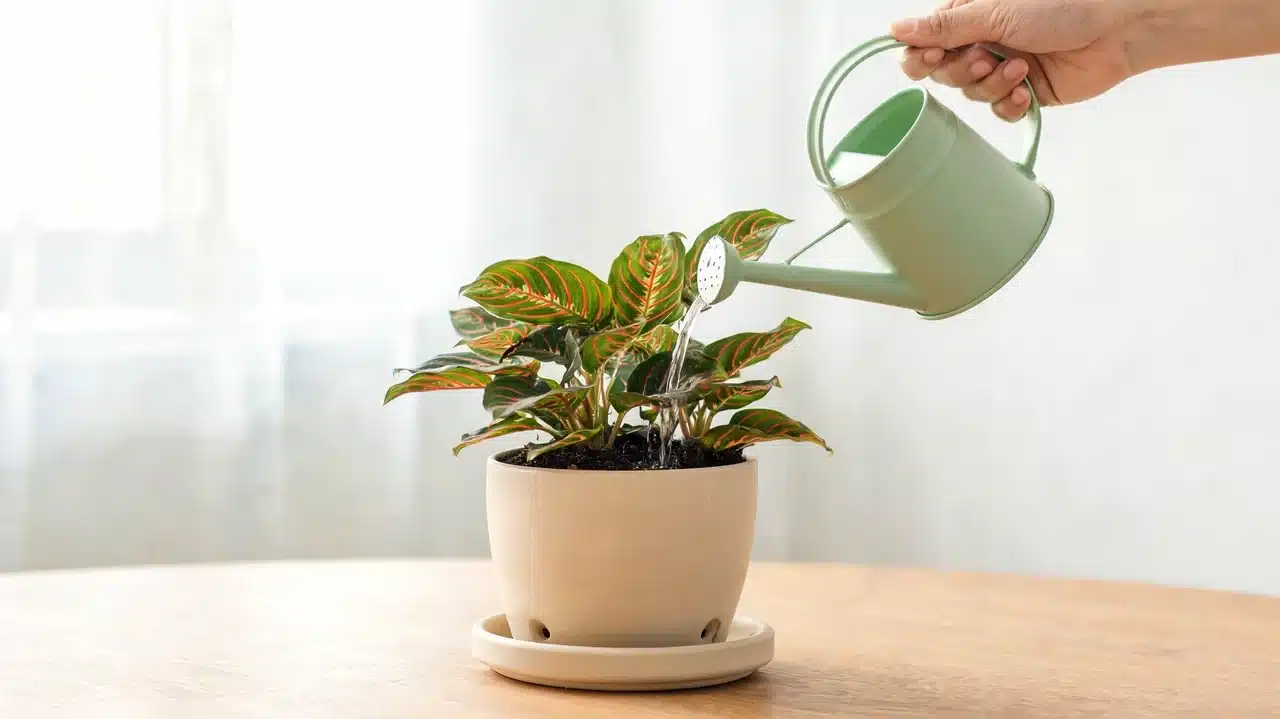
Water when the upper ½ to 1 inch of soil begins to feel dry. Add water evenly until it flows through the drainage holes, then empty the saucer.
Never allow the soil to dry completely or remain constantly saturated. Light, temperature, humidity, pot size, and soil composition affect watering frequency.
Filtered, distilled, or rainwater may reduce mineral-related brown tips. Use room-temperature water to avoid sudden stress around the plant’s sensitive root system.
4. Humidity and Temperature
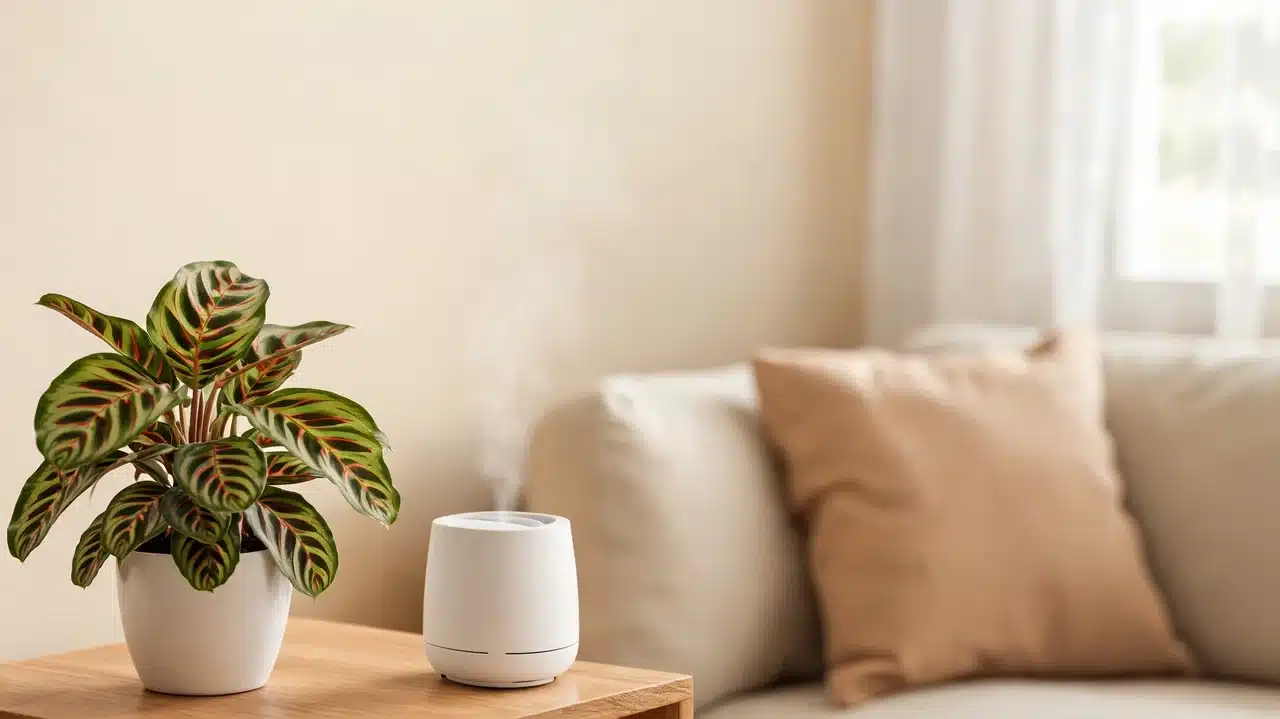
Prayer plants prefer moderate to high humidity, ideally above 50%. A small humidifier provides more consistent moisture than misting, while grouping compatible plants may slightly increase nearby humidity.
Frequent misting can leave foliage wet and encourage spotting when airflow is limited. Maintain temperatures between 60°F and 80°F.
Keep the pot away from heating vents, air conditioners, fireplaces, cold windows, exterior doors, and drafty hallways. Sudden temperature changes may cause curling, drooping, or leaf loss.
5. Container and Repotting Care
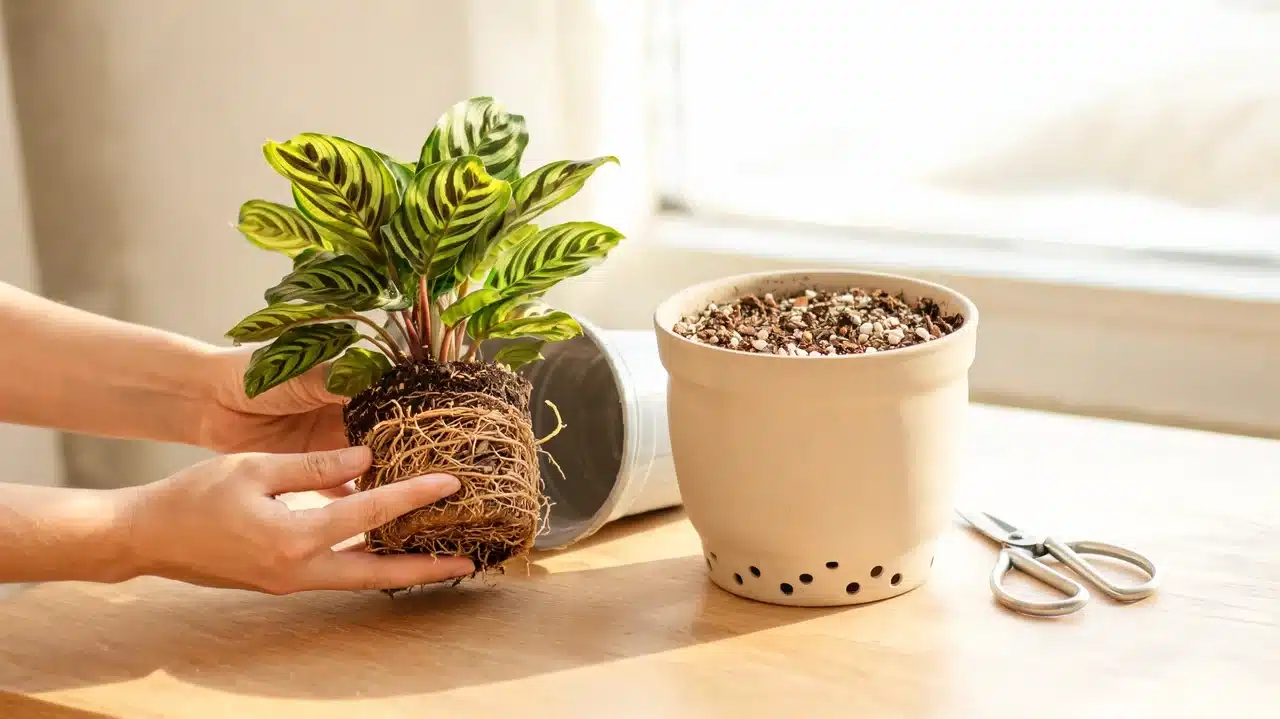
Choose a shallow or moderately deep container with several drainage holes. The pot should be only 1–2 inches wider than the roots, as excess soil may remain too wet for too long.
Repot when roots circle the container, emerge through drainage holes, or cause unusually rapid drying. Remove the plant carefully and trim any soft or damaged roots.
Replant it at its previous depth, water thoroughly, and delay fertilizer until healthy new growth becomes visible.
6. Fertilizing, Pruning, and Pest Prevention
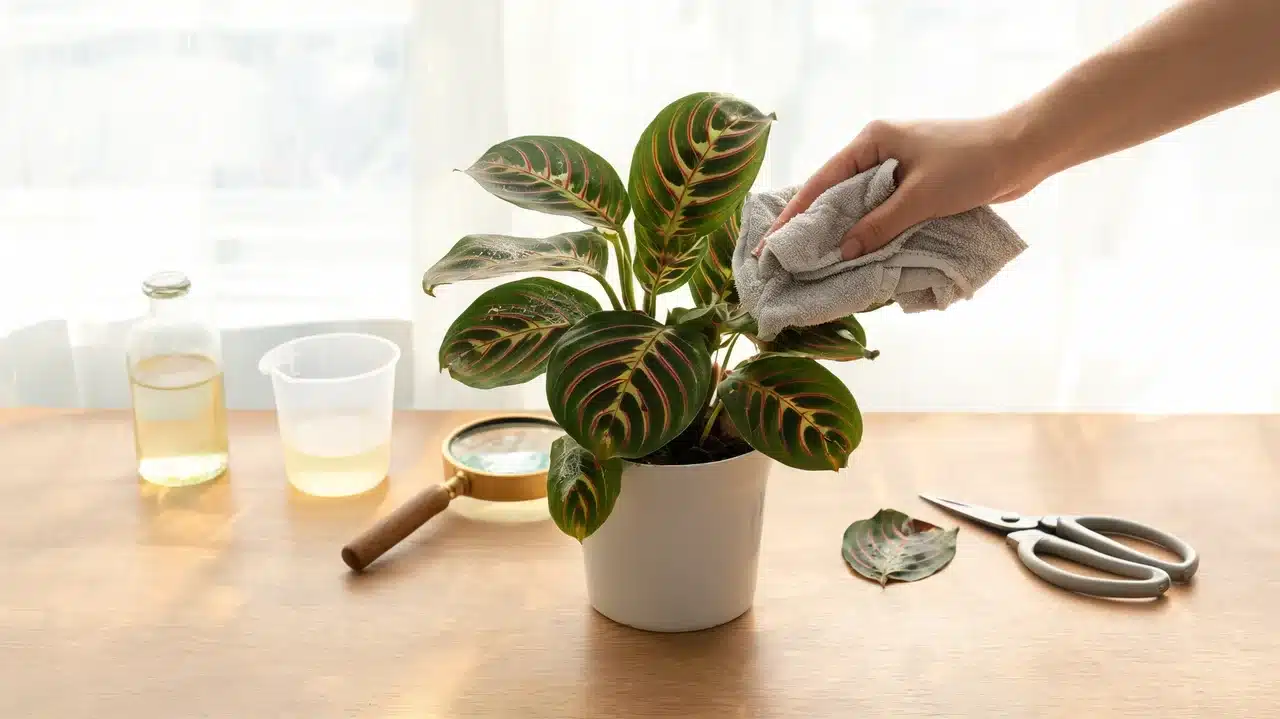
Apply a balanced liquid fertilizer diluted to half strength every four weeks during active growth. Water before feeding to protect the roots.
Trim long stems above a healthy node and remove completely damaged leaves with clean scissors.
Wipe foliage with a damp cloth to remove dust and reveal pests. Inspect for spider mites, mealybugs, scale, and fungus gnats.
Fine webbing, cotton-like clusters, brown bumps, or small flies may indicate the need for treatment and isolation.
7. Prayer Plant Propagation
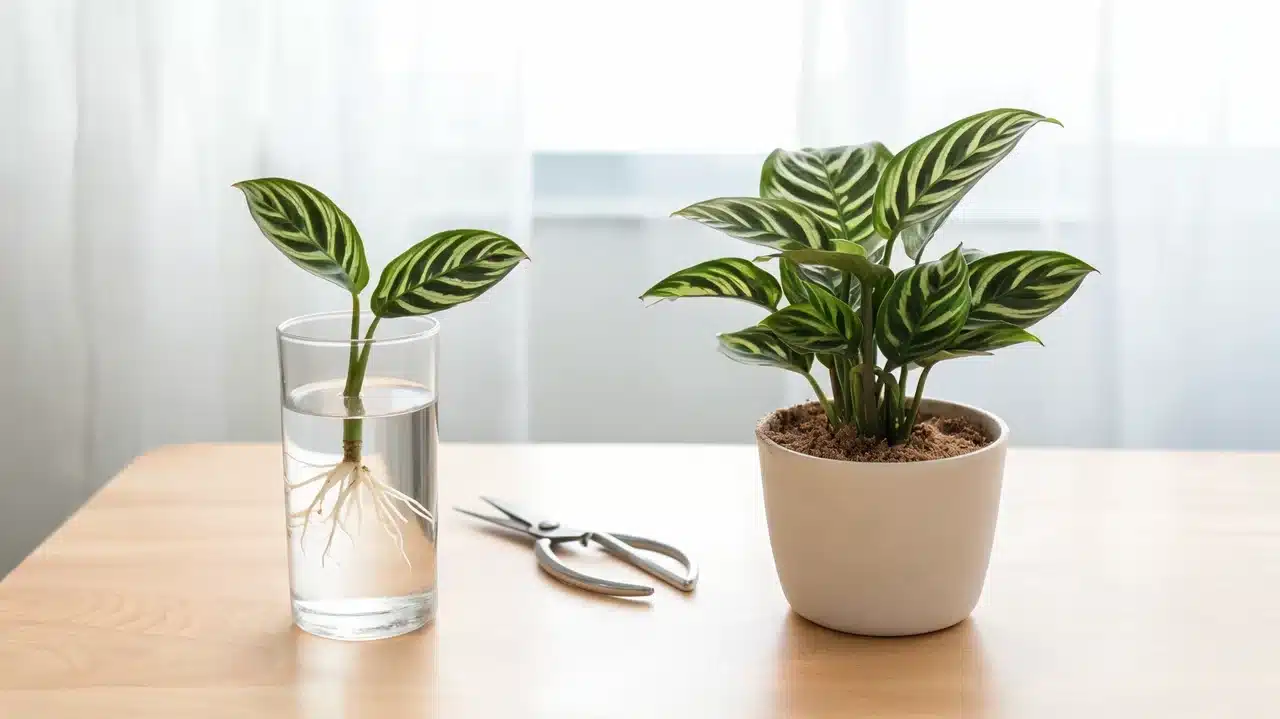
Maranta can be propagated through stem cuttings or root division. For a cutting, trim a healthy stem below a node and retain two or three leaves.
Place the node in clean water or lightly moist soil under bright indirect light. Transfer water-rooted cuttings once several roots have developed.
For division, remove a mature plant from its pot and separate naturally rooted clumps. Replant each section in a small container and keep it lightly moist until new growth appears.
Prayer Plant Care Through the Seasons
Indoor light, temperature, and humidity change throughout the year. Small routine adjustments help keep the plant stable.
| Seasonal condition | Prayer plant care |
|---|---|
| Brighter periods | Check soil moisture more often and begin diluted feeding when new leaves appear. |
| Hot conditions | Protect foliage from direct afternoon sunlight and monitor the soil for rapid drying. |
| Cooler periods | Reduce watering frequency as plant growth and soil evaporation slow. |
| Dry indoor periods | Use a humidifier and inspect the undersides of the leaves for spider mites. |
| Cold weather | Move the plant away from drafty windows, exterior doors, and cold indoor areas. |
Dry indoor air does not always mean the soil is dry. Test the potting mix before adding water.
Common Prayer Plant Care Mistakes to Avoid
Small routine errors can cause curling, discoloration, stunted growth, and root damage. Avoid these common problems to keep indoor prayer plants healthy.
- Watering on a fixed schedule: Check the top layer of soil before watering. Adding water while the potting mix is still wet can cause yellow leaves and root rot.
- Using the wrong pot: An oversized container retains excess moisture around the roots. Choose a pot only 1–2 inches wider than the existing root system.
- Providing excessive sunlight: Direct afternoon sunlight may bleach leaf patterns, create brown patches, and dry the edges. Use bright indirect light instead.
- Ignoring drainage: Empty the saucer after watering and keep drainage holes clear. Standing water reduces oxygen around the roots.
- Overcorrecting plant problems: Changing light, water, fertilizer, and humidity together makes the cause difficult to identify. Adjust one condition and monitor new growth.
Careful checks and gradual changes make prayer plant problems easier to diagnose and correct.
Final Thoughts
A healthy prayer plant starts with knowing its variety and responding to what the leaves and soil reveal.
You can support steady growth with bright indirect light, warmth, moderate humidity, and a well-draining pot.
Regular checks also make it easier to notice pests, mineral buildup, light damage, or root problems early. Older leaf damage may not disappear, so focus on the condition of new growth.
These prayer plant care habits help prevent common problems and make changes easier to manage without stressing the plant.
Try these tips gradually and share your prayer plant variety or current leaf problem in the comments below.
Frequently Asked Question
How Long Can a Prayer Plant Live Indoors?
A prayer plant may live for several years when light, moisture, temperature, and humidity remain stable. Older plants can also be renewed through division or healthy cuttings.
Does a Prayer Plant Need a Moss Pole?
No. Maranta naturally spreads across the soil and may trail over the edge of its container. A wide pot or hanging planter suits it better than a moss pole.
Should Prayer Plant Flowers Be Removed?
Removing the small flowers is optional. They do not usually harm the plant, though faded flower stems can be trimmed to keep the foliage tidy.