

Your croton’s leaves look dull. The colors just aren’t popping anymore. It’s a common problem. Most crotons lose their vibrant look without the right care.
The mammy croton is different. Its curled leaves and bold color mix make it a real showstopper indoors or out.
But it does need a few key things to thrive. Light, water, and temperature all play a part.
Get these right, and you’ll see thicker growth and richer color. Get them wrong, and the leaves fade fast.
Think of this as your go-to guide for mammy croton care, covering the full journey from planting to a thriving, colorful plant.
About the Croton Plant
Croton (Codiaeum variegatum) is a tropical evergreen plant admired for its colorful, leathery leaves.
Unlike many houseplants that depend on flowers for beauty, crotons draw attention purely through their striking foliage.
Their leaves display a vibrant range of colors, including green, yellow, orange, red, pink, and purple. This natural variety makes each plant look unique and full of character.
While crotons are commonly grown as indoor plants, they can also flourish outdoors.
In warm climates with stable temperatures, they thrive beautifully in open, natural settings.
Croton Plant Varieties
There are many croton varieties, each with unique leaf shapes and colors.
| Variety | Features |
|---|---|
| Mammy Croton | Curled leaves with bright red, orange, yellow, and green colors |
| Petra Croton | Green leaves with strong yellow and orange veins |
| Gold Dust Croton | Green leaves covered with yellow spots |
| Oakleaf Croton | Leaves shaped like oak tree leaves |
| Zanzibar Croton | Long, narrow leaves with bright colors |
Among these, Mammy Croton is especially popular because of its twisted leaves and dramatic color patterns.
Mammy Croton Plant Care Tips for Better Growth
Mammy Croton stands out for its curled leaves and bold colors, whether grown outdoors or indoors.
Its care stays largely the same in both settings: good lighting, careful watering, and stable temperatures keep its foliage vibrant.
1. Sunlight Requirements
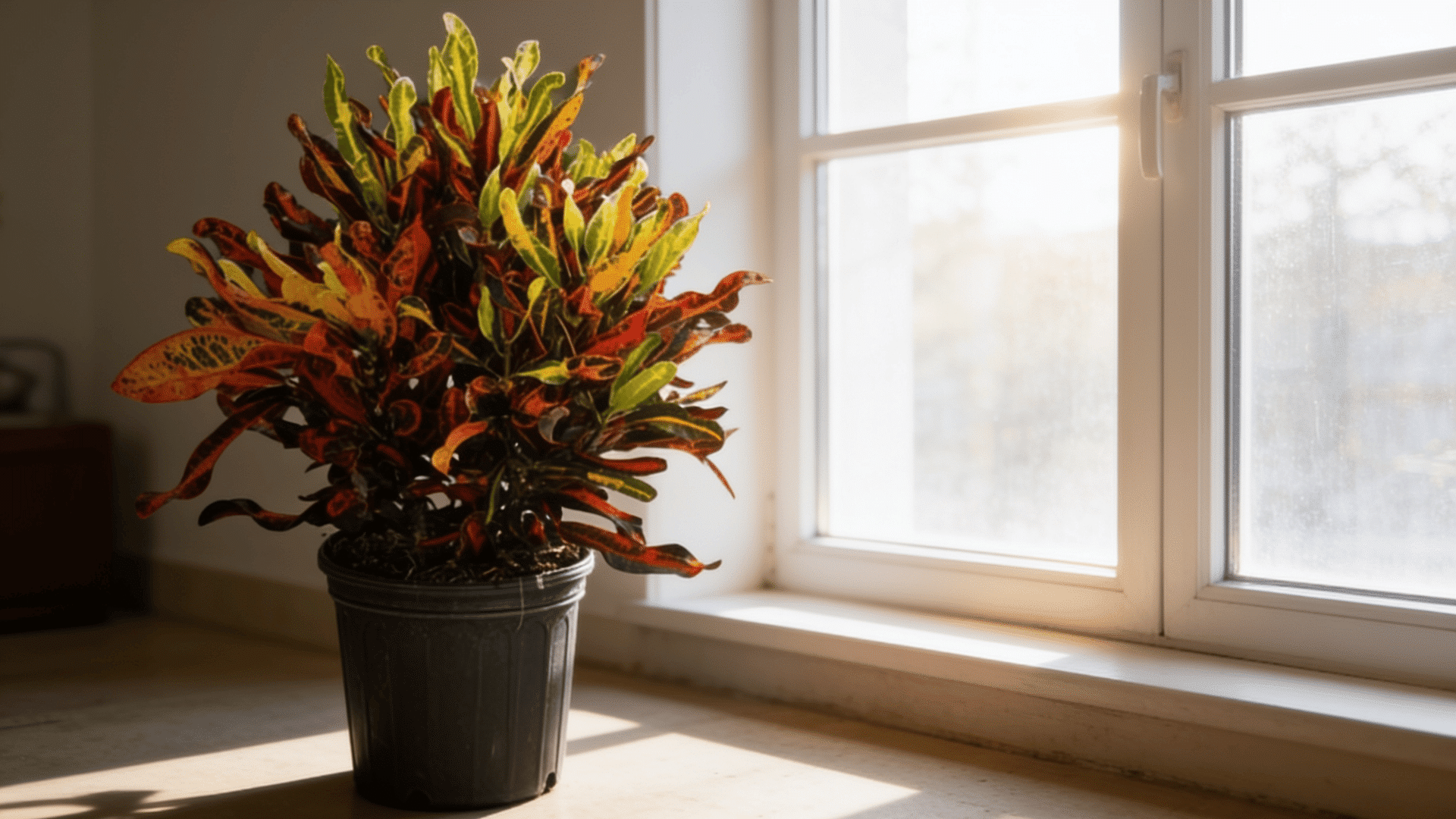
Place Mammy Croton in bright, indirect light for 6 hours daily to intensify leaf colors.
Low light causes leaves to revert to plain green. 2-3 hours of gentle morning sun can further boost pigmentation, but avoid harsh afternoon sun 12-4 PM, which can scorch the thin leaves.
Indoors, keep it within 2-3 feet of an east or south-facing window for best results.
2. Watering Needs
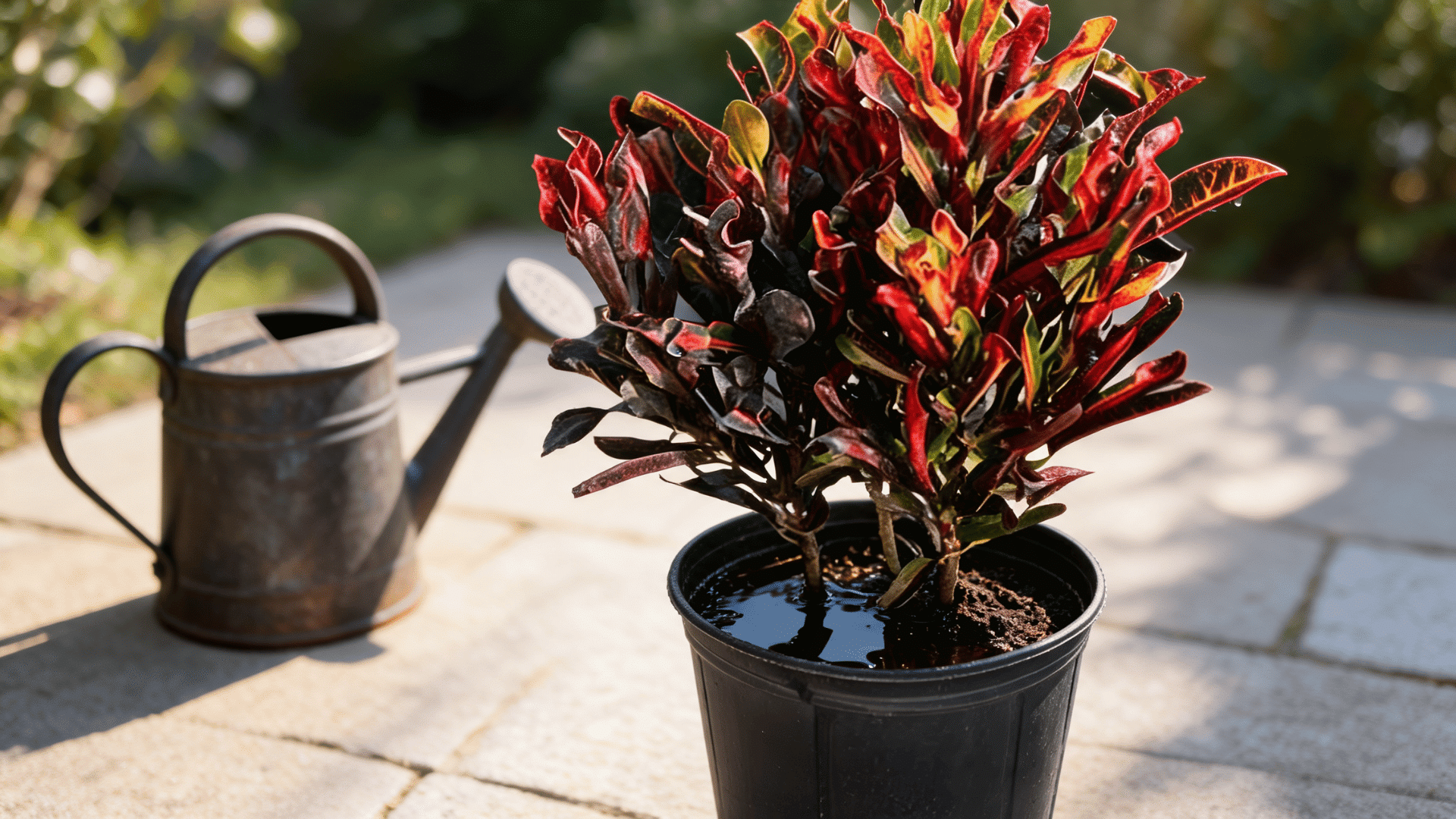
Water Mammy Croton when the top 1-2 inches of soil feel dry to the touch.
A consistent deep-watering schedule works better than frequent light sprinkles that only wet the surface.
During spring and summer, water roughly once every 5-7 days as growth speeds up. In fall and winter, reduce to once every 10-14 days since growth slows and the plant uses less water.
Note: Avoid constantly soggy soil, as the roots are prone to rot from excess moisture.
3. Soil Requirements
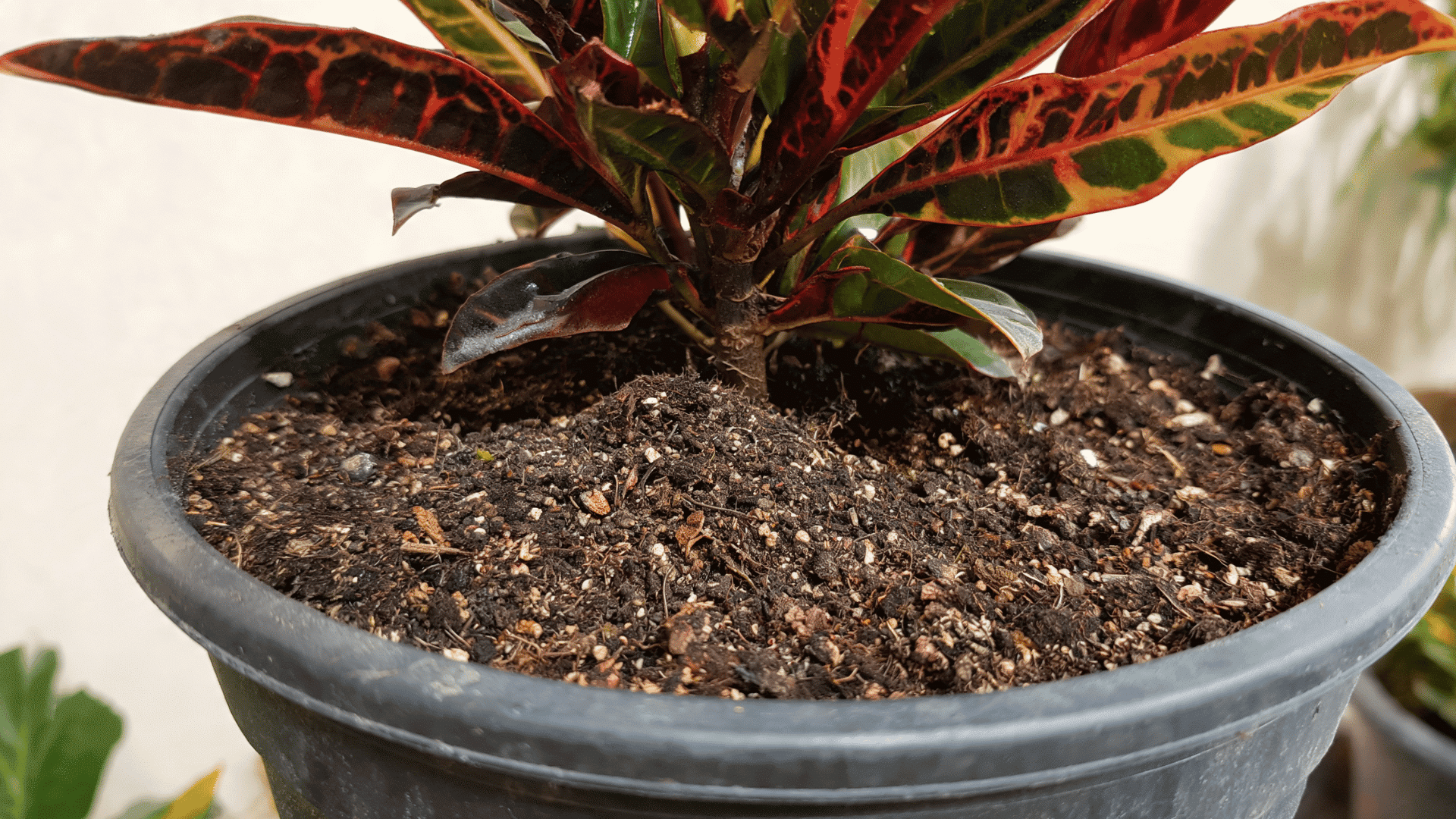
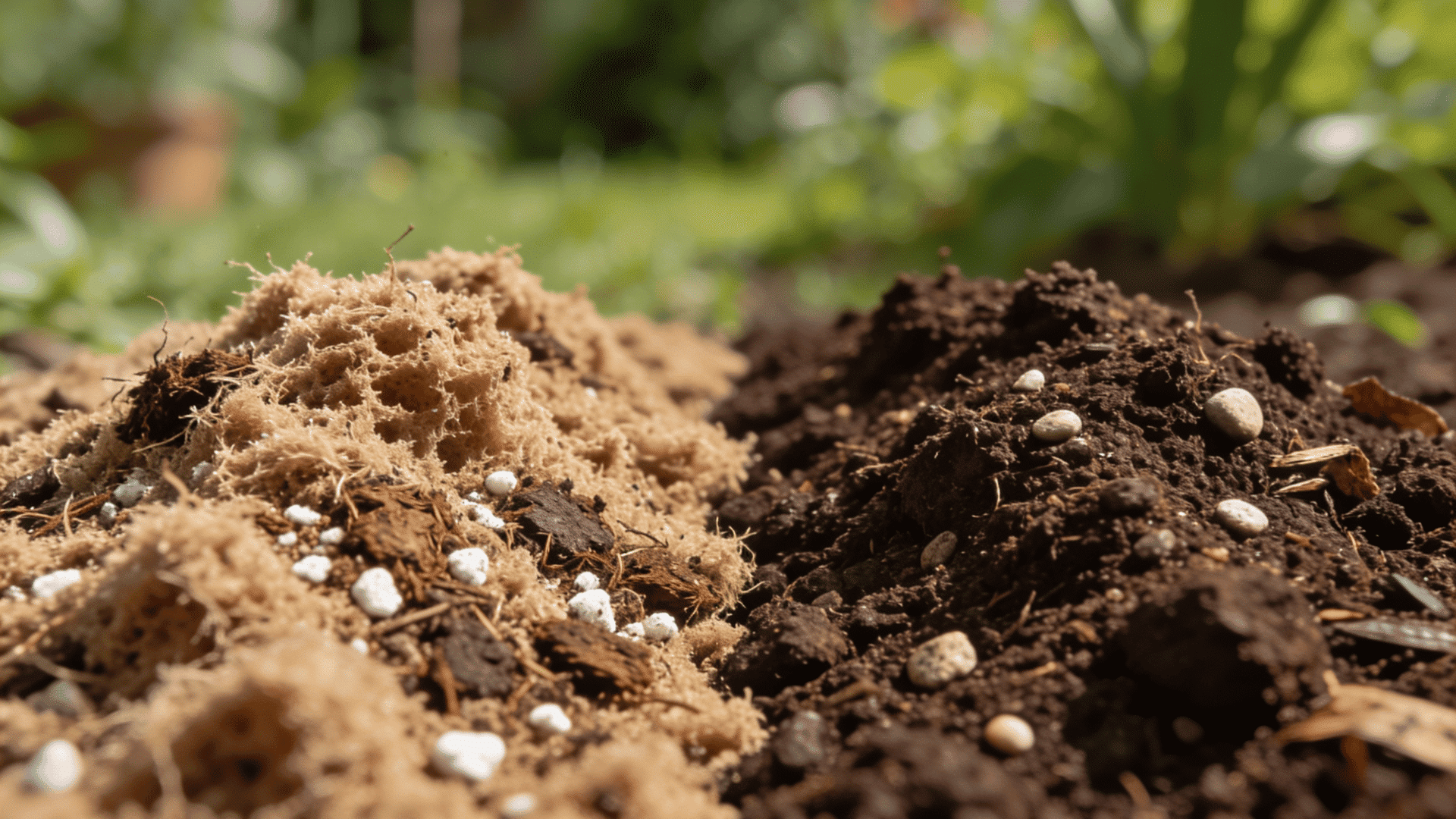
Mammy Croton needs well-draining soil its prevent root rot. Use a tropical plant mix, or blend potting soil with perlite and a bit of peat moss or coco coir.
Drainage matters even more indoors, where poor airflow keeps soil wet longer.
Always use a container with drainage holes or well-draining soil, so water flows through rather than pooling around the roots.
4. Temperature & Humidity
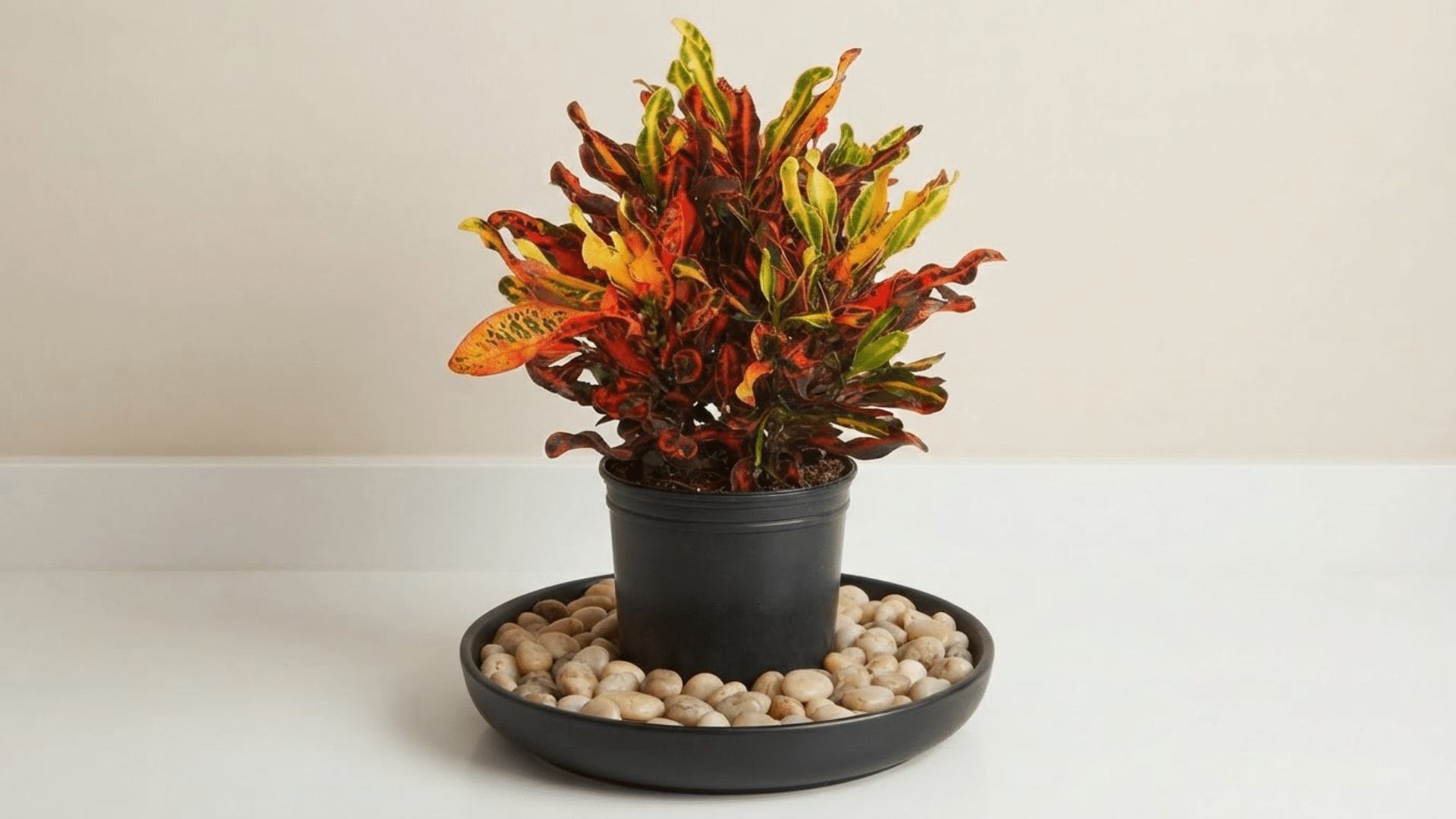
Mammy Croton thrives in warm, stable conditions between 60–85°F (15–29°C).
It holds its color best when temperatures stay consistent, so keep it away from cold drafts, air-conditioning vents, and heaters.
Avoid letting it sit below 50°F (10°C), as sudden cold triggers leaf drop. Because crotons are tropical, they also prefer moderate to high humidity; aim for 40–60%.
In dry indoor air, mist the leaves a few times a week or set the pot on a pebble tray to keep humidity steady.
5. Pest Control
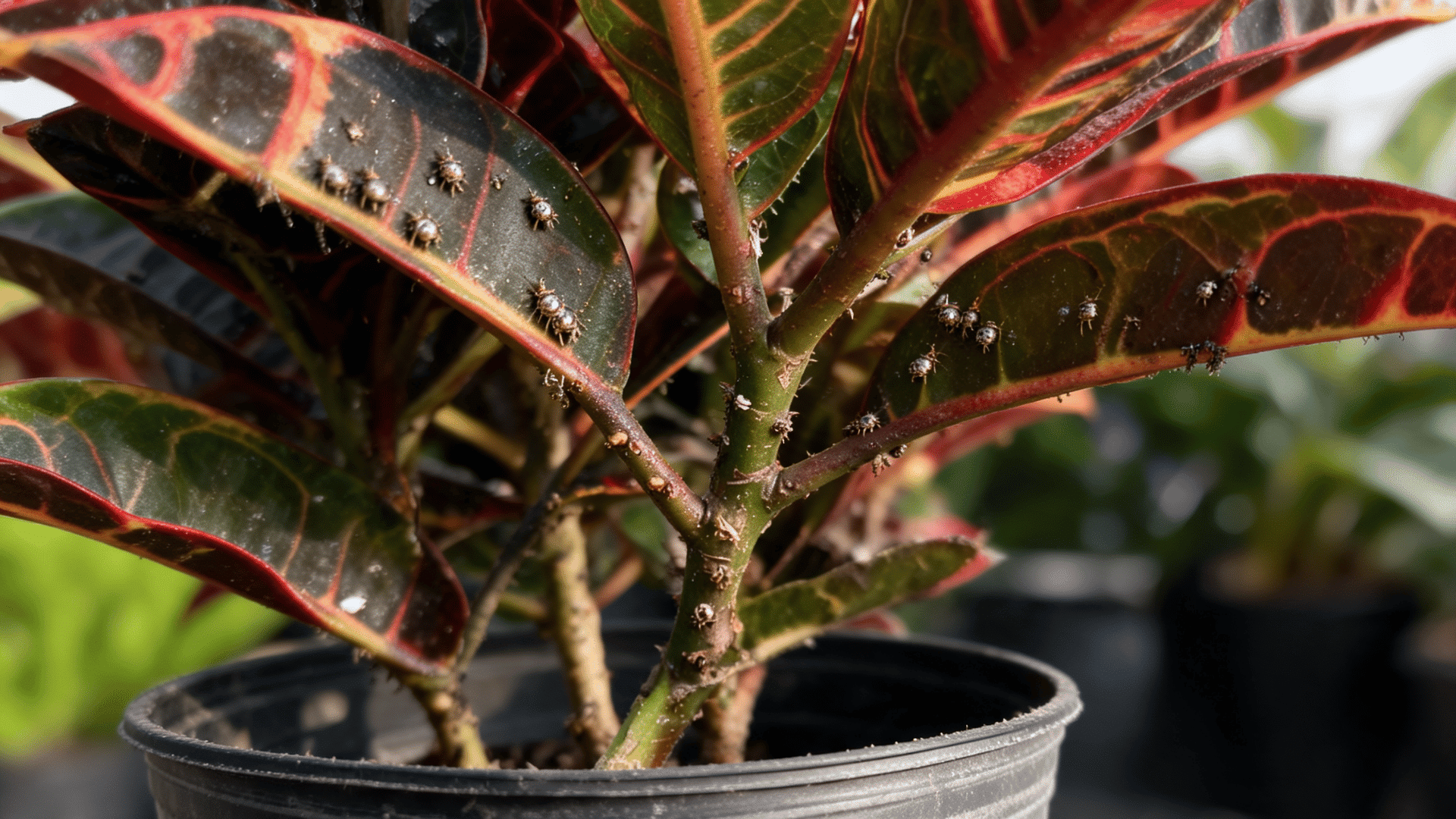
Check Mammy Croton regularly for spider mites, mealybugs, and scale, which cluster on the undersides of leaves and stem joints.
Indoor plants face a higher risk of spider mites in dry air, so mist leaves 2-3 times weekly or use a nearby humidifier.
Outdoor plants are more prone to mealybugs and scale brought in by neighboring plants.
Inspect leaves weekly and treat infestations early with insecticidal soap or neem oil, reapplying every 7-10 days until pests are cleared.
6. Fertilizer Needs
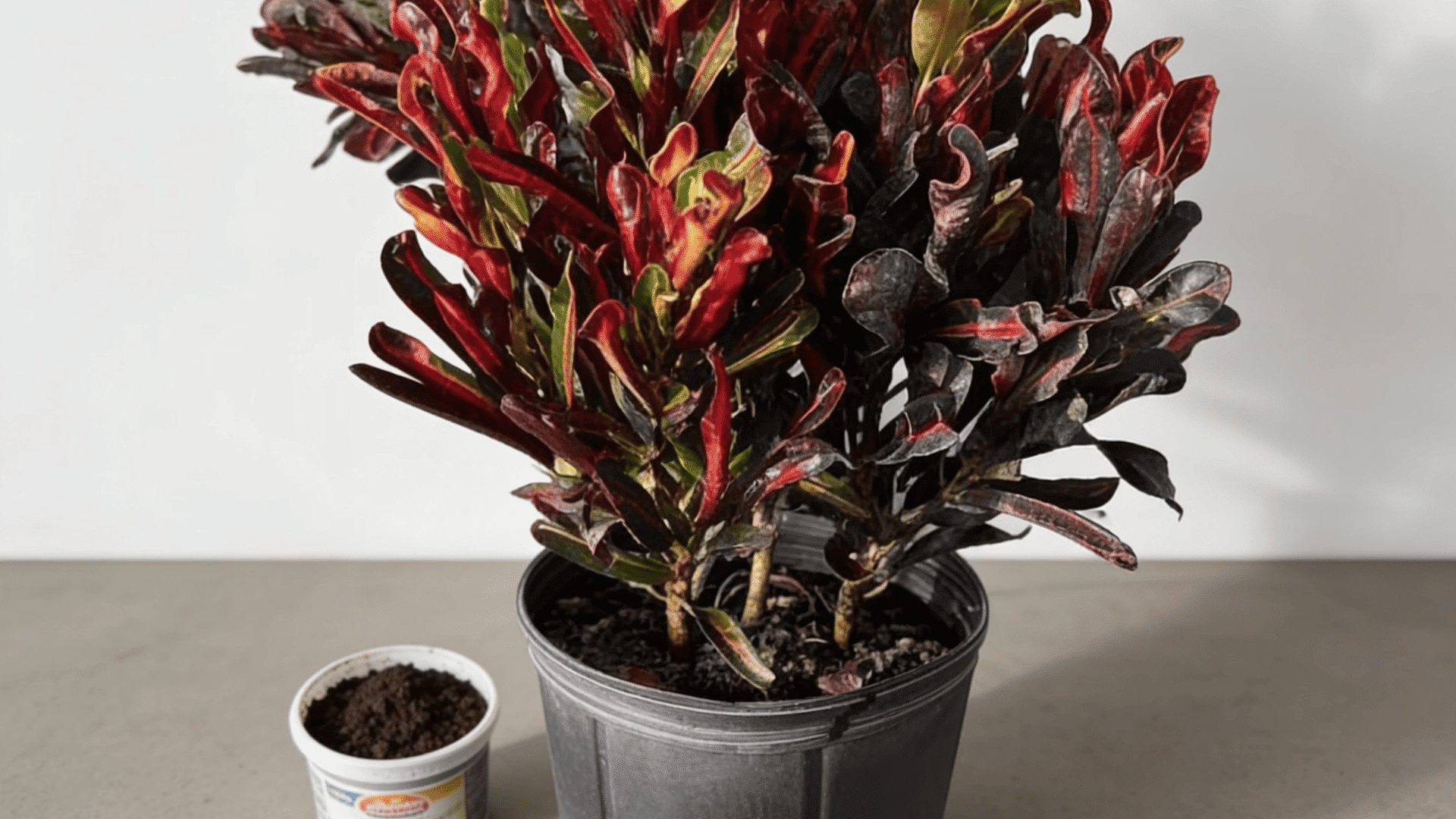
Feed Mammy Croton with a balanced liquid fertilizer every 4–6 weeks during spring and summer, when the plant is actively growing.
A few homemade natural fertilizers work well for this if you prefer an organic feed.
Reduce or stop fertilizing in fall and winter, as the plant’s growth slows down and excess nutrients can build up in the soil.
7. Pruning
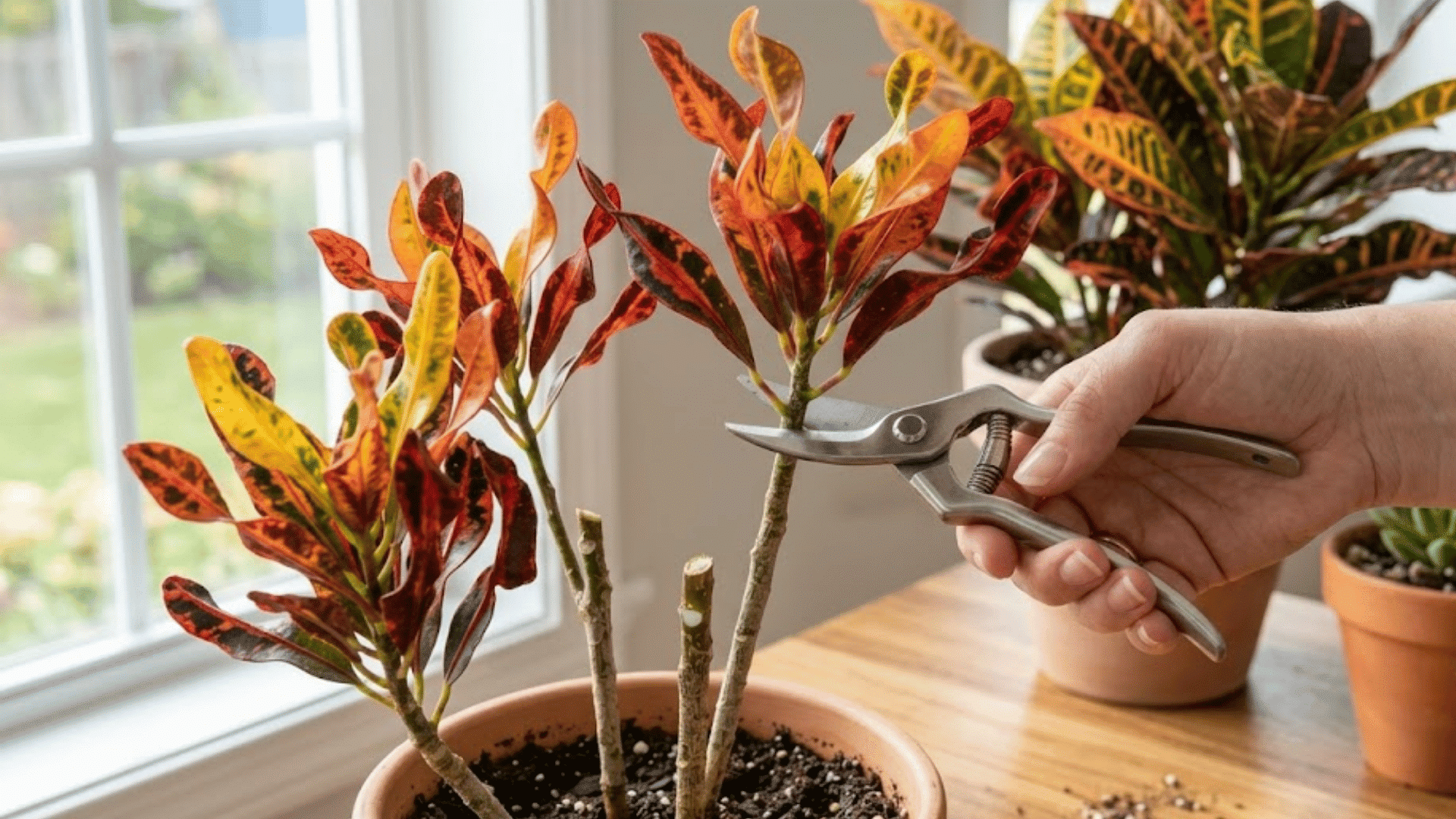
Prune Mammy Croton in spring or early summer to encourage bushier growth and remove leggy or damaged stems.
Cut longer stems back to just above a leaf node; this triggers branching at that point.
Light pruning every 4-6 weeks during the growing season keeps the plant compact and full, whether grown indoors or outdoors.
What Makes Mammy Croton Worth Growing?
Mammy Croton remains a popular choice among plant lovers for its bold, colorful foliage, which works well in many indoor and outdoor settings and adapts easily to different lighting conditions and living spaces.
- Bold, Year-Round Color: Vibrant reds, oranges, yellows, and greens stay bright in every season.
- Low-Maintenance Once Established: A consistent routine is all it takes to keep it thriving.
- Versatile Placement: Works well on patios, in garden beds, or by bright indoor windows.
- Improved Indoor Air Quality: Helps filter indoor air like other tropical foliage plants.
- Added Texture and Drama: Curled, twisted leaves add movement and visual interest.
- Long Lifespan: With proper care, it can thrive for years with steady growth.
Mammy Croton remains a reliable choice for anyone looking to add bold color, texture, and personality to their space.
With the right light, watering routine, and a bit of ongoing care, it can stay full, vibrant, and thriving for years to come, becoming a lasting favorite in any plant collection.
Mammy Croton Essential Maintenance Tips
Mammy Croton looks best when it’s properly maintained and given consistent care along with the right growing conditions to support its bold, colorful foliage.
A few simple maintenance habits, followed regularly, can go a long way in helping the plant stay full, balanced, and visually striking over time.
- Rotate the pot regularly for even growth on all sides.
- Remove damaged or yellowing leaves to keep the plant looking tidy.
- Trim long stems to encourage bushier, fuller growth.
- Clean leaves regularly to remove dust buildup and help them absorb light.
Taking the time to maintain these small but consistent habits can make a noticeable difference in the plant’s overall appearance and long-term health.
With the right ongoing care and attention, Mammy Croton will continue to stay full, colorful, and thriving for years to come.
Conclusion
A healthy mammy croton doesn’t happen by accident. It’s the result of a few consistent habits done right.
Good light, steady watering, and stable temperatures keep its colors bold and its leaves full. Regular feeding, pruning, and pest checks round out the rest, keeping your plant strong season after season.
The payoff is worth it. A well-cared-for mammy croton becomes a true centerpiece, indoors or out, with color that continues to improve over time.
Start applying these tips today, and watch your mammy croton transform into the vibrant showstopper it’s meant to be.
Have questions about your mammy croton, or tips of your own to share? Drop them in the comments below!
Frequently Asked Questions
Why Are My Mammy Croton Leaves Suddenly Dropping?
Usually a shock from temperature swings, drafts, or a recent move. Give it a few stable weeks to recover.
Can a Mammy Croton Grow Well in a Bathroom with a Window?
Yes, bright indirect light plus the extra humidity works well. Just avoid drafts and cold air.
Is Mammy Croton Toxic to Pets or Children?
Yes, it can cause mild irritation or stomach upset if ingested. Keep it out of reach.