
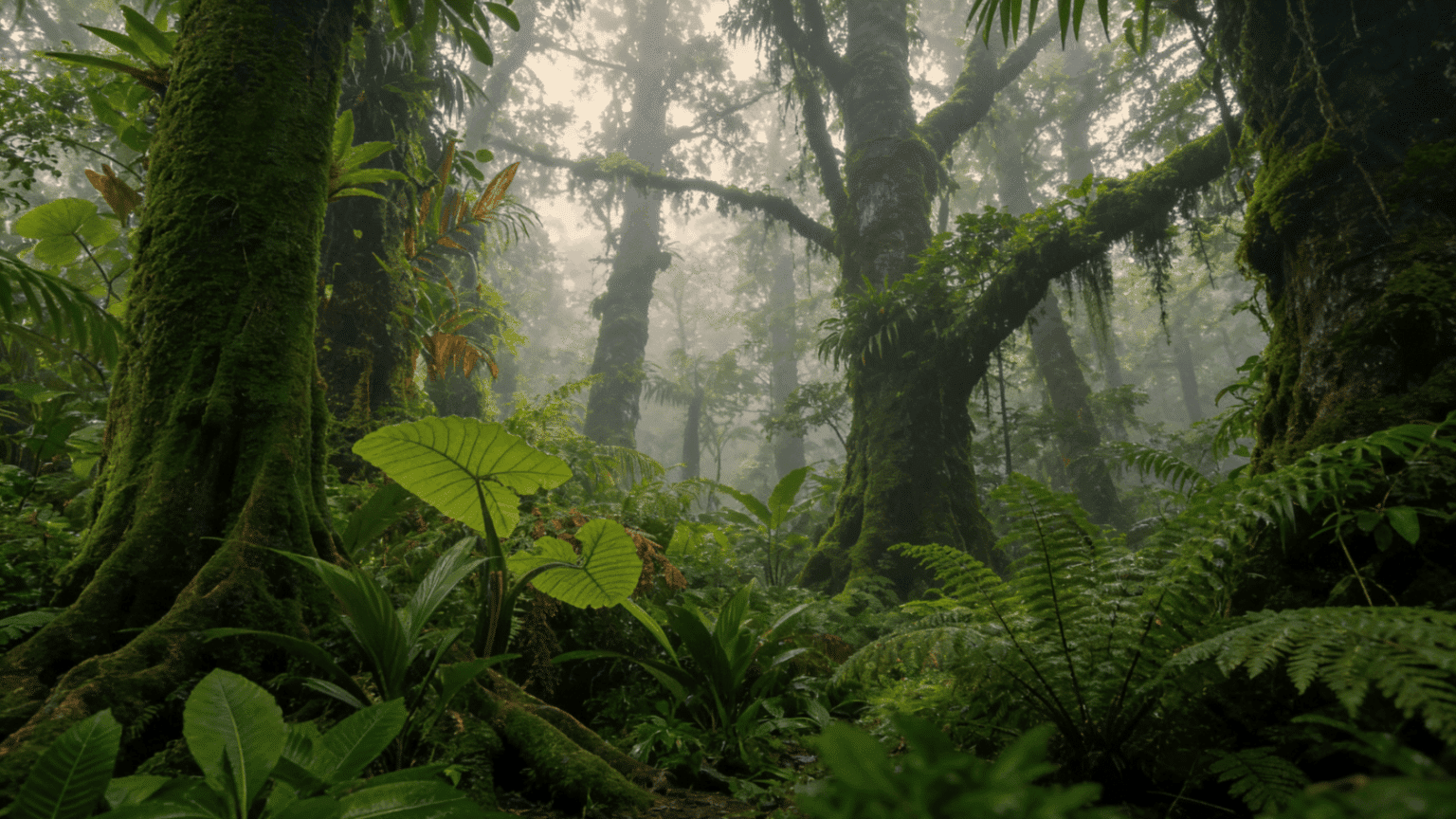
Most people know rainforests are important, but very few know why the plants inside them matter so much.
Rainforest plants produce the air breathed daily, supply food eaten every week, and keep weather patterns stable across the planet.
They also support millions of living things, from tiny insects to large animals, all of which depend on the same ecosystem.
Here you will learn about the different layers of the rainforest, the key plant types found there, how they survive, and why protecting them matters more than most people realize.
What are Rainforest Plants?
Rainforest plants are species that grow naturally in tropical and subtropical forests.
They range from towering trees to tiny floor-level ferns, all built to survive in high-moisture, low-light conditions.
What sets them apart is how closely suited they are to their surroundings. Their roots, leaves, and growth patterns have changed over thousands of years to match the forest environment.
Tropical rainforests cover only about 6% of the Earth’s surface but hold more than half of the world’s plant species, including the ancestors of tropical indoor plants like Monstera, which many of us grow at home today. That single fact shows just how plant-rich these forests truly are.
Rainforest Plant Layers and Adaptations
Rainforests have four layers, each with different light levels and plants built to match.
| Emergent Layer |
| Brazil nut and Kapok trees rise highest, held by buttress roots and small waxy leaves that limit water loss. |
| Canopy Layer |
| Rubber trees and mahogany form a thick roof. Large leaves capture sunlight, and epiphytes attach to branches to gain better light exposure. |
| Understory Layer |
| Heliconia and cacao manage in low, indirect light using broad, waxy leaves that repel water. |
| Forest Floor |
| Almost no sunlight reaches here. Giant ferns and gingers grow large leaves and feed off decaying plant material. |
Each layer holds plants perfectly suited to its conditions, making the rainforest one of the most well-organized ecosystems on the planet.
Key Types of Rainforest Plants
Rainforests are home to many different types of plants, and each one has a unique way of surviving.
Here is a look at the most interesting plant types found in these forests:
1. Epiphytes
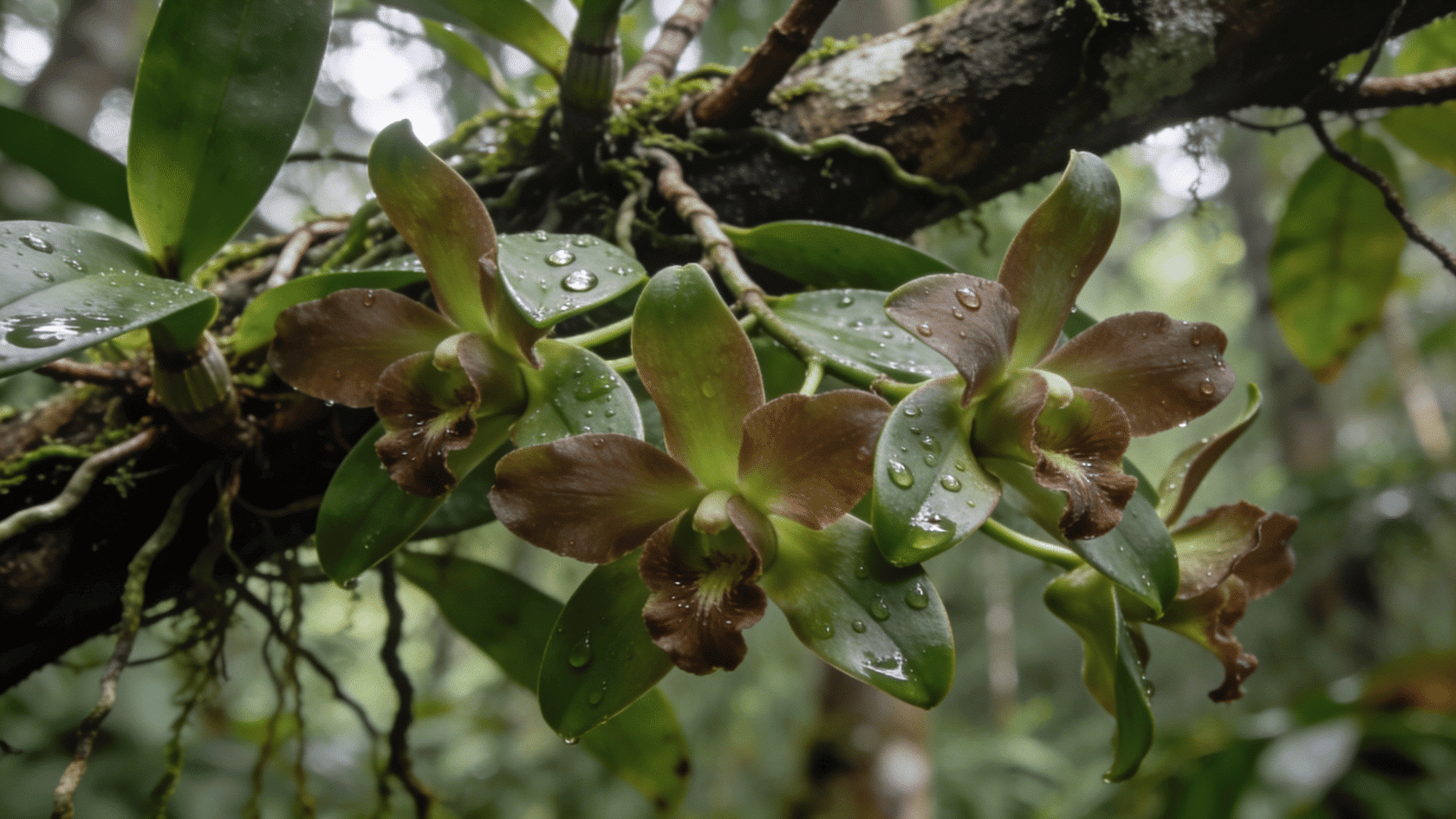
Epiphytes are plants that grow on other plants, like trees or branches, without causing any harm to the host. They come in many different types, each with its own way of collecting water and nutrients.
Some store water in their leaves, while others absorb it directly from the surrounding air. Each type has found a clever way to survive without ever touching the ground.
| Epiphyte | Type | How It Survives |
|---|---|---|
| Orchids | Flowering Epiphytes | Absorbs moisture from air on tree branches |
| Bromeliads | Water-Holding Epiphytes | Collects rainwater in leaf cups |
| Mosses | Non-Flowering Epiphytes | Soaks up moisture from damp surfaces |
| Ferns | Leafy Epiphytes | Spreads through spores on tree bark |
| Air Plants | Rootless Epiphytes | Pulls water through leaves from the air |
2. Lianas
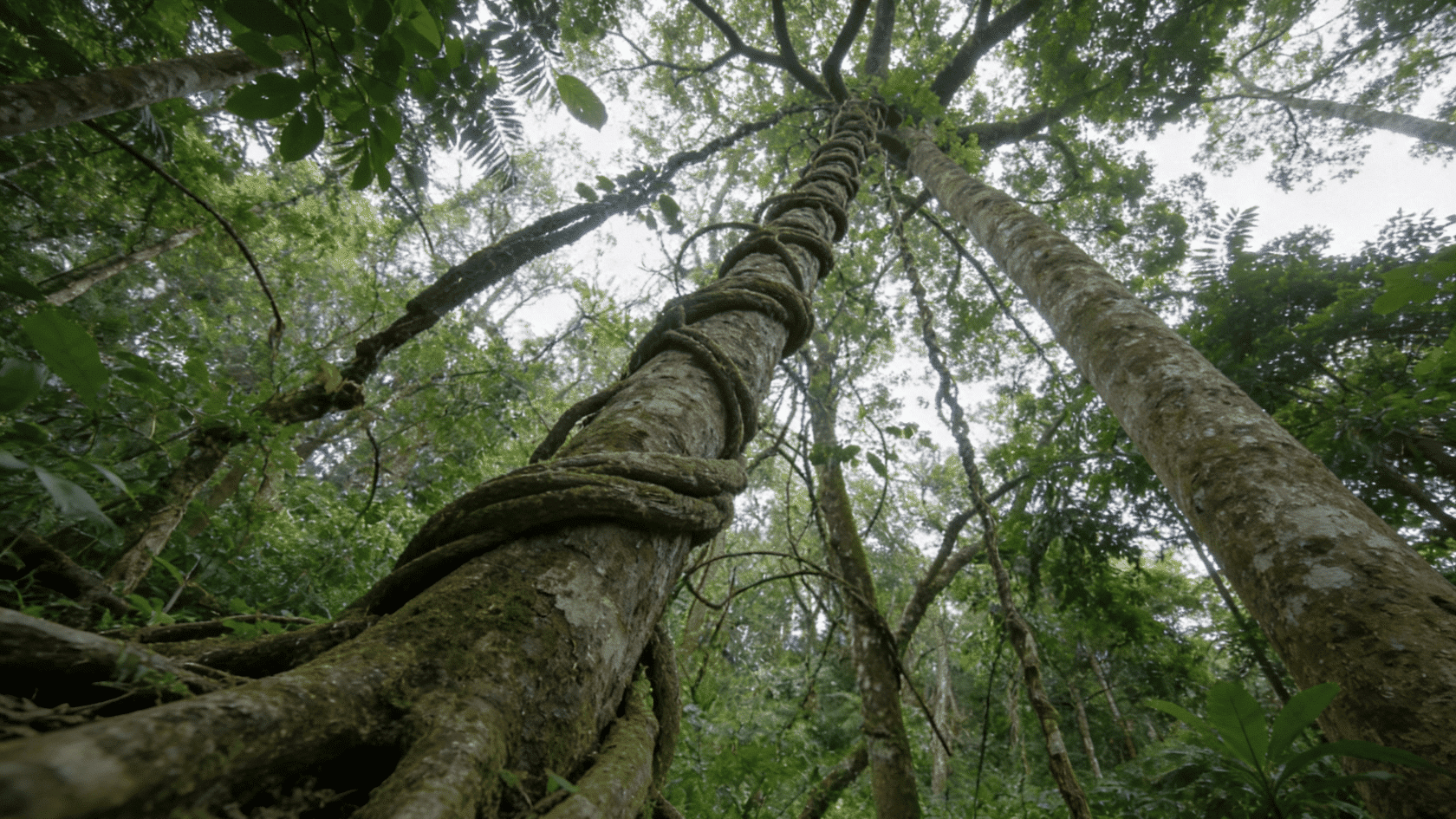
Lianas are thick, woody vines that start from the forest floor and climb trees to reach sunlight. They spread across multiple trees over time, forming long, interconnected networks high in the canopy.
These networks act as natural highways that animals use daily to move, feed, and find shelter. Each liana type has its own way of gripping, climbing, and surviving deep inside the rainforest.
| Liana | Type | How It Survives |
|---|---|---|
| Rattan | Climbing Palm Liana | Grips trees using hooked spines while climbing |
| Monkey Ladder | Flat-Stemmed Liana | Uses wide, ladder-like stems to spread across trees |
| Cat’s Claw | Hooked Liana | Locks onto bark tightly with claw-shaped hooks |
| Philodendron | Leafy Liana | Captures more light using broad leaves while climbing |
| Strychnos | Woody Liana | Spreads dense wood structure across multiple trees |
3. Carnivorous Plants
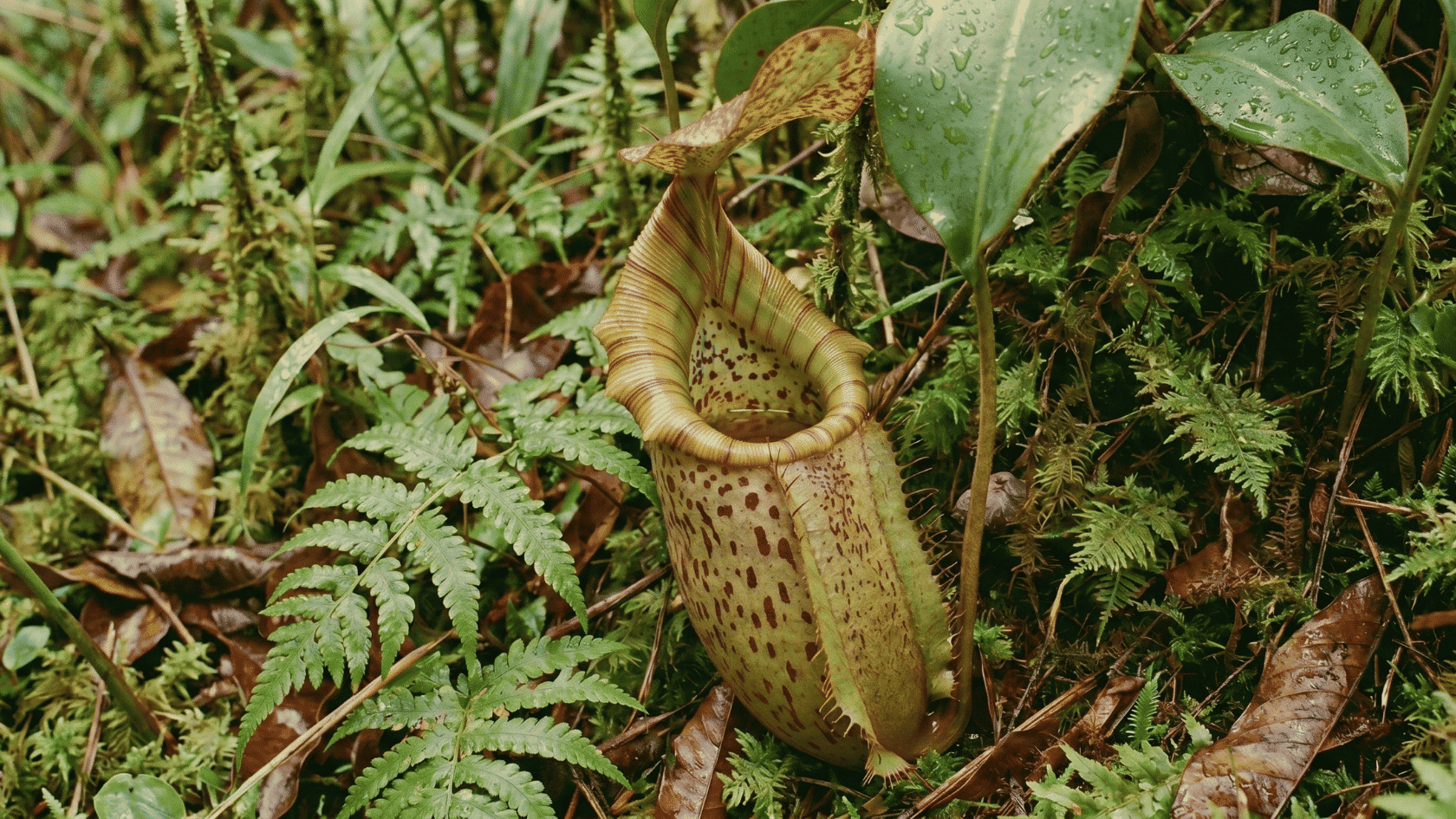
Carnivorous plants grow in nutrient-poor soils and make up for it by trapping and digesting insects to get the nutrition they need. They come in many different types, each with its own clever way of catching prey.
Some use liquid-filled tubes, while others rely on sticky surfaces or snap shut instantly. Each one has found a unique solution to surviving where most plants simply cannot.
| Carnivorous Plant | Type | How It Survives |
|---|---|---|
| Pitcher Plant | Tube Trap | Drowns and digests insects in liquid-filled leaves |
| Sundew | Sticky Trap | Catches bugs using hair-like structures coated in sticky liquid |
| Venus Flytrap | Snap Trap | Snaps hinged leaves shut when insects touch trigger hairs |
| Bladderwort | Suction Trap | Sucks in small insects through tiny underwater bladders |
| Butterwort | Flypaper Trap | Traps and slowly absorbs small insects on flat, greasy leaves |
4. Canopy Plants
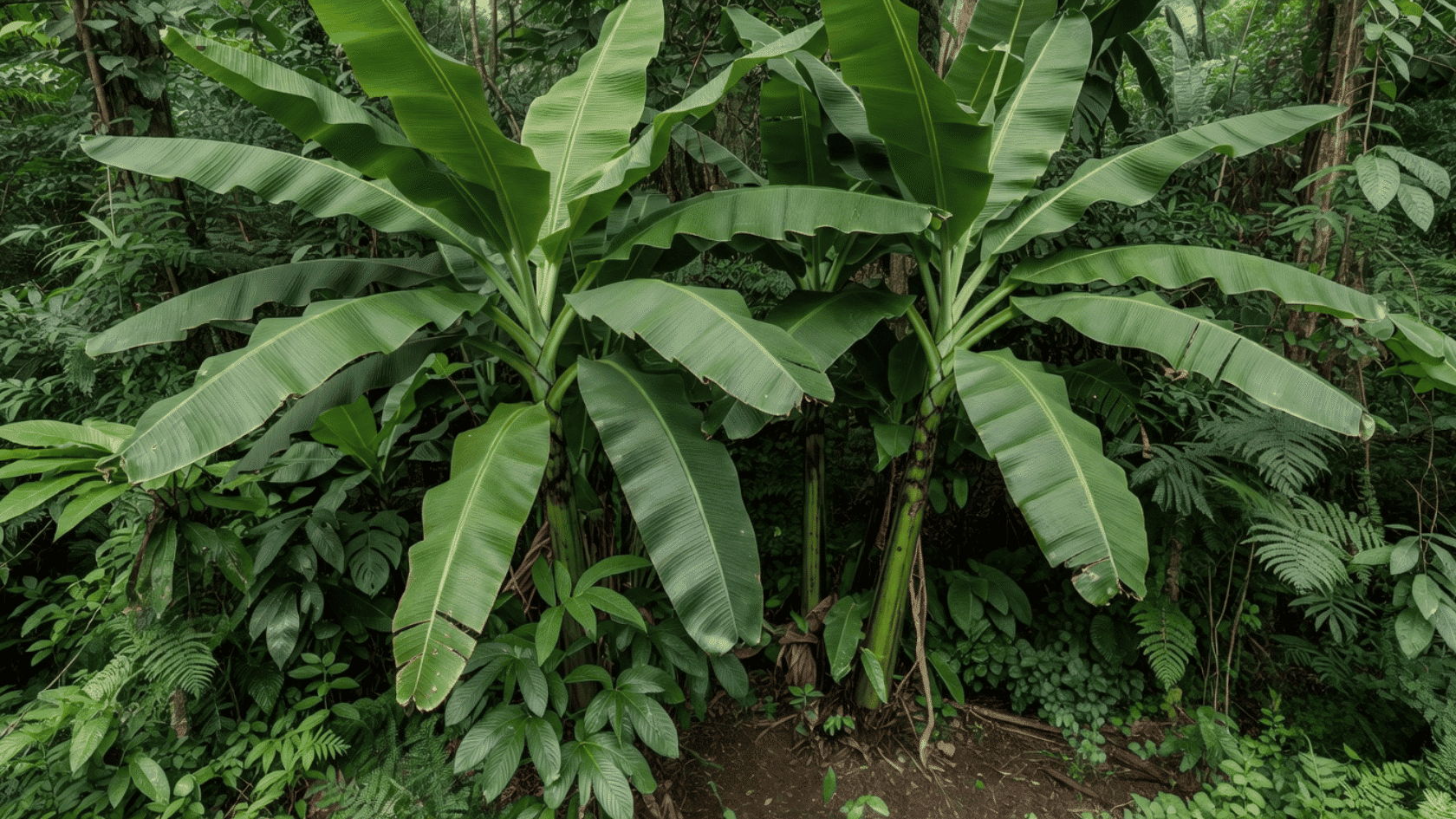
Canopy plants are among the most visible in the rainforest, known for their large, flexible leaves and rapid growth, which help them compete for available light. They spread wide and fast, forming the thick green roof that covers most of the forest.
Some produce latex, others grow dense hardwood, and many simply outpace everything around them. Each one has found its own way to claim as much light as possible from above.
| Canopy Plant | Type | How It Survives |
|---|---|---|
| Royal Palm | Tall Palm | Grows rapidly and thrives in open, light-rich areas |
| Banana Plant | Broad-Leaved Plant | Uses large, flexible leaves to catch wind and light |
| Rubber Tree | Latex-Producing Tree | Captures maximum sunlight through thick canopy leaves |
| Mahogany | Hardwood Tree | Dominates the canopy with dense wood and a wide crown |
| Cecropia | Fast-Growing Tree | Rapidly fills canopy gaps left by fallen trees |
5. Aquatic and Semi-Aquatic Plants
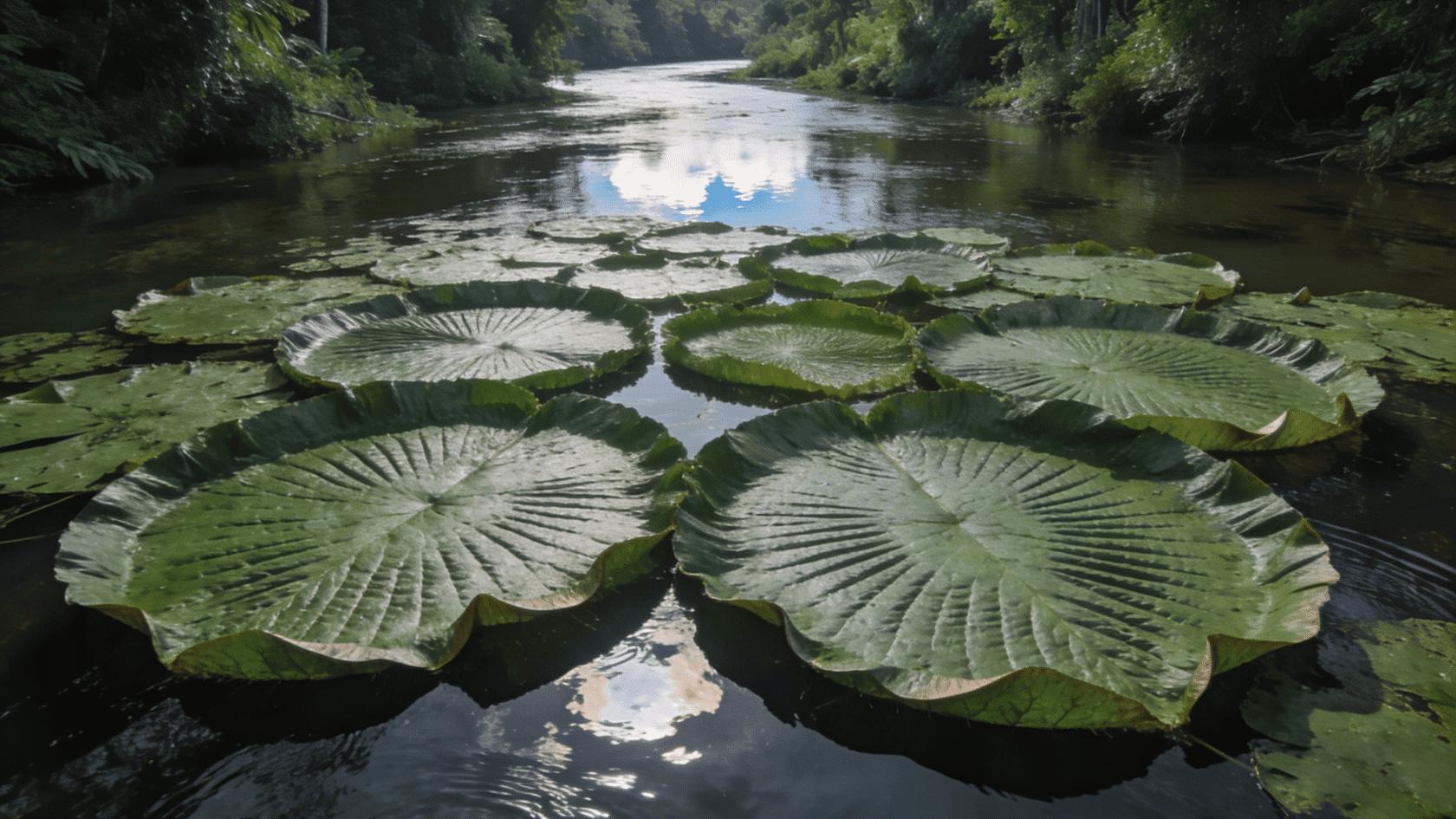
Aquatic and semi-aquatic rainforest plants grow in rivers, swamps, and flooded areas, absorbing nutrients directly from water rather than soil. They have adapted to life where most plants would simply not survive.
Some float freely on the surface, while others grow fully submerged or along the water’s edge. Each one has developed features that land-based plants simply do not need.
| Aquatic Plant | Type | How It Survives |
|---|---|---|
| Giant Water Lily | Floating Aquatic | Rests broad leaves on the surface and absorbs nutrients from water |
| Water Hyacinth | Free-Floating Plant | Floats freely and spreads rapidly across water surfaces |
| Canna | Semi-Aquatic Plant | Grows at water edges using large upright leaves to capture light |
| Papyrus | Marsh Plant | Anchors tall, reed-like stems in shallow, swampy water |
| Amazon Sword Plant | Submerged Aquatic | Grows fully underwater using long, blade-shaped leaves |
Importance of Rainforest Plants
Rainforest plants do far more than just grow. They play a direct role in keeping the planet healthy, and their impact reaches well beyond the forest itself.
- Produce large amounts of oxygen and absorb carbon dioxide, helping keep the atmosphere balanced.
- Provide shelter and food for animals, insects, birds, and countless microorganisms.
- Give humans a direct source of food, medicine, and raw materials used across the world.
- Absorb rainfall and release moisture into the air, influencing weather patterns across entire continents.
- Act as one of the most important carbon sinks on the planet, slowing down climate change.
Losing rainforest plants affects more than just the forest. It affects water cycles, air quality, and living things far outside the rainforest boundaries.
Why Are Rainforest Plants Disappearing?
Rainforest plants face serious threats today, and most come directly from human activity.
Large areas are cleared every year for farming, logging, and construction, permanently destroying plant habitats.
Rising temperatures and irregular rainfall disrupt the conditions plants need to grow and reproduce.
Climate change is accelerating this process, pushing many species beyond the limits they have adapted to over thousands of years.
Illegal logging removes high-value trees at an alarming rate, damaging the layered structure that other plants rely on.
Without action, rainforest plants and everything that depends on them will continue to disappear.
Fact check: According to WWF, the world loses around 4.7 million hectares of forest every single year. At this rate, some scientists estimate that up to 40% of Amazon plant species could face extinction by 2050.
Conservation Efforts to Protect Rainforest Plants
Real progress is being made across the country to protect rainforest plants. These five efforts are leading the way.
- Seed Banks: The USDA National Plant Germplasm System stores hundreds of thousands of plant samples to prevent species from being lost forever.
- Protected Reserves: The US Forest Service manages millions of acres of tropical forest in Hawaii and Puerto Rico, restricting logging and development.
- Reforestation:The American Conservation and Stewardship Atlas tracks large-scale replanting efforts across US-managed tropical and subtropical forest areas.
- Indigenous Land Rights: Native land stewardship programs across Hawaii and US territories have proven highly effective at reducing habitat loss.
- Global Agreements: The US rejoined the Paris Agreement in 2021, recommitting to international efforts that fund forest protection and reduce deforestation worldwide.
Small actions at every level add up to real change for rainforest plants worldwide.
Conclusion
Rainforest plants are not just part of a distant ecosystem. They influence the air, water, and food systems that billions of people depend on every day.
Every layer of the rainforest, from the tallest emergent trees to the smallest floor-level fern, plays a role that cannot easily be replaced.
The more these forests shrink, the more those systems are affected. Protecting them starts with simply understanding what is at stake.
Which plant type or adaptation stood out to you the most? Drop your answer in the comments.
Frequently Asked Questions
What Will the Amazon Rainforest Look Like in 2050?
By 2050, the Amazon could be drier, fragmented, and less dense, with some areas resembling savanna, unless conservation actions succeed.
Is Amazon 100% Explored?
No, the Amazon rainforest is not 100% explored. Large parts remain remote and inaccessible, with many areas still unmapped or underexplored, especially regarding plant, animal, and microbial biodiversity.
Which Country is Known as The Lungs of The World?
Brazil is known as the lungs of the world because the Amazon rainforest produces a large portion of the planet’s oxygen and absorbs significant amounts of carbon dioxide.