Most front gardens look either completely bare or like someone tried too hard. There’s almost never an in-between.
The difference usually isn’t money or skill. It’s one decision made before a single plant goes in the ground, and most people skip it entirely.
Flower beds that look effortlessly good follow a specific order that has nothing to do with picking flowers first. Get that order wrong, and even expensive plants end up looking random.
These simple flower bed ideas, front of house, backyard, balcony, and everything between, give you that starting point. One layout, one style, one weekend. That’s all it takes.
What Makes a Flower Bed Actually Work?
Most flower beds fail for the same reason: too many decisions made at once, in no particular order. Someone picks flowers first, then a container, then a spot, and hopes it comes together.
The flower beds that actually work are built in a different order. They start with structure, not plants. These flower garden ideas are organized around four things worth getting right:
- Layout: The foundation. A straight border, a circular island bed, or a tiered raised bed determines where height goes and how the eye moves through the space.
- Style: Once the layout is set, the style decides the mood, cottage, formal, tropical, moon garden, turning “some flowers” into a deliberate choice.
- Scale: The same idea won’t work the same in a 4-square-foot pot and a 60-square-meter yard. A matching scale keeps a garden looking full, not cramped or empty.
- One Decorative Touch: A mirror, fairy lights, a painted fence. The smallest investment, and often the one that makes a bed feel finished.
A great layout with the wrong scale looks cramped. A beautiful style with no structure underneath looks messy.
Get all four in the right order, and even a simple, low-budget bed is read as fully designed.
Flower Garden Layout Ideas
The layout is the foundation. Get this right, and almost any combination of plants will work on top of it.
These layouts below include simple flower bed ideas for front-of-house spaces, compact backyards, patios, and everything in between.
1. The Classic Border Bed

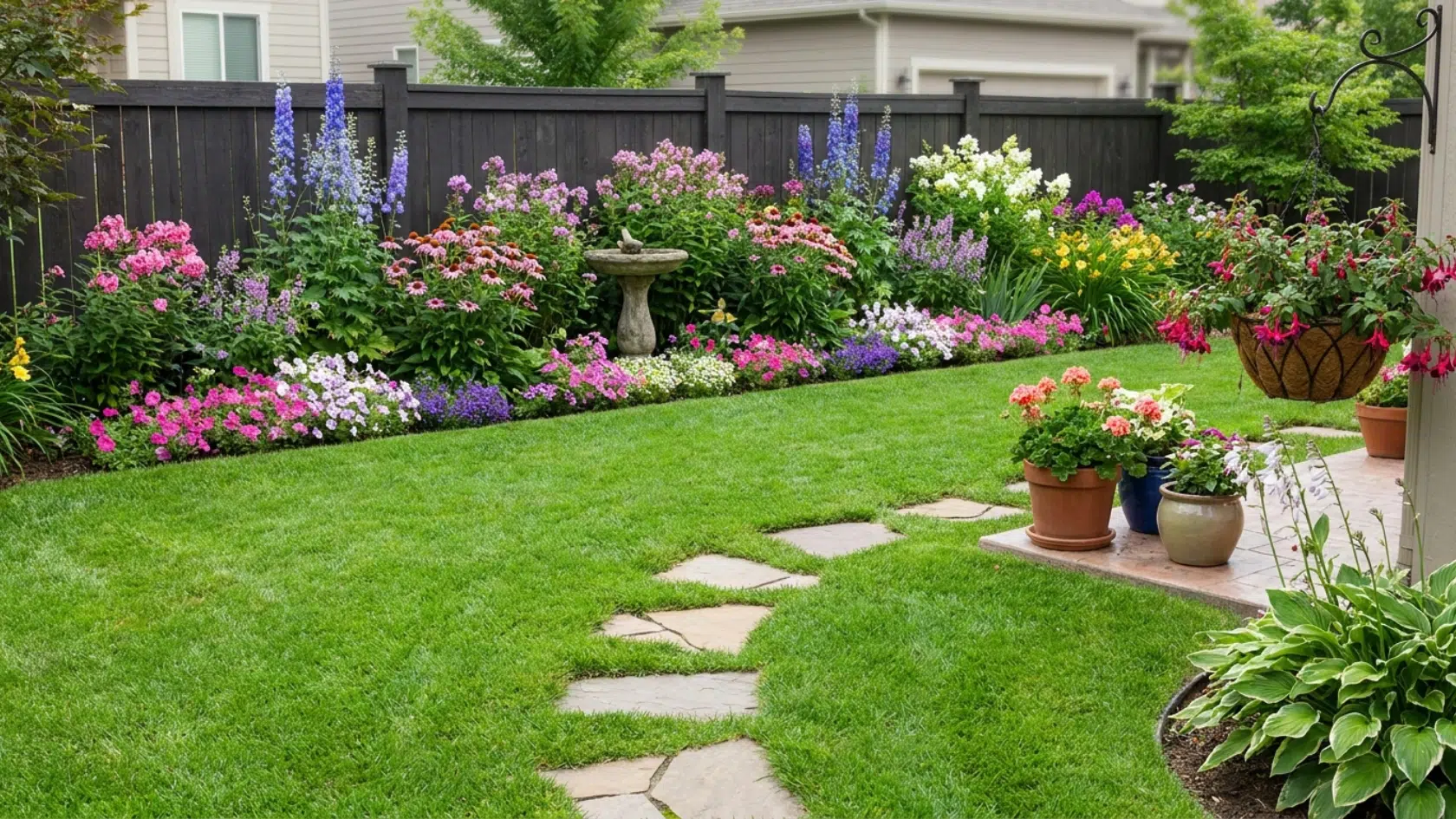
Straight flower beds along a fence or wall are the most reliable layout in flower gardening. Delphiniums or sunflowers sit at the back, roses or daisies in the middle, and alyssum or creeping phlox at the front.
This setup adds color without making the garden feel messy or overcrowded, and the fence serves as a natural backdrop, making every tier more visible.
Tip: Repeat the same flower type in clusters of three or five rather than planting singles.
2. Circular Island Bed

A circular island bed sits at the center of a lawn, visible from all sides, which means height placement matters more here.
The tallest plant anchors the middle, with medium-height flowers in a ring around it and low ground-huggers at the outer edge. Sunflowers, daisies, and seasonal mixed blooms work well for their balanced height variation.
Tip: Use repeating flower types in circular bands rather than random mixing.
3. Tiered Raised Beds

Two or three stacked frames of decreasing depth create a physical height structure before a single plant goes in.
This improves drainage, reduces weed pressure, and automatically defines each height tier as you plant into it, rather than requiring you to visualize them.
Lavender, salvia, and daisies grow well in this setup and stay visually clean season after season.
Tip: Add a 3-inch layer of mulch on top of the soil in each tier to reduce watering needs and suppress weeds.
4. Raised Bed

A wide raised bed becomes far more manageable when a stepping stone path bisects it down the middle. You never need to step on the soil, so compaction stays low, and roots stay undisturbed.
Every plant remains within arm’s reach from either side, which makes planting, deadheading, and harvesting quicker and less effortful.
Tip: Set the stones flush with or slightly below soil level so they don’t create a tripping hazard, and rainwater can drain freely.
5. Corner Bed

A triangular flower bed fits a dead corner where a full rectangular bed would look awkward.
One tall anchor plant at the innermost point sets the focal height, with medium and low flowers fanning outward toward both walls in decreasing tiers.
This idea works well in tight or angular spaces where formal layouts are not possible.
Tip: Use one bold flower color at the center anchor point. A single dramatic plant in a strong color draws the eye to the corner.
6. Pathway-Flanking Border

Two mirrored beds on either side of a stone or gravel path create a clear visual corridor that guides visitors through the garden.
The symmetry makes even a simple planting look structured and considered.
Lavender, salvia, and catmint all work well here because they spill slightly over the edge without encroaching on the walk.
Tip: Keep flower height low near the walkway edge. It should be lower than knee height for free movement.
7. Slope Terracing

A sloped area that is too steep to mow becomes a productive flower garden when cut into horizontal shelves with small retaining edges.
Each shelf holds its own planting, prevents soil runoff, and turns a problem zone into a structured multi-level display.
Ground-hugging plants work best at the top of each terrace to prevent erosion between shelves.
Tip: When watering a terraced slope, water slowly and in short sessions. Fast watering causes runoff before the soil can absorb it.
8. Container Cluster on A Patio

Grouping terracotta or ceramic pots at three different heights, using pot risers or upturned planters as bases, applies the same three-tier logic to a space as small as 4 square feet.
One tall pot, one mid-height pot, and one low-wide pot create instant depth without any ground planting. This is one of the most flexible flower garden ideas. The entire display can be moved or refreshed at any time.
Tip: Mix one tall upright plant with a trailing variety in each pot so the design works both horizontally and vertically, with the trailing plants softening the edges of the containers.
9. Minimalist Single-Row Flower Strip

One or two plant types in a straight, unbroken line along a driveway, fence, or wall create a clean, modern look that works especially well in urban or contemporary outdoor spaces.
The restraint is what makes it effective. A single dominant color with no mixing creates a strong visual statement.
Marigolds, lavender, or petunias all hold uniform height and color well over the long run.
Tip: Stick to one dominant flower color for the entire strip without mixing in other shades.
The right layout does not just make a garden look better; it’s the difference between flower garden ideas that hold up over time and ones that fall apart within a season.
Flower Garden Style Ideas
The difference between a garden that looks designed and one that looks accidental usually comes down to the style chosen before the plants are chosen.
These flower garden ideas help you figure out which direction yours should go.
10. Cottage-Style Mixed Flower Cluster

A cottage-style flower cluster uses a dense, mixed planting arrangement to create a natural, slightly wild appearance.
Different flower types are arranged close to create a layered look that feels colorful. Lavender, hollyhocks, and daisies are popular choices for their relaxed, blendable character.
Tip: Repeat a few key flower types across the bed to maintain visual balance and prevent the arrangement from feeling cluttered.
11. Butterfly and Pollinator Style Garden

This style groups nectar-rich flowers into a dedicated zone to attract butterflies and other pollinators.
Sunny spots work best, as butterflies are more active in warm, bright areas where blooms stay consistent.
Plants like milkweed, zinnias, and asters provide steady nectar across different seasons, while also boosting pollination throughout the wider garden.
Tip: Avoid overcrowding so butterflies have enough room to land and move freely between flowers.
12. Wildflower Meadow

A wildflower-style garden uses a loose, unstructured planting pattern like meadow spaces found in nature. This style works best in larger outdoor areas where flowers have room to naturalize.
Black-eyed Susans, coneflowers, poppies, cosmos, and daisies spread and mix freely over time, creating a habitat for bees, butterflies, and birds with almost no ongoing maintenance once established.
Tip: Combine early, mid, and late-blooming varieties in your initial seed mix so the meadow keeps changing color throughout.
13. Moon Garden (all-White Palette)

A moon garden uses a single-color palette of white and cream flowers that become especially striking after sunset.
Among all-white flower garden ideas, this is one of the most impactful to photograph and the most calming to sit in at dusk.
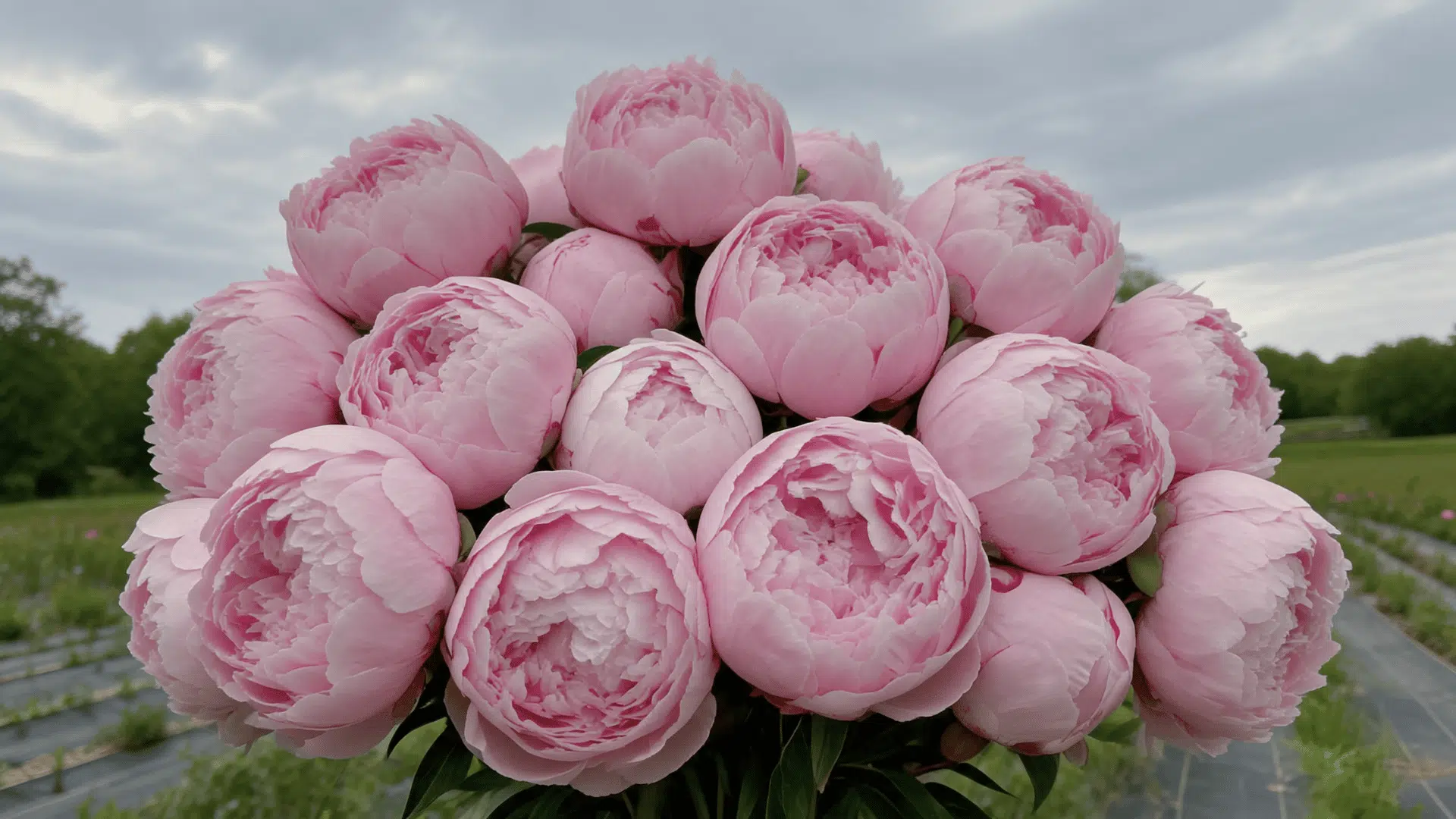
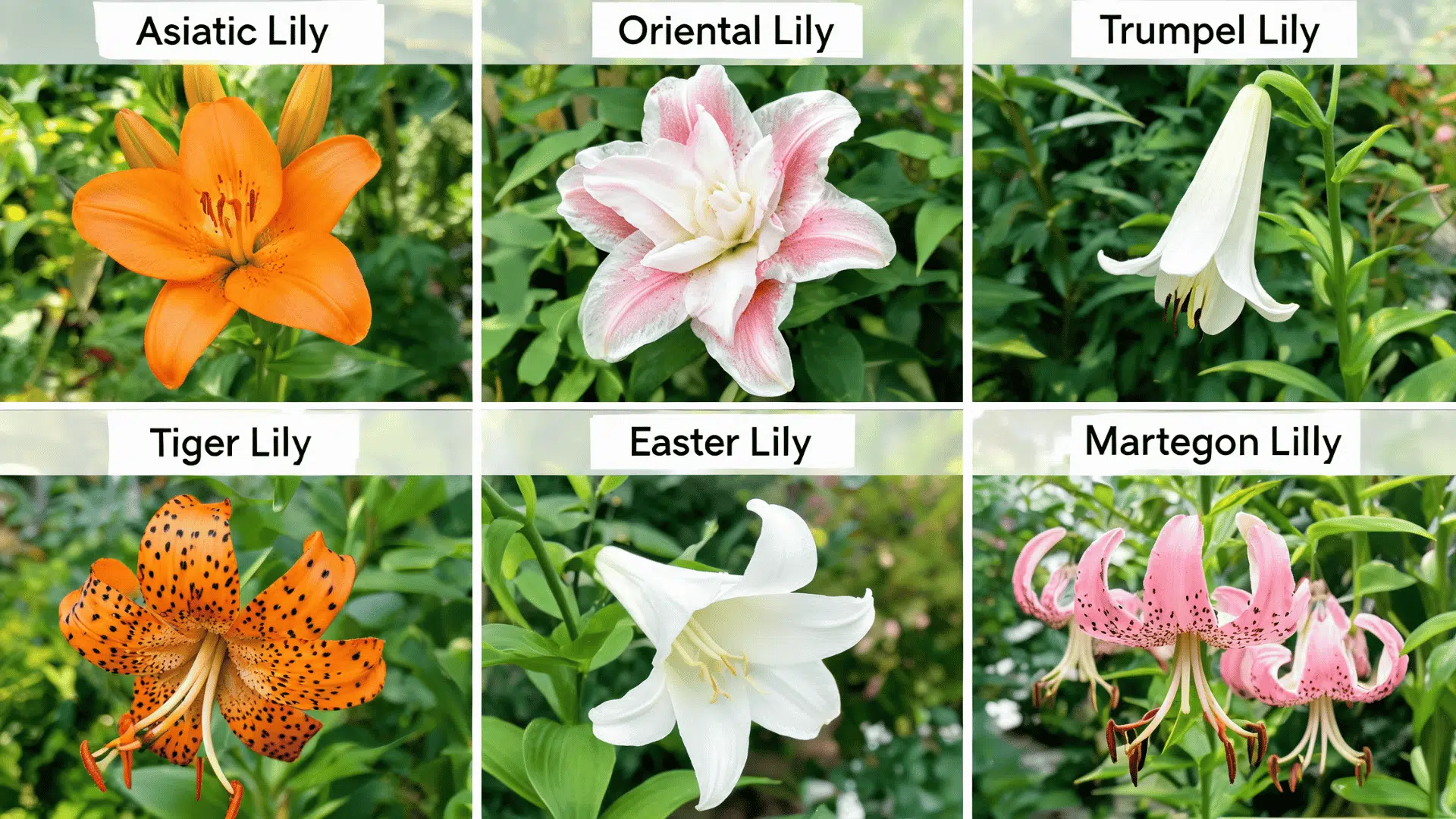
White lilies, hydrangeas, peonies, and white salvia planted against dark green foliage create a glowing, layered effect that no other color scheme produces.
Tip: Add solar lanterns or low-path lights along the garden edge to keep the white flowers visible in the evening.
14. Bold Color-Blocked Garden

Color-blocking divides a garden into distinct, solid drifts of contrasting color rather than mixing plants. The result looks intentional and high-impact despite using simple, easy-to-find flowers.
Deep purple salvia against bright orange marigolds, or yellow rudbeckia next to deep red dahlias, creates a bold display that reads clearly even from across a yard.
Tip: Place a strip of green foliage between two bold color blocks instead of pushing them directly against each other.
15. Japanese-Influenced Garden

This style prioritizes structure, restraint, and texture over volume and variety. Structured stone edging, limited plant count, and an emphasis on foliage shape over flower color create a calm, considered space.
A single ornamental cherry or Japanese maple anchors the design, with low groundcovers and mosses filling the space between. Fewer plants, placed more deliberately, define this approach.
Tip: Remove any plant that doesn’t contribute a distinct texture or form.
16. Desert and Drought-Tolerant Garden

Agave, lavender, sedum, and ornamental grasses planted in well-drained soil with a deep layer of dark mulch between them create a garden that requires little watering.
This style works across a wide range of climates and suits homeowners who want a beautiful garden without committing to regular irrigation.
The contrast of silver-green foliage against dark mulch gives the bed a clean, deliberate look.
Tip: Water deeply but infrequently in the first growing season to encourage deep root development.
17. Tropical Foliage Garden

Bold architectural leaves from plants like monstera, alocasia, and bird-of-paradise create a lush, dramatic garden.
This style works especially well in warm or humid climates where large-leaved plants grow quickly and stay healthy through the season. Pairing these with red- or yellow-flowering plants adds high-contrast color.
Tip: Use rich dark mulch between plants to retain the moisture that large tropical leaves require.
18. Formal Symmetrical Garden

Mirrored beds, clipped boxwood hedges, and a central water feature or fountain create this structured, architectural garden that reads as polished.
This style works best in front yards where the clean geometry is visible from the street and benefits from a fixed viewing angle. Symmetry does the design work. Even simple plantings look impressive when perfectly balanced.
Tip: Choose low-growing, slow-spreading plants for a formal garden so the symmetry stays precise with minimal trimming.
19. Edible Flower Garden

Nasturtiums, calendula, pansies, and borage combine beauty and function in a garden that is both ornamental and culinary. These flowers attract pollinators and can be used fresh in salads, garnishes, and drinks.
Planting them near a vegetable bed creates a productive, cohesive growing space where everything on display is also useful.
Tip: Harvest edible flowers in the morning when they are freshest, and avoid any flowers from beds treated with pesticides.
You do not need a large space, a large budget, or much experience to bring any of these flower garden ideas to life. You need one clear style and a willingness to start.
Flower Garden Ideas for Small Spaces
A small space just means the garden grows differently up walls, into baskets, and across every surface that would otherwise go unused. Here are a few flower garden ideas for smaller spaces.
20. Vertical Trellis Wall

A 6-foot trellis planted with clematis or morning glory turns a bare wall or fence into a living, flowering backdrop.
It works especially well in small patios where ground space is limited, but height is available. The vertical coverage makes the overall garden feel deeper and larger than it actually is.
Tip: Install the trellis before planting so roots settle properly and the climbing direction can be guided from the start.
21. Hanging Basket Display

Trailing petunias, ivy geraniums, or lobelia suspended in baskets above ground level add color to spaces where planting in the ground isn’t possible.
Porches, fence lines, and pergola beams all work well. A basket at eye level, with one upright plant mixed in, reads as fuller and more intentional than trailing flowers alone.
Tip: Position baskets slightly above eye level, not too high.
22. Window Box Planting

Narrow boxes mounted beneath windows fill blank wall space with a continuous band of color. The combination creates depth and movement that a flat row of single plants never achieves.
Upright plants like pansies or petunias stand at the back while trailing lobelia or ivy spills forward over the edge.
Tip: Use a mix of one upright variety and one trailing variety per box rather than filling with a single plant type.
23. Fence Pocket Planter

Fabric or metal pocket planters mounted directly onto a fence face hold individual plants in separate compartments without using any floor space.
A single panel of six to eight pockets creates the visual effect of a full garden. Succulents, trailing herbs, and compact flowering annuals like lobelia or violas all adapt well to the shallow depth.
Tip:Water pocket planters more frequently than ground containers. The small soil volume dries out faster, particularly in fabric pockets.
24. Balcony Flower Garden

A balcony with a railing becomes the right container strategy. Tall narrow pots along the back wall, medium pots in the middle, and trailing plants at the railing edge apply the same three-tier logic as a ground bed.
The vertical drop of trailing plants like bacopa or trailing verbena adds a dimension that upright-only containers never achieve.
Tip: Use lightweight plastic or fiberglass pots rather than terracotta on a balcony.
25. Doorstep Container Pair

Two matching pots flanking a front door create a complete garden in under 4 square feet. One tall thriller plant anchors the center of each pot, surrounded by mid-height fillers and finished with a trailing spiller at the edge.
The thriller-filler-spiller method guarantees a full, layered look regardless of which plants you choose.
Tip: Keep both pots identical in plant selection and color. Matching pairs at a doorstep read as intentional design.
The constraint of a small space is also its advantage when it comes to flower garden ideas like these. There is less to maintain, less to water, and less to get wrong.
Decorative Ideas that Make a Garden Feel Finished
A garden can be full of beautiful plants and still feel unfinished. These five structural decorative additions can give your garden that finished look.
26. Fairy Light Canopy

String lights hung overhead between two posts, a pergola, or the branches of a tree create a lit ceiling above a garden seating area.
The garden that disappears at dusk becomes fully usable after dark. Warm white bulb-style lights work better than cool white since they are more ambient and atmospheric.
Best for: Gardens used primarily in the evening or for entertaining.
27. Garden Mirror

A large mirror mounted on a fence or wall behind a planting reflects the bed back on itself, visually doubling the depth and volume of the garden.
It works best partially obscured by foliage, so the reflection reads as a continuation of the garden rather than an obvious trick. Even a modest-sized mirror makes a narrow garden feel significantly wider.
Best for: Long, narrow gardens or small walled courtyards where the boundary feels close and confining.
28. Central Water Feature

A birdbath or small fountain placed at the visual center of a bed gives the eye a resting point among the surrounding plant movement.
The sound of moving water adds an auditory layer that makes a garden feel more alive. It also attracts birds and beneficial insects consistently throughout the day, adding activity to the space even when nothing is in bloom.
Best for: Gardens that feel visually busy or scattered. A central focal point anchors the surrounding planting.
29. Painted Fence Backdrop

A fence painted in a deep, receding color like dark green, slate blue, or charcoal makes the plants in front of it appear more vivid and the garden feel deeper than it is.
Light colors reflect and flatten; dark colors absorb and recede. The fence stops reading as a boundary and starts reading as a backdrop specifically chosen to frame the planting.
Best for: Gardens where a pale or natural timber fence competes visually with the flowers in front of it.
30. Gravel Garden with Stepping Stones

Replacing a small lawn or bare soil area with fine gravel and a few carefully placed stepping stones creates a low-maintenance, visually clean base for container plants.
The gravel reads as a deliberate surface rather than empty ground, and containers placed on it look considered rather than random. Pale gravel reflects light upward, making a small dark space noticeably brighter.
Best for: Small gardens that feel dark, muddy, or perpetually untidy.
None of these flower garden ideas requires replanting, seasonal maintenance, or a green thumb. They are one-time additions that permanently change how the entire garden reads.
Which Layout and Style Suit Your Flower Garden
Every garden decision comes down to four things: how much space you have, how much time you can give it, what you want it to look like, and what will actually survive there.
This table maps it all in one place.
| Factor | Under 10 sqm | 10–30 sqm | 30–60 sqm | 60 sqm and above |
|---|---|---|---|---|
| Best layouts | Containers, window boxes, vertical trellis, doorstep pair, corner bed | Pathway border, raised bed, corner bed, hanging baskets | Three-tier border, circular island bed, raised bed with pathway | Wildflower meadow, slope terracing, formal symmetrical, three-tier border |
| Best styles | Moon garden, desert, formal symmetrical, edible flower | Cottage, butterfly, color-blocked, Japanese-influenced | Tropical foliage, formal symmetrical, color-blocked, edible flower | Wildflower meadow, cottage, tropical foliage, bold color-blocked |
| Avoid these layouts | Island bed, slope terracing, wildflower meadow | Large island bed, formal symmetrical at full scale | Minimalist single-row strip | Container cluster only |
| Avoid these styles | Wildflower meadow, cottage, tropical foliage | Wildflower meadow (needs room to naturalize) | Minimalist or single-theme styles | Moon garden, desert garden |
| Maintenance level | Low. Containers and compact beds are quick to manage | Low to medium. Most layouts are manageable in under an hour | Medium. Larger beds need regular deadheading | Medium to high. Scale increases the time needed significantly |
| Best for | Patios, balconies, urban courtyards, rental spaces | Suburban front and back gardens, terraced houses | Detached homes with dedicated garden areas | Large properties, rural gardens, open plots |
No garden size is a limitation. A well-done 6 sqm patio will always outperform a 60 sqm plot left unplanted.
Wrapping Up
A good garden does not require a large space, a big budget, or years of experience. It requires one clear decision on layout, style, or a single decorative addition made before anything goes in the ground.
The flower beds that look effortlessly good are rarely the most complicated ones. They are the most deliberate.
Pick one idea from this list, start with it, and build from there. Save this page and come back to it as your garden grows.
Start with one idea this weekend. One layout, one style, one pot. That is enough.
Found an idea you love or have a flower bed tip of your own? Drop it in the comments below. We read everyone.
Frequently Asked Questions
What Is the Best Time of Year to Start a Flower Garden?
Spring is the most forgiving time to start, as soil is warming and most plants are available as seedlings. That said, autumn is better for planting bulbs and establishing perennials before winter.
Do Flower Beds Need Full Sun to Look Good?
Not at all. Hostas, astilbes, foxgloves, and hellebores all thrive in shade and produce strong visual impact without direct sunlight. These shade-friendly flower garden ideas prove that.
How Do I Stop Weeds from Taking Over My Flower Bed?
A 3-inch layer of bark mulch laid after planting blocks light to weed seeds and reduces germination. Edges kept clean and defined in any material also stop grass from creeping in from the lawn.