The ocean can feel hard to understand because so much of its life stays hidden below the surface. But plants in the ocean play a huge role in keeping marine life and the planet healthy.
They produce oxygen, feed sea animals, absorb carbon dioxide, and create safe habitats for young fish, turtles, crabs, and many other species.
Some are true plants, while others are plant-like algae that perform similar roles. Together, they support food chains, protect coastlines, and help balance the ocean environment.
In this article, you will learn what ocean plants are, how many types exist, which ones are most common, how they survive, and why they matter.
What is an Ocean Plant?
Sea plants are autotrophic marine organisms that possess chlorophyll and can produce their own food through photosynthesis.
They typically dwell near the ocean surface or along seashores to make the most of solar power. These marine plants range from microscopic phytoplankton to large seaweeds and coastal mangroves.
They play a vital role in producing oxygen, absorbing carbon dioxide, and supporting marine food webs. Many ocean animals rely on these underwater plants for food, shelter, and breeding grounds.
Without the plants found in the ocean, marine ecosystems would struggle to survive and maintain their natural balance.
How Many Plants Are in the Ocean?
Scientists have identified around 72 species of seagrasses across the world’s oceans so far.
Algae are a much larger group, with over 50,000 documented species and many more still waiting to be found.
Unlike true underwater plants like seagrasses, which have flowers, leaves, stems, and roots, algae absorb nutrients directly from the water.
Despite these differences, both are essential sea plants that support ocean biodiversity.
From shallow coastal beds to deep ocean floors, the variety of plants found in the ocean continues to surprise researchers worldwide.
Whether simple or complex, every plant in the ocean plays a role in keeping marine ecosystems balanced and thriving.
What Kinds of Plants Live in the Ocean?
Many marine plants rely on photosynthesis to support underwater ecosystems.
Here are the most common plants found in the ocean:
- Phytoplankton: Microscopic organisms that produce their own food and form the base of the marine food chain.
- Corals: Tiny animals that build reefs, creating habitat for many marine species.
- Sea Anemones: Flower-like marine animals related to corals that attach to rocks and reefs.
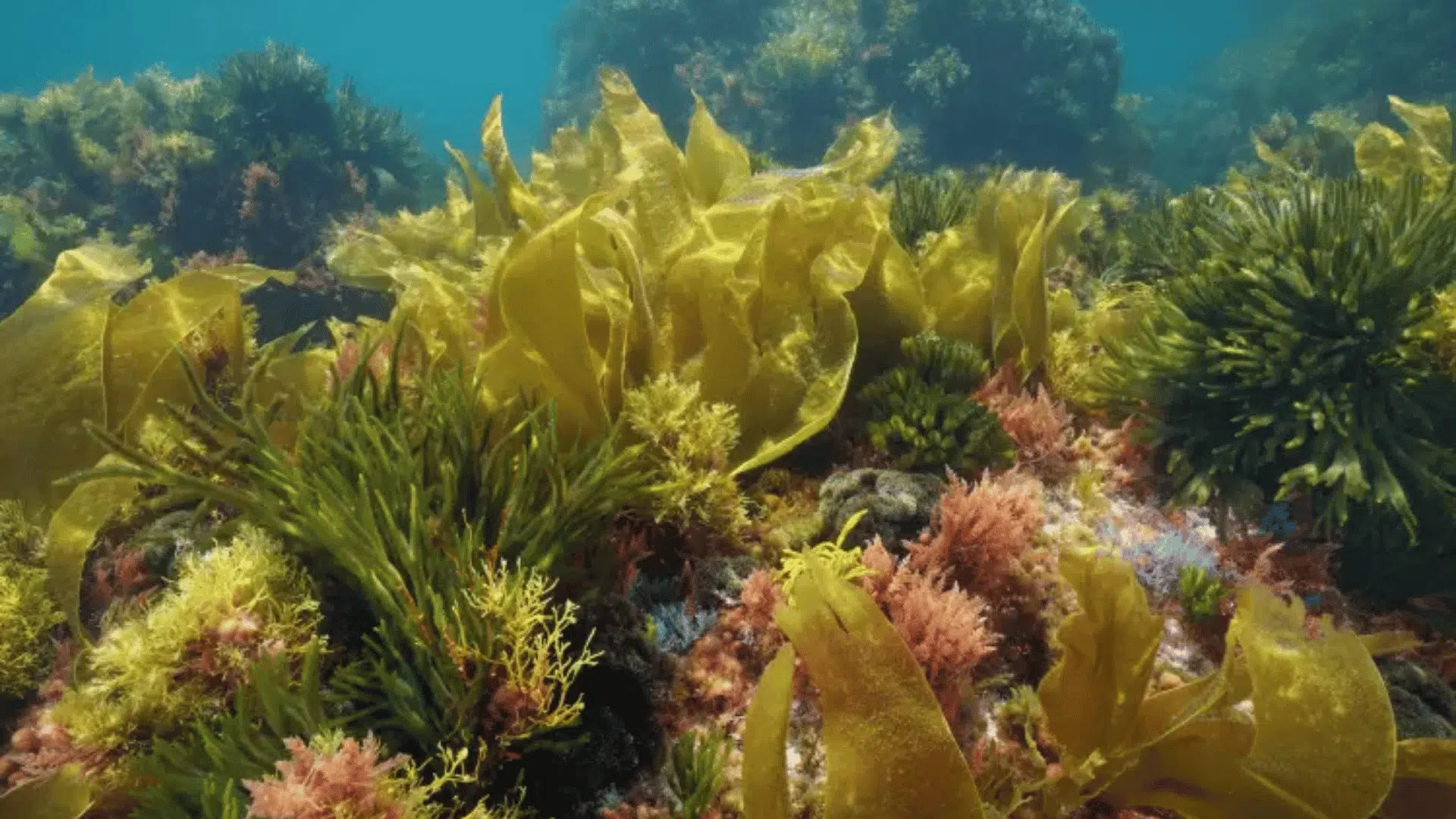
- Seaweeds: Large marine algae, including kelp, red algae, and sargassum, found throughout ocean waters.
- Seagrasses: True flowering underwater plants that grow in shallow coastal waters and support diverse marine life.
Together, these plants in the ocean produce oxygen, provide habitat, and keep ocean ecosystems thriving.
Most Common Plants That Grow in the Ocean
The ocean is home to an incredible variety of plant life, each species playing a unique and irreplaceable role in keeping marine ecosystems healthy and balanced.
Read the list below to learn about the most fascinating ocean plants found beneath the waves:
1. Phytoplankton: The Microscopic Foundation

Phytoplankton are tiny plant-like organisms that float in sunlit ocean waters. They form the base of the marine food chain and support countless ocean species.
| Key Characteristic | Details | Importance |
|---|---|---|
| Size | Microscopic organisms | Found throughout ocean waters |
| Habitat | Sunlit surface waters | Receives sunlight for photosynthesis |
| Food Chain Role | Primary producer | Supports marine life at all levels |
| Growth Rate | Can multiply rapidly | Creates seasonal plankton blooms |
| Oxygen Production | Produces oxygen through photosynthesis | Supports life on Earth |
Interesting Fact: Phytoplankton are responsible for producing nearly half of the world’s oxygen. Despite their microscopic size, they play a major role in supporting life on Earth.
2. Brown Seaweed (Kelp): The Underwater Forest

Brown seaweeds are large algae commonly found in cool coastal waters. Many species form dense underwater forests that shelter marine life.
| Key Characteristic | Details | Importance |
|---|---|---|
| Plant Type | Brown algae | One of the largest marine algae groups |
| Habitat | Cool, rocky coastlines | Thrives in nutrient-rich waters |
| Growth Rate | Can grow up to 2 feet per day | Among the fastest-growing organisms |
| Attachment | Anchored by a holdfast | Keeps algae secured to rocks |
| Marine Life Support | Creates underwater forests | Provides food and shelter |
Interesting Fact: Giant kelp can reach nearly 200 feet in length under ideal conditions.
3. Red Algae: The Reef Helper

Red algae are marine algae that can live at greater depths than many other ocean plants. Their special pigments help them capture sunlight in low-light conditions.
| Key Characteristic | Details | Importance |
|---|---|---|
| Color | Red or pink pigments | Helps absorb sunlight underwater |
| Habitat | Shallow and deep waters | Found worldwide |
| Depth Range | Lives deeper than brown algae | Adapts to low-light environments |
| Reef Support | Coralline species strengthen reefs | Helps stabilize coral structures |
| Human Use | Used in food products | Important commercial resource |
Interesting Fact: Nori, the seaweed used in many sushi rolls, comes from red algae.
4. Green Seaweed (Sea Lettuce): The Shoreline Staple

Sea lettuce is a bright green seaweed commonly found along coastlines around the world. It is often one of the first marine plants noticed by swimmers and snorkelers.
| Key Characteristic | Details | Importance |
|---|---|---|
| Appearance | Thin, leaf-like green blades | Easy to recognize |
| Habitat | Coastal waters worldwide | Thrives in many environments |
| Visibility | Common near shorelines | Frequently seen by snorkelers |
| Growth | Fast-growing seaweed | Quickly colonizes new areas |
| Plant Similarity | Shares traits with land plants | Closely related to green plant ancestors |
Interesting Fact: Sea lettuce is edible and is used in some soups, salads, and snacks, especially in coastal cuisines.
5. Sargassum: The Floating Island

Sargassum is a unique brown algae that floats freely on the ocean surface. It creates floating habitats for a variety of marine animals. It’s a centerpiece of both the Sargasso Sea and an immense Atlantic Belt spanning 8,000km (5,000 miles).
| Key Characteristic | Details | Importance |
|---|---|---|
| Habitat | Ocean surface waters | Does not attach to the seafloor |
| Structure | Floating brown algae | Travels with ocean currents |
| Wildlife Support | Provides shelter for marine animals | Acts as a floating ecosystem |
| Sea Turtle Connection | Protects young turtles | Improves survival rates |
| Famous Location | Common in the Sargasso Sea | Supports unique biodiversity |
Interesting Fact: Entire communities of fish, crabs, and sea turtles spend part of their lives among floating sargassum mats.
6. Seagrass: The Underwater Meadow

Seagrass is the only true flowering plant that lives completely underwater. It forms vast meadows that support fish, turtles, and many other marine species.
| Key Characteristic | Details | Importance |
|---|---|---|
| Plant Type | True flowering plant | Produces flowers and seeds |
| Habitat | Shallow coastal waters | Forms underwater meadows |
| Root System | Anchored in ocean sediment | Absorbs nutrients from the seabed |
| Wildlife Support | Food for turtles and manatees | Supports marine biodiversity |
| Environmental Role | Stabilizes sediment | Improves water quality |
Interesting Fact: Seagrass meadows can store large amounts of carbon in the seafloor, helping support marine life and the climate.
7. Mangroves: Where Ocean Meets Land

Mangroves are salt-tolerant trees that grow along tropical and subtropical coastlines. Their tangled roots help protect shorelines and support marine life.
| Key Characteristic | Details | Importance |
|---|---|---|
| Plant Type | Coastal tree | Adapted to salty environments |
| Habitat | Coastal shorelines and estuaries | Grows where land meets water |
| Root System | Aerial roots above water | Helps trees obtain oxygen |
| Coastal Protection | Reduces erosion and storm damage | Protects coastlines |
| Wildlife Support | Nursery habitat for fish and crabs | Supports diverse ecosystems |
Interesting Fact: Mangrove forests protect about 12% of the world’s coastlines and help reduce storm impacts.
Want to see what these ocean plants actually look like in their natural habitat? This BBC Earth video brings the underwater world to life:
Importance of Plants in the Ocean
Marine plants are far more vital and essential to all life on Earth than most people ever stop to realize or truly appreciate.
- Oxygen Production: Sea plants generate over half of the oxygen we breathe, rivaling the importance of land forests.
- Carbon Absorption: Plants found in the ocean soak up a significant share of atmospheric carbon, helping regulate the planet’s climate.
- Food Chain Foundation: Nearly every marine creature, from tiny zooplankton to sea turtles, depends on underwater plants for survival.
- Habitat and Shelter: These plants in the ocean provide critical breeding grounds and safe spaces for young marine species to grow.
- Food and Nutrition: Species such as red algae and wakame are widely consumed as nutritious foods across many cultures.
Simply put, sea plants are the backbone of our planet’s health; protecting them means protecting all life that depends on them.
How Do Plants Survive in the Ocean?
Like their land-based relatives, marine plants need sunlight, air, and nutrients to survive. To thrive in harsh ocean conditions, underwater plants have developed remarkable adaptations, from buoyancy tricks to chemical defenses:
- Kelps use long stalks or gas-filled bladders (pneumatocysts) to reach sunlight
- Phytoplankton use substances, spines, or chains together to stay afloat in sunlit layers
- Some sea plants, like seagrasses and seaweeds, deter grazers with bad tastes or toxins
- Mangroves can excrete harmful salt through their roots or leaves
- Kelps shed and regrow their fronds to remove parasites
- Some plants found in the ocean produce mucus to avoid drying out during low tide
Despite the harsh marine environment, every plant in the ocean thrives, from tropical waters to the Arctic, by adapting to varying depths, temperatures, and salinity levels.
Why Are Ocean Plants Under Threat?

Marine plants face growing challenges from climate change, pollution, and harmful algal blooms.
A UNEP report titled Out of the Blue found that seagrass habitats have been declining since the 1930s, with roughly 7% of the world’s seagrass area lost each year, equal to a football field disappearing every 30 minutes.
Rising ocean temperatures and changing water conditions can damage marine habitats and limit the growth of underwater plants.
According to the World Resources Institute’s Global Forest Review, tropical primary forest loss reached 4.3 million hectares in 2025 alone and coastal mangrove forests are part of that loss.
Their decline reduces food, shelter, and coastal protection for marine life and nearby communities.
Plastic waste, chemical runoff, and coastal development also reduce water quality and destroy the habitats of plants found in the ocean.
Protecting every plant in the ocean is essential for maintaining healthy marine ecosystems.
The UNEP World Conservation Monitoring Centre confirms that at least 22 of the world’s 72 seagrass species are already in decline, with nearly 30% of known seagrass area lost to human activity since the late 1800s.
Conclusion
Plants in the ocean are far more important than they may seem.
From microscopic phytoplankton to towering kelp forests and coastal mangroves, these species produce oxygen, support marine life, and help protect the planet.
Understanding the different types of plants in the ocean shows how much they matter to healthy ecosystems and coastal communities.
Learning about ocean plants is a simple way to appreciate and protect these valuable marine habitats.
Have a favorite ocean plant or fact to share? Drop it in the comments and join the conversation.
Frequently Asked Questions
Are All Ocean Plants Rooted to the Seafloor?
No. Some ocean plants and algae, such as phytoplankton and sargassum, float freely in the water. Others, including seagrasses and mangroves, are anchored to the seabed or coastal sediment.
Can Humans Eat Ocean Plants?
Yes. Many ocean plants and algae are edible. Popular examples include kelp, nori, wakame, and certain types of red algae, which are used in foods around the world.
Do Ocean Plants Help Fight Climate Change?
Yes. Ocean plants absorb carbon dioxide from the atmosphere and store it in their tissues and surrounding sediments, reducing carbon levels and supporting a healthier climate.
What Is the Most Beautiful Underwater Plant?
The most beautiful underwater flora, not limited to a proper plant, is definitely the sea anemones.