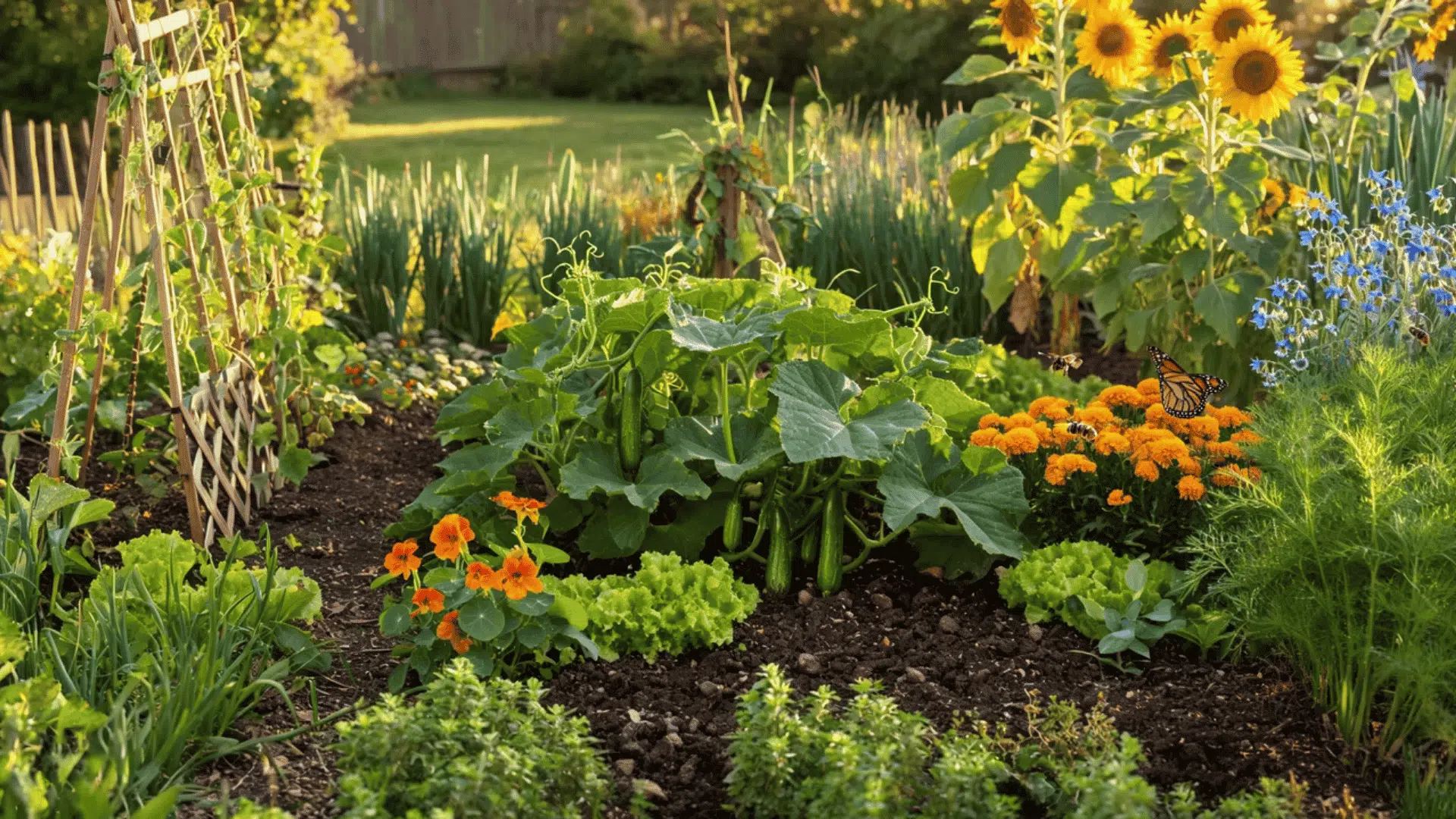
Plant a cucumber next to the wrong neighbor, and you could spend the whole season fighting stunted growth and pest invasions you never saw coming.
Plant it beside the correct one, and it can almost grow on its own. That’s the benefit of companion planting.
The right pairings improve soil health, draw in pollinators, and naturally repel pests, while the wrong ones leave your plants competing for nutrients and space.
In this blog, you’ll find the best cucumber companions, the ones to avoid, and how to arrange them for the healthiest harvest.
What Are Cucumber Companion Plants and Why Do They Matter?
Cucumber companion plants are vegetables, herbs, and flowers grown near cucumbers to support healthier growth.
They improve plant health by helping with pest control, pollination, and soil enrichment.
Cucumbers are heavy feeders with shallow roots and are often affected by pests like aphids, beetles, and squash bugs. Without support, they can face nutrient competition and reduced yield.
Companion plants create a more balanced garden by naturally confusing pests with strong scents and improving soil fertility through processes like nitrogen fixation.
Overall, they help build a healthier growing environment that supports stronger vines and more productive cucumber plants.
Best Cucumber Companion Plants You Can Grow
Cucumber companion plants are carefully chosen vegetables, herbs, and flowers that improve cucumber growth by supporting soil health, reducing pests, and increasing pollination.
When planted together, they create a more balanced and productive garden system with less effort.
1. Nasturtiums

Nasturtiums are one of the best trap crops for cucumbers, luring aphids away from tender leaves and reducing direct damage to the plants.
Their bright blooms also attract beneficial insects that help control pests naturally, making nasturtiums a colorful and effective way to protect nearby cucumber vines throughout the season.
2. Marigolds

Marigolds release strong scents that confuse and repel pests like cucumber beetles and nematodes, offering cucumbers natural, chemical-free protection throughout the season.
They also attract pollinators, boosting fruit set, while doubling as an attractive protective border around cucumber beds, combining pest defense with added visual appeal in the garden.
3. Beans

Beans enrich the soil by fixing nitrogen from the air, making it readily available for cucumbers, which are heavy feeders. This gives cucumbers a strong nutrient boost throughout the season.
The added fertility supports healthier vine growth, stronger leaf development, and improved fruit production, making beans a valuable companion for a more productive cucumber harvest.
4. Radishes

Radishes grow quickly and help deter cucumber beetles, acting as an early protective companion crop right when cucumbers are most vulnerable.
Since they mature fast, radishes are harvested well before cucumber vines start spreading, meaning they don’t compete for space and leave more room for cucumbers to grow freely.
5. Sunflowers

Sunflowers offer natural vertical support for climbing cucumber vines, reducing the need for extra trellising while also acting as strong pollinator magnets in the garden.
Their tall, sturdy structure can provide partial shade during hot weather, helping protect cucumbers from heat stress while keeping the growing space efficient and visually appealing.
6. Dill

Dill attracts beneficial insects like ladybugs and parasitic wasps, which naturally target and control common cucumber pests. This makes it a strong ally for organic pest management.
It works best when planted early, giving these helpful insects time to establish before peak pest activity, offering cucumbers stronger protection right when they need it most.
7. Borage

Borage is a powerful pollinator attractor, drawing in bees that improve cucumber flowering and boost fruit set. This makes it especially valuable during the peak growing season.
Many gardeners also notice stronger overall plant vigor when borage grows nearby, likely due to improved pollination and a more active, beneficial insect population around the cucumber bed.
8.Lettuce

Lettuce grows low to the ground, making it a great fit for filling empty spaces beneath cucumber vines without competing for vertical room. This allows for more efficient use of garden space.
Its dense, spreading leaves also help retain soil moisture and suppress weed growth, creating a more stable, low-maintenance environment for cucumbers to thrive in.
9. Peas

Like beans, peas fix nitrogen in the soil, naturally boosting fertility and giving cucumbers a stronger foundation for growth. This makes them a valuable addition to any crop rotation plan.
Peas are typically grown early in the season and harvested before cucumbers are planted, allowing the same bed to be reused efficiently while passing along improved soil quality.
10. Garlic

Garlic’s strong sulfur compounds act as a natural deterrent against aphids and other soft-bodied pests, helping keep cucumber plants healthier with less pest pressure. This makes it a reliable, low-maintenance line of defense in the garden.
Its narrow, upright growth also means garlic fits easily along borders or between rows, protecting cucumbers without competing for space or sunlight.
11. Onions

Onions release strong-smelling compounds that mask the signals pests use to locate cucumbers, naturally reducing the risk of infestation. This makes them a smart, low-effort layer of pest defense in the garden.
Their compact, upright growth also means they take up minimal space, making onions ideal for interplanting between cucumbers without competing for room or sunlight.
12. Oregano

Oregano makes an excellent low-growing companion for cucumbers, spreading as an aromatic ground cover.
Its strong scent naturally deters pests while helping suppress weeds around the base of the plants.
Beyond pest control, it supports a healthier micro-ecosystem by attracting beneficial insects and boosting biodiversity, a low-maintenance addition that benefits the whole cucumber bed.
Tip: Each companion plant plays a specific role from pest control to soil enrichment and pollination helping cucumbers grow stronger and yield better.
Plants You Should Not Grow With Cucumbers
Not all plants are suitable companions for cucumbers. Some compete for nutrients, some spread diseases, and others can directly slow down cucumber growth.
- Melons & Squash: Attract the same pests, such as cucumber beetles, and are prone to powdery mildew, increasing the risk of infection for both plants.
- Potatoes: Compete heavily for water and nutrients; dense planting also reduces airflow, increasing the chance of blight.
- Sage: Releases strong aromatic oils that can inhibit cucumber growth when planted nearby.
- Fennel: Produces allelopathic compounds that suppress the growth of surrounding plants, cucumbers included.
Steering clear of these incompatible pairings helps limit pest buildup and disease spread. It gives your cucumbers a cleaner, less competitive space to grow strong and productive.
Mistakes to Avoid When Using Cucumber Companion Plants
Cucumber companion plants work best when planned carefully, as small mistakes in spacing or selection can reduce their benefits and affect overall plant health.
- Planting too closely together reduces airflow and increases the risk of fungal diseases like powdery mildew
- Ignoring plant compatibility leads to pest buildup and poor growth from mismatched companions like squash or fennel
- Using companions without purpose reduces effectiveness since each plant should serve a clear role in pest, soil, or pollination support
- Letting aggressive plants spread freely can cause competition for nutrients, water, and space around cucumbers
- Skipping planning or crop rotation increases soil depletion and long-term pest and disease problems
With proper spacing, planning, and plant selection, cucumbers stay healthier and produce better yields throughout the season.
Conclusion
Building a garden around the right cucumber companion plants is one of the easiest upgrades you can make this season.
It costs little, requires minimal effort, and pays off with fewer pests, better pollination, and higher yields.
Instead of fighting cucumber problems after they appear, a thoughtful planting layout can prevent many of them from developing in the first place.
Start small: pick two or three companions from this guide, place them intentionally, and watch how your cucumber patch responds over the coming weeks.
Ready to give your cucumbers the support they deserve? Pick your companion plants today and start planting for a healthier, more productive harvest this season.
Got a favorite cucumber companion plant combo? Share it in the comments below!
Frequently Asked Questions
Can I Grow Cucumber Companion Plants in Containers or Raised Beds?
Yes, most companions, such as marigolds, dill, and lettuce, thrive in containers alongside cucumbers if the pots have adequate depth and drainage.
How Far in Advance Should I Plant Companions Before My Cucumbers?
Plant nitrogen-fixers and trap crops like peas or radishes two to three weeks early so they’re established before cucumber seedlings emerge.
Do Cucumber Companion Plants Need Different Watering Schedules than Cucumbers?
Most recommended companions share similar moisture needs, but herbs like oregano prefer slightly drier soil, so avoid overwatering shared beds.