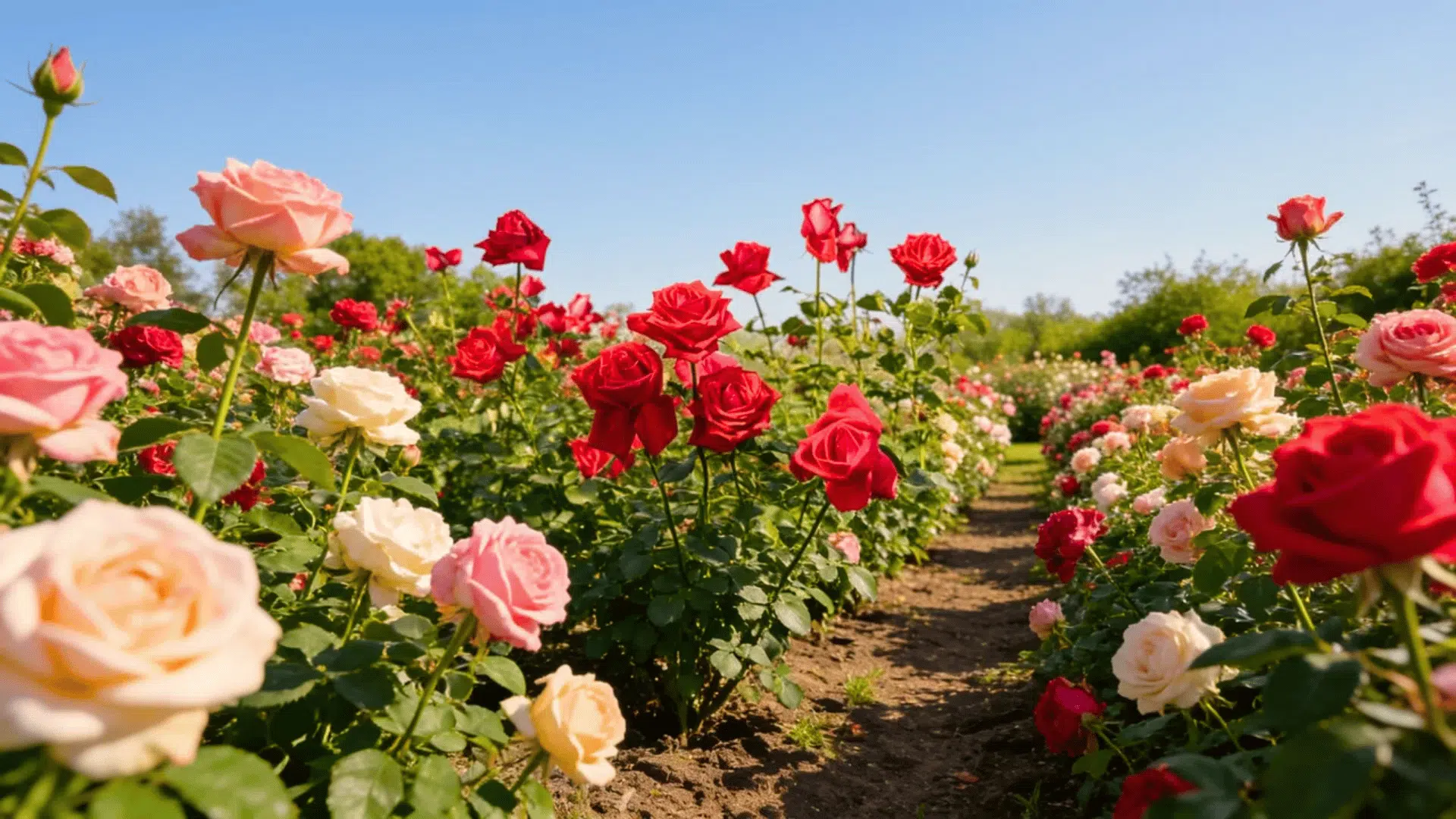
Standing in the rose aisle, everything starts to look the same. Red bloom, green stem, a little tag with some fancy name you don’t recognize.
Truth is, not all roses are built the same. Some need constant babying. Others practically grow on their own.
Knowing the different types of roses changes everything. You’ll know which one actually fits your garden, your schedule, and your style.
No more guessing at the nursery. No more watching a rose die out in a month because it was never right for you.
By the end, you’ll know the main rose families, what makes each one different, and which type matches exactly what you need.
What Are the Main Types of Roses?
Roses might look like one big flower family, but they actually split into three distinct groups. Knowing these three makes every other rose type easy to place.
- Wild (Species) Roses: grow naturally without any breeding involved
- Old Garden Roses: bred before 1867, known for fragrance and history
- Modern Roses: everything bred after 1867, including Hybrid Tea, Floribunda, and Grandiflora
Most roses you’ll spot at a nursery or in a bouquet trace back to one of these three families. Once you know which group a rose belongs to, its traits start to make a lot more sense.
Most Beautiful Types of Roses
“Modern Roses” isn’t a type you’ll spot growing in a yard; it’s the umbrella covering Hybrid Tea, Floribunda, Grandiflora, Polyantha, and Miniature roses. Keep that in mind as you go through the list below.
1. Hybrid Tea Roses

- USDA Hardiness Zones: 5 to 9
- Mature Size: 3 to 6 feet tall and 2 to 3 feet wide
This is the classic “florist rose”: one large, elegant bloom per long stem, with the pointed bud shape most people associate with roses.
Hybrid Teas repeat-bloom throughout the growing season and are the most popular choice for cut-flower arrangements and formal rose gardens.
2. Floribunda Roses

- USDA Hardiness Zones: 5 to 9
- Mature Size: 2 to 4 feet tall and 2 to 4 feet wide
Floribundas produce clusters of smaller blooms rather than a single large flower per stem, giving them heavier, more continuous color coverage across the plant.
They were bred by crossing Hybrid Tea roses with Polyantha roses, a combination worth understanding, because it explains exactly why this type exists.
3. Grandiflora Roses

- USDA Hardiness Zones: 5 to 9
- Mature Size: 4 to 7 feet tall and 3 to 4 feet wide
Grandifloras are a cross between Hybrid Teas and Floribunda roses, combining the tall, long-stemmed growth of Hybrid Teas with the clustered blooming habit of Floribundas.
The result is a tall plant that produces clusters of large blooms on long stems, useful as a backdrop planting or for cutting.
4. Polyantha Roses

- USDA Hardiness Zones: 4 to 9
- Mature Size: 2 to 4 feet tall and 2 to 4 feet wide
Polyantha roses are the parent type behind Floribundas, and they’re worth knowing on their own.
They produce very small blooms in dense clusters, and the plants themselves are compact and notably hardy.
If you understand Polyantha, you understand where the “clustered blooms” trait in Floribunda and Grandiflora actually came from.
5. Miniature & Miniflora Roses

- USDA Hardiness Zones: 5 to 9
- Mature Size: Miniatures reach 1 to 2 feet tall, while Minifloras reach 2 to 4 feet tall
Both of these are scaled-down versions of standard roses, ideal for containers, small spaces, or borders.
True Miniature roses are the smallest, often under 18 inches tall with correspondingly tiny blooms.
Miniflora roses sit in between slightly larger plants and blooms than Miniatures, but still much smaller than full-size garden roses.
6. Climbing Roses

- USDA Hardiness Zones: 4 to 10
- Mature Size: 6 to 20 feet tall and 3 to 8 feet wide
Climbing roses aren’t a genetic category on their own; “climbing” describes a growth habit that shows up across several rose types.
These produce long, flexible canes that can be trained onto trellises, arbors, or fences, and many Climbing varieties are actually climbing versions of Hybrid Tea or Floribunda roses bred to grow longer canes.
7. Shrub Roses

- USDA Hardiness Zones: 3 to 10
- Mature Size: 3 to 8 feet tall and 3 to 6 feet wide
Shrub roses were bred specifically for hardiness and low maintenance, making them a popular modern subclass for gardeners who want reliable color without constant upkeep.
Adding cedar mulch around the base helps retain moisture and reduce watering.
The Knock Out series is the best-known example, known for disease resistance and near-continuous blooming with minimal care.
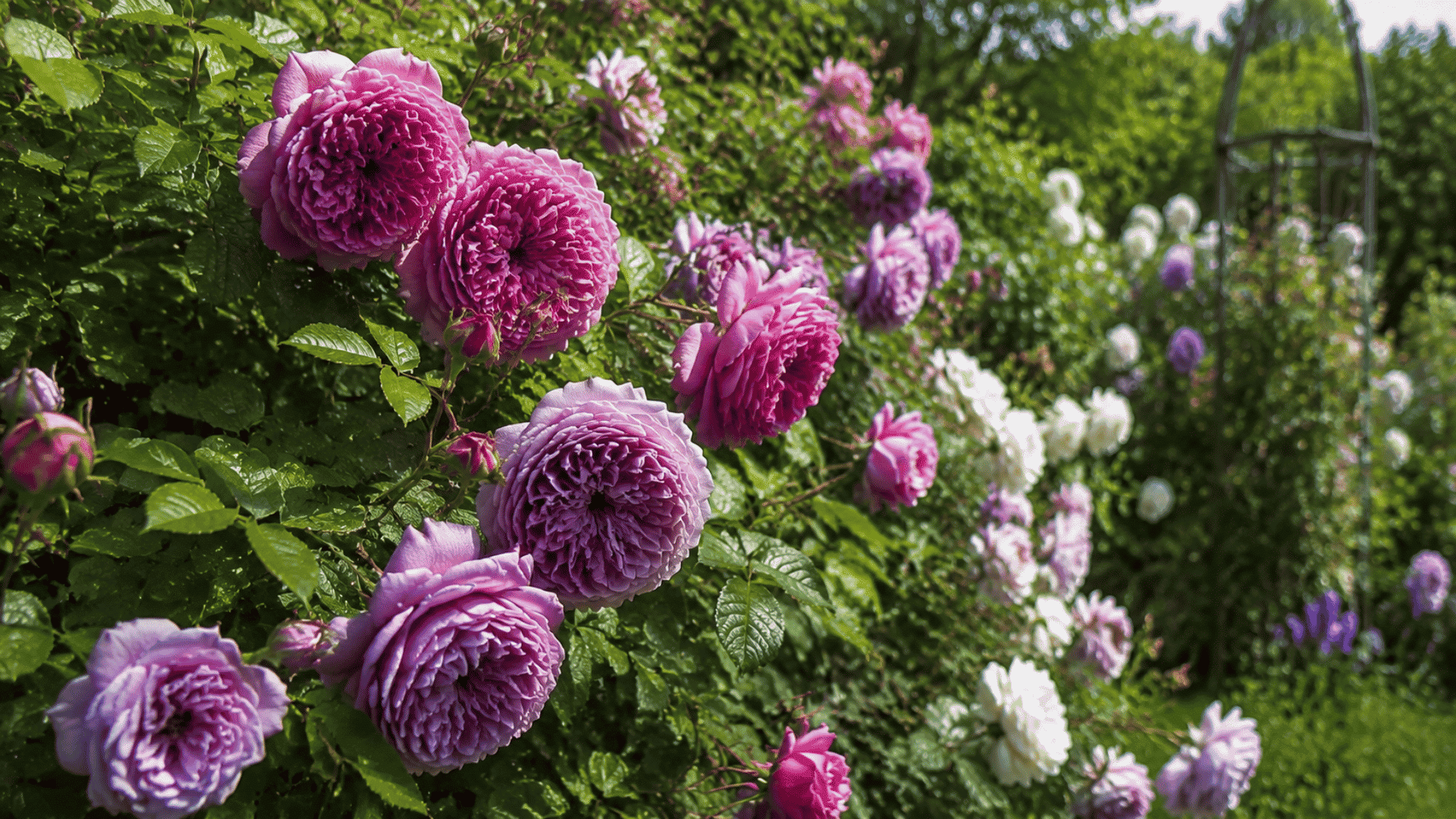
8. Old Garden

- USDA Hardiness Zones: 3 to 10, depending on the class
- Mature Size: 3 to 8 feet tall and 3 to 6 feet wide
This category covers any rose bred before 1867, including well-known subvarieties such as Damask, Gallica, and Alba.
These tend to bloom once per season rather than repeat-blooming, but they’re prized for strong fragrance and historical garden character.
9. Wild (Species) Roses

- USDA Hardiness Zones: 2 to 11, depending on the species
- Mature Size: 2 to 10 feet tall and wide, though some species grow larger
Before anyone ever crossed a single rose variety with another, Wild Roses were already growing exactly as nature made them.
No breeding, no human hands shaping them, just simple flowers with five petals, doing what they’d done for millions of years.
What makes them worth knowing is that every single rose type covered so far, Hybrid Tea, Floribunda, Grandiflora, all of it, eventually traces back to species like these.
They’re less a “type” of rose and more the starting point that made every other type possible.
What Each Rose Type Is Best Known For?
Each rose type has a feature that makes it stand out. Hybrid Tea roses are known for large blooms on long stems, while Floribundas provide fuller color through clustered flowers.
Grandifloras combine height with large blooms, making them useful toward the back of a garden bed.
Polyantha roses stay compact and produce many small flowers, while Miniature and Miniflora roses are well-suited to pots and limited spaces.
Climbing roses add height to fences, arches, and trellises. Shrub roses are valued for reliable growth and easier maintenance.
Old Garden roses are often chosen for fragrance and traditional character, while Wild roses offer simple flowers, natural hardiness, and strong value for pollinators.
Looking at each type’s strongest quality can make the final choice much easier.
Which Type of Rose Is Right for You?
All these types are great on their own, but the right pick really comes down to what you actually need from your garden. Match your goal to the list below, and the choice becomes much simpler.
- For cut flowers and arrangements: Hybrid Tea or Grandiflora work best, thanks to their long stems that are easy to snip and arrange in a vase.
- For fuller color with less fuss: Floribunda or Shrub roses, especially Knock Out, bloom in clusters and hold up well without constant care.
- For small spaces or container gardens: Miniature or Miniflora roses stay compact, making them ideal for balconies, pots, or tight garden beds.
- For covering a trellis or fence: Climbing varieties are the way to go, since their long canes are built to be trained upward or across structures.
- For strong fragrance and old-world character: Old Garden and Heirloom roses bring the deep, classic rose scent along with real garden history.
- For the lowest-maintenance option: Shrub roses, particularly Knock Out, are bred to resist disease and bloom on their own with minimal upkeep.
At the end of the day, there’s no single “best” rose, just the one that fits your space and effort level. Once you know what you’re optimizing for, the right type practically picks itself.
Final Thought
At the end of the day, roses aren’t one-size-fits-all, and now you know why. Once you understand the different types of roses, picking the right one stops being a guessing game.
You know which type blooms longer, which needs less work, and which one actually belongs in your space. That’s the real win here: a garden that fits your life instead of fighting it.
So next time you’re at the nursery, skip the guesswork. Pick the rose that’s actually right for you, and watch it thrive.
Your garden’s been waiting long enough. Pick your rose type and get those hands in the soil this weekend.
Got a favorite rose type? Drop it in the comments below.
Frequently Asked Questions
Can Different Rose Types Be Planted Together?
Yes, just group by similar care needs, and sunlight mixing high-maintenance and low-maintenance types in one bed usually backfires.
Do Rose Types Affect Winter Hardiness?
Yes, shrubs and Wild roses handle cold far better than Hybrid Teas, which often need winter protection.
How Long Do Rose Types Typically Last?
Shrubs and Wild roses can live for decades with little care, while Hybrid Teas often need replacing within 10-15 years.