Struggling with limited space for plants is common. Not everyone has a big garden or open ground to grow freely.
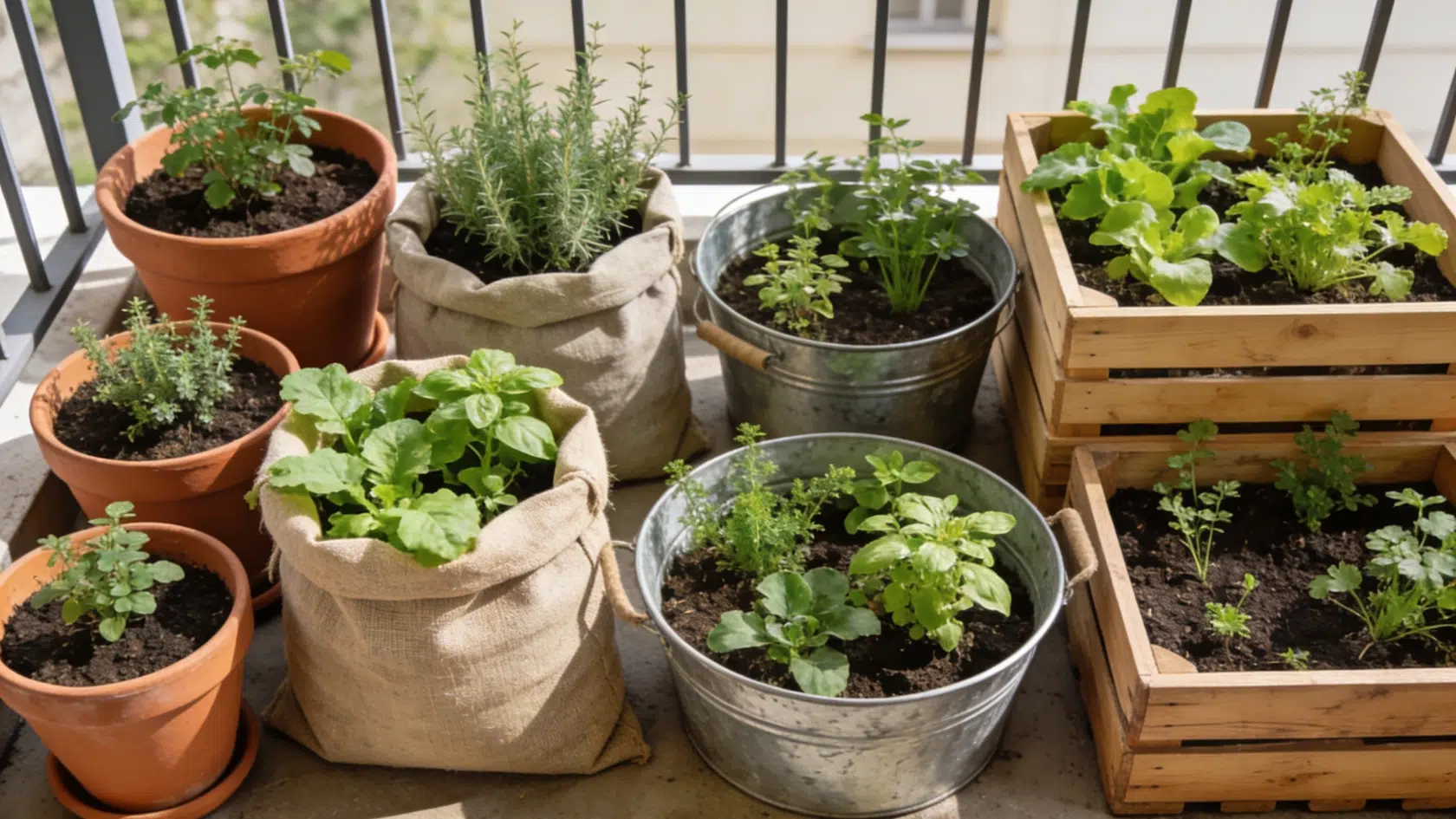
Containers make it simple to grow plants in small areas like balconies, patios, and corners. Even a narrow windowsill or a few square feet of concrete can turn into a productive little garden.
This is where container gardening ideas come in handy. They help turn everyday items into planting spaces.
Herbs, vegetables, and flowers can all grow in compact setups with better placement. Here are some easy container gardening ideas and tricks for compact spaces.
What is Container Gardening?
Container gardening is the practice of growing plants in portable, enclosed vessels rather than directly in the ground. The real advantage is control: over soil, drainage, moisture, and exactly where a plant sits.
The reason containers work so well comes down to what happens at the root level. When a plant grows in the ground, its roots negotiate with whatever the native soil offers.
Containers are not smaller gardens. They are a different system, one that rewards understanding how an enclosed root environment actually behaves.
This is exactly why the right container gardening ideas matter more than they seem to at first.
Choosing the Right Container for Container Gardening
Two things matter when picking a container: the material, which decides how often you water, and the depth, which decides what you can grow.
| Factor | What to Know | Quick Guide |
|---|---|---|
| Porous materials | Terracotta, clay, and fabric grow bags dry out fast | Good for plants sensitive to overwatering; water daily in heat |
| Non-porous materials | Ceramic, plastic, and metal hold moisture longer | Good for vegetables and annuals; water every 2–3 days |
| Budget pick | Fabric grow bags are the cheapest | Beat many mid-range pots for vegetables |
| Herbs | 15–20 cm / 6–8″ deep | Shallow roots, fit almost any pot |
| Leafy greens | 20–25 cm / 8–10″ deep | Enough room for regular harvests |
| Tomatoes | 30 cm+ / 12″+ deep | Use dwarf varieties |
| Root vegetables | 30–40 cm / 12–16″ deep | Need the most depth |
Whatever you pick, make sure it has drainage holes, size up when unsure, and use potting mix instead of garden soil.
The Best Plants for Container Gardening
Vegetables, herbs, flowers, and companion plants all grow well in containers if the root depth matches what the plant actually needs.
Even a small balcony or patio can support a surprising variety once you match the right plant to the right pot size. Here’s everything worth growing:
Best Vegetables for Container Gardening
Here are the top vegetables for container gardening ideas that actually work. Make sure to stick to dwarf and bush varieties.
- Salad Greens: shallow roots, fit almost any container
- Radishes: tiny footprint, grow in the smallest pots
- Bush beans: compact and upright, no extra space needed
- Peppers: naturally small, no pruning or training required
- Tomatoes: dwarf varieties bred for restricted root space
Beginner Tip: Start with salad greens or radishes if you’re new to container growing. Both are fast and rewarding.
Best Herbs for Container Gardening
Most herbs are shallow-rooted, grow fast, and reward regular harvesting with bushier growth. These are your best picks:
- Basil: shallow roots, thrives in small pots
- Chives: minimal root depth, fits any container
- Rosemary: deeper roots but stays compact above the soil
- Mint: spreads aggressively in the ground, contained perfectly in pots
- Thyme / Oregano: low-growing and drought-tolerant, ideal for small containers
Herbs are the most beginner-friendly container gardening ideas to start with. Small pots, quick results, and useful every time you cook.
Mix at least one companion plant into every container with edibles. It’s one of the simplest container gardening ideas for keeping pests down without spraying anything.
Container Gardening Design Ideas for Containers
Not every great planter comes from a garden center. These creative container gardening ideas turn everyday objects into standout potted garden pieces that work in any space.
1. Colanders Lined with Coco Coir

Colanders already have built-in drainage, making them amongthe simplest repurposed containers to prepare.
Line the inside with coco coir to hold the potting mix while still allowing water to pass through freely. They work well for trailing plants and herbs, where the open metalwork adds visual texture.
Tip: Hang them at varying heights on a fence or wall for an instant vertical display.
2. Tin Buckets Hungon a Wall

Tin buckets hung on a wall or fence turn a flat surface into a layered planting display. Drill drainage holes in the base of each bucket before planting.
Compact herbs, trailing succulents, and small annuals all suit the format well.
Tip:Group buckets in odd numbers and vary the sizes slightly. Three different-sized buckets look far more betterthan three identical ones.
3. Old Coolers for Deep-Rooted Vegetables

Coolers are deeper than most commercial pots, making them perfect for rooting vegetables like carrots and beetroot.
Drill holes in the base before filling. The insulated walls trap moisture, and root rot sets in fast. The thick walls also insulate roots from temperature extremes.
Tip: Dark-coloured coolers absorb heat. Keep them in partial shade during peak summer to protect roots.
4. Wicker Baskets

Wicker baskets make warm, textural containers for seasonal planting displays of spring bulbs, summer annuals, or autumn plants. Line with heavy plastic sheeting, punch holes through the base, and fill with potting mix.
The natural material suits cottage and informal garden styles particularly well.
Tip: Cover wicker baskets in winter. Prolonged wet weather accelerates decay faster than most expect.
5. Hanging Glass Bottle Planters

Glass bottles can be cut and prepared to create simple hanging planters for small plants. They can be fixed upside down or sideways on a wall or support frame.
They are best used for small plants such as mosses, herbs, or tiny trailing varieties. The transparent glass allows partial visibility of roots and soil layers inside the bottle.
Tip: Use a light layer of charcoal or small stones at the base to improve drainage and reduce root rot inside the sealed glass space.
6. Old Boots or Wellies

Boots and wellies need no modification. They already hold soil well and drain through the natural gaps at the sole. Fill with potting mix and plant with thyme, chives, or small succulents for a low-maintenance display.
A row of mismatched boots along a garden path or wall reads as deliberate and characterful rather than cluttered.
Tip: Punch a few extra holes in the sole if drainage feels slow. Rubber retains moisture more than most expect.
7. Repurposed Kitchen Colanders

Kitchen colanders hung on a wall or fence make instant wall planters with built-in drainage. Line with coco coir, fill with potting mix, and plant with compact trailing herbs or annuals.
The perforated sides add visual texture, and the hanging format keeps them off surfaces where drainage could cause staining.
Tip: Use S-hooks for hanging. They allow the colander to be repositioned or removed quickly without tools.
8. Galvanized Tubs

Galvanized tubs are one of the most durable repurposed containers available. Drill three to five holes in the base, fill with potting mix, and they are ready to plant.
They hold a large volume of soil, which helps buffer moisture and suits vegetables well.
Tip: Seal the interior with a food-safe coating if planting edibles. Raw galvanized metal can leach zinc into soil over time.
9. Oil Drums with Twisted Metal Sides

Oil drums have the depth and volume to support large plants and the structural strength to anchor a trellis or climbing frame directly.
The twisted metal sides add industrial texture that works as a design feature in its own right. Best suited to statement plants, a single large grass, a climbing bean, or a trained shrub.
Tip: Line the interior with geotextile fabric before filling to slow rust and extend the drum’s lifespan.
10. Metal Gutters

Gutters mounted on a fence or wall create a vertical growing zone that uses space most gardens waste entirely. They are shallow, which suits salad greens, radishes, and herbs perfectly.
Drill drainage holes along the base at regular intervals before planting.
Tip: Mount three gutters at staggered heights for a wall garden that looks designed rather than improvised.
11. Hollowed-Out Logs

A hollowed log is one of the most naturalistic container options, particularly in a shaded garden or woodland-style planting scheme.
Chisel out the center to a depth of at least 20cm, leaving the base partially intact with small drainage gaps. Ferns, mosses, and shade-tolerant perennials establish well in the naturally acidic environment.
Tip: Choose hardwood logs. Softwood rots within a season or two, while oak and chestnut last for years.
12. Wine Barrels Cut in Half

Half-wine barrels are among the largest and most structurally impressive repurposed containers available.
Their volume suits statement plants like small fruit trees, olive trees, or large ornamental grasses. that need deep root space. The weathered timber adds warmth and works in almost every garden style.
Tip: Soak the barrel in water before planting. Dry timber shrinks, and gaps appear at the staves, which close once the wood is hydrated.
13. Wooden Crates

Wooden crates are deep for most herbs and leafy greens and wide enough to group several plants together. Line the interior with landscape fabric before filling to slow moisture loss through the timber.
Untreated wood will eventually rot. Treat the exterior with a non-toxic wood sealant to extend its life.
Tip: Elevate on pot feet to improve drainage and slow the rot that comes from sitting on damp ground.
14. Floating Reed Raft Gardens

Reed raft gardens are buoyant platforms planted with aquatic or marginal plants and are increasingly popular in garden pond design.
They add planting volume to a water feature without permanent installation and create habitat for wildlife beneath the surface. Construct these from bundled reeds, cork, or purpose-built floating frames.
Tip: Marginal plants like iris, marsh marigold, and water mint establish quickly on floating rafts.
15. Shells for Succulents

Large shells like clams, conch, or oysters make natural shallow containers for succulents and small cacti. Their curved forms hold just enough potting mix for shallow-rooted plants and drain freely through the open base.
Arranged on a table, shelf, or windowsill, they work as living decorative objects rather than conventional planters.
Tip: Use a gritty succulent mix rather than standard potting mix. Shells drain quickly, and succulents need extra-sharp drainage.
16. Repurposed Chimney Pots

Chimney pots are tall, narrow, and visually striking even before a plant is added. Their height suits upright grasses, standard topiary, or single-stem plants that benefit from elevation.
Place at an entrance, path junction, or as a focal point within a border.
Tip: Fill the base with rubble or gravel before adding potting mix. Chimney pots are deep, so filling them fully with potting mix is costly and unnecessary.
17. Stacked Terracotta Pots

Stack terracotta pots in descending sizes, filling each with potting mix and planting around the rim of the larger pots. The tiered structure creates multiple planting levels in a compact footprint, ideal for a collection of herbs.
The terracotta material suits Mediterranean herbs particularly well, allowing the fast drainage they need.
Tip: Plant the most drought-tolerant herbs at the top. The upper tiers dry out faster than the base.
18. Fabric Grow Bags

Fabric grow bags require no modification. Air passes through the walls naturally, pruning roots and encouraging a denser, healthier root structure.
They are among the cheapest container options available and outperform many mid-range pots for vegetables. Lightweight and foldable when not in use, they store flat between seasons.
Tip: Place a saucer underneath in hot weather to catch drainage and slow moisture loss from the base.
19. Stacked Concrete Blocks

Concrete blocks stacked into a low boundary or retaining wall create individual planting pockets in the gaps between blocks. Each pocket suits a single compact plant, such as sedums, thyme, small ferns, or trailing lobelia.
The structure does double duty as both a garden boundary and a planting feature.
Tip: Fill pockets with a gritty, free-draining mix. The confined space and exposed position dry out faster than a standard container.
20. Hanging Coconut Shell Planters

Halved coconut shells can be cleaned and drilled to create simple hanging planters. These are to be filled with lightweight soil and are best used for small plants that do not need deep root space.
The curved shell shape keeps them light, easy to hang, and suitable for clustering.
They work well in vertical corners, balcony railings, and wall-mounted garden setups where floor space is limited.
Tip: Line the inside lightly with coco coir before adding soil to help retain moisture evenly and slow drying in hot weather.
Container Gardening Care Tips
Container gardening depends on a few simple rules that directly affect plant growth. These container gardening ideas make plants healthier and easier to manage. Here are a few key tips to follow:
- Always use containers with proper drainage holes
- Choose larger pots to keep moisture stable for longer
- Match container depth to root size
- Use lightweight potting mix instead of garden soil
- Keep containers slightly raised for better drainage
- Group plants with similar water needs together
- Rotate pots for even sunlight exposure
Following these basics won’t guarantee a perfect garden, but it removes most of the common mistakes that hold container plants back.
Conclusion
Good container setup is all about water control, root space, and light balance. Whether you are working with a balcony, a patio, or a single windowsill, the right container, the right depth, and the right potting mix are all you need to get started.
The best container gardening ideas are not just for beginners. Experienced gardeners use the same principles to solve problems that fixed garden beds simply cannot. Start with one container, one plant, and one good potting mix. That is genuinely all it takes.
Ready to put these container gardening ideas into action? Pick one from this guide and plant it this weekend.
Which container gardening idea are you trying first? Drop it in the comments below. We would love to see what you are growing.
Frequently Asked Questions
Can I Leave Containers Outside During Winter?
Most containers can stay outside in mild winters, but terracotta and ceramic crack in freezing temperatures as moisture inside the walls expands. Move vulnerable pots under cover or wrap them in bubble wrap to protect.
Do Container Plants Need More Sunlight than In-Ground Plants?
Container plants have the same sunlight needs as their in-ground counterparts, but you can move them to follow the light. Position containers where they get the recommended hours for that plant.
Can I Grow Fruit Trees in Containers?
Dwarf fruit trees, including apple, lemon, and fig, grow well in large containers with adequate root depth. Choose a pot at least 40–50cm deep, feed regularly in the growing season, and repot every two to three years.