Tomato plants often struggle with pests, poor pollination, and slow growth. It’s frustrating to work hard in the garden only to see small, weak fruits.
The right neighbors can change everything. Tomato companion plants naturally repel pests, attract pollinators, improve soil, and boost growth.
Some plants act as insect traps, helping keep your tomatoes safe. Others release natural chemicals that deter harmful bugs. You can also invite bees and beneficial insects to help your plants thrive.
Read ahead to find out which companion plants work best, how to place them, and how to avoid common mistakes for a healthier, more abundant tomato harvest.
What Is Companion Planting and Does It Work?
Companion planting means growing certain plants near your tomatoes to help them grow better. It works, though not like magic.
The right tomato companion plants can repel pests, attract pollinators, and improve your soil naturally.
Some release chemicals that repel bugs. Others act as traps, luring pests like aphids off your tomatoes. A few bring in bees to improve fruit set. It won’t erase every problem, but it adds a strong layer of protection.
Best Tomato Companion Plants
Your tomatoes grow best with the right neighbors. Each plant below performs a specific job, whether repelling pests, feeding the soil, or attracting pollinators.
Here are the ones worth adding:
1. Basil

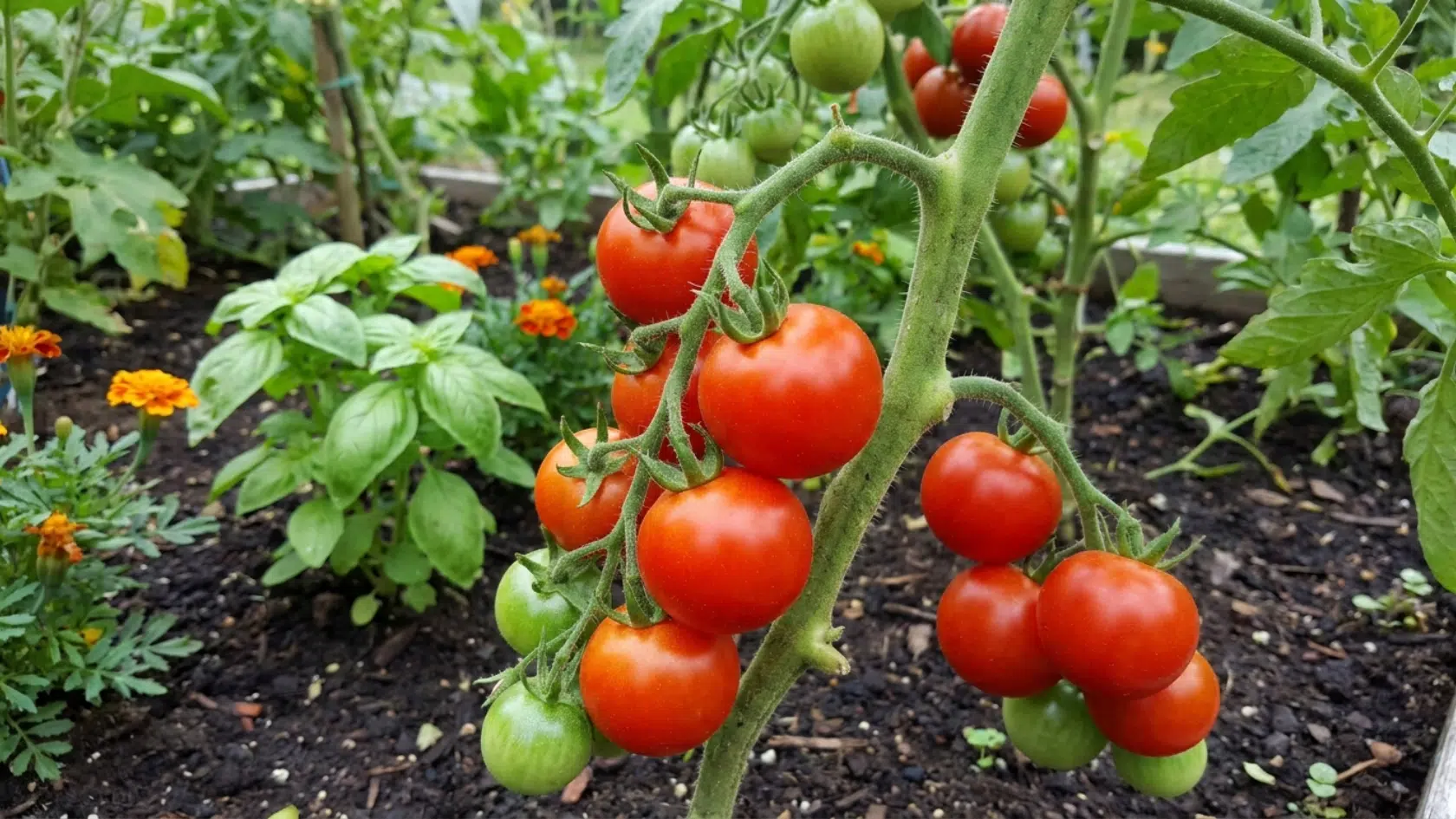
Basil produces natural oils, such as linalool and eugenol, that help repel thrips and aphids when planted near tomatoes.
The closer basil is to your tomatoes, the more concentrated its protective effect which is why spacing and flower management matter as much as planting it at all.
Gardeners also notice better tomato flavor, likely because healthier, less-stressed plants produce tastier fruit.
Tip: Plant 12–18 inches from each tomato and pinch flowers off as soon as they appear. Once basil flowers, oil production drops and so does the protection.
2. French Marigolds

French marigolds (Tagetes patula) produce a compound in their roots called alpha-terthienyl, which can kill root-knot nematodes.
However, this only works if the marigolds were grown the season before planting tomatoes densely. Even if planted this season, they still help by keeping whiteflies away and attracting pollinators.
Tip: Use the French variety, not the tall African type, and plant as a dense border around the bed.
3. Nasturtiums

Aphids are strongly attracted to nasturtiums, so planting them along the edge of your tomato bed helps draw pests away from your tomatoes.
If you plant nasturtiums among the tomato plants instead, aphids may spread to the tomato area rather than staying on them. Check them weekly and take action if needed to keep your tomatoes safe.
Tip: Plant at the outer perimeter only. Check weekly if aphids are on the nasturtiums, your tomatoes are being protected.
4. Borage

Borage attracts bumblebees, the most effective pollinators for tomatoes, through buzz pollination.
This frequency releases pollen more efficiently than other insects. It also hosts parasitic wasps that prey on the hornworm.
Borage is also one of the few companion plants that improve the garden it grows in each year, as its decomposing leaves return trace minerals to the soil.
Tip: Let it flower freely and allow it to reseed. Plant it once and it returns every year without replanting.
5. Garlic and Chives

Garlic and chives release sulfur compounds that deter nearby spider mites and aphids. When chives flower, they attract pollinators too.
Both are perennial or semi-perennial in most climates, meaning once established they return each season with minimal effort and provide consistent protection year after year.
Tip: Plant garlic in fall so it’s established before tomatoes go in. Let chives flower rather than keeping them trimmed.
6. Carrots

Carrots loosen compacted soil around tomato roots as they grow, also helping improve the drainage without any effort.
Their root structure also attracts ground beetles, which eat cutworm larvae and other soil pests.
They are also among the most space-efficient companions available, fitting into gaps between tomato plants that would otherwise go empty and unused throughout the season.
Tip: Sow between tomato plants . They occupy a different soil layer and won’t compete for space or nutrients.
7. Parsley and Dill

When parsley and dill are allowed to flower, they attract parasitic wasps and hoverflies that eat aphids and hornworm eggs.
The leaves alone don’t provide this benefit, but the flowers do. Be careful not to confuse fennel with dill, as fennel can harm tomatoes and should be planted far away.
Both are also dual-purpose plants that serve the kitchen and the garden.
Tip: Let a few plants bolt and flower at the bed’s edge rather than keeping them trimmed back.
Every plant on this list earns its place through a specific mechanism.
Pick the ones that match your conditions, place them correctly, and they will work quietly in the background all season.
The Worst Tomato Companion Plants
Getting the bad neighbors wrong quietly costs you the whole season. Here are the plants to keep away from your tomatoes, along with how far to move them:
| Plant | Why to Avoid | How Far to Keep It |
|---|---|---|
| Fennel | Releases root compounds that suppress nearby plant growth | At least 6 feet. Ideally, a separate corner or container |
| Corn | Shares the same primary pest, Helicoverpa zea, and fungal diseases | Opposite end of the garden |
| Brassicas | Compete directly for calcium and nitrogen with nothing beneficial in return | At least 3 feet, separate bed preferred |
| Potatoes | Share late blight, which can jump to tomatoes within days | Minimum 10 feet or a separate bed |
| Peppers and Eggplant | Same plant family, same disease risks | Separate bed. Distance within the garden is fine |
| Dill (mature) | Attracts tomato hornworm once it reaches full maturity | Relocate or remove before it fully matures |
| Beetroot | Competes aggressively for soil nutrients and stunts root development | At least 2–3 feet |
| Black Walnut | Produces juglone, a soil toxin that can kill tomato plants | Minimum 50 feet from the tree’s root zone |
Keeping these plants at the recommended distances ensures your tomatoes avoid competition, shared pests, and allelopathic effects, protecting your harvest for the entire season.
How to Plan a Companion Planting Tomato Bed?
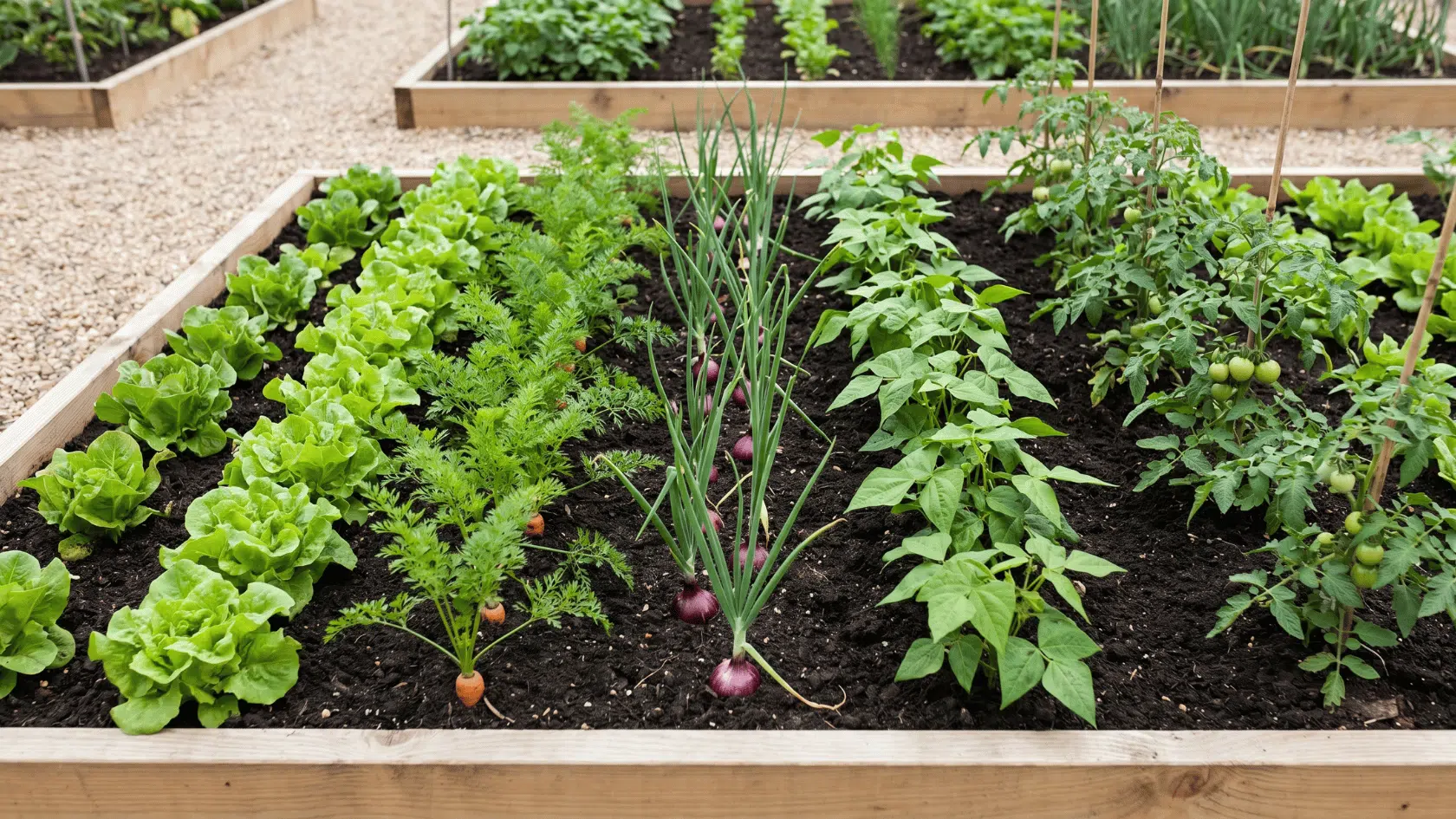
Think of your bed in three rings: tomatoes in the center, pest-deterring plants around them, and pollinator plants at the edges. Build outward in that order.
Here’s how to lay out your tomato bed so every plant has a job and knows where to do it:
Step 1: Plan Before You Plant

Decide on your bed size before buying anything. A standard 4×8 raised bed comfortably fits 2–3 tomato plants, with room for companions. Sketch out where each plant goes.
Tomatoes down the center, aromatics alongside them, border plants at the edges, and trap crops just outside the bed.
Step 2: Start From the Center and Work Outward

Plant tomatoes down the middle of the bed, about 2 feet apart. Put one basil plant beside each tomato, which is close enough to touch but not crowding it.
Fill the gaps between plants with chives or carrots; they stay compact and won’t compete. Then line all four edges with French marigolds to form a continuous pest barrier around the whole bed.
Step 3: Time Your Companions to Match Your Tomatoes

Plant basil and marigolds at the same time you put your tomato transplants. They need to be growing and releasing their compounds from day one of the season.
Garlic goes in the previous fall. Nasturtiums and borage can go alongside or just after your tomatoes.
Step 4: Place Trap Crops Outside the Bed

Plant nasturtiums just outside the bed’s edge, not inside it. When they’re outside, aphids go to them first and stay away from your tomatoes.
Check them weekly. If aphids are on the nasturtiums, that means they’re off your tomatoes. Spray just the nasturtiums if it gets heavy, or leave them.
Step 5: Bring Beneficial Plants and Bees to the Edges

Plant borage anywhere near the bed and let it flower freely. Bees come to it in numbers and pollinate your tomatoes while they’re at it.
Put sunflowers on the north side so they don’t shade anything. Let a few parsley or dill plants grow tall and flower at the edge. Don’t trim them. A flowering herb helps in pest control.
Step 6: Maintain Companions Through the Season

Pinch basil flowers as soon as they appear. Once it flowers, the pest-repelling oils drop off. Keep marigolds deadheaded so they keep blooming at the border.
Pull any companion showing disease straight away. Borage, nasturtiums, and chives take care of themselves from there.
Do this once at the start of the season, and your bed will run itself. The right companions in the right places mean less work, fewer pests, and better tomatoes all season long.
Beginner Tip: Plant basil next to every tomato and line the border with French marigolds. Those two plants alone cover most common pest problems.
Conclusion
Using the right tomato companion plants makes gardening easier and more productive. They help keep pests away, improve pollination, enhance soil health, and support stronger, tastier tomatoes.
Even small adjustments in placement or plant choice can make a big difference throughout the season.
Start with a few reliable companions, like basil and marigolds, and watch your tomato plants thrive with less effort. Pay attention to spacing, trap crops, and flowering herbs for ongoing protection and pollination.
Take action today. Plan your tomato bed carefully and choose companions that match your garden’s needs.
Share your results and tips in the comments below. We’d love to hear what works for you!
Frequently Asked Questions
Can Companion Plants Help Tomatoes in Container Gardens?
Yes, smaller companion plants like basil, thyme, or marigolds thrive in pots alongside tomatoes, providing pest control and attracting pollinators without taking up extra space.
How Often Should I Rotate Companion Plants Each Season?
Rotate them yearly, or move heavy feeders like marigolds and borage to a different spot to maintain soil nutrient levels and prevent pest buildup.
Can Companion Plants Improve Tomato Resilience to Extreme Weather?
Yes, plants like sunflowers or borage provide shade, wind protection, and moisture retention, helping tomatoes survive heat or strong winds.