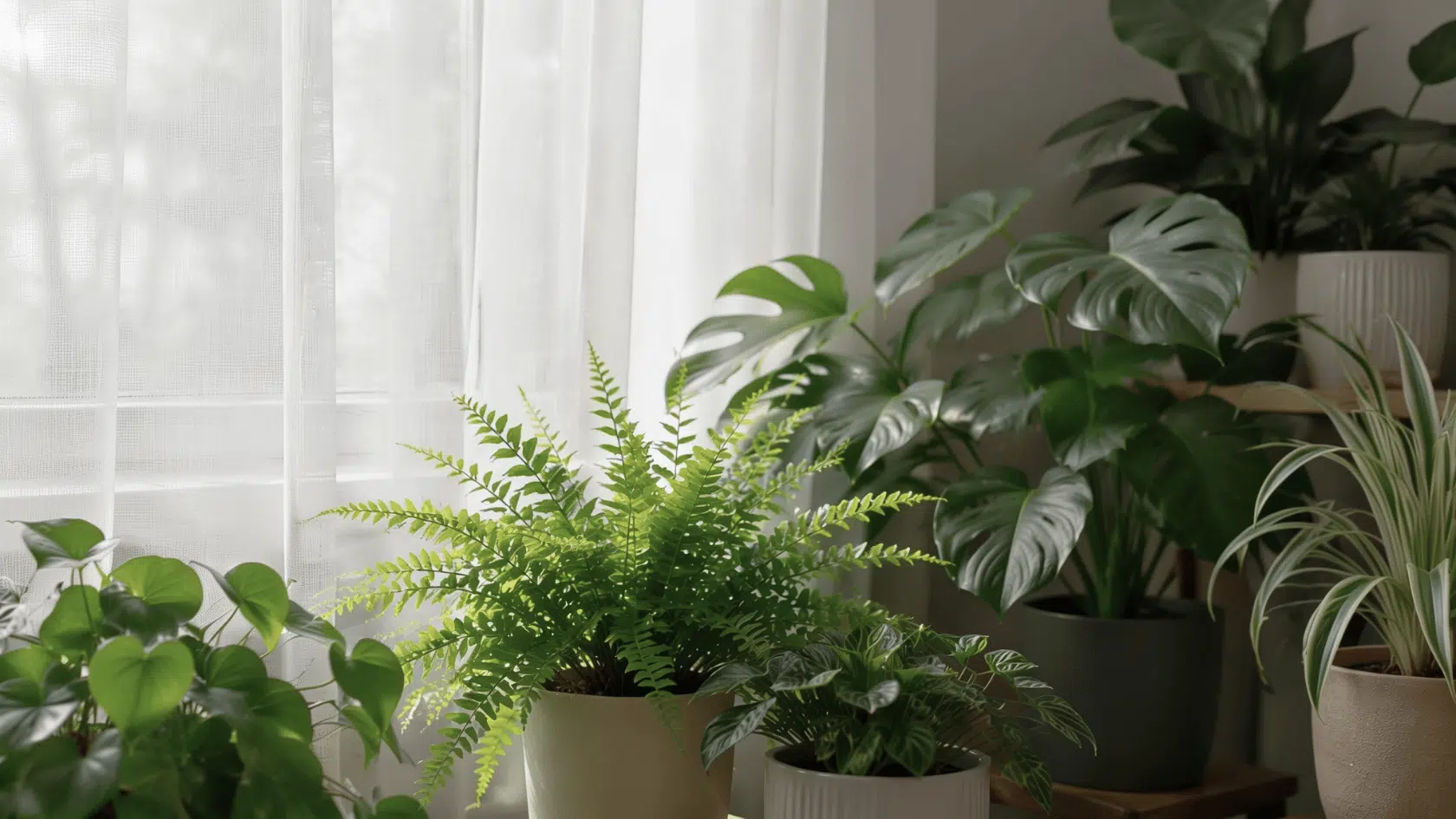
That plant you bought last month? The one that looked perfect on the shelf and now has yellowing leaves you can’t explain? Yeah, most people have killed at least one plant they were sure they could keep alive.
The problem is almost never the plant. It’s a small habit nobody told you about, something that takes 30 seconds to fix once you know what it is.
Common house plants are more forgiving than their reputation suggests. Some practically raise themselves. Others just need one or two things done right, and they’ll outlive your furniture.
Ahead are some of the best ones, along with exactly what each one needs from you.
What to Consider Before Buying a Houseplant?
Before falling for a plant because it looks good on the shelf, match it to your actual living space and habits.
Start by observing the light in your intended spot throughout the day, since brightness can shift dramatically even a few feet from a window.
Next, consider how much hands-on care you’re realistically willing to give: low-maintenance plants like snake plant and ZZ plant thrive on neglect, while calathea and peace lily need attention.
If you have pets or young kids at home, note that pothos, philodendron, and peace lily are toxic if ingested, so pet-safe alternatives are often simpler.
Watering habits matter most, since overwatering causes more plant deaths than underwatering, so check the soil rather than watering on autopilot.
Popular Houseplants to Consider
From low-maintenance succulents to statement greenery, here are popular houseplants and exactly what each one needs to thrive.
1. Pothos
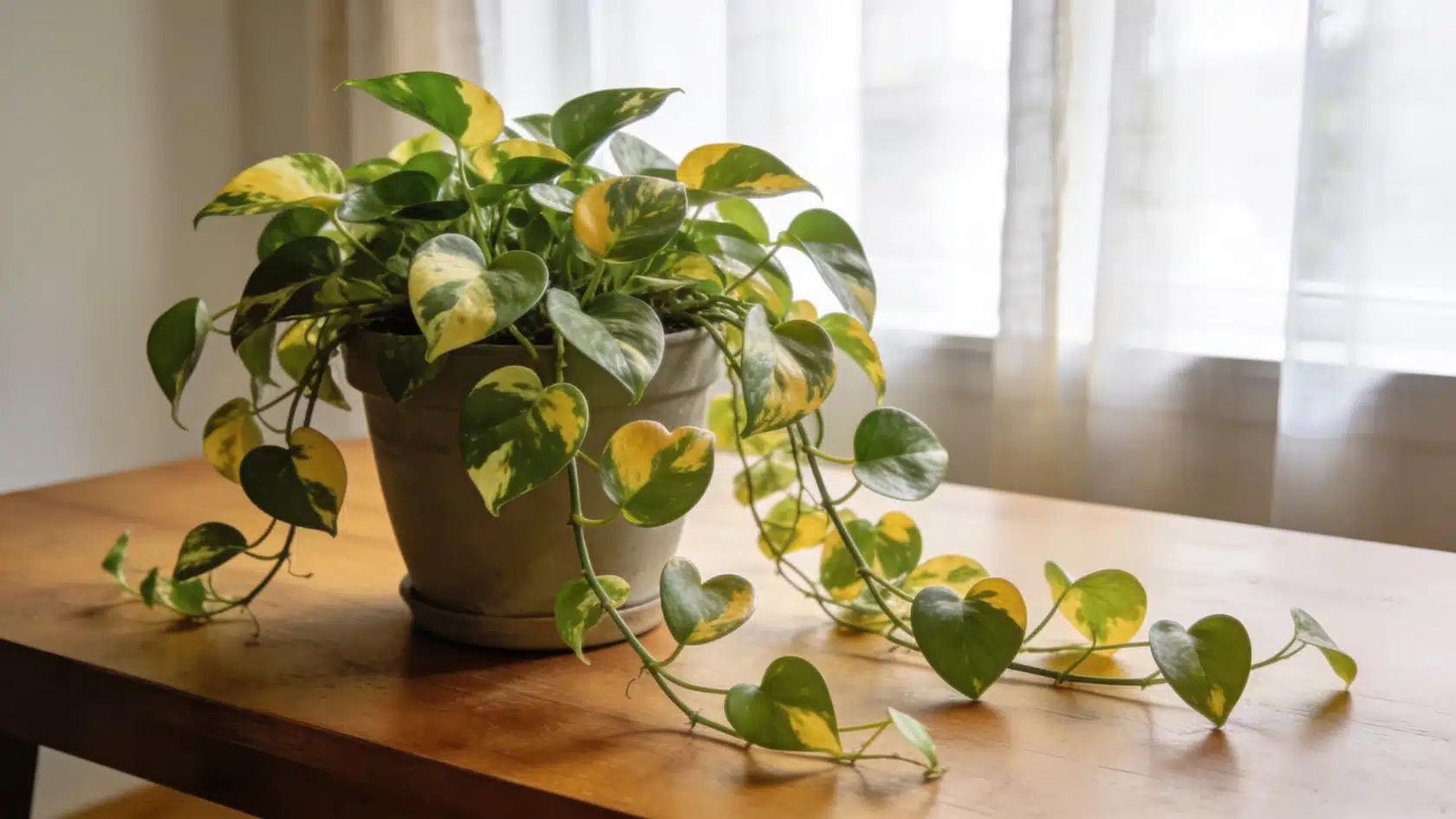
Pothos has trailing vines and heart-shaped leaves that grow long enough to cascade off a shelf or climb a support.
It’s one of the most forgiving houseplants around, tolerating almost any light and a missed watering or two. The main thing to watch for is overwatering, since soggy soil rots the roots.
The main thing to watch for is overwatering, since soggy, waterlogged soil quickly leads to root rot and yellowing leaves.
- Light: Low to bright, indirect
- Water: Weekly, once the top 2 inches of soil dry out
- Pet Safety: Toxic to cats and dogs
2. Snake Plant
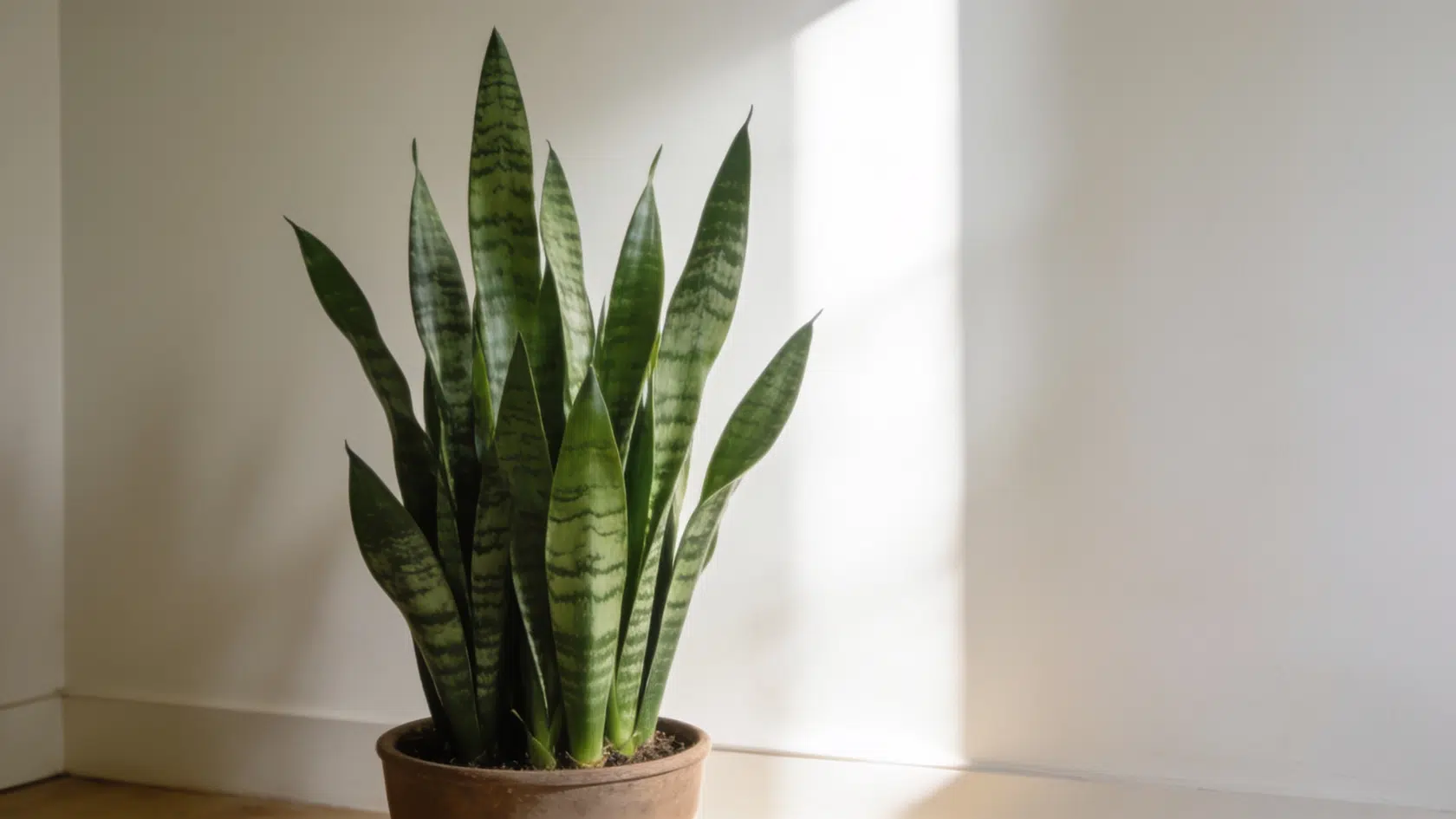
Snake plant has thick, upright leaves that stand tall with almost architectural structure, making it a striking addition to any room.
It stores water like a succulent, so it survives weeks of neglect and low light. The biggest risk is water sitting in the pot, which causes soft root rot.
The biggest risk is letting water pool at the base, since soft, mushy rot sets in long before the leaves show any visible stress.
- Light: Low to bright, indirect
- Water: Every 2–3 weeks, less in winter
- Pet Safety: Mildly toxic to pets
3. Spider Plant
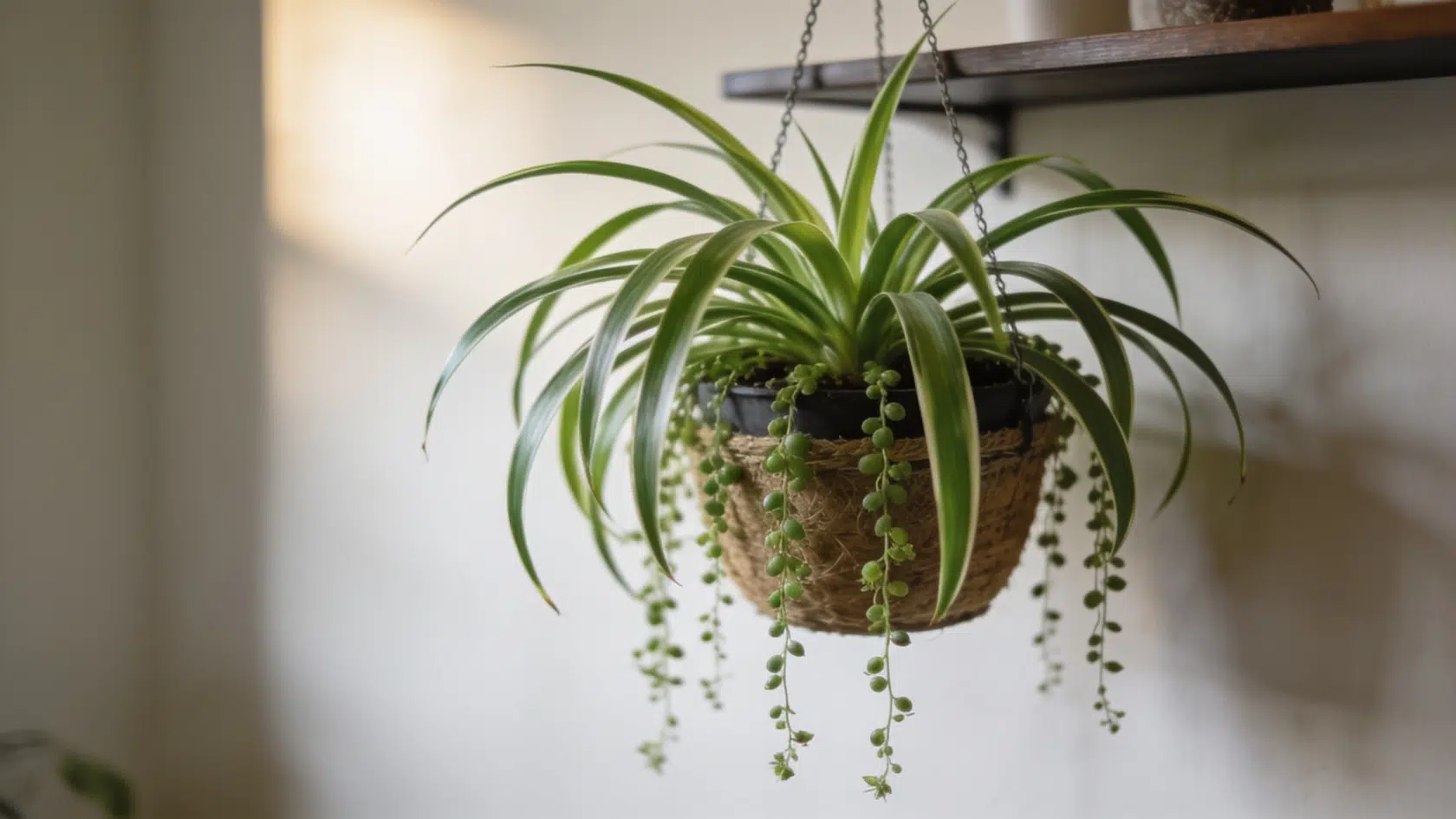
Spider plant has arching, grass-like leaves and small dangling plantlets that make it look great in hanging baskets or on high shelves.
It tolerates a wide range of light and only needs average watering, which makes it low effort for how full it looks. The main thing to be careful about is letting it dry out completely for too long.
The main thing to watch for is prolonged dryness, since fully drying out for extended stretches causes browning tips and stalled growth.
- Light: Bright, indirect
- Water: Weekly, soil kept lightly moist
- Pet Safety: Safe for cats and dogs
4. Peace Lily
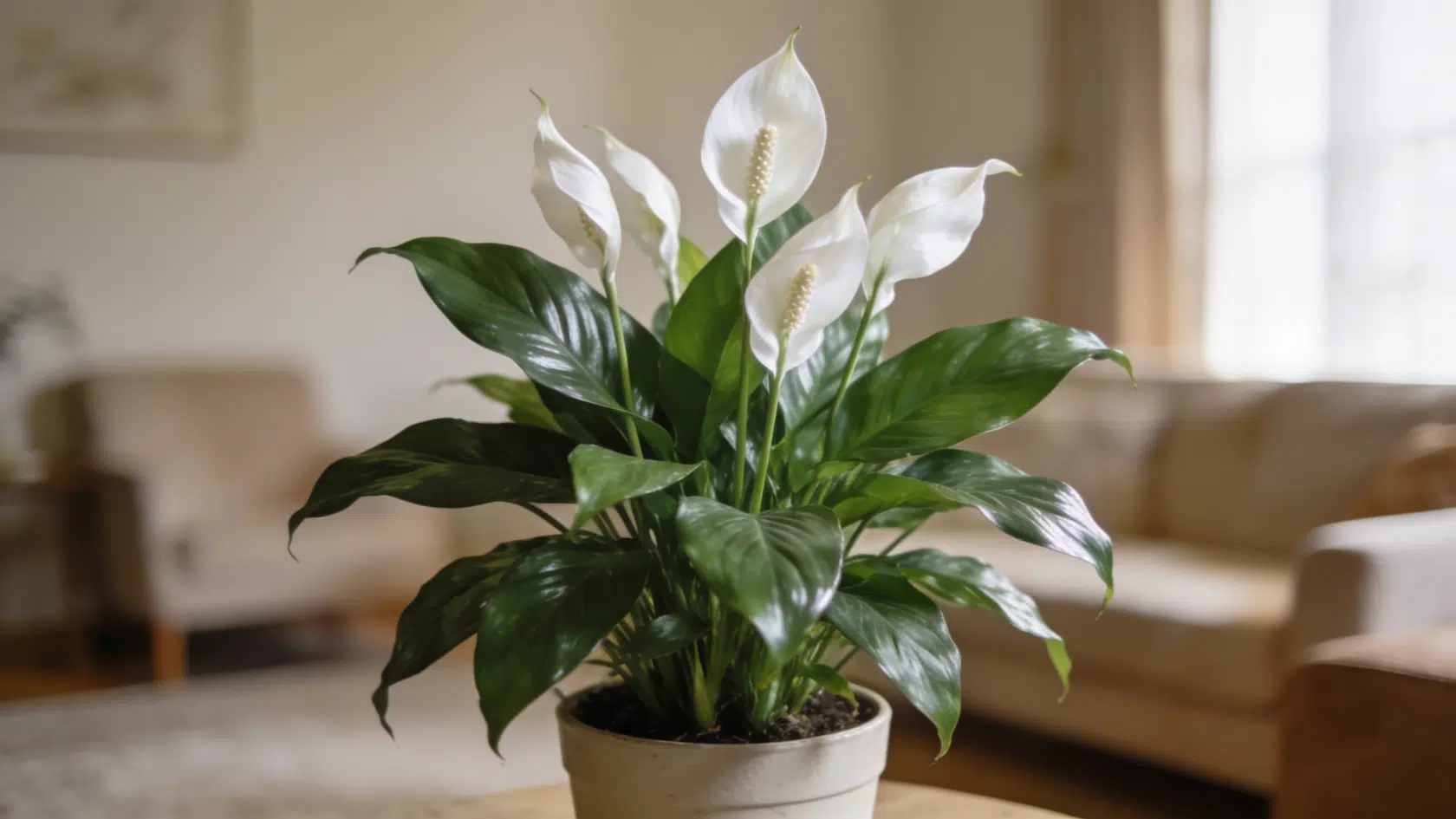
Peace lily has glossy green leaves and elegant white blooms, making it a popular gift plant for any room. It tolerates lower light better than most flowering houseplants.
The risk is responding to that drooping signal too aggressively, since watering again before the soil dries causes root rot.
Overwatering usually creeps in under good intentions, since rewatering as soon as the leaves droop, before the soil has actually dried, sets up root rot instead of solving the problem.
- Light: Low to medium, indirect
- Water: Weekly, right as leaves start to droop
- Pet Safety: Toxic to pets
5. ZZ Plant
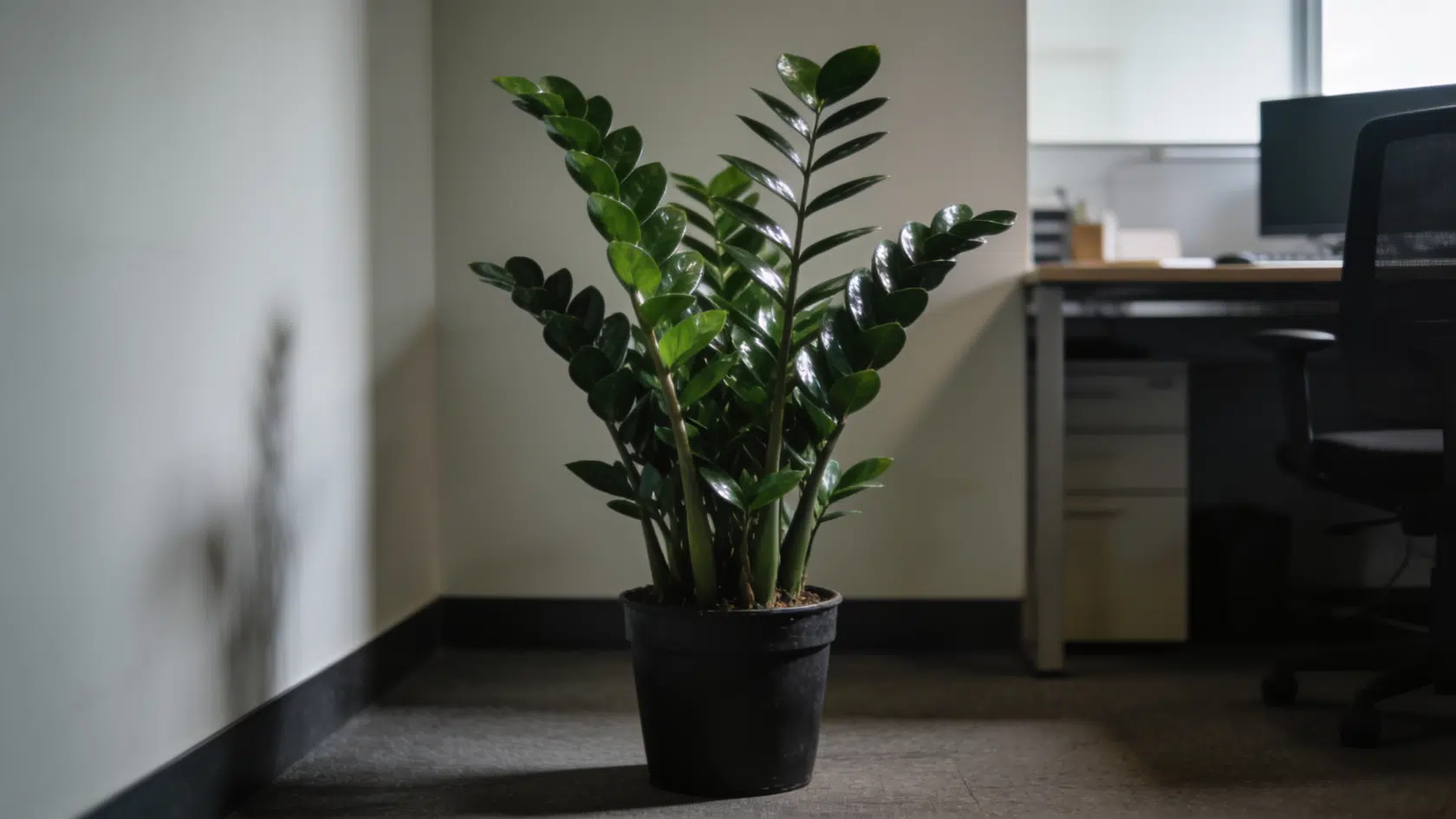
ZZ plant has thick, glossy leaves and thrives even in low-light, difficult spaces like offices. It also grows very slowly, so it rarely needs repotting or frequent care.
Its water-storing rhizomes allow it to survive for weeks without watering, making it extremely low-maintenance. Don’t water on a fixed schedule since overwatering can quickly cause root rot.
The main thing to avoid is a fixed watering schedule, since its rhizomes store enough moisture to last weeks, and watering too soon leads straight to rot.
- Light:Low to bright, indirect
- Water:Every 2–3 weeks, only once the soil is fully dry
- Pet Safety: Toxic to pets
6. Aloe Vera
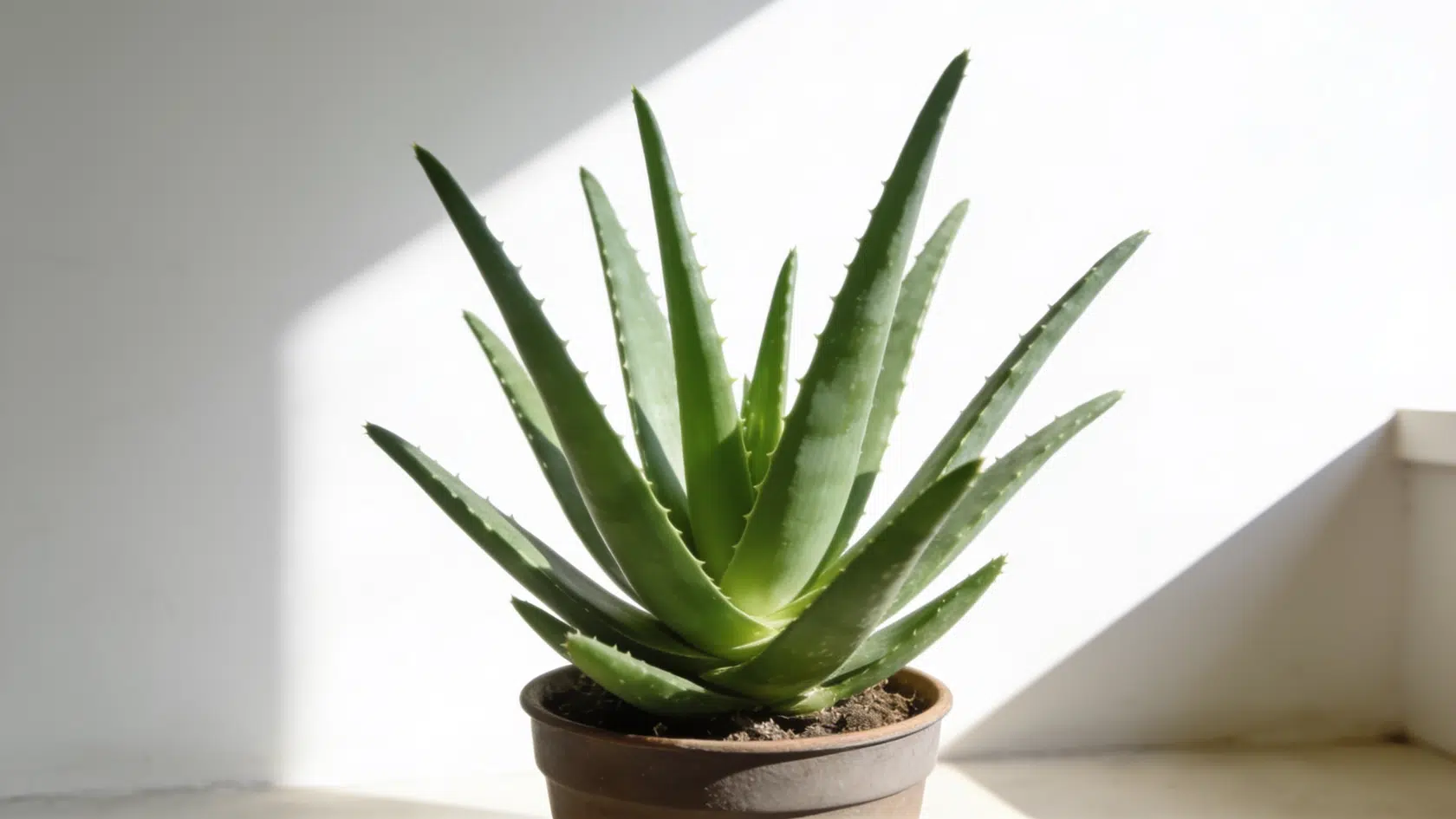
Aloe vera is a desert succulent with thick, fleshy leaves that store a gel used to soothe burns and skin irritation. It thrives on neglect, needing very little water and handling strong, direct light easily.
Its roots are adapted to dry conditions, so waterlogged soil can quickly cause rot before symptoms appear on the leaves.
The main thing to watch for is soil that stays wet too long, since its dry-adapted roots rot quickly, often before any warning signs show up above the surface.
- Light: Bright, direct to indirect
- Water: Every 2–3 weeks, sparingly
- Pet Safety: Toxic to pets
7. Monstera Deliciosa
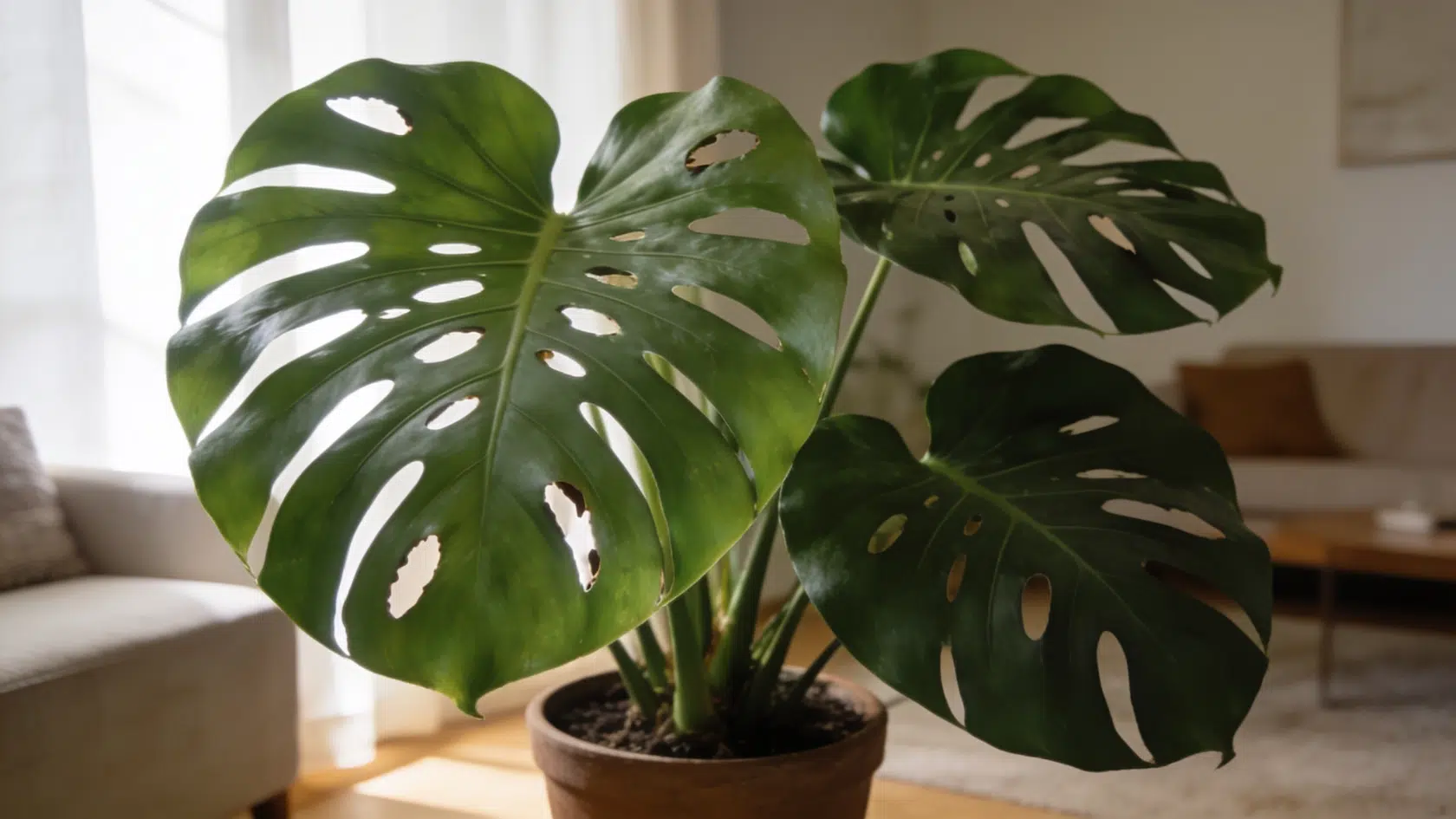
Monstera, often called the Swiss cheese plant, has large leaves with natural splits and holes that develop as it matures.
It grows quickly, tolerates lower light than many tropical plants, and stays visually interesting as it fills out a room.
The main thing to watch for is direct sun exposure, since even brief periods of harsh light can scorch its leaves and leave permanent brown patches.
- Light: Partial, indirect
- Water: Every 1–2 weeks, once the topsoil dries
- Pet Safety: Toxic to pets
8. Heart-Leaf Philodendron
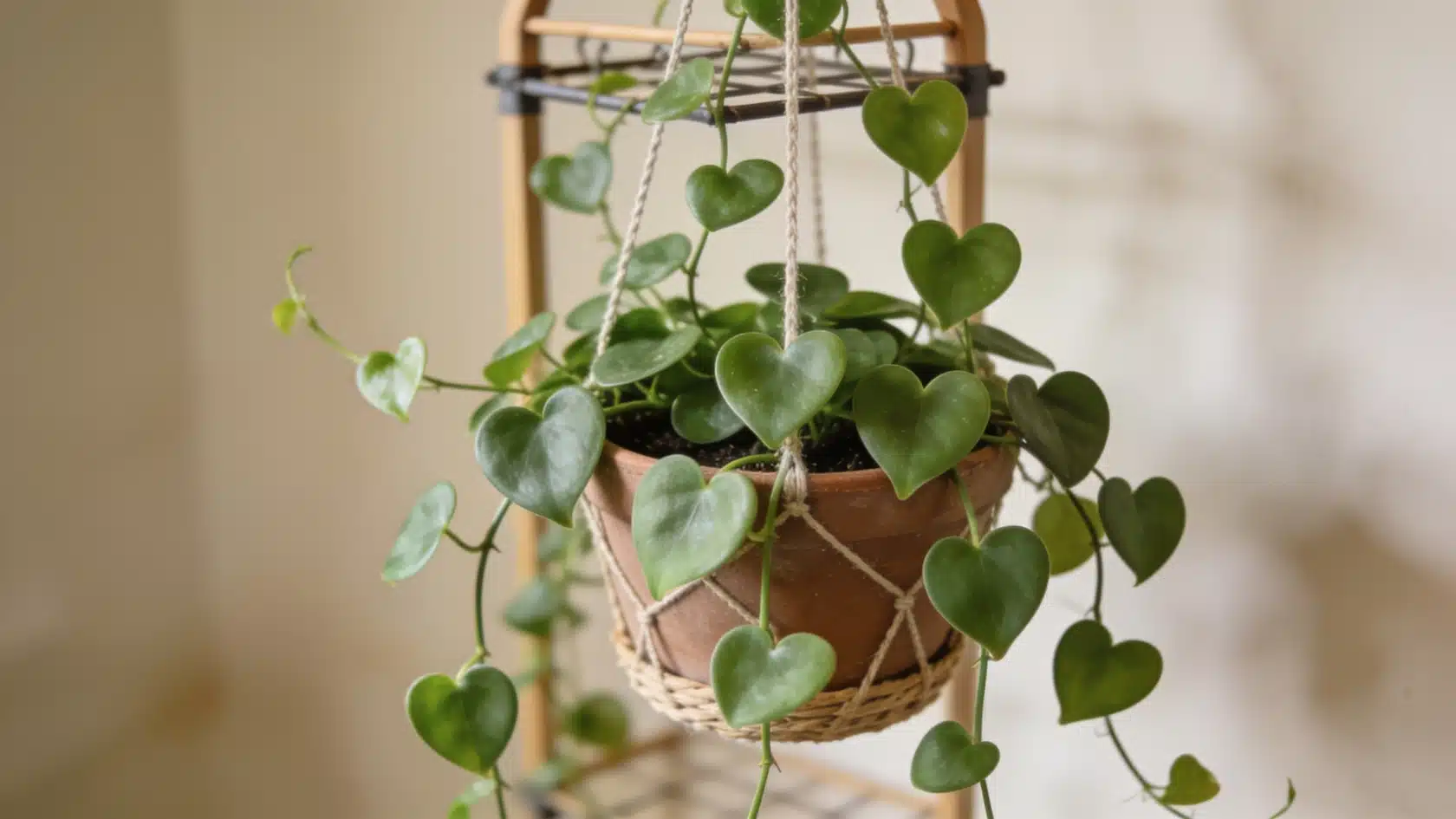
Heart leaf philodendron has small, trailing, heart-shaped leaves that look good climbing a trellis or spilling from a hanging basket.
It adapts to nearly any light condition and communicates its needs clearly through its leaves.
The main thing to watch for is yellowing foliage, which almost always signals overwatering rather than thirst, so resist the urge to add more water when leaves look off.
- Light: Low to bright, indirect
- Water: Weekly, allowing slight drying between
- Pet Safety: Toxic to pets
9. Chinese Money Plant
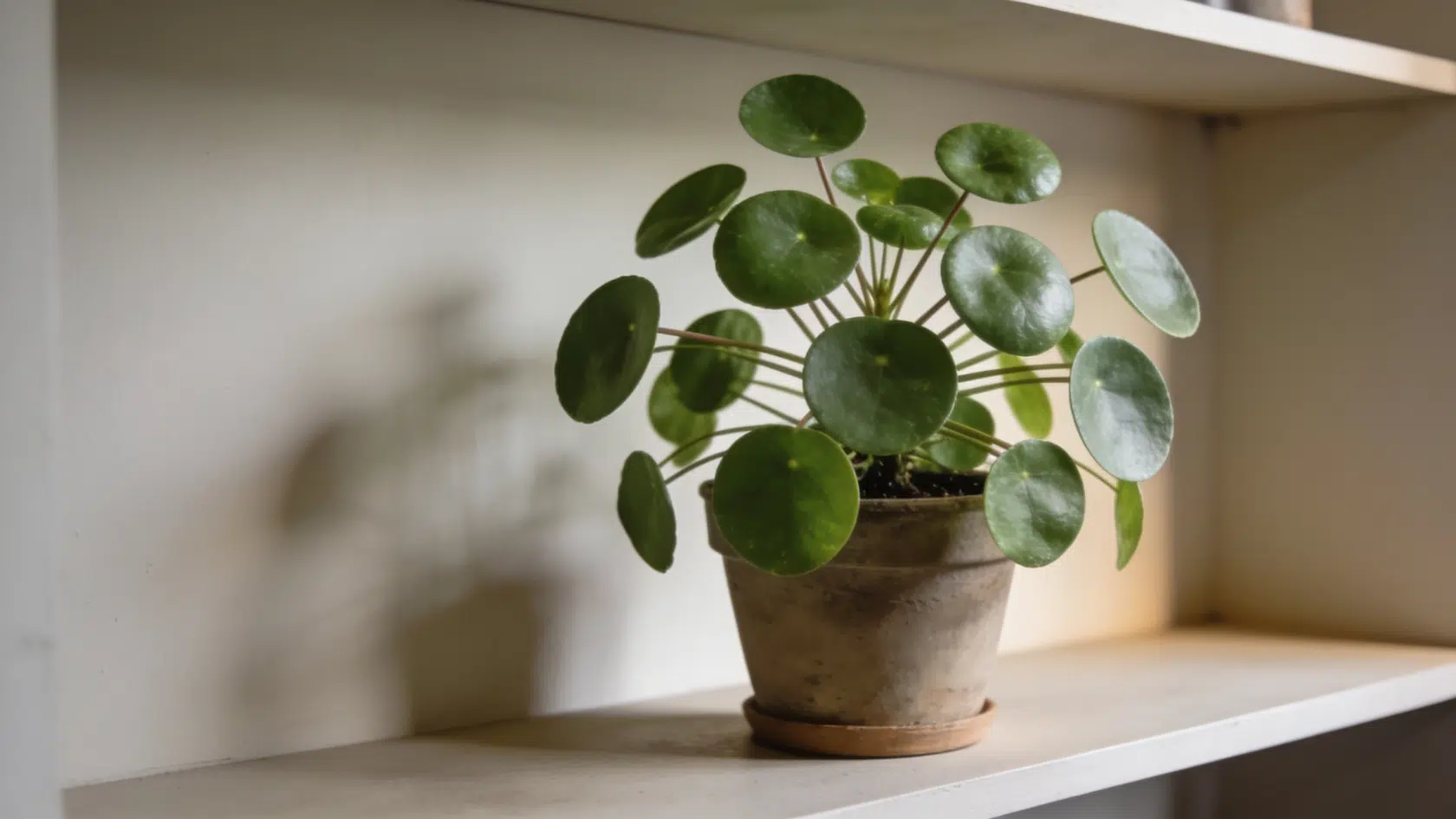
Chinese money plant has round, coin-shaped leaves and a minimalist look that fits easily into modern interiors.
It tolerates lower humidity and cooler temperatures better than most tropical houseplants, making it easy to place almost anywhere.
Be careful about leaving it in one spot too long, since it grows toward its light source and can end up lopsided.
- Light: Bright, indirect
- Water: Every 1–2 weeks, deep but infrequent
- Pet Safety: Safe for pets
10. Fiddle Leaf Fig
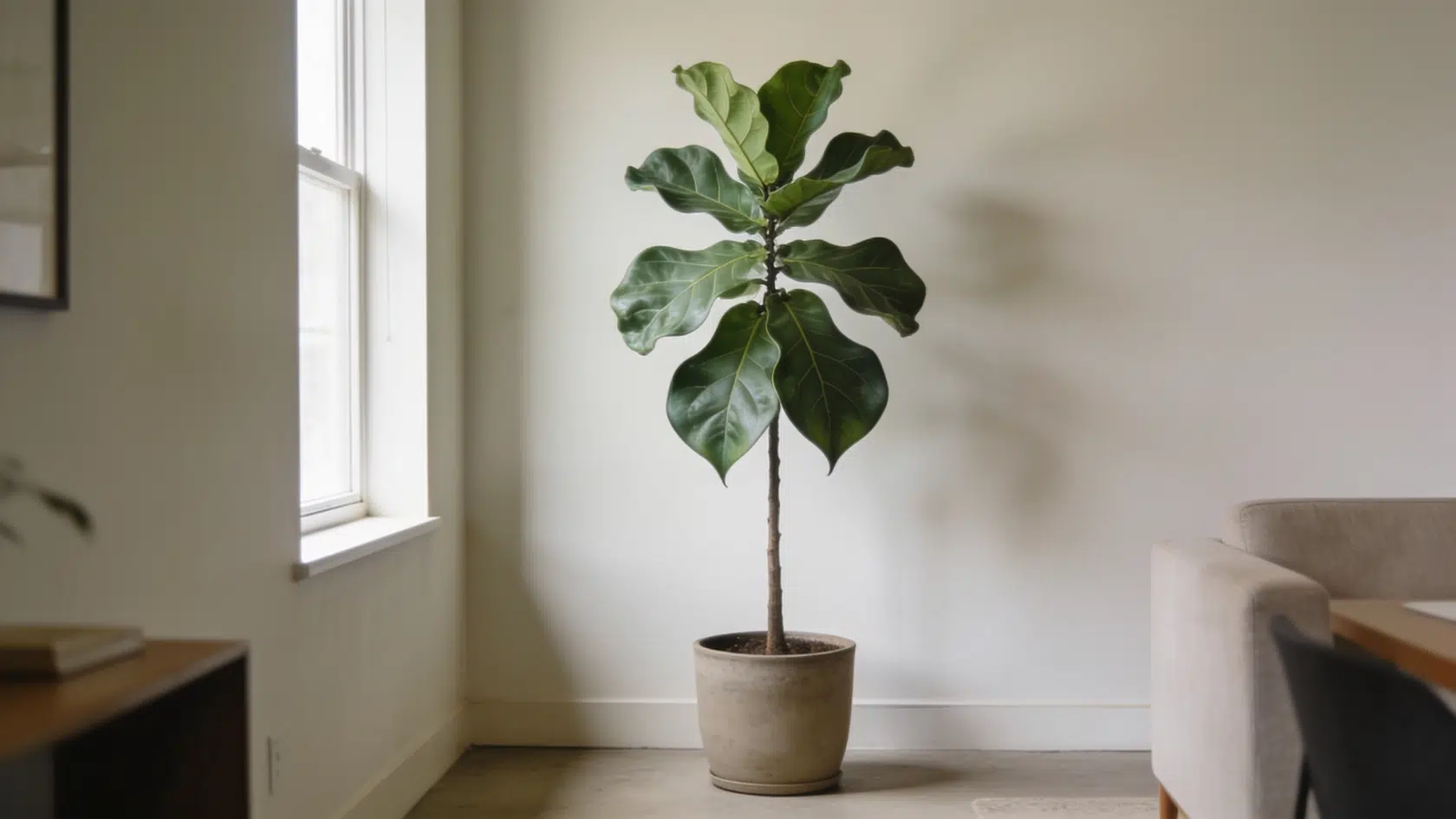
Fiddle leaf fig’s large violin-shaped leaves make it one of the most dramatic statement plants for a living room or office.
It’s a popular choice for filling empty corners with height and visual weight. It also prefers loamy, well-draining soil that holds a bit of moisture without staying soggy.
The main things to watch for are drafts and inconsistent watering, since this plant reacts quickly, often dropping or browning leaves within days of either issue.
- Light: Bright, indirect
- Water: Weekly, letting the soil dry between
- Pet Safety: Toxic to pets
11. African Violet
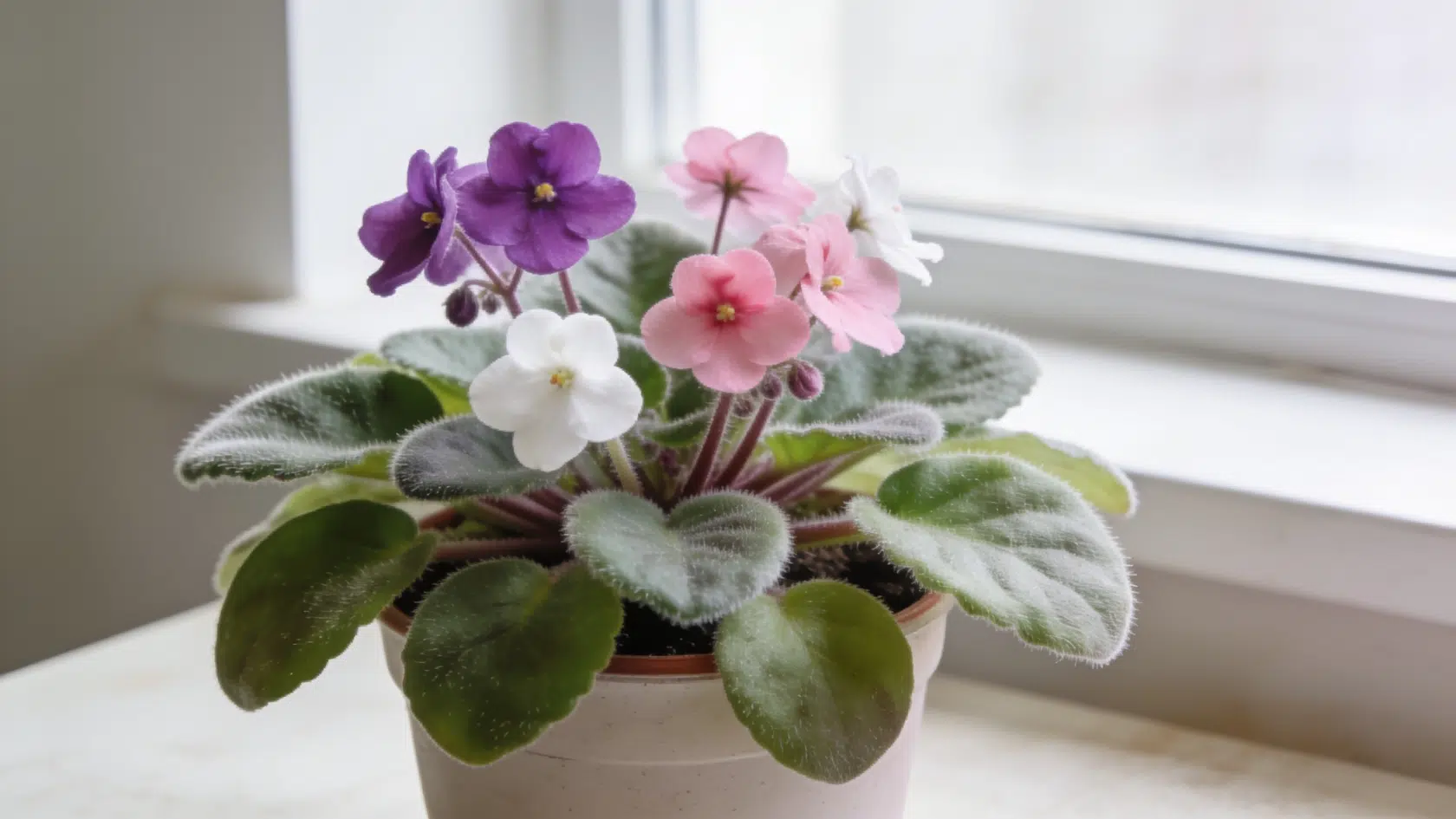
African violet is grown mainly for its flowers, which bloom in shades of purple, pink, and white for months at a time.
It’s one of the few common houseplants that flowers reliably indoors with the right light and care. It also does best in a light, well-drained, soil-free mix designed for African violets.
Be careful about watering from overhead, since water sitting on the fuzzy leaves can cause spotting and rot.
- Light: Bright, indirect
- Water: Weekly, from the base rather than overhead
- Pet Safety: Safe for pets
12. Jade Plant
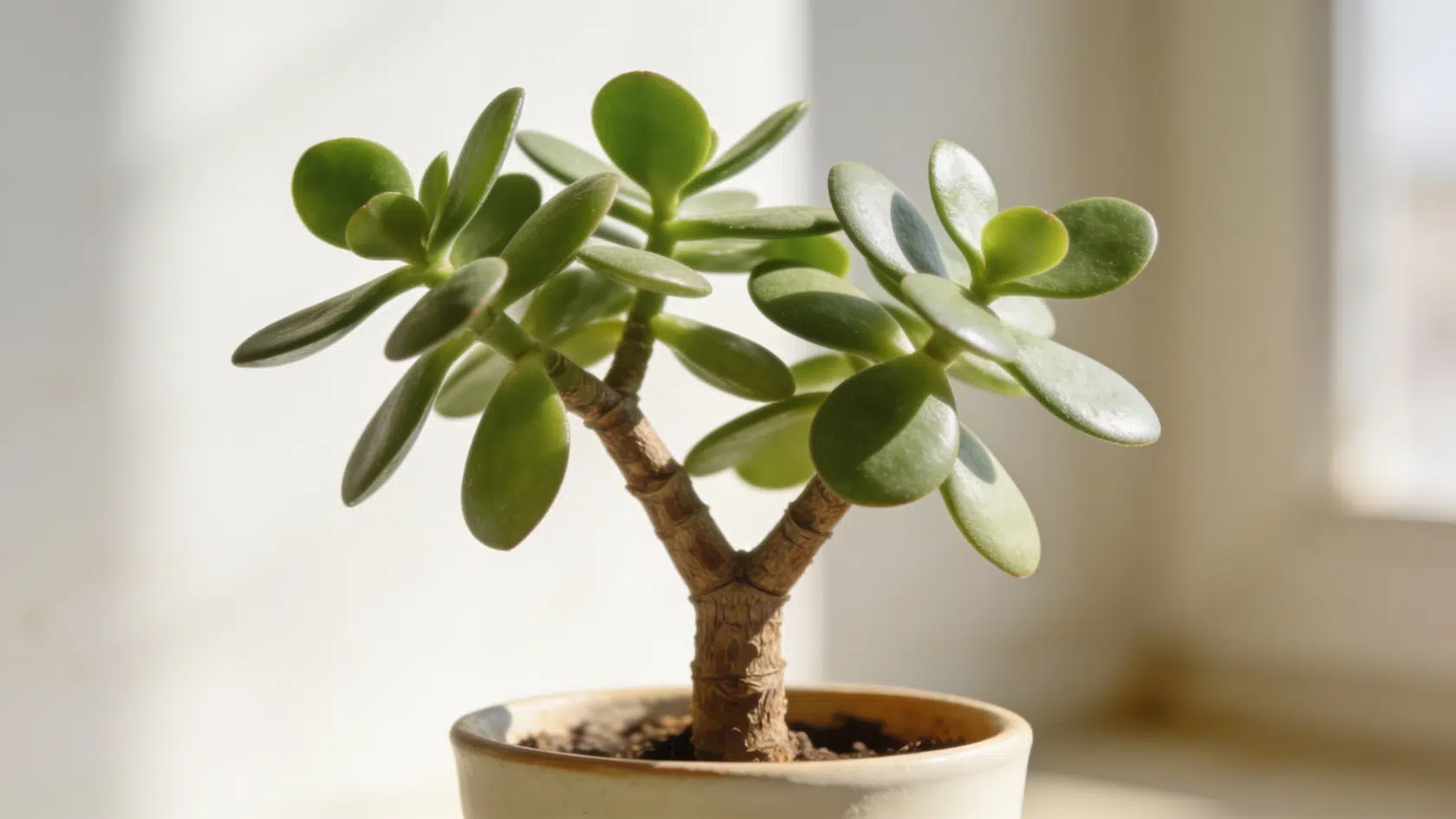
Jade plant is a slow-growing succulent with thick, oval leaves on a woody, tree-like stem, often kept for years as a gift.
It needs very little watering and tolerates bright, direct sun better than most common houseplants. Jade plants are also known for living for decades and being passed down as family heirlooms.
The real risk isn’t drought; it’s soil that stays wet long enough to rot the roots before the leaves show any stress.
- Light: Bright, direct to indirect
- Water: Every 2–3 weeks, sparingly
- Pet Safety: Toxic to pets
13. Money Tree
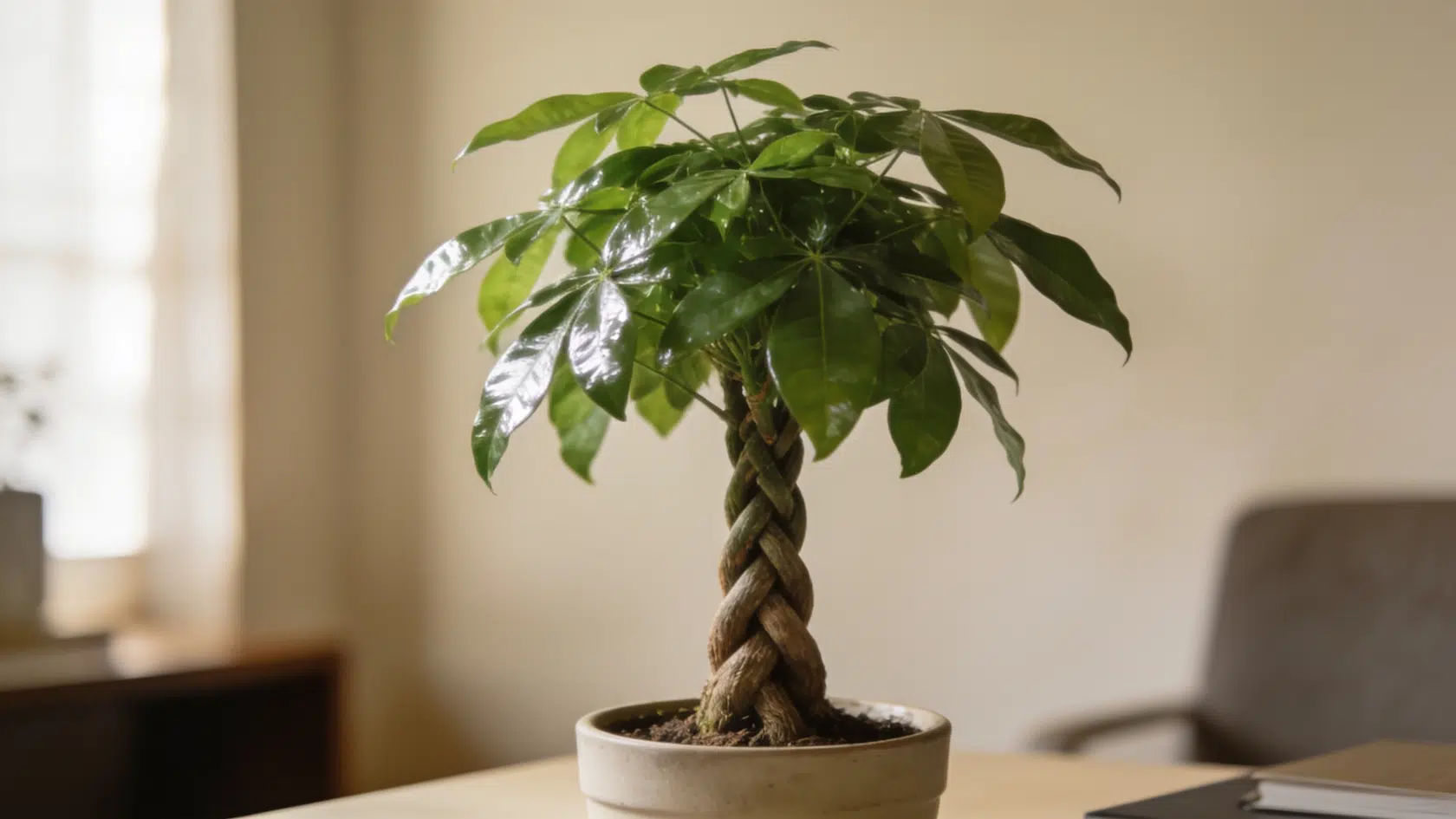
Money tree, often sold with a braided trunk, has glossy green leaves and a compact, tree-like shape that suits desks and living rooms alike.
It’s unusually forgiving of overwatering compared to most plants, which makes it a solid pick for beginners. Be careful about low humidity, since dry air can cause the leaf tips to brown over time.
Money trees are also considered a symbol of good luck and prosperity in Feng Shui, particularly when grown with the traditional braided trunk.
- Light: Bright, indirect
- Water: Weekly, keeping soil lightly moist
- Pet Safety: Safe for pets
14. Rubber Plant
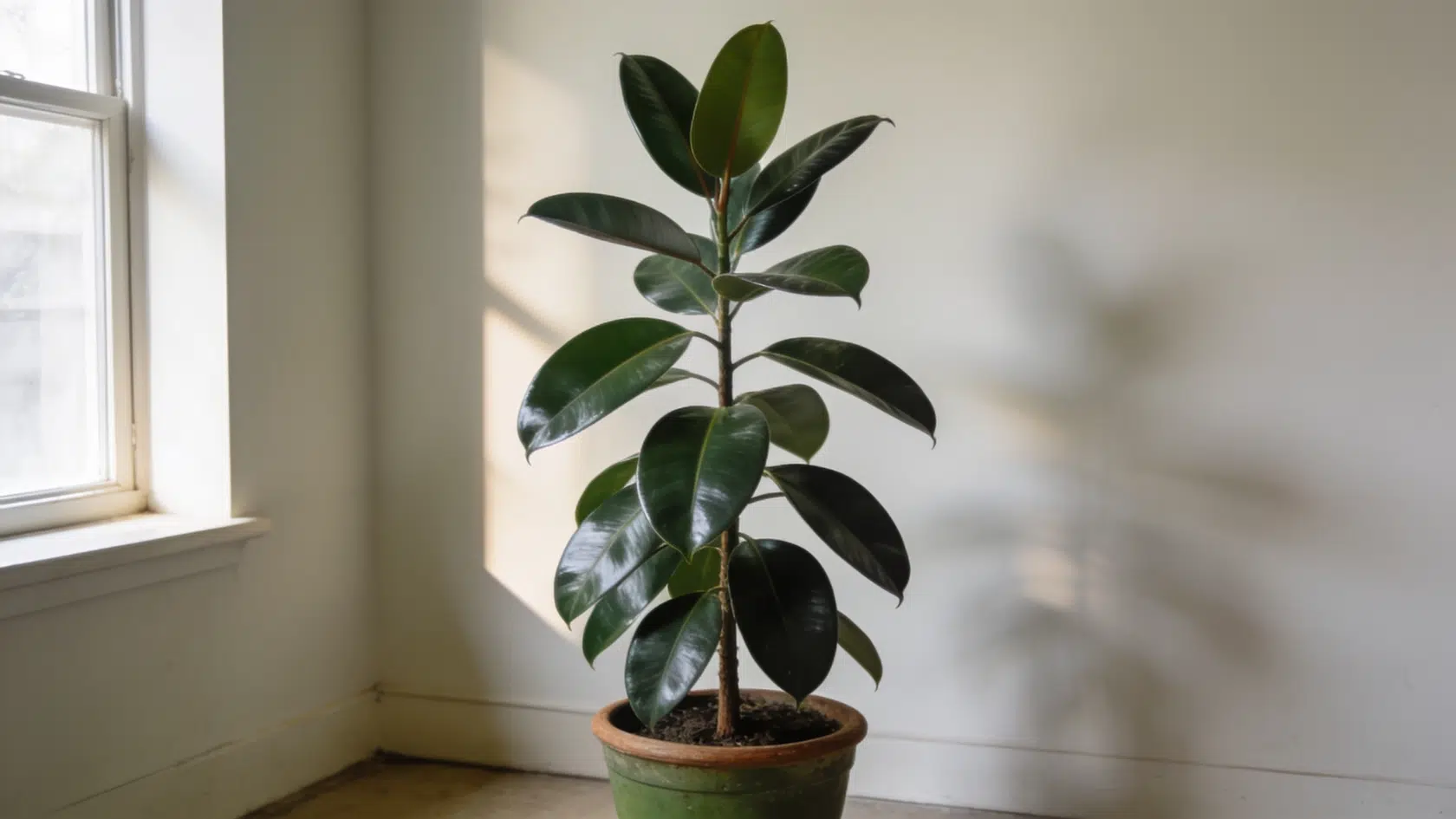
The rubber plant has thick, glossy leaves and a sturdy upright growth habit that can fill a room as it matures into an indoor tree.
It’s considerably more forgiving of inconsistent care than its close cousin, the fiddle leaf fig. Be careful with too much direct sun, which can bleach or scorch the leaves and dull their rich color.
Rubber plants also respond well to occasional pruning, which helps control their height and encourages a fuller, bushier shape as they mature into indoor trees.
- Light: Medium, indirect
- Water: Every 1–2 weeks, once the topsoil dries
- Pet Safety: Toxic to pets
15. Calathea
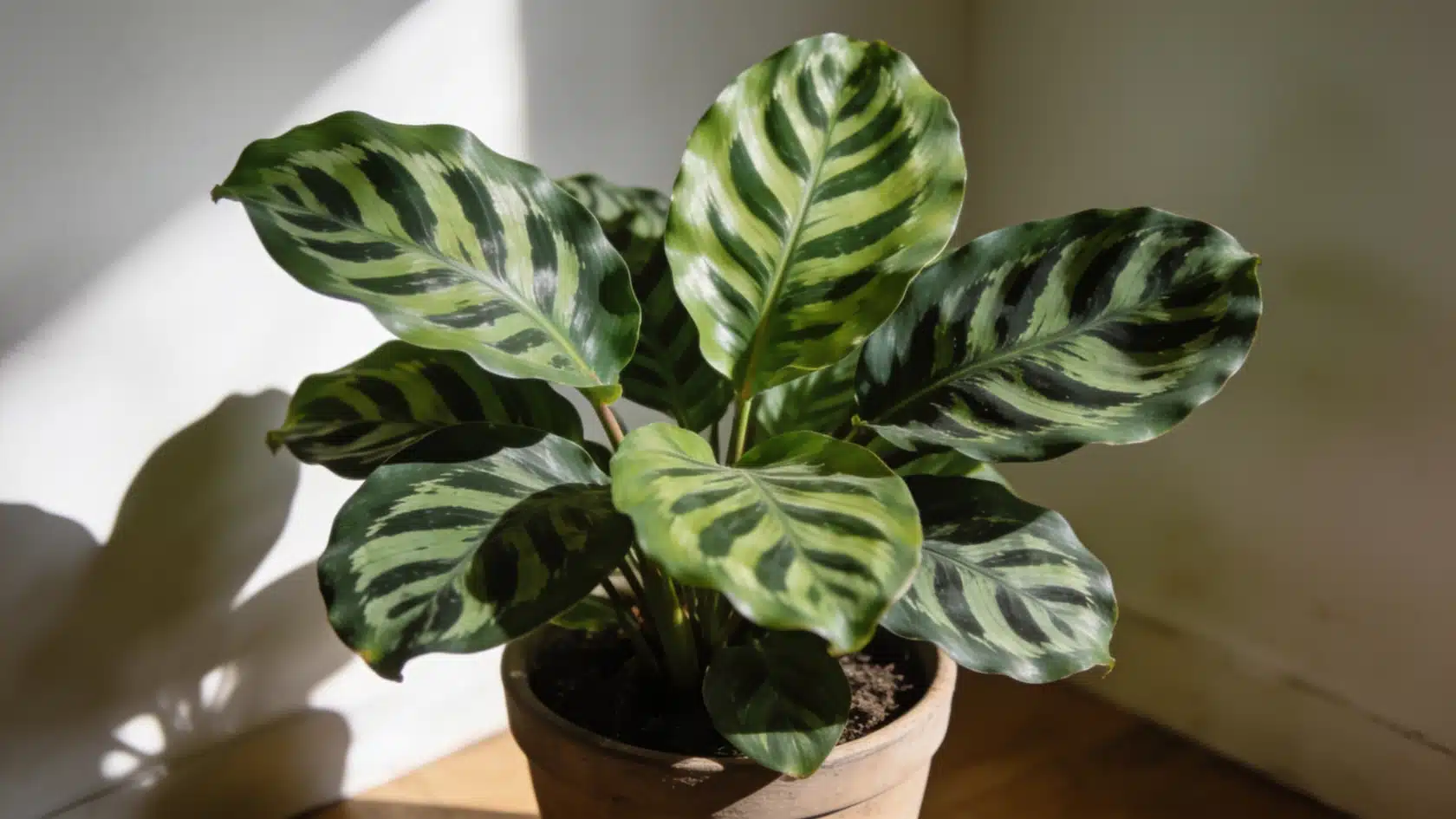
Calathea has striking patterned leaves that shift position throughout the day, opening toward light and folding up at night.
Its constant movement and bold leaf patterns make it one of the more visually dynamic common houseplants.
Be careful of low humidity and inconsistent watering, since curling or fading leaves usually point to one of those, not thirst.
- Light: Partial shade
- Water: Every few days, keep the soil evenly moist
- Pet Safety: Safe for pets
16. Bromeliad
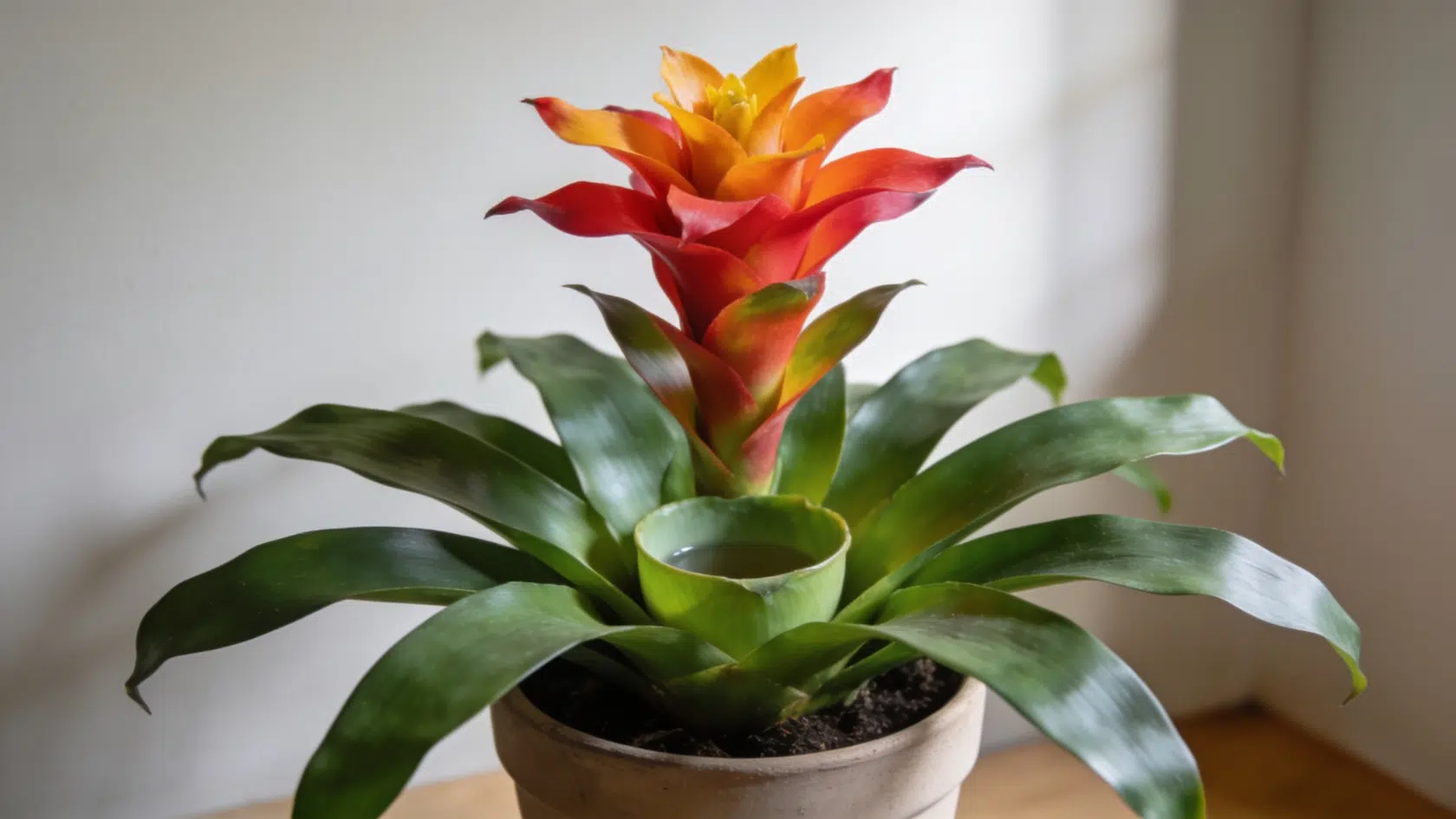
Bromeliad has bold, colorful bracts that hold their color for months, giving year-round visual interest that’s rare among common houseplants.
In the wild, it grows as an epiphyte, clinging to trees rather than rooting in soil. Be careful when watering the soil, since bromeliads are watered by filling the central cup formed by their leaves.
Bromeliads also bloom only once in their lifetime, with the colorful bracts lasting for months before the mother plant naturally fades.
- Light: Filtered or indirect
- Water: Weekly, into the central cup rather than the soil
- Pet Safety: Generally safe for pets
17. Air Plant
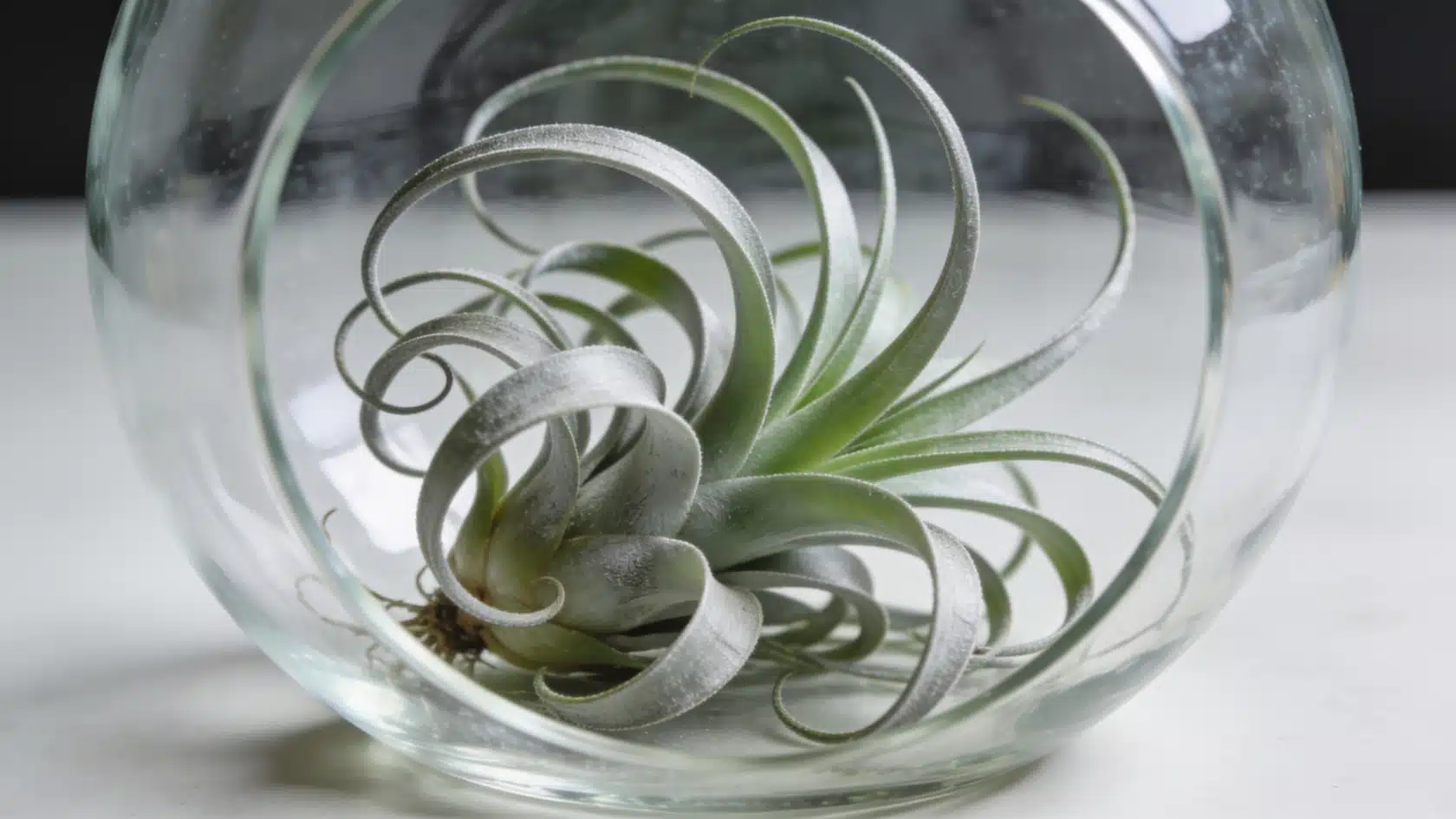
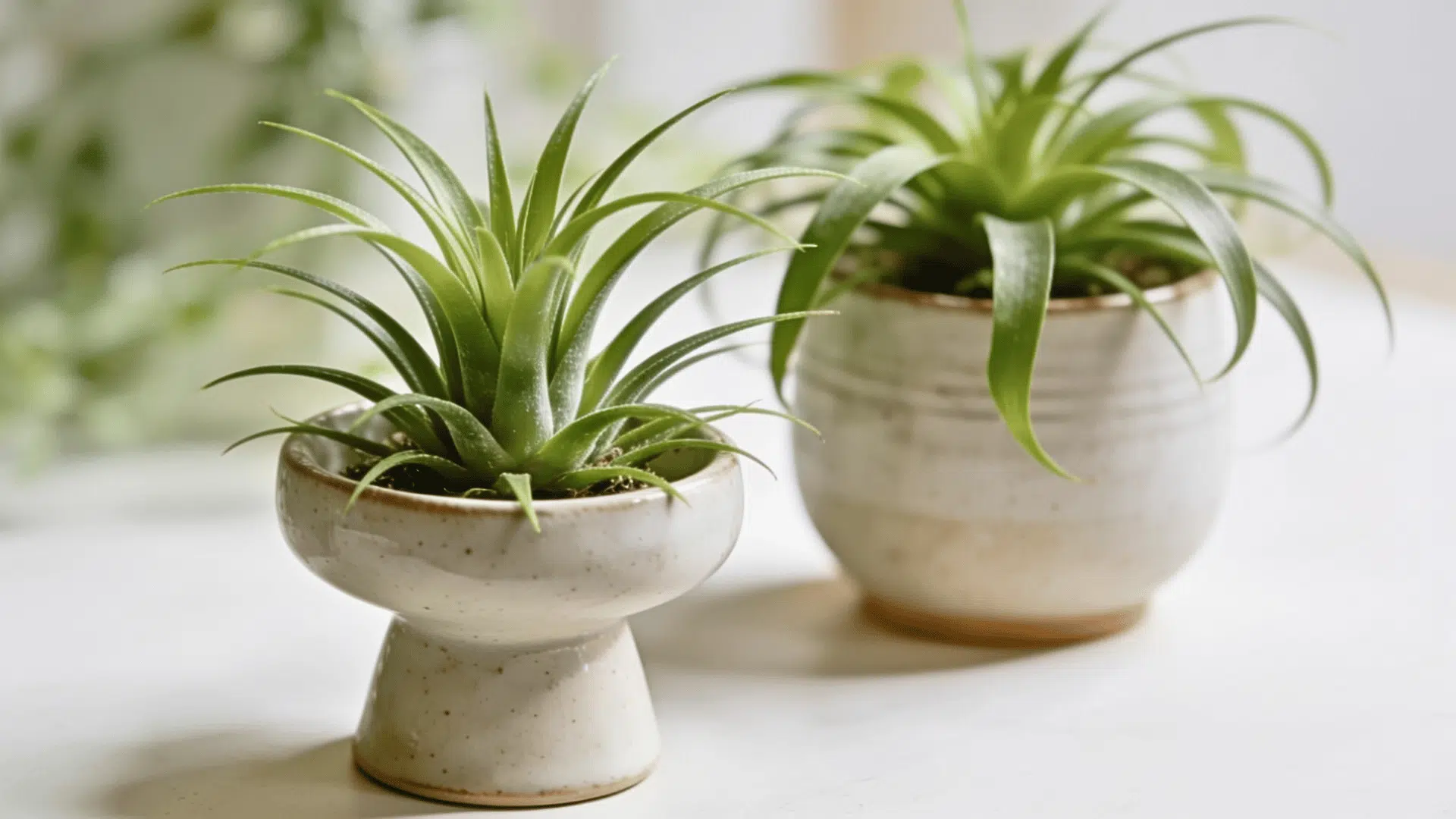
Air plants grow without any soil at all, absorbing water and nutrients through its leaves, which makes them perfect for terrariums and creative mounted displays.
Its no-soil, no-pot design makes it one of the most flexible and low-commitment houseplants to style.
Be careful about skipping its regular watering, since there’s no soil to retain moisture in between and it dries out faster than it looks like it should.
- Light: Bright, indirect
- Water: Weekly misting or brief soak
- Pet Safety: Safe for pets
18. English Ivy
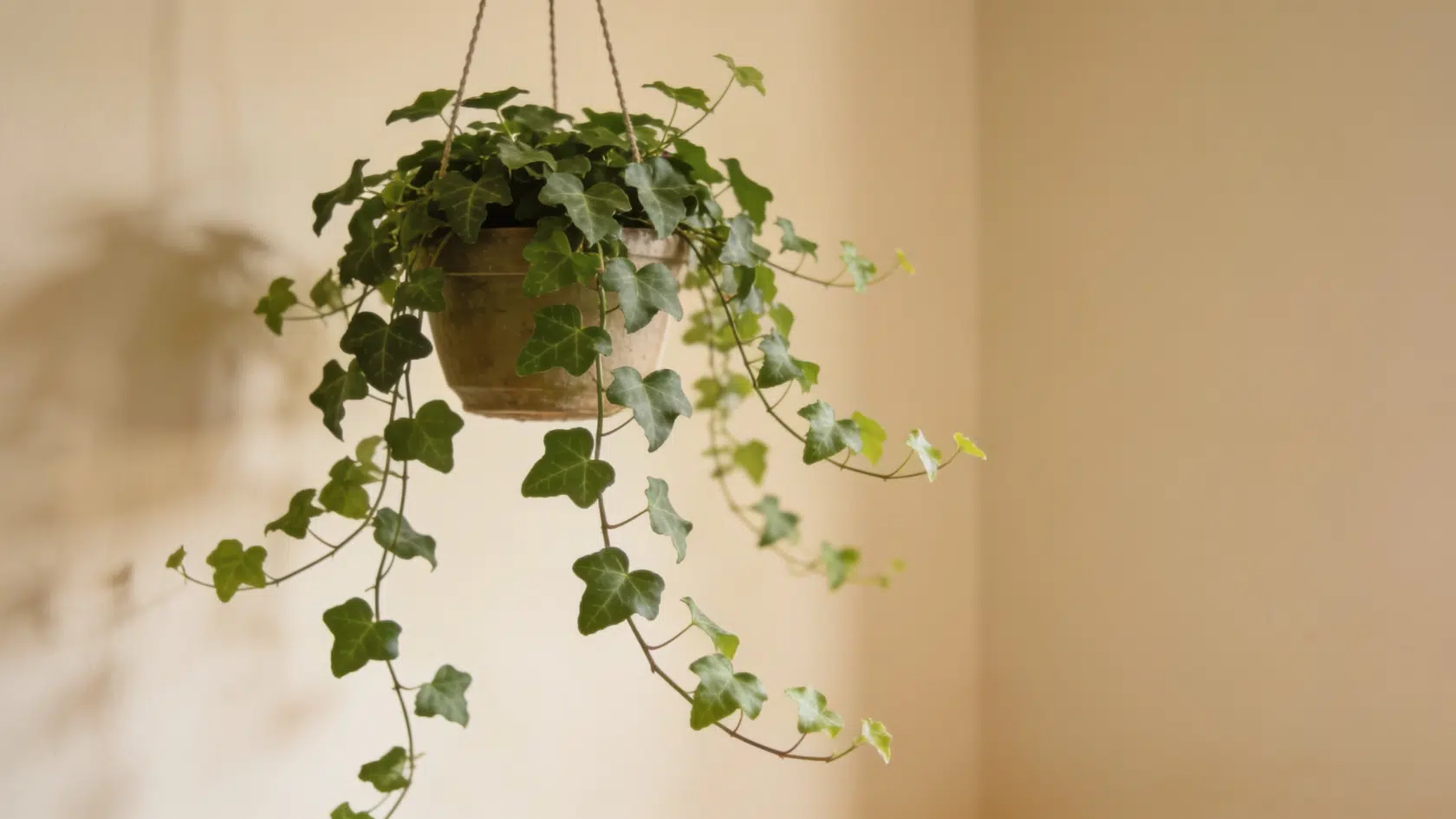
English ivy is a fast-growing trailing vine with small, lobed leaves that works well as a hanging plant or a climbing wall cover.
It fills space quickly and can be trained to climb almost any surface, giving a lush look in a short amount of time. Be careful not to let it grow unchecked.
English ivy is also valued for its air-purifying qualities, with studies showing it can help filter common indoor pollutants, making it a practical choice beyond its trailing good looks.
- Light: Medium to bright, indirect
- Water: Weekly, keeping soil consistently moist
- Pet Safety: Toxic to pets
Quick Tips for Healthier Houseplants
Small habits make a bigger difference than expensive fertilizers or fancy pots. Keep these in mind, and most common houseplants will take care of themselves.
- Water on demand: Water when the soil is dry, not on a fixed schedule.
- Rotate for even growth: Rotate pots occasionally so plants grow evenly toward the light.
- Dust-free leaves: Wipe dust off leaves so they can absorb light properly.
- Proper drainage: Use pots with drainage holes to prevent water from pooling and root rot.
- Winter fertilizer break: Skip fertilizer in winter, when most plants naturally slow down.
- Group by humidity needs: Group humidity-loving plants together to raise moisture around them.
- Pest checks: Check the underside of leaves for pests before they spread.
- Repot based on roots: Repot only when roots are cramped, not on a set timeline.
Master these basics, and you’ll spend less time troubleshooting and more time enjoying your plants. The healthiest indoor gardens come from consistency, not effort.
Wrapping Up
Common houseplants aren’t hard to keep alive once you know the basics. The right light, the right watering rhythm, and a little patience go a long way.
Every plant on this list rewards you differently. Some fill your space with lush greenery, some purify the air, and some ask for almost nothing at all.
Pick the ones that match your lifestyle, not just your taste, and you’ll spend far less time troubleshooting dying leaves.
Start small. Choose one or two plants from this list, follow their care tips, and build your confidence from there.
Which plant are you adding to your home next? Drop it in the comments below.
Frequently Asked Questions
How Often Should I Fertilize Common House Plants?
Most common house plants only need fertilizer during spring and summer, roughly once a month. Skip it in fall and winter, since growth naturally slows and extra nutrients can build up in the soil.
Why Do the Leaf Tips on My Plant Turn Brown?
Brown tips usually point to low humidity or a buildup of minerals from tap water. Try filtered water and group plants together to raise humidity around them.
How Do I Know if My Plant Is Getting Too Much Light?
Scorched, bleached, or crispy patches on the leaves usually mean too much direct sun. Move the plant a few feet back or add a sheer curtain to soften the light.