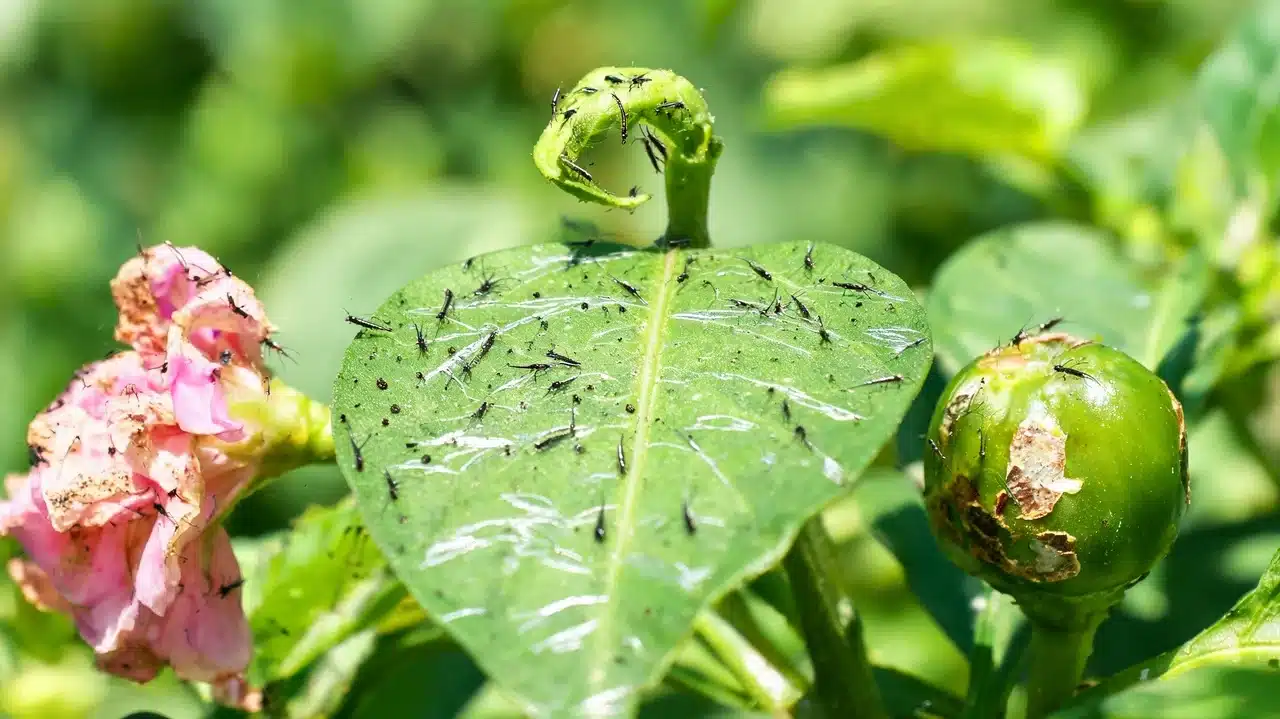
A plant can look healthy one week and develop silver leaves, curled growth, or faded flowers soon after.
These changes often signal thrips on plants, tiny insects that damage plant cells while feeding on leaves, buds, flowers, and fruit.
Because thrips hide in folded foliage and growing tips, you may notice their marks before seeing the insects themselves.
Small black spots, pale streaks, and distorted new leaves can help separate their activity from plant stress.
This blog covers thrips identification, plant damage, life cycle, prevention, and control.
What Are Thrips on Plants?
Thrips are tiny, narrow insects belonging to the order Thysanoptera.
Most measure about 1 to 2 millimeters long and can be difficult to see without a magnifying glass.
Adults may be yellow, brown, or black. Many have two pairs of narrow wings edged with fine fringes. Young thrips, called larvae or nymphs, are usually white or pale yellow and lack wings.
Plant-feeding species attack leaves, buds, flowers, stems, fruit, and tender shoots. They damage the outer plant tissue and feed on the contents of the cells beneath it.
Not all thrips harm plants. Some species feed on pollen, fungal spores, mites, and other small insects.
Identification of Thrips on Plants
Thrips often hide inside flowers, buds, folded leaves, and growing tips. Since mites, diseases, weather, and poor care can cause similar symptoms, visible damage alone cannot confirm an infestation.
- Inspect plant damage: Look for silver streaks, pale dots, brown patches, curled leaves, weak shoots, black fecal spots, damaged flowers, deformed buds, and scarred fruit. Pale larvae or darker adults may hide near these affected areas.
- Examine hidden areas: Check leaf undersides, veins, stem joints, flower buds, open blooms, and tender new growth. A magnifying glass can make the small, narrow insects easier to identify.
- Confirm active thrips: Hold a white sheet of paper beneath the foliage and gently tap the plant. Tiny moving insects may fall onto it. Blue or yellow sticky traps placed nearby can also detect flying adults.
Direct inspection, the white-paper test, and sticky traps provide stronger evidence than plant symptoms alone.
How Thrips Damage Plants
Thrips scrape or puncture the outer plant tissue and consume the liquid released from damaged cells. This feeding leaves visible scars instead of clean holes.
Symptoms may appear later as affected leaves, flowers, shoots, or fruit grow.
1. Leaves
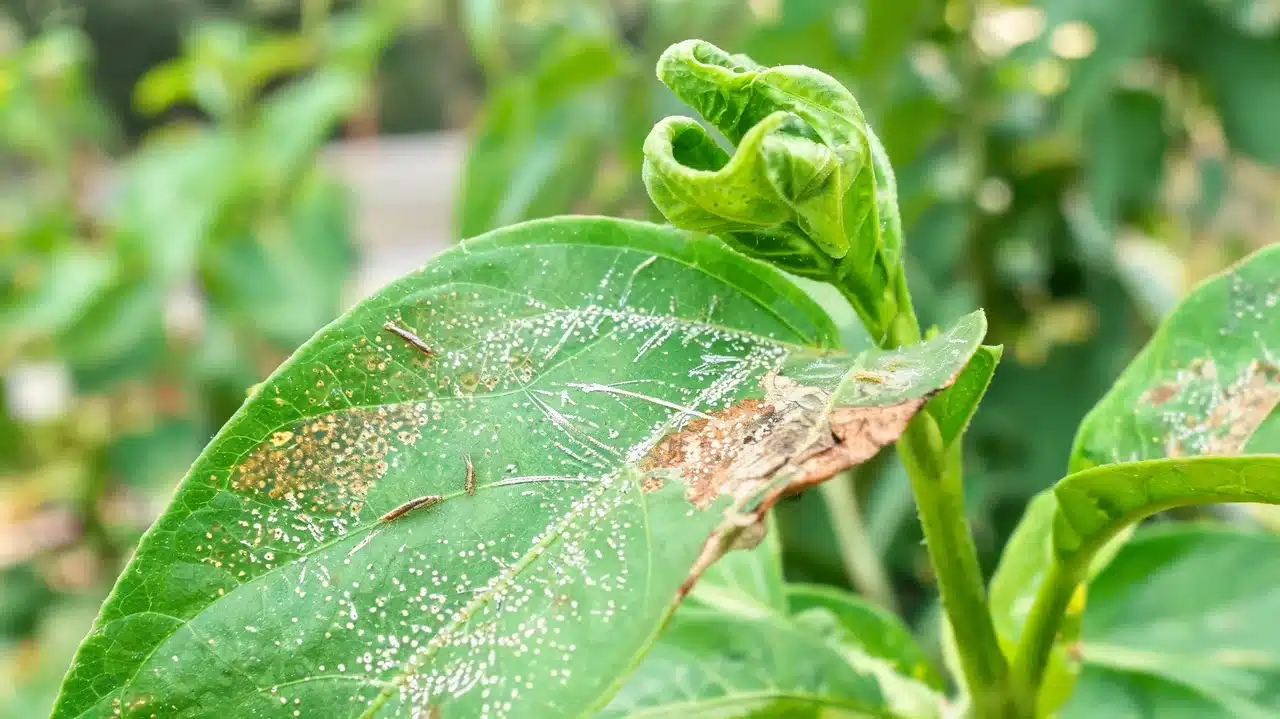
Leaves may develop pale stippling, silver streaks, bronze areas, dry patches, or early leaf drop. New leaves can become permanently curled or misshapen when thrips feed before they fully open.
Mature plants can usually tolerate minor leaf damage. Young, stressed, or heavily infested plants may lose strength when large areas of foliage are affected.
2. Flowers and Buds
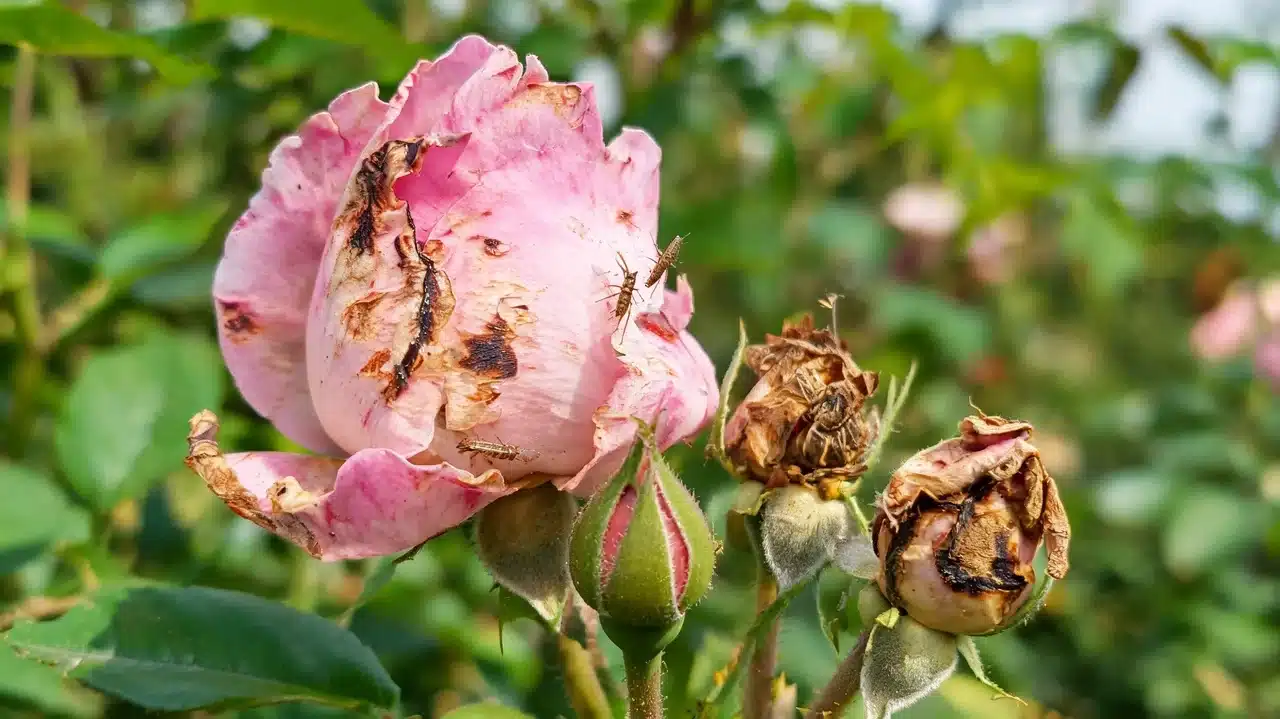
Thrips can shorten flower life and reduce bloom quality. Feeding while buds are unopened may cause petals to emerge with dark streaks, faded patches, irregular coloring, or uneven edges.
Severely damaged buds may become deformed, dry out, or fail to open. This can reduce flowering and affect fruit formation in some plants.
3. Tender New Growth
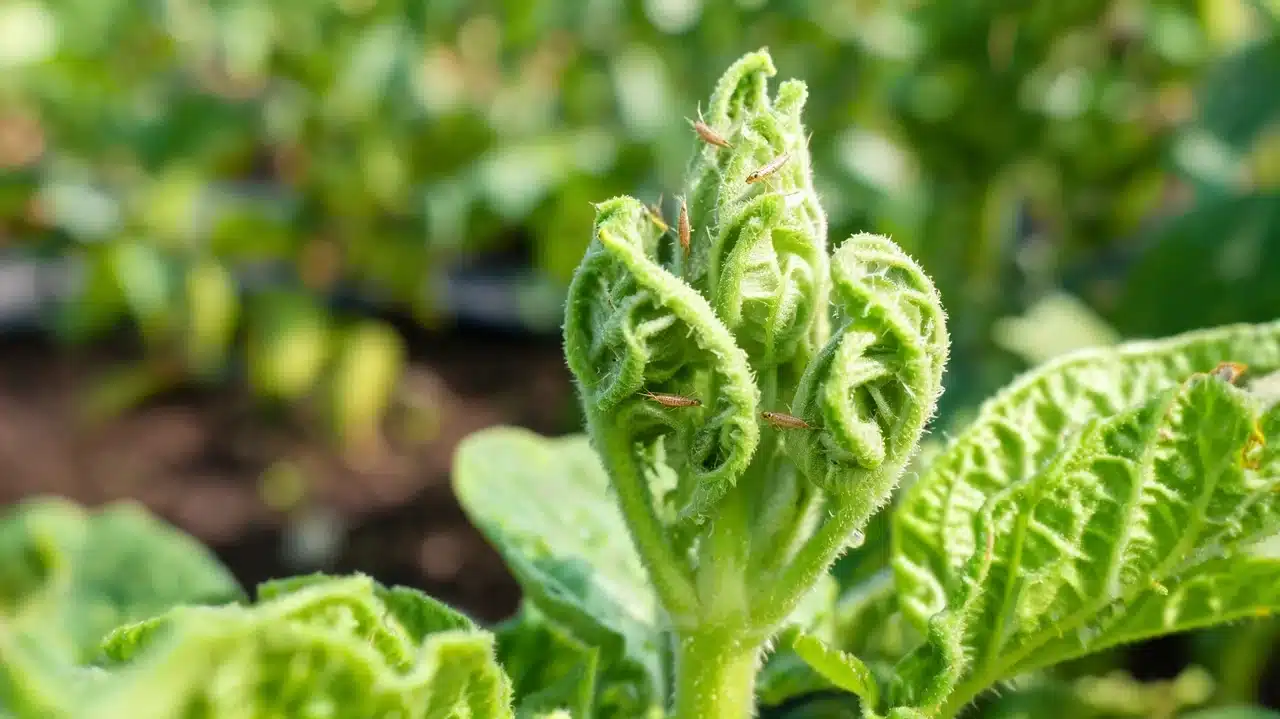
Young shoots contain soft tissue that is easier for thrips to feed on. Repeated feeding may produce stunted stems, rolled leaves, weak growing points, and slower development.
Seedlings and young plants are more vulnerable because they have less established foliage and fewer stored resources to support recovery.
4. Fruit and Vegetable Crops
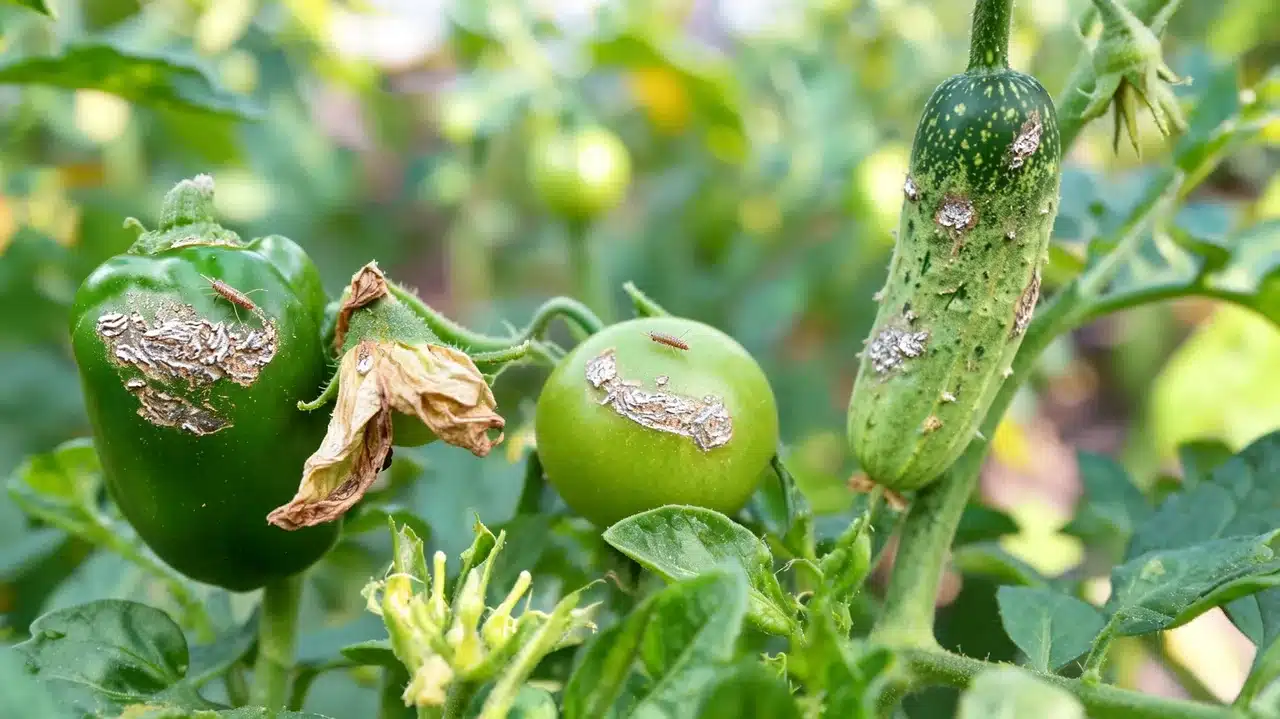
Thrips can leave rough scars on vegetables and fruit, injure flowers needed for fruit production, and weaken developing crops. Heavy infestations may reduce yield, particularly on young plants.
The severity varies by crop and thrips species. Their presence alone does not confirm serious damage, so visible feeding symptoms should also be checked.
5. Plant Virus Transmission
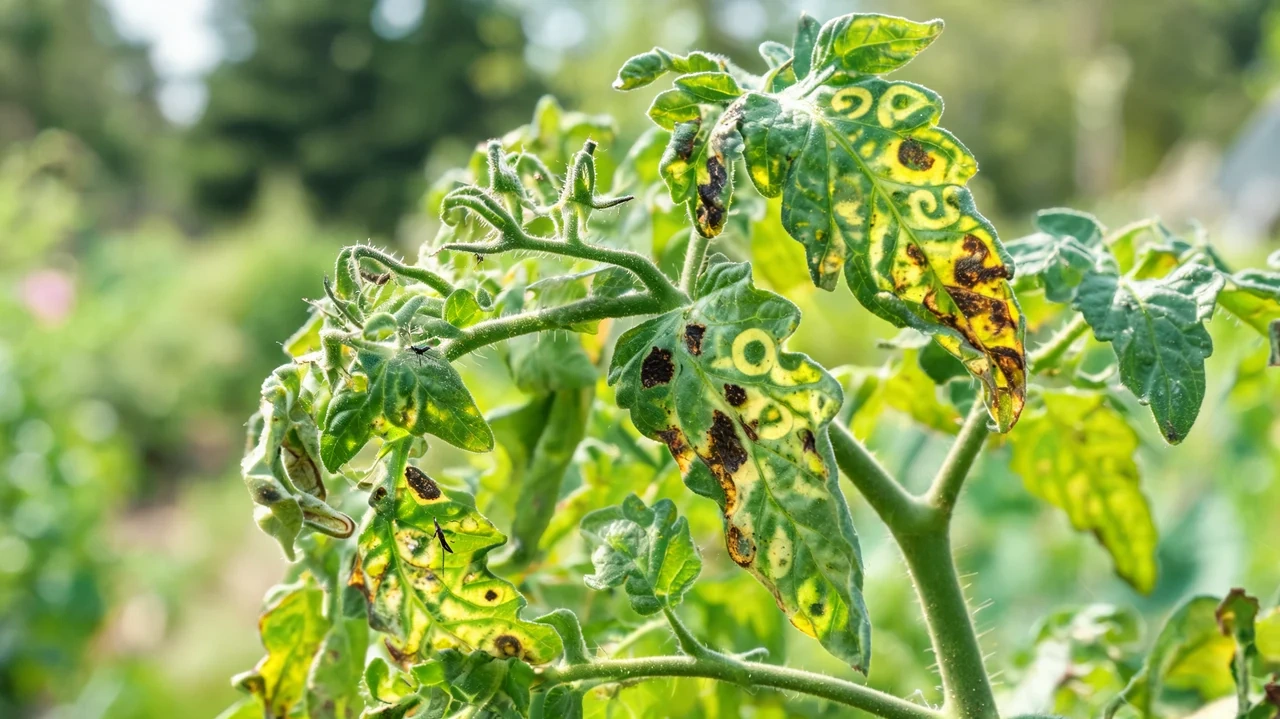
Some thrips species carry viruses from infected plants to healthy ones. Tomato spotted wilt virus and impatiens necrotic spot virus are two common examples.
Possible symptoms include rings, dark patches, unusual discoloration, wilting, and stunted growth. Since other problems can cause similar symptoms, laboratory testing may be needed for confirmation.
The Thrips Life Cycle
The thrips life cycle includes egg, larval, prepupal, pupal, and adult stages. Each stage develops in a different area, making infestations difficult to control.
| Life Stage | Description |
|---|---|
| Eggs | Females insert eggs into plant tissue, where they may hatch within one or two weeks. |
| Larvae | Pale, wingless larvae feed on leaves, flowers, and tender growth before becoming prepupae. |
| Prepupae and Pupae | These nonfeeding stages hide in soil, leaf litter, rolled leaves, crevices, or beneath foliage. |
| Adults | Adults walk, jump, or fly between plants and may spread through wind or infested plants. |
Warm conditions can shorten the life cycle to about two weeks, allowing several overlapping generations to develop during a single growing season.
How to Prevent and Control Thrips on Plants
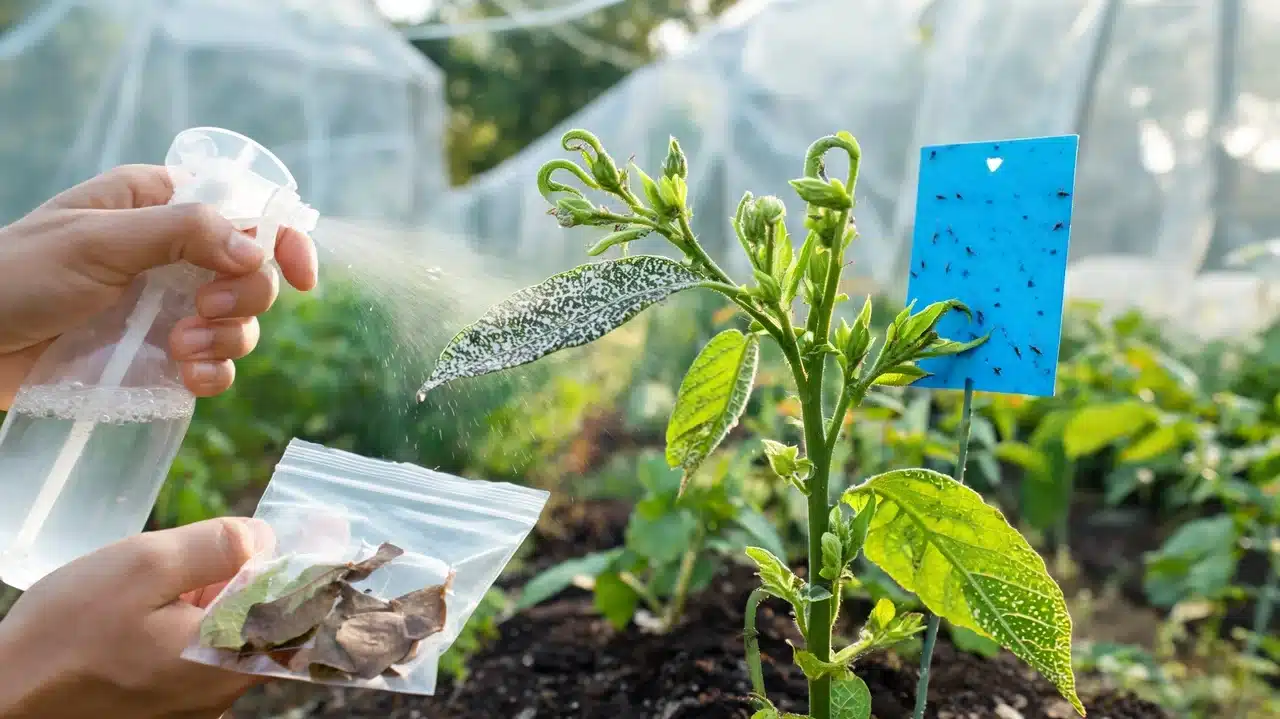
Early action helps reduce thrips populations and protect nearby plants. Combine regular checks, proper care, physical removal, and appropriate treatments to achieve better control.
- Inspect and monitor plants: Check hidden areas for silver marks, black spots, larvae, or adults.
- Maintain healthy conditions: Provide proper light, water, airflow, and spacing. Remove weeds, fallen leaves, and infested material.
- Use physical and natural protection:Adding row covers or reflective mulch around young plants. Protect natural predators that feed on thrips.
- Remove insects and damaged growth: Isolate affected plants, prune severe damage, and wash exposed thrips away with water.
- Apply a suitable treatment: use a labeled insecticidal soap, horticultural oil, neem oil, or spinosad to hidden areas.
- Repeat and monitor: Reapply treatments as directed and check healthy new growth for signs that control is working.
Consistent care and repeated checks help prevent thrips from returning. Healthy new growth without fresh marks shows that control methods are working.
Final Thoughts
Thrips may be tiny, but their feeding can leave lasting marks on leaves, flowers, buds, and fruit. You can spot an infestation by checking for silver streaks, curled growth, black spots, and pale larvae.
Regular inspections also help separate thrips damage from mites, disease, or poor plant care.
Healthy growing conditions, clean planting areas, physical barriers, and the protection of natural predators can reduce future problems.
If thrips appear, act early and follow each product label carefully.
Have you dealt with thrips before? Share your experience or helpful plant care tips in the comments below.
Frequently Asked Question
Are Thrips More Common During Certain Seasons?
Outdoor thrips are often most active from late spring through summer. Indoor infestations can develop at any time when temperatures remain warm.
Can Thrips Enter Through Window Screens?
Thrips are small enough to pass through some standard window screens. Fine insect mesh offers better protection where outdoor populations are consistently high.
Do Thrips Infest Stored Seeds or Harvested Food?
Plant-feeding thrips mainly attack living plant tissue. They may remain briefly on freshly harvested produce but do not usually establish infestations in stored food.