You have an empty backyard but no idea how to make it useful. A simple structure could change everything.
A pergola adds shade and function and is one of the best backyard shade and style ideas you can try without a full renovation. It works for small patios and large gardens alike.
More homeowners are adding pergolas to boost comfort and property value. The results speak for themselves.
By the end, you will know exactly what is a pergola, what it is made of, how much it costs, and what to consider before building one.
What Is a Pergola?
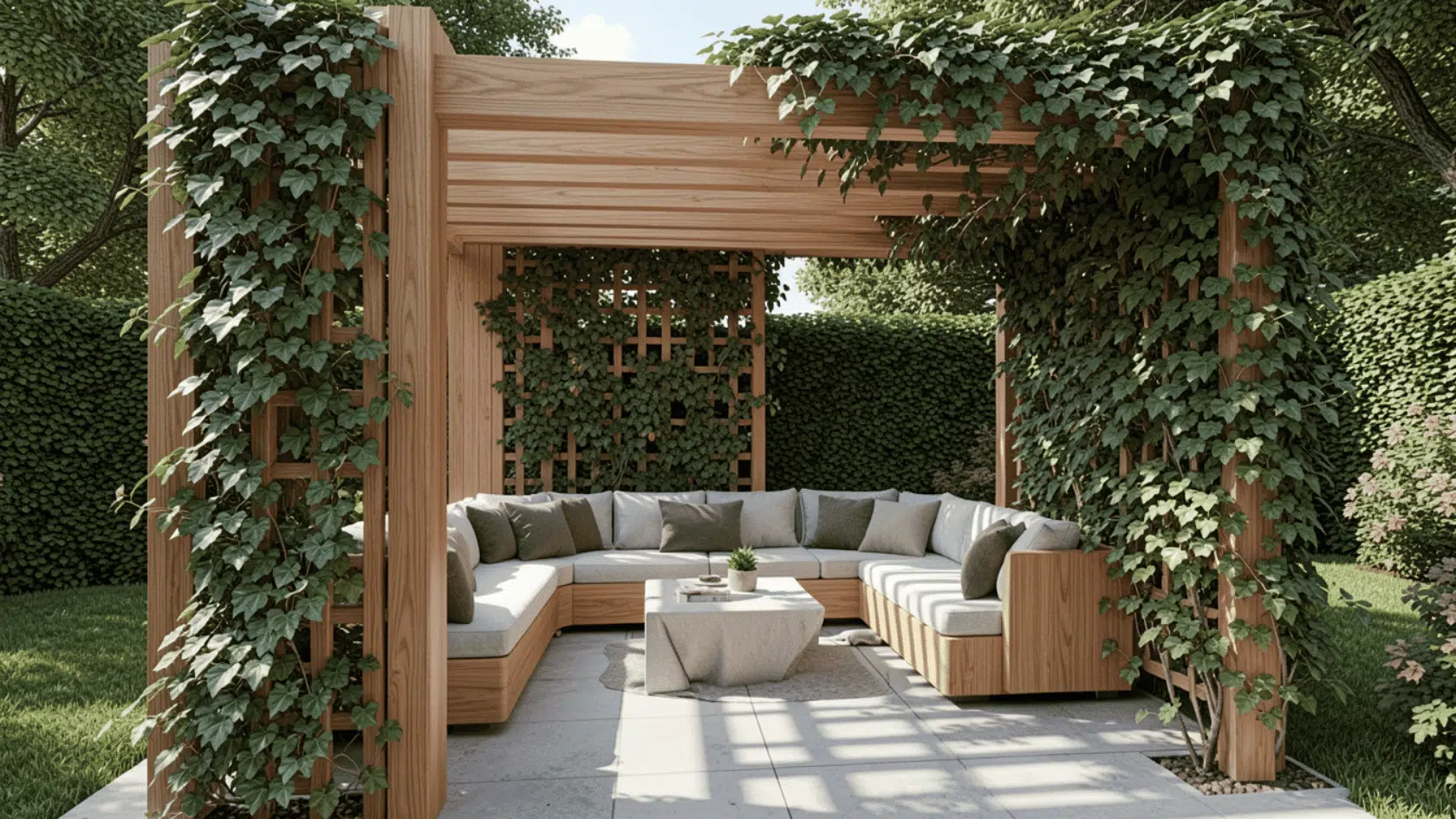
A pergola is an outdoor structure built with vertical posts and an open roof made of beams or rafters. It creates a shaded, open-air space in your backyard or garden.
Unlike a fully covered roof, a pergola lets in natural light and airflow. It provides just enough shade to make your outdoor space comfortable without feeling closed off.
The open roof design is one of the most recognizable features of a pergola. The beams or rafters run across the top in a slatted pattern, allowing sunlight to filter through.
Pergolas can be freestanding, meaning they stand on their own anywhere in your yard. They can also be attached directly to your home, extending your indoor living space outward.
What Is the Purpose of a Pergola?
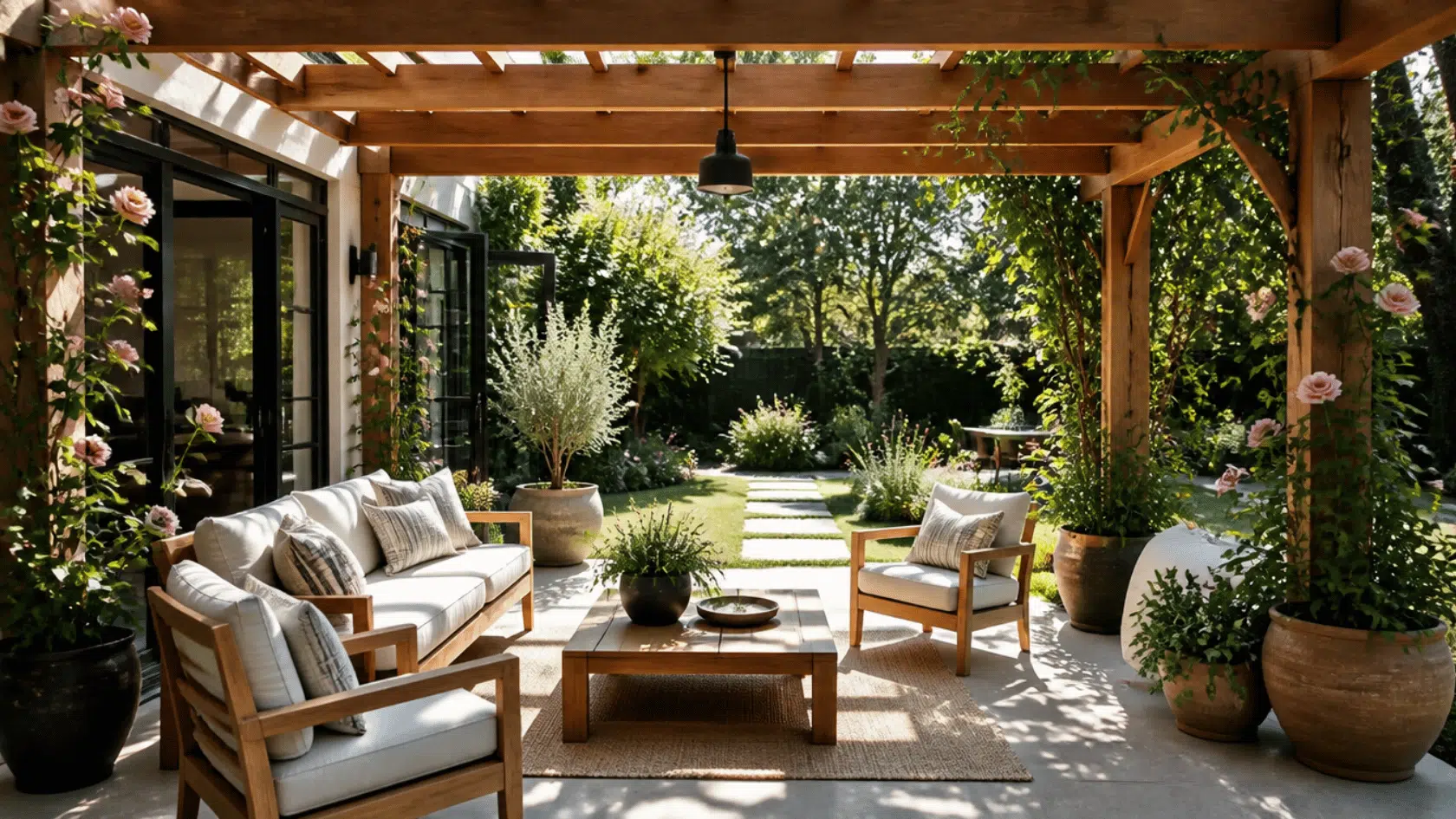
A pergola serves more than just a decorative role in your outdoor space. It brings structure, comfort, and a clear sense of purpose to any backyard, patio, or garden area.
- Creates Partial Shade: A pergola helps cut down direct sunlight while still keeping the area open and breezy.
- Defines Outdoor Living Spaces: It turns an empty patio, deck, or garden corner into a proper seating or dining area with a defined boundary.
- Adds Visual Appeal: A well-placed pergola improves the overall look of your backyard and adds character to your property.
- Supports Climbing Plants: Vines, roses, ivy, and wisteria (American or Chinese) can grow along the beams, making the structure look natural and full of life.
Common Types of Pergolas
Pergolas come in different types, each suited to different outdoor spaces, budgets, and style needs.
Read below to learn which type of pergola may best fit your outdoor space:
1. Traditional Pergola
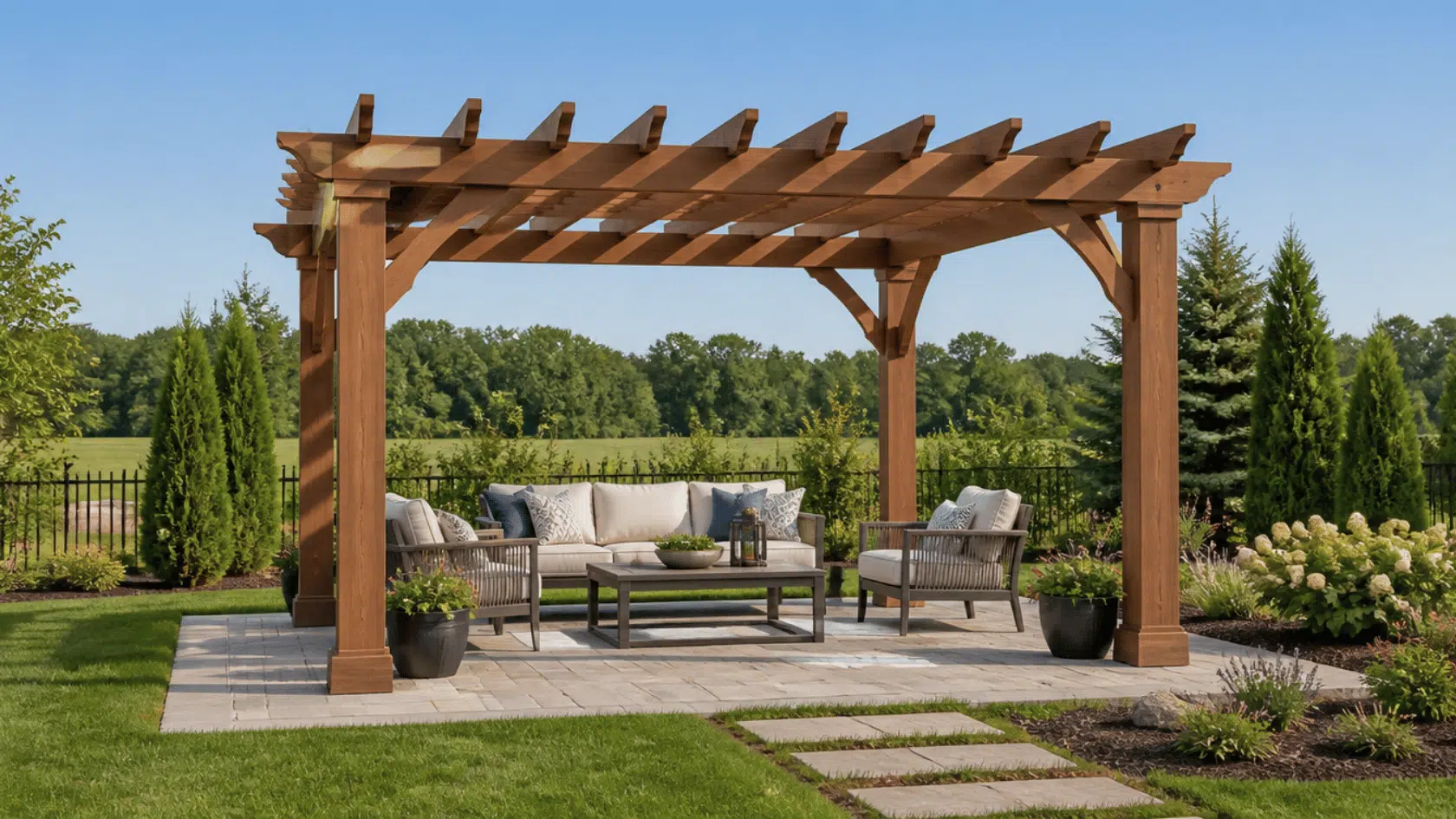
It is the most common style of pergola found in backyards across the world. It features an open slatted roof design that allows sunlight to filter through gently while still providing a comfortable shaded spot below.
This style works well for most standard outdoor spaces. It is a timeless choice that suits almost any backyard layout or design preference.
2. Attached Pergola
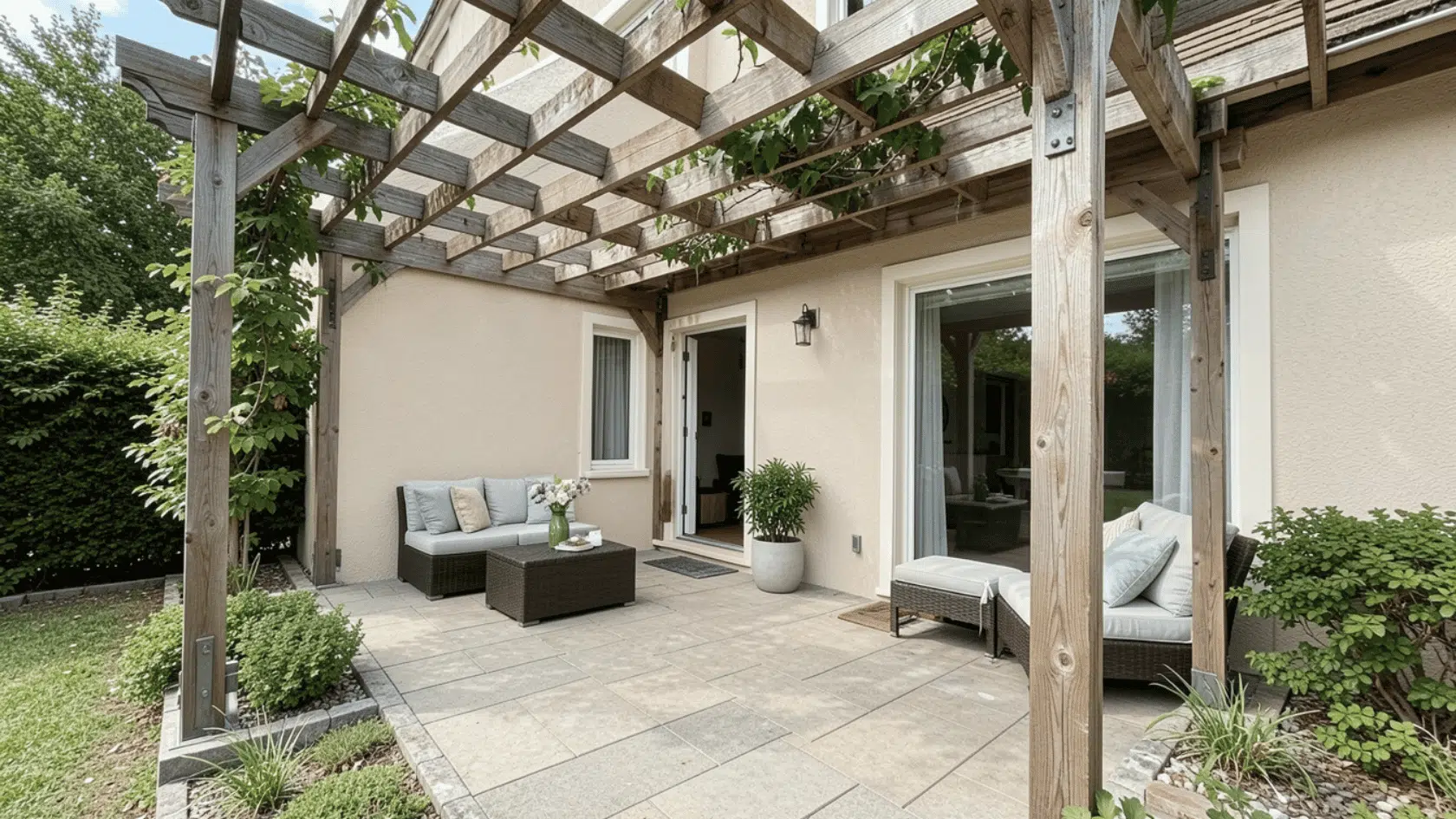
An attached pergola connects directly to your home’s exterior wall, making it feel like a natural extension of your living space. It is ideal for expanding your patio or deck without major construction.
It blends seamlessly with your existing structure and adds usable outdoor space right at your doorstep. A simple yet practical choice for most homeowners.
3. Louvered Pergola
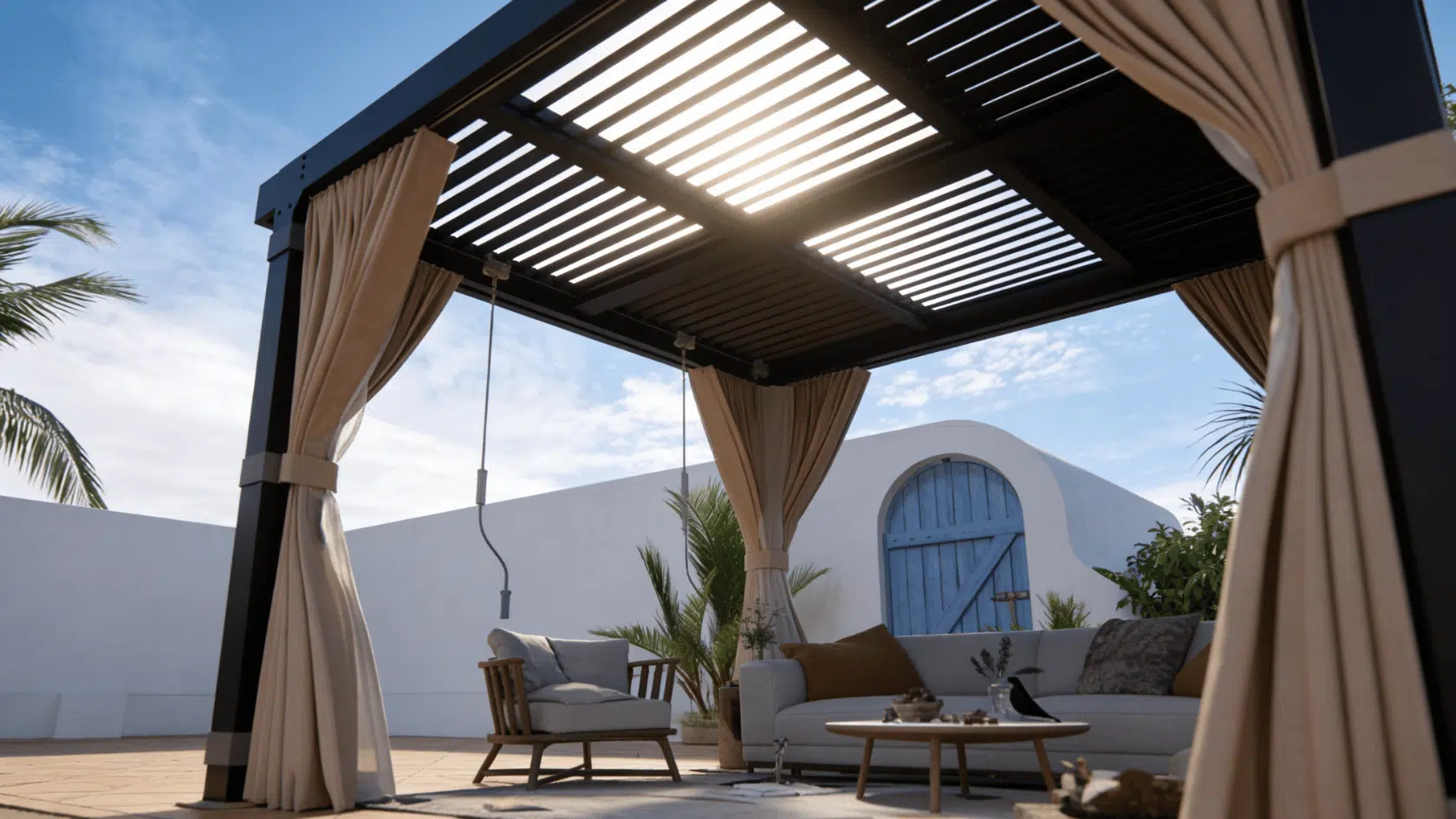
A louvered pergola features adjustable roof slats that can be opened or closed depending on the weather or time of day. This gives you full control over sunlight, ventilation, and light rain protection.
It is one of the most practical and functional pergola styles available today. A great pick for those who want comfort and flexibility in one structure.
4. Retractable Pergola
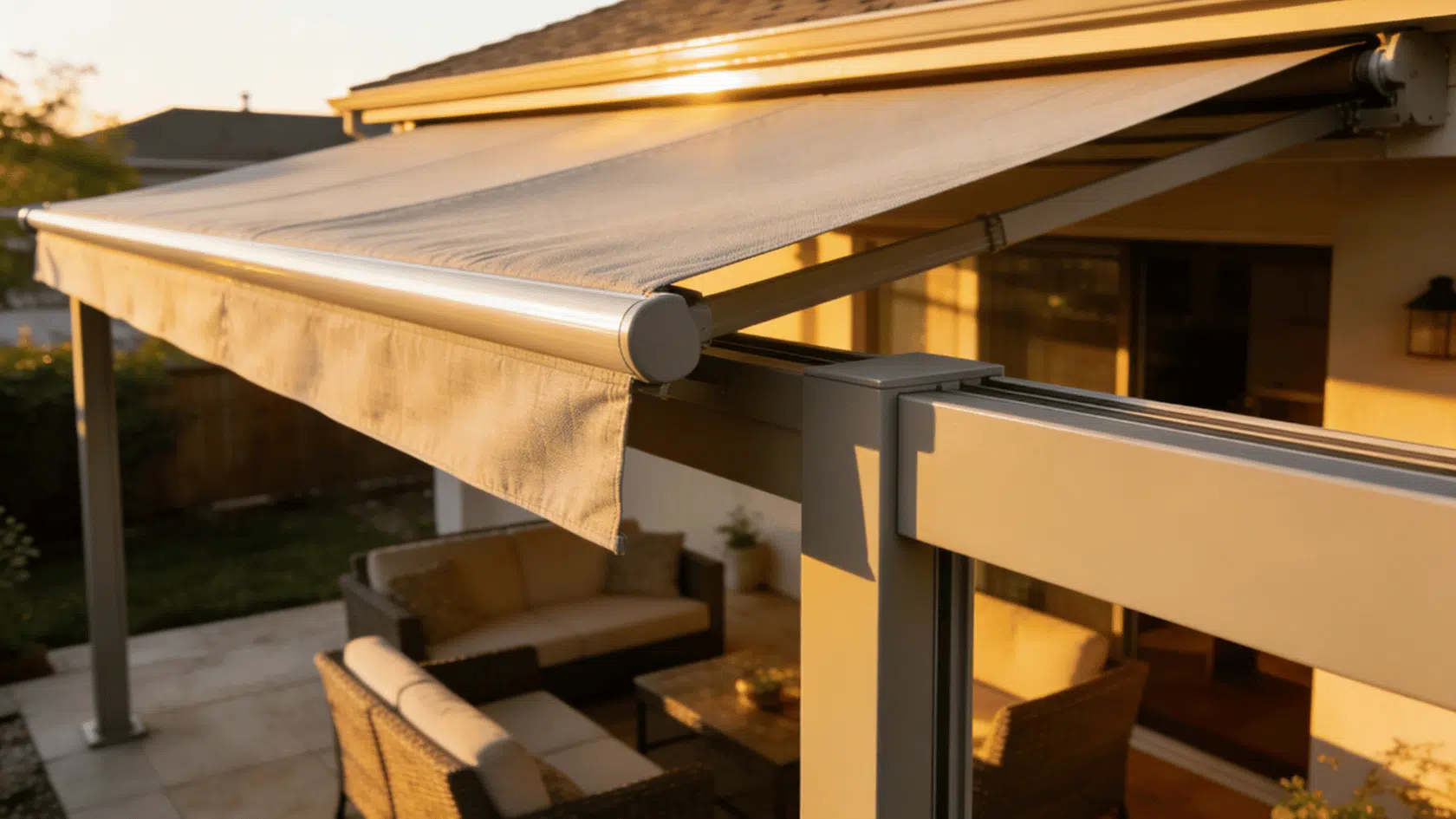
A retractable pergola comes fitted with a fabric or motorized canopy that can be extended for shade or pulled back to open up the sky. It is ideal for spaces where the weather changes frequently throughout the day.
It gives you full control over sunlight and airflow with minimal effort. A smart choice for those who want flexibility in their outdoor setup.
What Are Pergolas Made Of?
The material you choose affects how your pergola looks, how long it lasts, and how much upkeep it needs. Here are the four most common options:
- Wood pergolas: Give a natural, warm appearance that fits most garden settings. Cedar and redwood are top picks for their resistance to moisture and insects.
- Vinyl Pergolas: A low-maintenance option that needs no painting or sealing. Holds up well against moisture, rot, and insects over time.
- Aluminum or Metal Pergolas: Built to handle tough weather without rusting or warping. Modern in look and very little maintenance required.
- Fiberglass Pergolas: Extremely durable and resistant to cracking, warping, and fading. A great long-term investment that can mimic the look of wood without the upkeep.
Pro Tip: Before choosing a material, consider your climate, how much time you can devote to upkeep, and the look you want. A material that fits all three will always outperform one chosen solely on price.
Difference Between Pergola and Gazebo
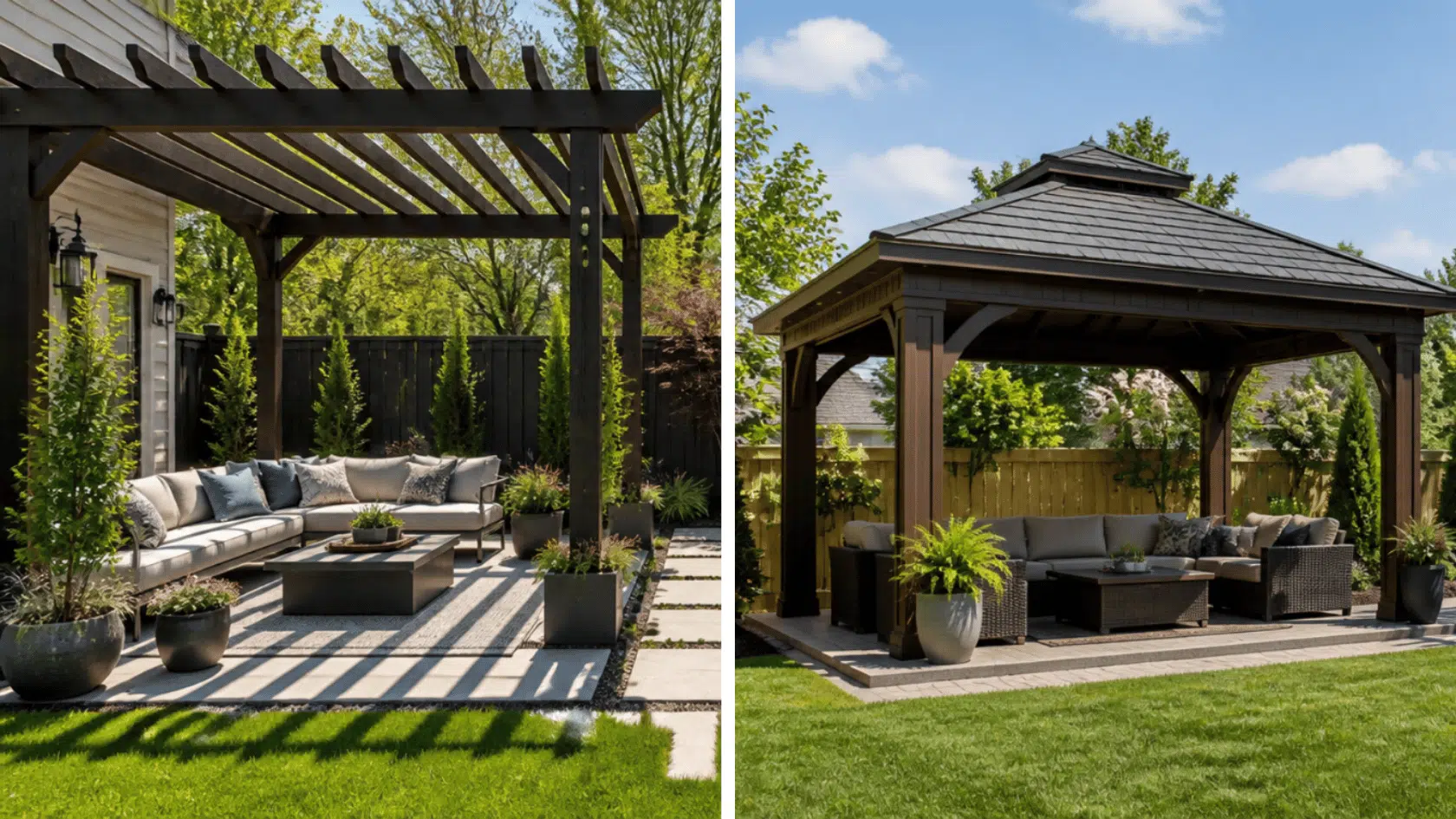
Both pergolas and gazebos are popular outdoor structures, but they serve different purposes. Knowing the difference helps you pick the right one for your outdoor space and needs.
| Feature | Pergola | Gazebo |
|---|---|---|
| Roof Type | Open slatted roof | Fully covered roof |
| Shade Level | Partial shade | Full shade |
| Feel | Open and airy | More enclosed |
| Weather Protection | Limited | Better rain and sun protection |
| Best For | Decorative and plant support | Outdoor shelter and seating |
Quick Takeaway: Choose a pergola for an open, airy feel, natural light, and climbing plants. Go with a gazebo if you need more shade, rain protection, and an enclosed outdoor space.
Things to Consider Before Building a Pergola
Getting these details right from the start will save you time, money, and effort.
- Size and Placement: Match the size to your space. Planning your outdoor garden layout first makes this step a lot easier.
- Sun Exposure: Face it in the right direction to get the shade and comfort you need.
- Material and Maintenance: Choose a material that suits your maintenance preferences and climate.
- Budget and Costs: Factor in materials, labor, permits, and any add-ons before you start.
- Purpose and Use: Know how you plan to use the space before settling on a size or style.
A well-planned pergola will always fit your space and lifestyle better than one built on impulse.
How Much Does a Pergola Cost?
The cost of a pergola depends on size, material, and installation. And if your yard needs clearing first, checking land and yard clearing costs before you build will help you set a more accurate budget.
Quick breakdown to help you plan your budget:
| Factor | Details | Estimated Cost |
|---|---|---|
| Average Cost Range | Typical pergola installation | $1,500 to $10,000+ |
| DIY Installation | Materials only, self-built | $1,500 to $3,500 |
| Professional Installation | Labor and materials included | $4,000 to $10,000+ |
| Wood (Cedar/Redwood) | Natural look, higher upkeep | $3,000 to $7,000 |
| Vinyl | Low maintenance, clean finish | $2,500 to $6,000 |
| Aluminum / Metal | Durable, modern finish | $3,500 to $10,000+ |
Keep in mind that additional factors such as size, location, and permits can push the final cost above the base estimate.
Do You Need a Permit to Build a Pergola?
In most parts, a permit may be required before building a pergola. Requirements vary by state, county, and city, so checking with your local building department is always the right first step.
Attached pergolas are more likely to require a permit since they connect directly to your home’s structure.
Freestanding pergolas may fall under different rules, but size and placement still play a role in whether a permit is needed.
Skipping the permit process can result in fines, delays, or being forced to tear down the structure.
A quick call to your local authority before you build can save you a lot of time, money, and stress.
Benefits of Adding a Pergola
A pergola does more for your outdoor space than you might think. Here is what it brings to the table.
- Blocks harsh sunlight and creates a cooler, more relaxed spot outside.
- Gives your yard a clean, structured appearance that feels more finished.
- Turns an unused patch of yard into a functional sitting or dining area.
- Seen as a desirable feature by homebuyers and boosts property appeal.
- Creates a natural gathering spot for meals and get-togethers.
- Supports climbing plants and adds a natural, lush look to your yard.
- Adds privacy and defines your outdoor space without closing it off.
One of the simplest ways to make your backyard more comfortable, functional, and visually appealing.
Conclusion
A pergola is one of the simplest ways to get more out of your outdoor space. It adds shade, structure, and a great spot to relax without major construction work.
Now that you know what a pergola is, think about how one could fit into your own backyard. Even a small pergola can completely change how you use your outdoor area.
The right material, size, and placement can make a big difference in how functional and good-looking your pergola turns out to be.
Start with a clear goal for your space, and the rest of the decisions will follow much more easily.
Are you thinking about adding a pergola to your backyard? Drop your questions, ideas, or plans in the comments below. Would love to hear what you are working on!
Frequently Asked Questions
What Is Another Name for a Pergola?
Another name for a pergola is an arbor or garden trellis, depending on the design and size.
How Many Years Do Pergolas Last?
A pergola can last anywhere from 10 to 30 years or more, depending on the material, weather exposure, and maintenance.
What Is Better than a Pergola?
Agazebo or covered patio can be better than a pergola if you want more shade, weather protection, and privacy.