Most people think fairy gardens need outdoor space and a large budget.
A teacup, old pot, or broken bowl works just as well to create a proper scene, and if you want to go bigger, pairing a fairy garden with a few small backyard oasis ideas turns the whole outdoor space into something worth showing off.
The range of fairy garden ideas available today covers everything from tiny indoor teacup displays to large outdoor wagon builds with multiple planting zones.
From beginner flower pot builds to detailed woodland scenes, there is a setup here that fits any space, skill level, and budget.
What Is a Fairy Garden?
A fairy garden is a miniature world you create from scratch. It can be as simple or as detailed as you like.
The real goal is to build a tiny scene that feels lived-in rather than just arranged. I think that is what separates a good fairy garden from a plain decorated pot.
Every small detail counts. Together, those details turn an ordinary space into something that makes people stop and look twice.
Common Myths About Fairy Gardens
| Myth | Fact |
|---|---|
| It must include fairy figures | Figures are optional. Gnomes, animals, or just plants work just as well. |
| It needs a big budget | Many builds cost very little using found or reused materials. |
| A large yard is required | It fits in pots, jars, teacups, and small indoor spaces. |
| Only store-bought materials work | Sticks, stones, bark, pinecones, and fresh flowers from a cutting garden work perfectly in most builds. |
Fairy Garden Ideas by Container
The container shapes the entire build. From basic flower pots to old wheelbarrows, the right pick depends on the space and detail level wanted.
1. Flower Pot Fairy Garden

Broken terracotta pieces can be stacked as walls, stairs, and terraces to create a layered, multi-level scene. Add soil behind each layer so plants can root properly between levels.
Plant small succulents, moss, or trailing plants between the layers and connect them with gravel paths. This style works well for anyone who wants more visual detail in a compact space.
2. Wheelbarrow Fairy Garden

An old wheelbarrow gives more room than a standard pot and can be moved around the yard. Divide the space into plant zones using gravel or stones and add small fairy houses between sections.
Use drought-tolerant plants if the wheelbarrow sits in full sun. Always add drainage holes to the base since waterlogging after rain damages roots and makes the whole setup harder to maintain.
3. Teacup Fairy Garden

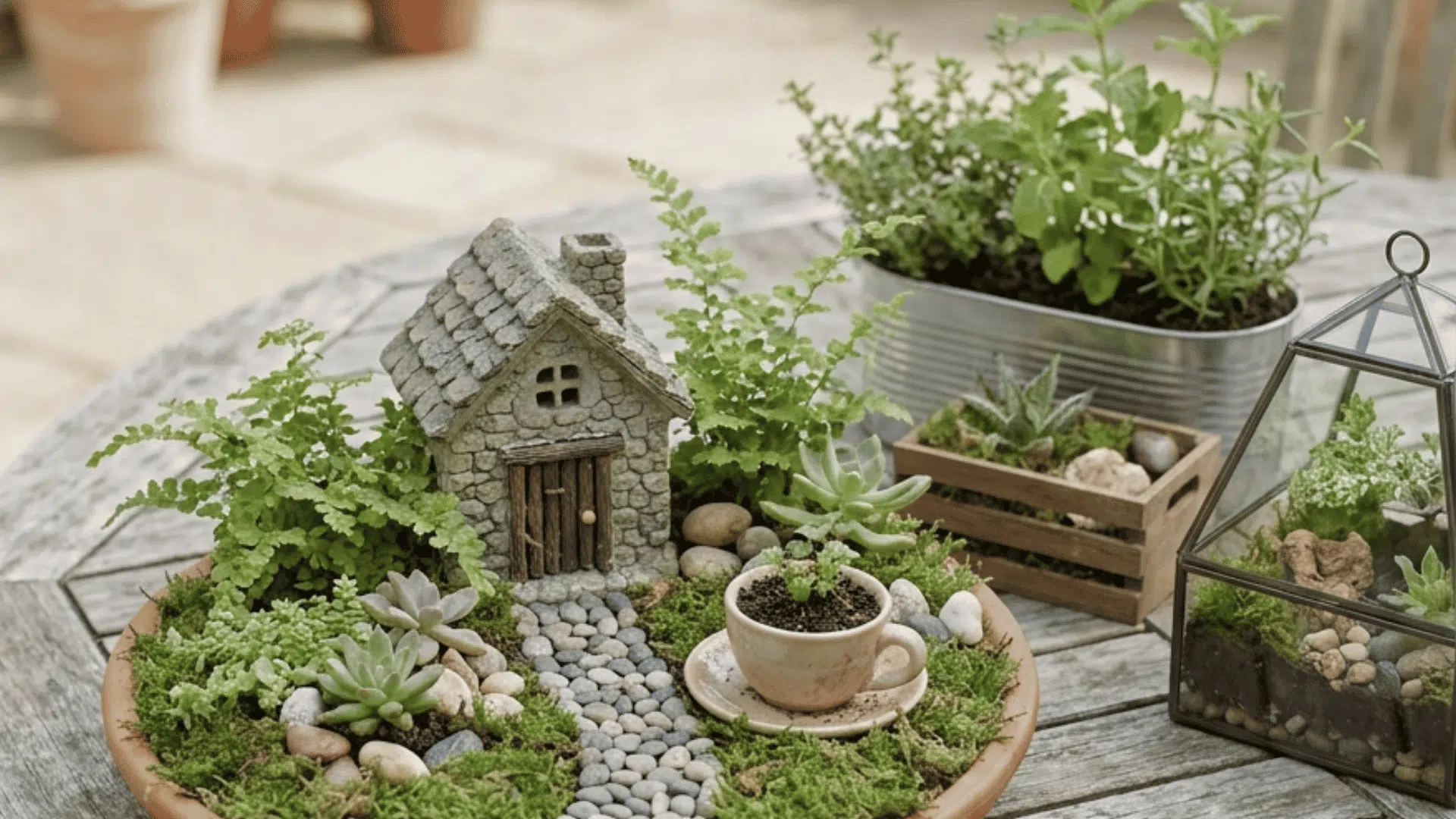
A teacup, mug, or small bowl makes a quick build for gifts, craft nights, or indoor shelf displays. Fill it with faux moss, air plants, tiny cuttings, or preserved moss for best results.
Scale matters more here than in any other container. Even one figure that is slightly too large throws the whole setup off and makes the scene look out of proportion.
4. Mason Jar Fairy Garden

A mason jar works well for a small indoor fairy garden when space is limited. Use sand, pebbles, moss, or small plants to build up the base layer and keep the layout minimal.
If the jar has a lid, use only moisture-safe accessories inside. Items that absorb water or have flaking paint break down quickly when trapped in a closed and consistently humid jar.
| Do | Don’t |
|---|---|
| Use sand, pebbles, or faux moss | Use paper or cardboard accessories |
| Keep the layout simple and minimal | Overcrowd with too many figures |
| Use moisture-safe miniatures in closed jars | Use painted or metal items that rust or flake |
| Leave the jar open for better air flow | Seal the jar without any drainage layer |
5. Tree Stump Fairy Garden

A tree stump, hollow log, or the base of a large tree makes a natural base for an outdoor fairy garden. No extra container is needed at all.
Fill the space with moss, bark, stones, twigs, and pinecones. A small fairy door placed at the base of the stump pulls the whole scene together instantly.
Warning: Fragile accessories left outside get damaged quickly by rain, pests, and shifting soil. Stick to weather-resistant materials that can handle outdoor conditions year round.
Fairy Garden Ideas by Theme
A theme gives the whole build a clear direction. These ideas cover a range of styles, from natural woodland scenes to seasonal displays and kid-friendly builds.
6. Woodland Fairy Garden

Moss, bark, twigs, stones, pinecones, and acorns all fit this style perfectly. Place the garden under a tree or in a shaded pot and use ferns, ivy, or mini hostas.
Keep colors earthy and the layout simple. The fewer unrelated pieces used, the more convincing the scene looks. Bright plastic figures immediately break the natural feel of the whole build.
7. Succulent Fairy Garden

Succulents, sedum, hens and chicks, or echeveria stay small and need very little water. Always use cactus or succulent soil since regular potting mix holds too much moisture and causes root rot.
Add gravel, sand, and stones around the plants to fill the space. A small house or bench placed among the succulents gives the scene a lived-in feeling without overcomplicating the layout.
8. Beach Fairy Garden

Sand, shells, sea glass, blue stones, and a tiny chair are all the base materials needed. Use air plants or faux plants to keep care levels low in bowls, jars, or shallow planters.
Replace real water with blue glass stones or clear marbles for a pond effect. Real water in a tiny setup turns stagnant fast, grows algae, and attracts mosquitoes within days.
9. Camping Fairy Garden

Use a pebble fire ring, twig tents, bark benches, tiny lanterns, and mini chairs to set the scene. Add moss or gravel as the ground layer before placing any accessories.
Keep the prop count low and give each piece room to be seen clearly. Too many items packed together lose the open, outdoorsy feeling the camping theme is meant to create.
10. Cottage Fairy Garden

Use a small cottage figure, a low fence, flowering plants, and a tiny seating area to build this classic style. Choose plants with small leaves so they stay in proportion with the cottage.
Lay a pebble or gravel path directly to the cottage door. This one detail connects the whole scene and gives the eye a clear focal point to land on first.
| Works Well In | Why |
|---|---|
| Flower pots | Keeps the cottage as the clear focal point |
| Wagons | Enough room for a path, fence, and seating area |
| Flower beds | Natural setting makes the cottage feel built-in |
| Raised planters | Easy to view from all sides |
11. Seasonal Fairy Garden

A seasonal fairy garden changes throughout the year using temporary accents like small pumpkins, faux snow, spring flowers, or holiday figures. Keep seasonal pieces easy to lift out cleanly.
Use indoor-only pieces in protected spots only. Paper, clay, and painted figures left outside in rain or frost break down quickly and are difficult to replace once damaged.
12. Gnome Garden

A gnome garden uses the same basic build as a fairy garden but replaces fairy figures with gnomes, mushrooms, tiny tools, and winding paths. It works well in shaded beds and larger pots.
Keep plant scale close to the size of the figures used. Small, low-growing plants work far better than tall ones that tower over the gnomes and hide them from view.
13. Kids’ Nature Fairy Garden

A kids’ nature fairy garden costs nothing and uses only materials found outside. Sticks, leaves, bark, stones, flowers, seed pods, and moss are all that is needed to get started.
Let kids build the walls, paths, and tiny houses themselves from whatever they find. The focus is on building and playing freely, not on achieving a polished or perfect result.
Fairy Garden Ideas by Material
The material used for paths, structures, and ground cover changes the entire look of a build. These ideas show how simple, low-cost materials can do most of the heavy lifting.
14. DIY Twig Fairy Garden

Twigs are free and easy to work with. Use them to build bridges, ladders, fences, arbors, and tiny walls, then tie the pieces together with twine or waterproof glue.
This style fits best in woodland, camping, and tree stump builds. Avoid hot glue outdoors as it softens in heat and rain, and thin twigs snap after repeated moisture exposure.
15. Pebble Path Fairy Garden

Pea gravel, aquarium stones, river rocks, or tiny pavers all work well for a fairy garden path. Curve it toward a door, bench, or house to make the layout feel more natural.
Use slightly larger stones along the outer edges as a border to keep the path in place. This creates a clear line between planted areas and the accessory zones without extra effort.
16. Moss Fairy Garden

Live moss works well in shaded, moist outdoor spots with indirect light. For indoor or low-care builds, preserved or faux moss holds its color and texture without any watering needed.
Add moss around paths, fairy houses, tree bases, and stones to fill gaps naturally. It softens hard edges and gives the whole scene a more settled, finished appearance over time.
| Type | Best For | Care Level |
|---|---|---|
| Live moss | Shaded outdoor gardens | Needs moisture and indirect light |
| Preserved moss | Indoor displays and dry spaces | No care needed |
| Faux moss | Crafts, gifts, and closed containers | No care needed |
17. Mini Pond Fairy Garden

Blue glass stones, sea glass, clear marbles, or blue sand create a convincing pond effect. Border the area with natural stones and place a small bench or animal figure nearby.
Keep real water out of small fairy garden setups entirely. Even a shallow amount turns cloudy, grows algae, and attracts mosquitoes within days of being placed in a tiny container.
How to Keep Your Fairy Garden Looking Good?
A fairy garden needs regular attention to stay looking its best. Small weekly checks cover watering, trimming, refilling ground layers, and protecting accessories from weather damage.
| Mistake | What to Do Instead |
|---|---|
| Treating it as a one-time craft | Check the garden every week or two for small changes needed |
| Letting plants take over the scale | Trim or replace plants before they outgrow the layout |
| Leaving indoor accessories outside | Bring fragile pieces in during bad weather and store them safely |
| Ignoring drainage and soil movement | Refill shifted soil and check that drainage holes stay clear |
| Mixing plants with different water needs | Group plants with similar needs or separate them into different containers |
Wrapping Up
Fairy garden ideas come in far more shapes and sizes than most people expect. A container, a few plants, and small details are all it really takes.
The best builds are not always the most detailed or expensive ones. A simple, well-maintained flower pot setup will outlast an overcrowded and neglected larger scene every time.
Now you know the right container, theme, and materials matter more than the budget spent. Small decisions made early shape how the whole scene comes together over time.
Have a fairy garden setup or personal experience to share? Drop it in the comments below. Real suggestions from other builders always help someone else get started faster.
Frequently Asked Questions
What Plants Work Best for a Fairy Garden?
Low-growing plants like Irish moss, thyme, sedum, mini hostas, and ferns work best. Choose plants that stay small and match the light and water conditions of the chosen container.
How Do you Winterize a Fairy Garden?
Move delicate accessories and figures indoors before frost arrives. Cover outdoor containers with burlap or bring them inside entirely. Replace any damaged plants once the weather warms back up.
Can a Fairy Garden Survive Outdoors All Year?
It depends on the materials used. Weather-resistant containers, sealed accessories, and frost-hardy plants handle year-round outdoor conditions well. Painted, clay, or paper pieces need to be brought inside each season.