Starting a garden can feel confusing when you do not know where to begin. Many people struggle with limited space, poor layouts, or choosing the right herbs.
There are plenty of simple herb garden ideas that work for small balconies, patios, kitchens, and large backyards.
Fresh herbs are easy to grow, useful for cooking, and can make any space feel greener and more inviting.
Some setups save space, while others make herbs easier to organize and harvest. Even a few small containers can provide fresh herbs throughout the season.
Below are simple herb garden layouts, planting ideas, and easy tips to help you create a setup that fits your space.
Why Herb Gardens Are Perfect for Any Home?
Herb gardens are a good fit for almost any home because they are simple to manage and useful every day. Most herbs grow quickly and require little care, making them a great choice for beginners.
A few small pots can provide fresh herbs for cooking and help save money. They also add a fresh scent and natural greenery to indoor and outdoor spaces.
Another reason herb garden ideas work so well is that they fit in both small and large spaces. A compact indoor shelf can hold a few herbs, while bigger yards can support raised beds or larger garden layouts.
Many herbs can also grow well throughout different seasons with proper care and regular watering. This makes herb gardens a practical and attractive choice for everyday use at home.
Things to Know Before Starting an Herb Garden
Starting an herb garden becomes easier when you understand a few basic growing needs before planting.
- Choose the Right Spot: Most herbs grow best in areas with plenty of sunlight and good airflow throughout the day.
- Sunlight Needs: Herbs like basil, rosemary, and thyme usually need around 6 hours of direct sunlight daily.
- Drainage Basics: Well-drained soil helps prevent excess moisture that can damage roots and slow plant growth.
- Understand Watering Needs: Some herbs prefer slightly dry soil, while others need more consistent moisture to stay healthy.
- Group Compatible Herbs Together: Herbs with similar sunlight and watering needs usually grow better when planted together.
Understanding these basics can help herbs grow healthier and make gardening easier to manage over time.
Herb Garden Ideas for Every Space
There are many herb garden ideas that work for both small and large spaces. Some setups focus on saving space, while others help make planting and harvesting easier.
Read the list below to find simple herb garden ideas that fit patios, kitchens, and backyard spaces:
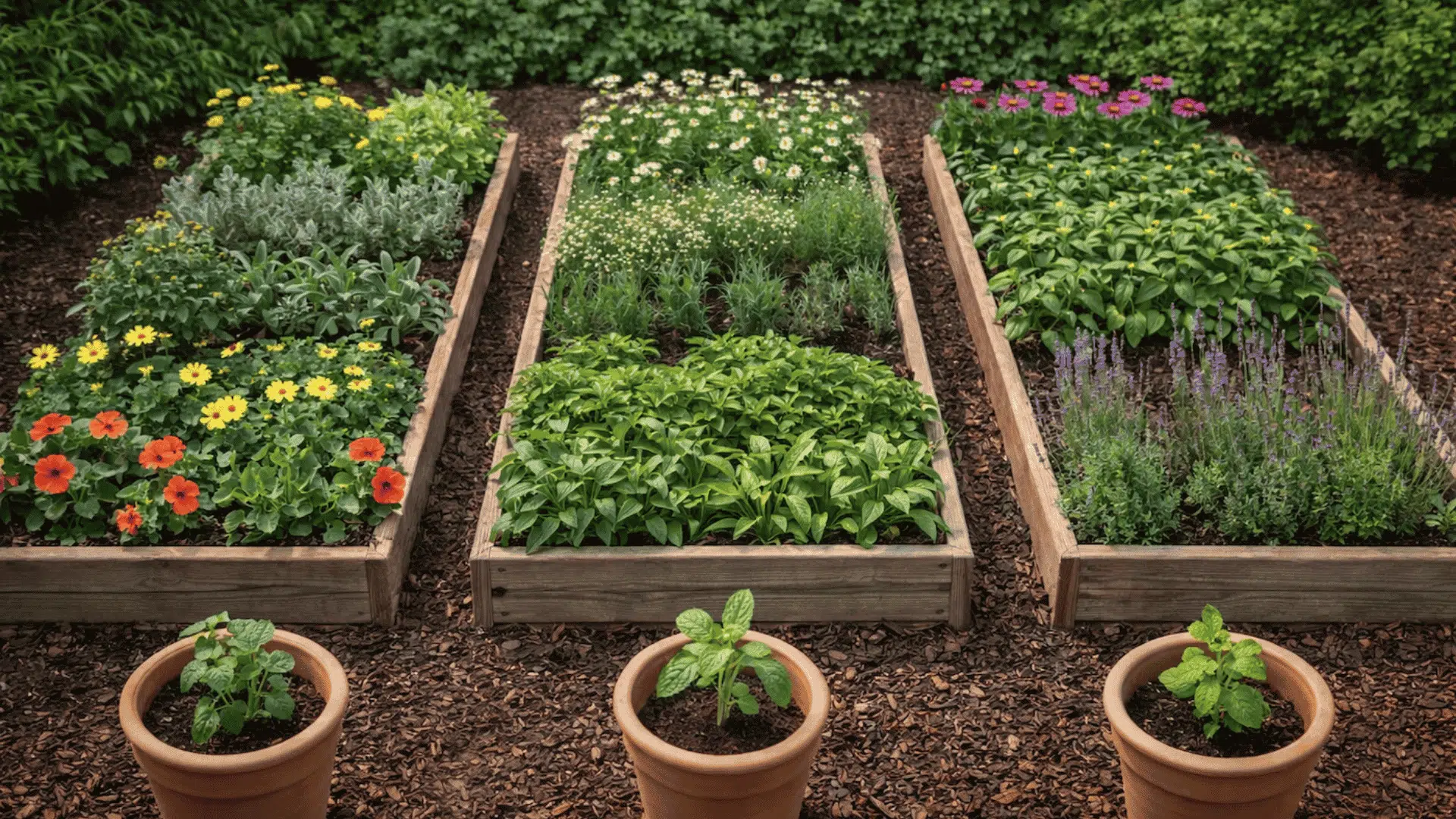
1. Raised Bed Herb Garden

A neat herb garden layout built with raised planting sections that help keep herbs organized and easy to manage. The elevated design improves drainage while watering, trimming, and harvesting.
The structured setup keeps herbs separated and easier to maintain throughout the growing season. A practical garden option that works especially well for sunny backyard spaces.
| Herb | Why It Works Well | Sunlight Needs |
|---|---|---|
| Basil | Grows quickly in warm raised beds with good sunlight | Full sun |
| Rosemary | Prefers well-drained soil and open airflow | Full sun |
| Thyme | Handles dry soil conditions and spreads easily | Full sun |
2. Recycled Container Herb Garden

A flexible herb garden setup that works well for patios, balconies, kitchens, and small outdoor spaces.
Containers make herbs easier to move and rearrange throughout different seasons. Herbs like basil adapt well to pot cultivation and can produce steady harvests with the right balance of soil and sunlight.
The portable design makes it easier to manage sunlight, watering, and weather changes. A beginner-friendly option that fits both indoor and outdoor gardening styles.
| Herb | Why It Works Well | Sunlight Needs |
|---|---|---|
| Mint | Grows well in containers without spreading too far | Partial to full sun |
| Parsley | Adapts easily to pot growing indoors or outdoors | Partial sun |
| Cilantro | Grows quickly in compact pots with regular watering | Full sun |
3. Vertical Herb Garden

A space-saving herb garden style that uses walls, shelves, or stacked planters for growing herbs vertically. The upright setup keeps herbs organized while using less floor space.
The compact design works especially well for balconies, patios, and small backyard corners. A practical option for growing more herbs in limited spaces.
| Herb | Why It Works Well | Sunlight Needs |
|---|---|---|
| Oregano | Handles vertical growing with minimal maintenance | Full sun |
| Chives | Grows upright and fits narrow spaces well | Full sun |
| Tarragon | Stays manageable in slim vertical containers | Full sun |
4. Hanging Herb Planters
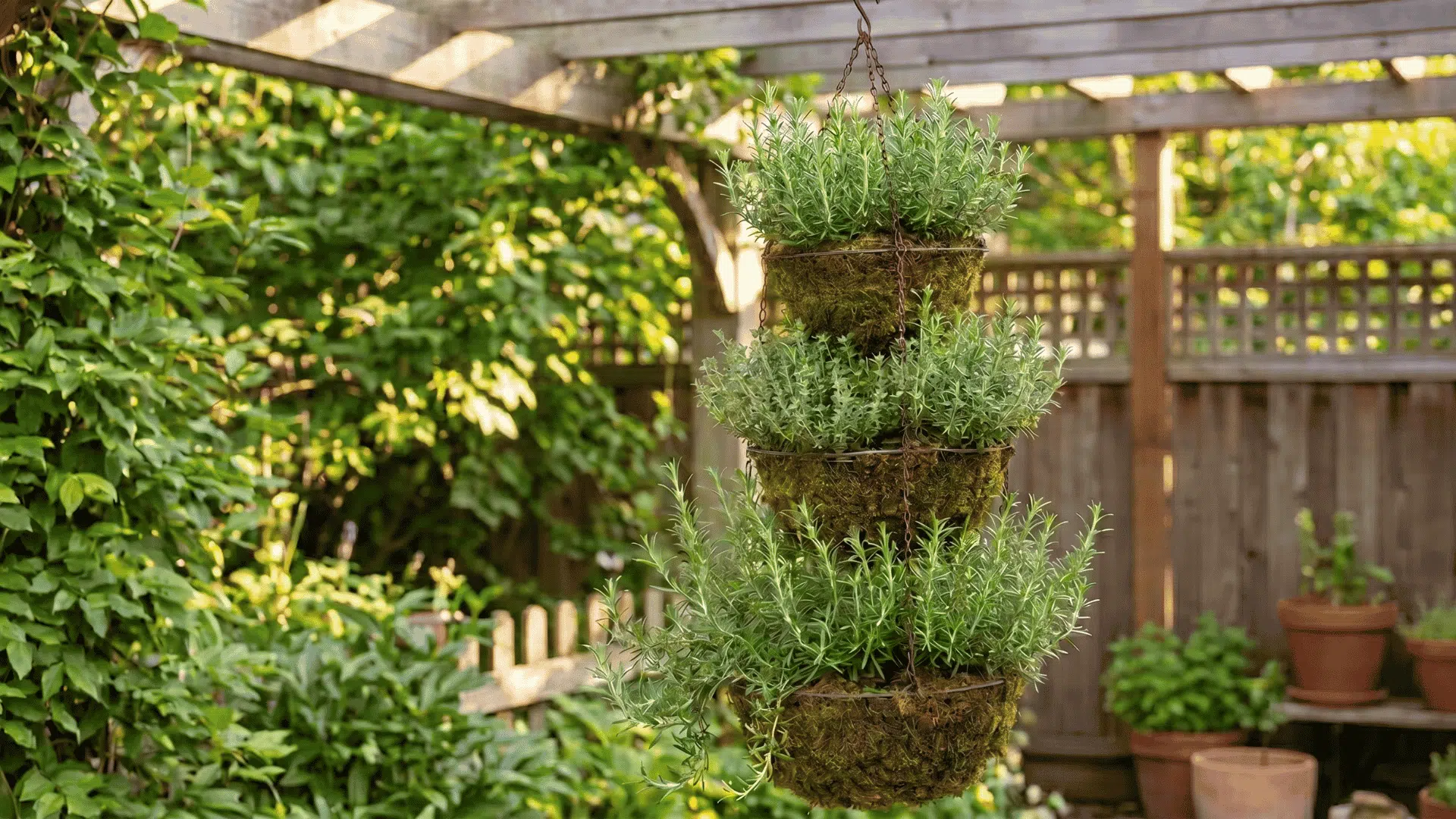
A decorative herb garden option that keeps plants raised above the ground in hanging containers. The elevated setup helps free up floor space while adding greenery to outdoor areas.
The hanging layout works well for porches, patios, and balcony corners with good airflow. A useful setup for compact homes and small seating areas.
| Herb | Why It Works Well | Sunlight Needs |
|---|---|---|
| Creeping Thyme | Trails gently over hanging planter edges | Full sun |
| Trailing Rosemary | Adds greenery with cascading growth | Full sun |
| Nasturtium | Brings color while fitting hanging baskets well | Full sun |
5. Windowsill Herb Garden

A simple indoor herb garden placed near a sunny kitchen window for easy daily access. The setup works especially well in apartments and smaller homes with limited outdoor space.
The compact layout keeps herbs close while cooking and makes indoor care easier to manage. A practical option for fresh herbs throughout the year.
| Herb | Why It Works Well | Sunlight Needs |
|---|---|---|
| Dill | Grows neatly in narrow indoor containers | Full sun |
| Lemon Balm | Handles indoor growing with simple care | Partial sun |
| Micro Basil | Fits compact windowsill pots easily | Full sun |
6. Herb Spiral Garden

A spiral-shaped herb garden designed to save space while improving drainage naturally between levels. The raised shape creates different growing conditions within one compact area.
The layered structure works well for mixed herbs with different moisture and sunlight needs. A useful setup for natural and permaculture-style gardens.
| Herb | Why It Works Well | Sunlight Needs |
|---|---|---|
| Marjoram | Prefers the warmer upper spiral levels | Full sun |
| Greek Oregano | Handles dry spiral sections well | Full sun |
| Sorrel | Grows better in cooler, lower sections | Partial sun |
7. Tiered Herb Garden

A stacked herb garden design that adds height while making small spaces feel more organized. The layered setup helps display multiple herbs clearly in one area.
The vertical arrangement works especially well for patios, decks, and sloped yards. A practical option for easier access and cleaner planting layouts.
| Herb | Why It Works Well | Sunlight Needs |
|---|---|---|
| Vietnamese Coriander | Fits compact tier levels with steady growth | Partial sun |
| Salad Burnet | Adds texture while staying manageable | Full sun |
| Summer Savory | Grows neatly in smaller planting sections | Full sun |
8. Pallet Herb Garden

A pallet herb garden uses wooden pallets to create a simple vertical planting setup for small outdoor spaces. The upright design helps organize herbs neatly while taking up less ground space on patios or balconies.
The budget-friendly layout works well for DIY gardening projects that use recycled wood. A practical option for growing multiple herbs while keeping the setup compact and easy to maintain.
| Herb | Why It Works Well | Sunlight Needs |
|---|---|---|
| Oregano | Grows neatly in narrow pallet sections | Full sun |
| Dill | Handles vertical growing with lightweight foliage | Full sun |
| Lemon Thyme | Spreads gently while fitting compact spaces | Full sun |
9. Balcony Herb Garden

A compact herb garden designed for apartment balconies and small outdoor corners. Container growing makes it easier to manage herbs in limited spaces.
The setup keeps fresh herbs accessible while adding greenery to urban homes. A practical option for simple gardening without needing a backyard.
| Herb | Why It Works Well | Sunlight Needs |
|---|---|---|
| Stevia | Grows well in compact balcony containers | Full sun |
| Garlic Chives | Handles smaller pots and windy spaces well | Full sun |
| Shiso | Adds greenery while adapting to container growth | Partial sun |
10. Dedicated Culinary Herb Station Near the Kitchen

A practical herb garden setup placed close to the kitchen for quick harvesting during cooking. The nearby layout keeps commonly used herbs easy to reach every day.
The organized design works well beside patios, windows, or outdoor kitchen spaces. A convenient option for regular cooking and simple herb maintenance.
| Herb | Why It Works Well | Sunlight Needs |
|---|---|---|
| Bay Laurel | Useful for slow-cooked meals and soups | Full sun |
| Flat-Leaf Parsley | Easy to harvest quickly while cooking | Partial sun |
| French Tarragon | Adds flavor while growing neatly in containers | Full sun |
Simple Tips to Keep Your Herb Garden Healthy
Healthy herb gardens grow better with regular care and a few simple maintenance habits. Small gardening routines can help herbs stay fuller, greener, and easier to harvest throughout the season.
- Harvest herbs regularly to encourage fresh growth and prevent plants from becoming too woody.
- Prune herbs regularly to improve airflow and help plants grow fuller.
- Feed herbs lightly since too much fertilizer can weaken flavor and growth quality.
- Watch for pests and fungal problems by checking leaves for spots, holes, or discoloration.
- Refresh container soil occasionally to improve drainage and replace lost nutrients.
- Water herbs based on soil moisture rather than a strict daily schedule.
Taking the time to regularly maintain herbs can improve plant health and make gardens easier to manage. With proper care, herb gardens remain productive and attractive for longer.
Herb Garden Layout Ideas That Make Planning Easier

Choosing the right herb garden layout can make planting, watering, and maintenance much easier. Different layouts also help gardens fit better in both small and large outdoor spaces.
| Layout Style | Best Features | Works Best For | Recommended Spacing |
|---|---|---|---|
| Grid Layout | Organized planting sections | Raised beds and backyards | 12–18 inches |
| Circular Herb Garden | Easy access from all sides | Decorative outdoor spaces | 18–24 inches |
| Border Herb Garden | Neat pathway edges | Walkways and patios | 10–15 inches |
| Symmetrical Herb Layout | Balanced and clean appearance | Formal garden styles | 12–20 inches |
| Wild Natural Layout | Relaxed mixed planting | Cottage-style spaces | 8–24 inches |
The right layout can improve airflow, simplify harvesting, and keep herbs healthier over time. Simple spacing and organized planting also make gardens easier to maintain throughout the season.
Common Herb Garden Mistakes to Avoid
Healthy herb gardens are easier to maintain when a few common growing mistakes are avoided from the beginning.
- Overwatering Herbs: Too much water can weaken roots, cause yellow leaves, and increase the risk of root rot.
- Poor Drainage: Wet soil without proper drainage can damage herbs and slow healthy plant growth.
- Planting Aggressive Herbs Together: Fast-spreading herbs like mint can quickly take over nearby smaller plants.
- Not Harvesting Often Enough: Regular harvesting helps herbs stay fuller and prevents plants from becoming woody.
- Giving Herbs Too Much Shade: Many herbs need direct sunlight to grow properly and maintain strong flavor.
- Using Crowded Planting Layouts: Tight spacing can reduce airflow and increase the risk of moisture-related plant problems.
Avoiding these simple mistakes can help herbs stay healthier, fuller, and easier to manage throughout the growing season. Proper sunlight, spacing, and watering habits also improve long-term plant growth.
Final Thoughts
Creating a home herb garden does not need a large backyard or years of gardening experience. With the right herb garden ideas, even small spaces can grow fresh herbs for easier daily use and cooking.
Simple layouts, proper sunlight, and regular harvesting can help herbs grow healthier throughout the season.
From raised beds to compact containers, there are many ways to build a setup that fits your space and routine.
Start with a few herbs you use most often and expand your garden over time. Try one of these herb garden ideas today and create a fresh, useful space right at home.
Have a favorite herb garden setup or growing tip? Share your thoughts in the comments below.
Frequently Asked Questions
Can Herbs Survive Outdoors During Winter?
Some herbs like thyme, sage, and oregano can survive winter with proper sunlight and drainage.
Potted herbs may need to be moved indoors during freezing temperatures.
How Long Do Herb Plants Usually Live?
Annual herbs like basil grow for one season, while perennial herbs can grow for several years.
Regular pruning and healthy soil can help herbs last longer.
Can Herb Gardens Help Reduce Insects Naturally?
Strong-smelling herbs like mint, lavender, and rosemary may help reduce certain insects naturally.
Many people plant them near patios, windows, and vegetable gardens for this reason.