Spinach is a popular, nutritious leafy green, but it can be a favorite target for many pests.
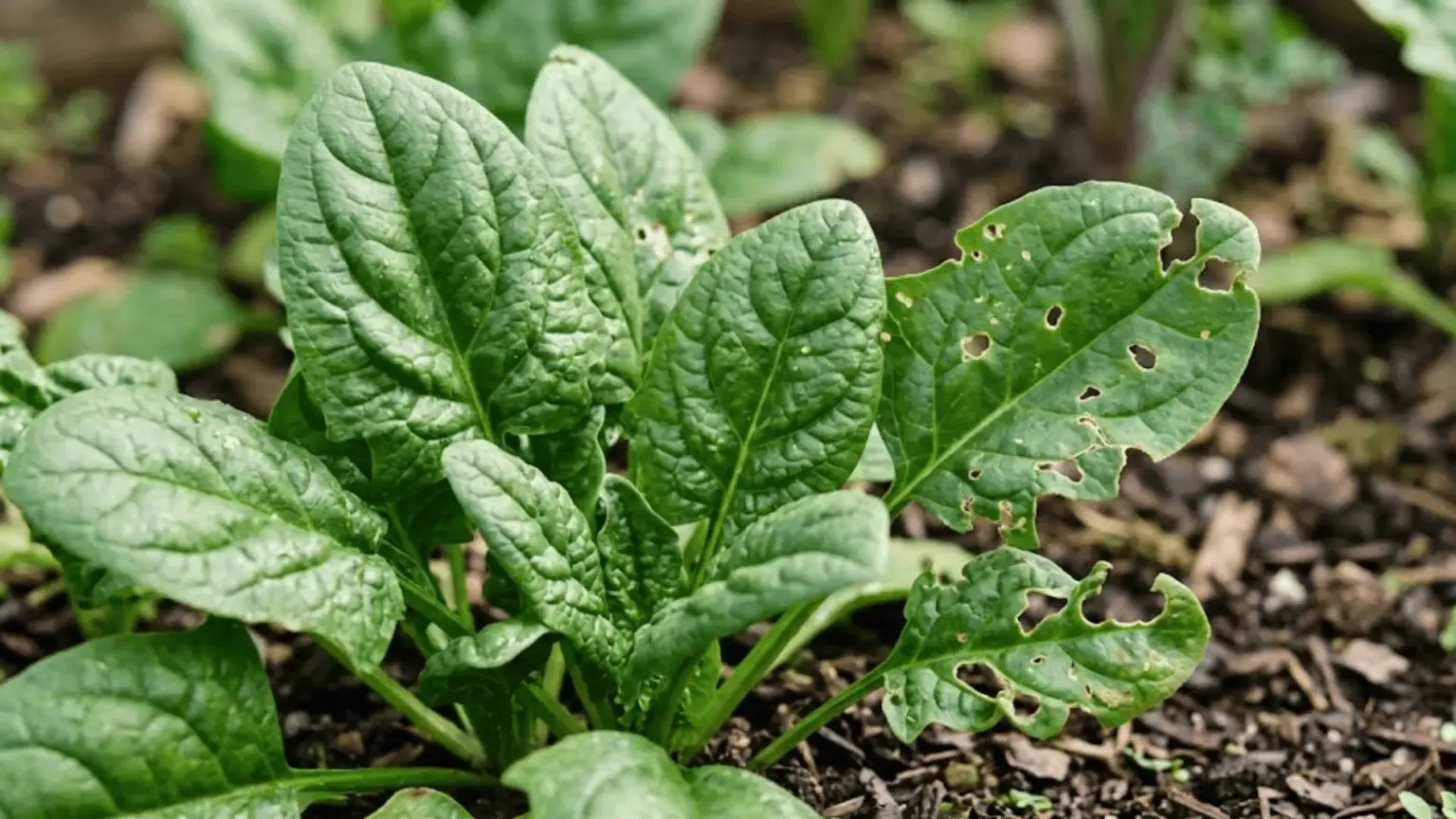
Small insects like aphids and leaf miners, as well as larger animals such as rabbits, can quickly damage your plants. Leaves may develop holes, trails, or ragged edges, which can slow growth and reduce your harvest.
Knowing how to identify the signs of pest damage and acting quickly can keep your spinach healthy and strong.
With the right mix of prevention, natural methods, and practical care, you can protect your spinach and enjoy fresh, leafy greens straight from your garden.
Why Your Spinach Leaves Get Eaten?
Spinach leaves are soft, tender, and nutrient-rich, which makes them very attractive to many pests.
Insects like aphids, leaf miners, and caterpillars are drawn to the juicy leaves, while animals such as rabbits and deer may nibble on them when they find easy access.
Planting certain spinach companion plants nearby can help make your spinach less attractive to pests.
The damage they cause can look different depending on the pest.
You might see small holes, jagged edges, curled leaves, trails across the surface, or even sticky residue from sap-sucking insects.
Knowing that both tiny insects and larger animals can attack your spinach helps explain why your plants sometimes look more eaten than healthy, even in a well-kept garden.
Insects that Eat Spinach Leaves
Spinach leaves are favorite targets for several kinds of insects that feed on them in different ways. Recognizing these pests early can help protect your plants and keep them healthy.
- Aphids: Small insects that suck sap, causing leaf curling, yellowing, and sticky honeydew.
- Leaf Miners: Tiny larvae that tunnel inside leaves, leaving winding white trails and weakening growth.
- Slugs & Snails: Feed at night, leaving large holes and slimy trails on leaves.
- Flea Beetles & Caterpillars: Flea beetles make small “shot-holes,” while caterpillars chew bigger, ragged sections.
Closely watching for these signs can help you act quickly and keep your spinach strong, healthy, and productive.
How to Identify Which Pest is Eating Your Leaves?
Knowing exactly which pest is eating your spinach makes it much easier to control them. You can often tell by looking at the type of damage on the leaves.
| Damage Pattern | Likely Pest |
|---|---|
| Winding, serpentine trails | Leaf Miners |
| Tiny clusters or sticky sap | Aphids |
| Small, round “shot-holes” | Flea Beetles |
| Large holes with slime trails | Slugs & Snails |
By checking your leaves regularly and carefully matching the type of damage to this table, you can spot pests early and take action to protect your spinach before the problem worsens.
How to Stop Spinach Pests: Organic & Practical Methods
Keeping spinach pest-free requires a mix of careful planning, protective barriers, and natural solutions. Acting early can prevent damage and help your plants stay strong and healthy.
1. Prevention
The best way to avoid pests is to prevent them before they appear. Choosing the best time to plant helps reduce pest problems and gives leaves a strong start.
Rotate your crops each season to prevent pests from building up in the soil.
Keep your garden clean by removing weeds, fallen leaves, and plant debris, as these can harbor insects. Check your spinach plants regularly for early signs of damage so you can act quickly if pests appear.
2. Physical Barriers
Physical barriers can stop many pests from reaching your spinach. Floating row covers or fine netting act as a shield, keeping insects from reaching leaves.
These covers also prevent adults from laying eggs on your plants. Make sure the edges are secured to the ground so pests cannot sneak underneath. This method works well without using chemicals and keeps your leaves safe.
3. Hands-On Control
Sometimes the simplest solution is to remove pests by hand. Pick off slugs, snails, and caterpillars you see on your spinach.
Cut away heavily damaged leaves to stop pests from spreading to healthy parts. You can also set traps for slugs, such as shallow containers filled with beer, to reduce their numbers.
This approach takes some effort but is safe and effective.
4. Natural Predators & Companion Planting
Encouraging natural predators helps control pests without the use of chemicals. Ladybugs and other beneficial insects eat aphids and other small pests.
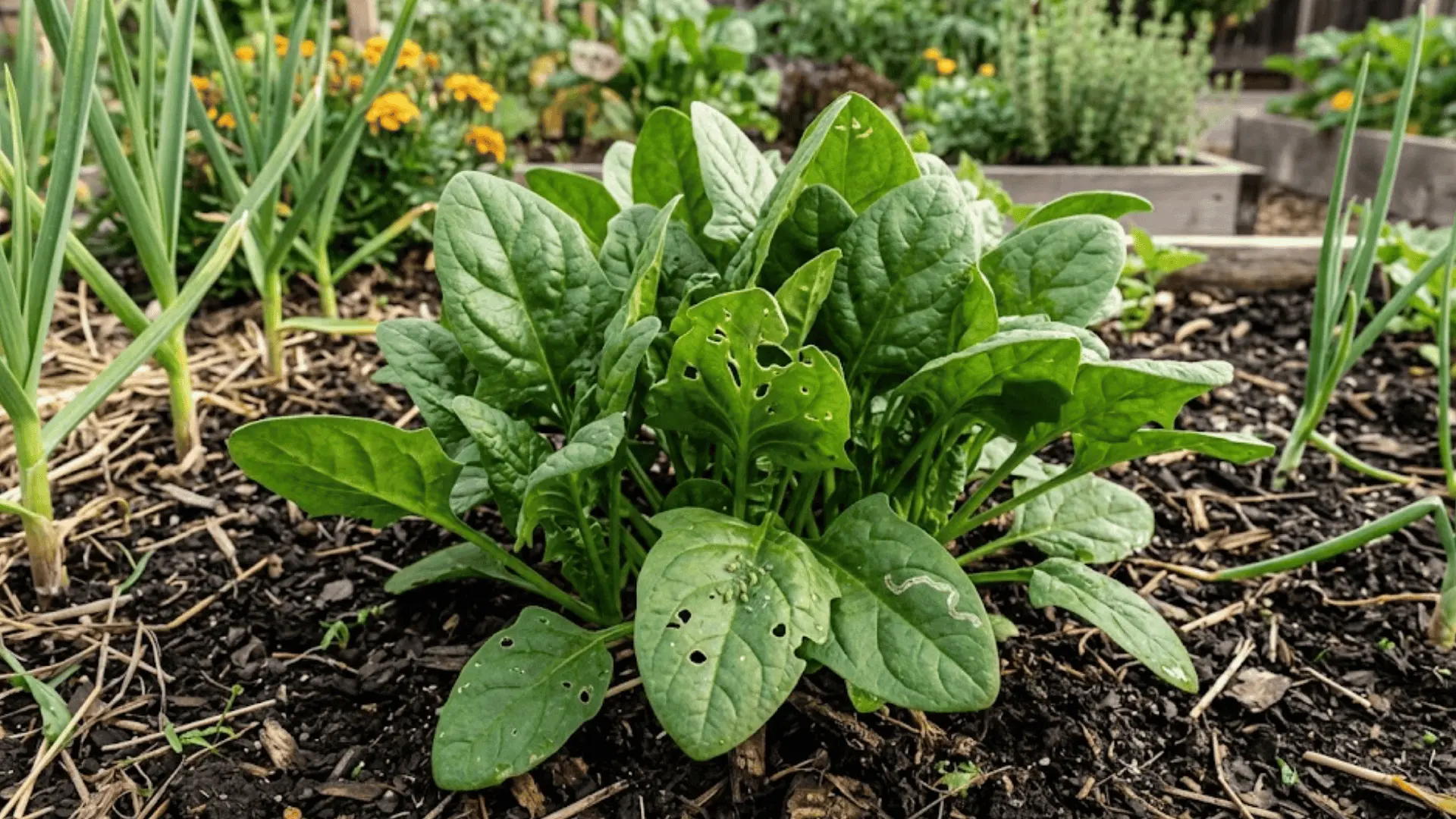
Planting companion crops such as garlic, onions, or chives near spinach can also naturally deter pests.
At the same time, it’s important to avoid bad companion plants near spinach, as they can attract pests or compete for nutrients. Combining predators with careful planting keeps your garden healthy.
5. Organic Sprays
Organic sprays can protect spinach when other methods are not enough. Neem oil or insecticidal soap can safely control pests such as aphids and caterpillars.
Apply sprays in the early morning or late afternoon to prevent leaf burn.
Follow the instructions carefully and avoid spraying just before harvest. Using these sprays occasionally can help keep your spinach healthy while avoiding harmful chemicals.
When You Should Consider Chemical Controls
Chemical controls for spinach should be used only when organic methods fail, and pests are causing serious damage.
It’s important to choose products that are safe for leafy greens and follow the instructions carefully. Apply chemicals at the right time, usually well before harvesting, to avoid residues on your leaves.
Wear gloves and protective clothing while spraying, and avoid windy days to prevent drift.
Using chemicals responsibly can help save a crop that is under heavy attack, but relying on them too often can harm beneficial insects and upset the balance of your garden.
That’s a Wrap
Keeping spinach pest-free requires attention and consistent care. By spotting damage early, using organic methods, and adding protective measures, you can stop insects and animals from ruining your plants.
In severe cases, carefully selected safe chemicals can be used to save your crop. Healthy spinach grows faster, tastes better, and gives you more leaves for meals.
Every gardener faces pest challenges, but acting quickly makes a big difference.
Do you have a favorite method for protecting your spinach? Share your tips or experiences in the comments below and help others grow strong, healthy spinach in their gardens.