Most people strip thyme leaves and toss the stems without thinking twice.
But the stems do not always need to go in the bin. Some are perfectly fine to eat, and some are better left out of the dish entirely.
The difference comes down to one thing: how woody the stem is. Young stems are soft enough to cook with or even eat raw. Older stems are tough, fibrous, and hard to chew.
Knowing which is which saves you time in the kitchen and helps you get more out of every bunch of thyme you buy.
This guide covers exactly what to keep, what to skip, and why it matters.
Are Thyme Stems Edible or Not?
Yes, you can eat thyme stems, but only the young, flexible ones. Woody stems from the lower part of the plant are too tough to eat comfortably. They work well for flavoring soups and stews, but you remove them before serving rather than eating them directly.
The stems you want to avoid eating are the ones that snap or resist when bent. Soft stems that bend without breaking are fine to use whole in cooking.
How you handle the stems before adding them to a dish affects both the texture and the flavor of the final dish.
Fresh thyme is most useful when you know which parts to keep and which to skip. There are also quite a few ways to use the whole herb, leaves, and tender stems together, once you know what works.
How to Tell Young Thyme Stems From Woody Ones?
The easiest test is to bend the stem between your fingers.
| Stem Type | How It Feels | Best Use |
|---|---|---|
| Young, green stem | Bends easily, does not snap | Cook whole or eat raw |
| Semi-woody stem | Slight resistance when bent | Use for flavoring, remove after cooking |
| Fully woody stem | Stiff, snaps when bent | Use only for stock or infusions |
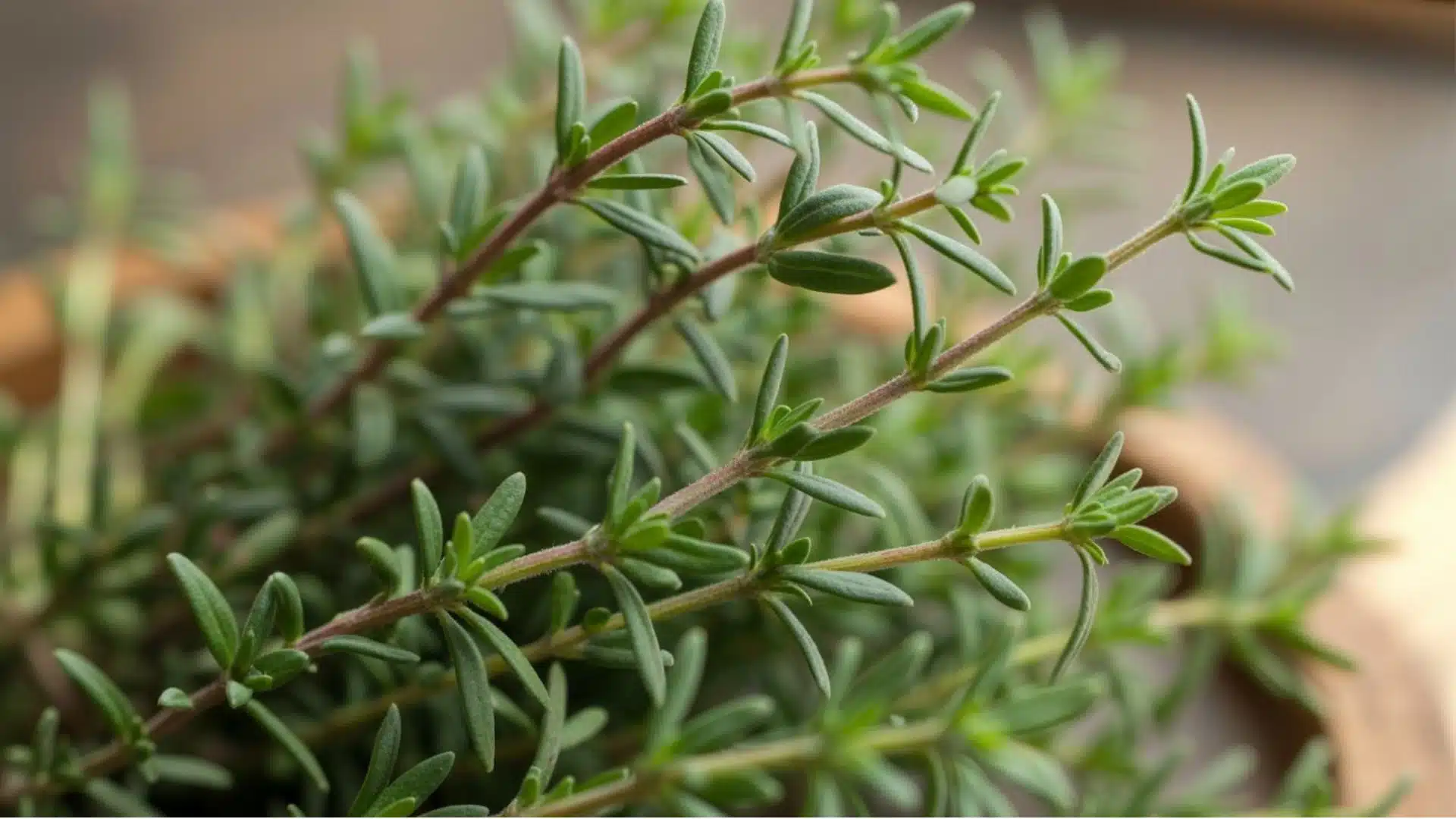
Young stems are usually found at the tips of the thyme plant. They are light green and covered in small leaves. As you move further down the plant, the stem gets darker, stiffer, and more fibrous.
Can You Cook With Woody Thyme Stems?

Woody stems are not edible, but they are not useless either. They still carry flavor and work well in dishes where they simmer in liquid for a long time.
Good uses for woody thyme stems:
- Drop into soups or broths and remove before serving
- Add to a bouquet garni with bay leaf and parsley
- Place under a whole roasting chicken for added aroma
- Use in stocks where everything gets strained out at the end
The key is that woody stems are used only for flavoring. You pull them out before the dish goes to the table.
Young Thyme Stems: When to Keep Them In?
Tender thyme stems are thin enough that they soften during cooking and blend into the dish. In most cases, you will not even notice them once the food is ready.
- Scrambled eggs or frittatas: Chop the whole tender stem along with the leaves
- Pasta sauces: Thin stems break down in the sauce as it cooks
- Salad dressings: Young stems are soft enough to go in raw if finely chopped
- Bread doughs and flatbreads: Mix in with the leaves without stripping
Some dishes need a very clean texture. In those cases, strip the leaves even from young stems.
Smooth sauces, compound butters, and any dish where texture matters a lot will benefit from using only leaves.
Are Thyme Stems Safe to Eat? Yes. Thyme is non-toxic, and both the leaves and stems are safe to consume. There are no harmful compounds in any part of the plant. The only reason to avoid woody stems is texture, not safety. |
What Happens If You Leave Thyme Stems In a Dish?
Leaving young stems in a dish that cooks for long enough usually causes no problem. They soften and either dissolve into the sauce or become tender enough to eat without noticing.
Leaving woody stems in a finished dish is a different story. They stay tough no matter how long they cook and create an unpleasant texture when bitten into. Always remove woody stems before serving.
A quick check before the dish goes to the table:
- Run a spoon through the dish and pull out any visible stems
- If a stem bends easily, it is fine to leave it in
- If it holds its shape and feels stiff, take it out
Storing Thyme Stems You Plan to Use Later
Do not throw away stems after stripping leaves. They store well and have plenty of uses left.
- In the freezer: Collect stems in a zip bag and freeze. Add directly to stocks and broths from frozen.
- In oil: Steep woody stems in warm olive oil for 10 to 15 minutes. Strain and use the oil for cooking or dipping.
- In salt: Bury stems in coarse salt for a week. The salt takes on the thyme flavor and works well on roasted vegetables or grilled meat.
Wrapping Up
Thyme stems are not something you always need to throw away.
Young, flexible stems are safe to eat and cook well in a wide range of dishes. Woody stems are too tough to eat but still useful for flavoring soups, stocks, and roasts before being removed.
The bend test is the quickest way to tell them apart. Once you get into the habit of checking stems before cooking, you waste less of the herb and get more flavor out of every bunch.
Next time you reach for a bunch of thyme, take a closer look at the stems before deciding what stays and what goes.