Recipes call for a sprig of thyme all the time, but most home cooks pause when they see those words.
How big is a sprig, exactly?
Does the whole stem go in, or just the leaves? These are fair questions, and the answers are simpler than you think.
A sprig of thyme is a short stem with leaves attached, typically around 3 to 5 inches long.
Once you understand what it actually is, cooking with it becomes much easier.
This guide covers what a sprig looks like, how to measure it, and when to use a whole sprig versus a stripped one, so you never second-guess a recipe again.
What Does a Sprig of Thyme Look Like?
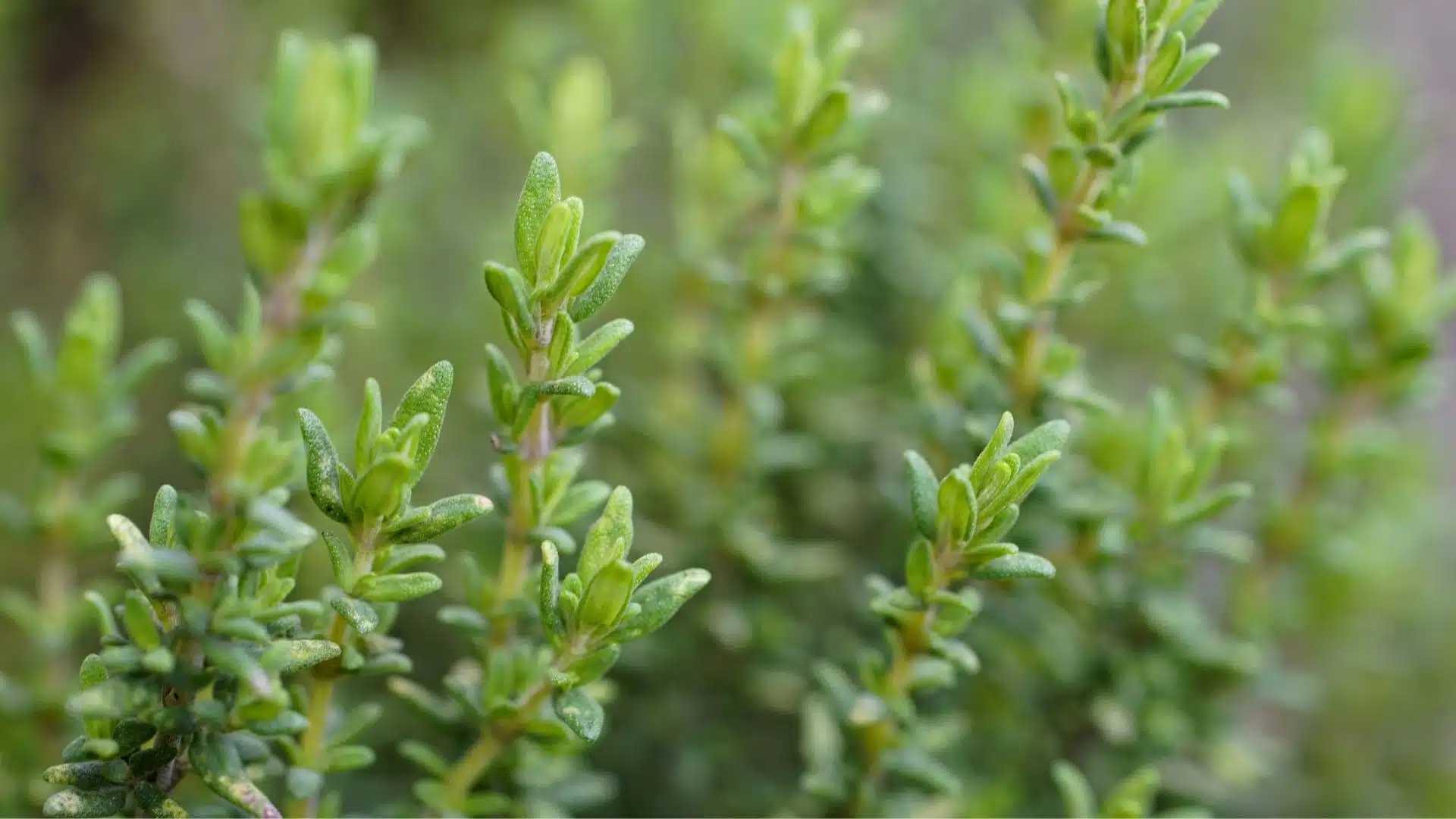
A sprig is a single stem cut from the thyme plant. It has small, oval leaves growing along its length. The stem may be green and flexible or slightly woody and stiff, depending on where it was cut from the plant.
Fresh thyme sprigs look like this:
| Feature | Description |
|---|---|
| Length | 3 to 5 inches on average |
| Stem color | Green to light brown |
| Leaves | Tiny, clustered along the stem |
| Aroma | Earthy, slightly floral |
Young sprigs taken from the tips of the plant tend to be softer. Older, woodier stems come from lower on the plant.
Not all parts of the stem behave the same way in cooking, and certain stems are best avoided depending on how you plan to cook.
How Much Is One Sprig of Thyme in Leaves?

This is where things get practical. One sprig of fresh thyme yields roughly:
- 1/2 teaspoon of loosely stripped leaves
- 1/4 teaspoon of finely chopped leaves
Most recipes that call for a sprig expect you to add the whole stem to a pot or pan, then remove it before serving. The heat releases the flavor from both the leaves and the stem during cooking.
If a recipe calls for sprigs but you only have loose leaves, use about 1/2 teaspoon of fresh leaves per sprig. For dried thyme, use 1/4 teaspoon per sprig.
Getting the leaves off cleanly is a skill in itself, and proper chopping technique makes a real difference when you need a precise amount for a dish.
When Should You Add a Sprig Whole?
Adding a whole sprig works best in slow-cooked dishes where the stem has time to release its flavor. Think soups, stews, braises, and roasted meats.
Dishes That Work Well With Whole Sprigs
- Soups and broths: Drop in 2 to 3 sprigs and remove before serving
- Roast chicken or lamb: Tuck under the skin or into the cavity
- Braised vegetables: Add to the liquid and cook low and slow
- Marinades: Bruise the sprig slightly to release more flavor
You add the sprig early in the cooking and remove it at the end. The stem holds everything together, so it is easy to fish out.
When Not to Use a Whole Sprig
Whole sprigs do not work in quick-cooking dishes. If you are making a stir-fry, pasta, or vinaigrette, the stem will not have time to soften. In those cases, strip the leaves and use them instead.
Fresh thyme leaves work well in many dishes, especially ones that cook quickly or need a lighter hand with flavor.
How Many Sprigs Should a Recipe Use?
Most recipes are not very specific about sprig size, which leaves room for guessing. Here is a general guide:
| Dish Size | Sprigs Recommended |
|---|---|
| Single serving soup | 1 sprig |
| Family-size stew (6 servings) | 3 to 4 sprigs |
| Whole roast chicken | 4 to 5 sprigs |
| Marinade for 1 lb of meat | 2 to 3 sprigs |
If your sprigs are small, use more of them. If they are large and leafy, fewer will do. Thyme has a strong flavor, so it is better to start with less and adjust as you go.
Fresh vs Dried: How to Substitute a Sprig
Fresh and dried thyme are not always interchangeable in equal amounts. Drying concentrates the flavor, so you need less.
| Ingredient | Equivalent to 1 Fresh Sprig |
|---|---|
| Dried thyme | 1/4 teaspoon |
| Fresh thyme leaves (stripped) | 1/2 teaspoon |
| Ground thyme | 1/8 teaspoon |
Fresh sprigs are always the better choice for long-cooked dishes. Dried thyme works fine in rubs, sauces, and baked goods. Ground thyme is best saved for spice blends where texture does not matter.
How to Store Sprigs to Keep Them Fresh
Fresh thyme sprigs can last up to 2 weeks when stored correctly.
- In the fridge: Wrap loosely in a damp paper towel and place in a zip bag. Keep in the vegetable drawer.
- In water: Stand sprigs upright in a glass with a small amount of water, as with fresh-cut flowers. Cover loosely with a plastic bag.
- In the freezer: Freeze whole sprigs on a tray, then transfer to a freezer bag. Use straight from frozen in cooked dishes.
Avoid washing sprigs before storing. Moisture speeds up decay. Rinse them right before use instead.
Wrapping Up
A sprig of thyme is simply a short stem, around 3 to 5 inches long, with small leaves attached. It adds depth to slow-cooked dishes and is easy to remove before serving.
One sprig gives you about half a teaspoon of leaves when stripped. Fresh sprigs work best in soups, roasts, and braises, while stripped leaves suit faster recipes.
Knowing this takes the guesswork out of any recipe that lists sprigs as an ingredient.
Once you get comfortable with how thyme looks and behaves in the kitchen, it becomes one of the most useful herbs you can keep on hand.
Start with one sprig the next time you cook, taste as you go, and adjust from there.